
Sign up to save your podcasts
Or

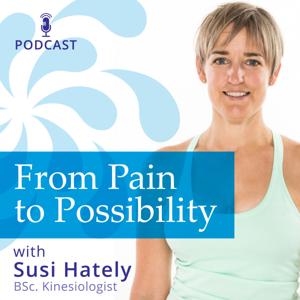


In this episode, I introduce a new miniseries on what it truly means to become a movement detective. I explore how this approach has shaped my work as a yoga therapist and kinesiologist, helping people reduce and eliminate pain by focusing not just on techniques, but on understanding how the body actually moves and adapts.
I break down the key differences between choreography, corrective exercise, and movement-based observation, and explain why so many practitioners feel stuck or confused in their work. By shifting away from isolated fixes and toward recognizing patterns and relationships in the body, we can create more meaningful and lasting change.
In this episode, I explore the evolution of pain understanding—from a structural, tissue-based model to the introduction of pain science—and what both perspectives miss when it comes to real-life recovery. I share how earlier beliefs around degeneration, alignment, and "damage equals pain" shaped fear-based movement, and how pain science helped reframe pain as a protective output of the nervous system rather than a direct measure of injury.
I also look at the gap that still exists today: knowing pain science does not automatically change how people move. Many people can understand the concepts intellectually yet continue to brace, avoid load, or move in protective patterns. I invite a shift toward integrating movement, coordination, and sensory awareness so that relief becomes a starting point for retraining, not the end goal. This is where real change in trust, movement, and capacity begins.
In this episode, I explore how hills—whether climbing up or going down—reveal a lot more about your movement patterns than they do about your strength. I share why so many people assume hills are a "strength problem," and how that assumption often misses what's really going on underneath. From my work with clients post-surgery, dealing with pain, or adapting to changes in their bodies, I've noticed a consistent pattern: hills expose coordination, not just capacity.
I walk you through how the body responds differently on inclines and declines, and why compensation shows up when coordination is limited. Instead of seeing hills as something to avoid or conquer, I invite you to use them as feedback. When you understand what your body is doing in these moments, you gain access to real, lasting change in how you move.
In this episode, I introduce a concept that has been reshaping the way I work with clients and train teachers: moving beyond a muscle-focused approach and learning to observe how the body actually coordinates movement. I talk about why trying to "fix" tight or weak muscles can sometimes lead to confusion and limited results, and how much of this comes from the fact that we can't directly see muscle engagement. Instead of guessing, I explain how shifting our focus to segmental movement allows us to work with something more observable, measurable, and ultimately more effective.
I also walk through how this perspective changes the way we assess and guide movement, using real examples from my work. By asking better questions—what's moving, what shouldn't be, and what's missing—we can uncover the true drivers behind dysfunction and pain. This approach not only creates clearer outcomes but also empowers clients to better understand their own bodies, improve their proprioception, and actively participate in their progress.
In this episode, I invite you to rethink neck pain by becoming a movement detective. Instead of focusing only on where the pain is, I explore how the body works as an interconnected system and why the neck often takes on more work than it's designed to do. I share how compensation patterns form and why pain is often a signal, not the root problem.
I also introduce the concept of functional synergy and how restoring better coordination between the shoulder girdle and pelvic girdle can reduce strain on the neck. By working with smaller, less compensated movements and tuning into subtle "whispers" in the body, I explain how you can retrain patterns, improve efficiency, and create lasting relief.
In this episode, I break down a recent article on compensation patterns and share where I agree, and where I see a gap. While the article frames compensation as a muscle issue, I explain why I view it instead as a coordination pattern shaped by habits, strategies, and how the body distributes load. I walk through why simply stretching or strengthening may not lead to lasting change.
I also dive into what actually creates sustainable results: working with the pattern itself. I share how awareness is only the starting point, and why developing clarity, connection, and internal feedback is key to retraining movement. Through examples and real-world applications, I offer a different lens to understand pain, movement, and true healing.
In this episode, I walk you through a real client case study to illustrate how meaningful change actually happens in the body. Instead of focusing on a single issue, I share how layered patterns, like long-standing imbalances, overthinking movement, and subtle compensations—can keep someone feeling stuck despite being active and strong. I break down how we worked together to shift awareness from control and cognition into deeper somatic connection.
I also explore how tuning into early signals (what I call "yellow lights" and "whispers") can transform the way you relate to pain, movement, and performance. This episode highlights how we can use our natural tendencies, even overthinking, as strengths when directed intentionally, ultimately creating more freedom, ease, and resilience in the body.
In this final part of the three-part series, I walk through what it really takes to turn temporary relief into lasting results. I break down why pain isn't the problem, but rather a signal of deeper patterns in the body—and how learning to recognize subtle "whispers" can completely shift the way I approach healing and change.
I also share real client examples to show how awareness, consistency, and understanding movement patterns lead to sustainable progress. Instead of chasing symptoms, I focus on building clarity, tracking data points, and developing new patterns that stick over time.
In this episode, I build on our conversation about "whispers" in the body and take it a step further—what happens after you start noticing patterns and experience relief. I explain why relief doesn't always last, why symptoms return, and why that's not failure, but actually part of the change process. When you understand how your body defaults to familiar patterns, you can start working with it instead of against it.
I also walk you through how real, lasting change happens in a non-linear, cyclical way. By shifting your focus from chasing symptoms to observing patterns, you can begin to retrain your system more effectively. This episode will help you reframe setbacks, understand your body's signals, and build more sustainable pain relief over time.
In this episode, I bring together over three decades of clinical observation working with people in pain—from chronic and autoimmune conditions to frozen shoulders, scoliosis, kyphosis, and post-cancer movement recovery. I explore how, beneath these seemingly different presentations, there is a shared process of patterning, awareness, and change rather than a focus on chasing symptoms.
I share how my work helps people recognize movement, breathing, and coordination patterns that were previously outside their awareness. By learning to notice the "whispers" and "yellow lights" in the system before they become "red lights" or pain, clients begin to shift how they relate to their bodies—and in doing so, create meaningful and often unexpected change.
From the publisher's feed
12,890 Listeners
10,508 Listeners

11,781 Listeners

209 Listeners

1,852 Listeners

1,258 Listeners
12,710 Listeners

14,899 Listeners

8,527 Listeners

3,419 Listeners
5,474 Listeners

41,388 Listeners
1,095 Listeners

19,273 Listeners

8,792 Listeners