
Sign up to save your podcasts
Or

By Mark Allen
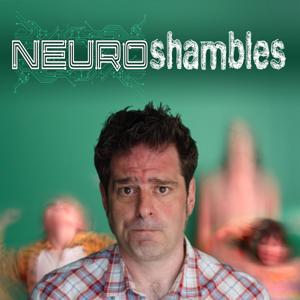
Neuroshambles is a UK parenting podcast about raising neurodivergent children. Hosted by lapsed comedian Mark Allen, this show explores autism parenting, ADHD, PDA, SEND, school struggles, family l
... more
5
33 ratings


The podcast currently has 63 episodes available.
The most played episodes among Podcast App listeners.
Mark welcomes back a Neuroshambles favourite Lisa Galley, for a deep dive into one of the topics every family raising neurodivergent kids will recognise: meltdowns. As an autism family consultant and mum to three of her own, fully grown neurodivergent humans, Lisa brings a wealth of lived experience to help unpick what is really going on in a child's brain and body when their nervous system tips beyond its limits. Mark and Lisa explore the three main contributing factors to meltdowns, before working through the four main survival responses that PDA and other neurodivergent kids can show when overwhelmed: fight, flight, freeze and fawn. They also tackle one of the most frustrating bugbears for parents of autistic, ADHD and PDA kids - the assumption that a meltdown is simply a tantrum. They dissect exactly why the two are worlds apart and why treating one like the other often makes things worse. They share honest, sometimes hair-raising stories from their own households, from the most extreme of flight responses to an epic meltdown triggered by an Easter egg hunt and they offer a genuinely practical rundown of what can help before, during and after a meltdown happens. It's the kind of grounded, funny, non-judgemental chat about parenting neurodivergent kids that Neuroshambles listeners are looking - whether they're seeking autistic parenting advice for the first time or simply want to feel a little less alone in the chaos. CHAPTER TIMESTAMPS (ESTIMATED) 00:01:10 - Meet the guest: Lisa Galley returns 00:03:02 - Topic of the week: what actually is a meltdown? 00:04:48 - The window of tolerance and the nervous system 00:13:37 - Three main causes of meltdown: sensory, communication and unpredictability 00:23:15 - Fight, flight, freeze and fawn: the four meltdown responses 00:43:00 - Tantrums vs meltdowns: what's the difference? 00:49:31 - Common misconceptions about meltdowns 00:50:55 - Public meltdowns and dealing with judgement 00:57:53 - Spotting the signs before a meltdown happens 01:06:43 - What actually helps during a meltdown 01:18:39 - The Positives 01:21:48 - Neurodiversity Champions 01:26:31 - Tiny Epic Wins 01:30:39 - What The Flip? Moments LINKS TO STUFF WE MENTION IN THIS EPISODE Parenting Your Autistic Child: Permission to Do It Differently, by Lisa Galley - https://amzn.eu/d/09LMvRVR Lisa Galley's website - https://lisagalley.com Lisa Galley's free Autism Parenting Guide to Meltdowns (plus bonus meltdown tracker) - https://learn.lisagalley.com/meltdownsguide Different Minds: How We Can Help Our Autistic School Children Thrive, by Pete Wharmby - https://amzn.eu/d/0cE2Sjcq Neuroshambles mailing list sign-up (with free PDF of What the Flip moments) - https://preview.mailerlite.io/forms/2414072/190019322933937234/share 📣 CONTACT US 🌐 Website: www.neuroshambles.com 📧 Email: [email protected] 📸 Instagram: @neuroshambles 🎵 TikTok: @neuroshamblespod 📘 Facebook: Neuroshambles 📬 Sign up to the Neuroshambles mailing list: https://preview.mailerlite.io/forms/2414072/190019322933937234/share 🎙️ CREDITS 🎶 Theme music by Skilsel on Pixabay: pixabay.com

The issue of how to navigate sleep with our neurodivergent kids is one of the most requested topics on Neuroshambles, so Mark brought in someone who actually knows what she's talking about. This episode tackles the question that haunts pretty much every household raising neurodivergent kids: how do you get them to sleep, keep them asleep, and stop them waking up at some ungodly hour demanding an apple? Mark is joined by Michelle Cyril, a children's nurse and fully qualified paediatric sleep consultant who specialises in supporting families of autistic, ADHD and PDA kids. She's also a parent of neurodivergent twins herself, so this isn't advice from someone lecturing from a textbook - it's advice from someone who's been on the sharp end of three-hour bedtime battles too. Mark and Michelle break bedtime down into its component parts of chaos: the bedtime routine itself, actually getting to sleep, staying asleep through the night, and waking up - wether that’s ludicrously early, or begrudgingly late. They cover why traditional sleep advice is largely useless for neurodivergent kids, how PDA turns bedtime into a demand minefield, and dive into the knotty issue of melatonin. Anyone wondering whether melatonin is safe, why GPs are so reluctant to prescribe it, or why their kid can't seem to switch their brain off at night will find answers here. Whether it's a PDA profile, an ADHD brain that won't switch off, or a kid who just runs unnervingly hot in bed, there's something in this episode for most Neuroshamblers. CHAPTER TIMESTAMPS (Estimated) 00:01:48 - Meet the Guest: Michelle Cyril 00:04:00 - Topic of the Week: Why Sleep Is Such a Battle 00:13:39 - The Traditional Sleep Advice That Just Doesn't Work 00:16:13 - Making Bedtime Routines Fun Instead of Boring 00:26:35 - PDA, Demand Avoidance and Bedtime 00:34:06 - Getting to Sleep: Busy Brains and Familiar Stories 00:45:11 - The Melatonin Debate 00:58:39 - Staying Asleep: Night Waking and Anxiety 01:10:46 - The Early Morning Wake-Up Struggle 01:17:23 - The Impact of Poor Sleep on Parents 01:23:02 - Sleep Deprivation and Its Ripple Effects 01:26:44 - Finding the Silver Linings 01:28:39 - Neurodiversity Champions 01:31:48 - Tiny Epic Wins 01:35:58 - What the Flip? LINKS TO STUFF WE MENTION IN THIS EPISODE Neuroshambles mailing list sign-up (with free PDF of What the Flip moments) - https://preview.mailerlite.io/forms/2414072/190019322933937234/share Michelle Cyril, Family Sleep Specialist - https://familysleepspecialist.co.uk/ Busy Brains at Bedtime (Michelle's free download) - https://familysleepspecialist.co.uk/busy-brains-guide/ Greeking Out (National Geographic podcast) - https://www.nationalgeographic.com/podcasts/greeking-out/ Michael Gradisar - https://winksleep.online/about-michael-gradisar Confusional Arousals - https://www.sleepfoundation.org/parasomnias/confusional-arousal Neuro Embrace, Madeleine Woolgar - https://www.neuro-embrace.com ARFID Life UK - https://www.facebook.com/p/ARFID-Life-UK-61569140673395/ 📣 CONTACT US 🌐 Website: www.neuroshambles.com 📧 Email: [email protected] 📸 Instagram: @neuroshambles 🎵 TikTok: @neuroshamblespod 📘 Facebook: Neuroshambles 📬 Sign up to the Neuroshambles mailing list: https://preview.mailerlite.io/forms/2414072/190019322933937234/share CREDITS 🎙️ CREDITS 🎶 Theme music by Skilsel on Pixabay: pixabay.com
If you've ever found yourself having to outline the entire day's schedule before you've even had your first coffee, or negotiating bath time as a sacred non-negotiable human right, this episode might just be the one you didn't know you needed. Mark is joined by the brilliant Jo Matthews for a deep dive into what it really means to be your child's safe person. Whether your neuroshambolic family is shaped by autism, ADHD or PDA, so many of us know the exhausting, relentless, sometimes claustrophobic experience of being the one person our child needs above all others. It's a privilege and it's hard work, but it's almost never talked about with the honesty it deserves on a neurodivergent parenting podcast. In a Neuroshambles first, this episode also features a second guest - Dotty Matthews, Jo's 19-year-old autistic daughter - who joins Mark for a candid, funny and genuinely moving conversation about what it felt like to be that child. From the early days of demanding apple juice to command her mum's attention, through to slowly learning to find safety in other people, Dotty's perspective is the kind of lived experience that makes this show worth your time. There's also a listener email from Lydia, whose 13-year-old daughter's intense attachment prompted this whole conversation - and both Jo and Dotty have something genuinely useful to say in response. Autistic parenting advice doesn't get much more grounded in lived experience than this. CHAPTER TIMESTAMPS (ESTIMATED) 00:01:08 - Meet the Guest: Jo Matthews 00:03:40 - This Week's Topic: Being Your Child's Safe Person 00:04:22 - Lydia's Listener Email 00:07:06 - Dotty's Early Attachment (and the Gee Story) 00:10:25 - Transitional Objects and Starting School 00:18:58 - Co-regulation: Being Your Child's Emotional Anchor 00:25:54 - Scaffolding the Day: Structure and Predictability 00:30:54 - Being Their Executive Function 00:37:45 - Advocating for Your Child 00:43:41 - Being a Physical Safe Space (Including Co-sleeping) 00:48:05 - Being an Emotional Outlet 00:56:34 - The Guilt and Exhaustion of Being a Safe Person 01:03:12 - Attachment Theory and Building Independence 01:06:58 - When Only One Parent is the Safe Person 01:14:17 - Meet the Second Guest: Dotty Matthews 01:38:51 - It's Not All Rubbish 01:41:07 - Neurodiversity Champions 01:43:46 - Tiny Epic Wins 01:47:04 - What the Flip Moments LINKS TO STUFF WE MENTION IN THIS EPISODE Attachment Theory (John Bowlby) - https://www.simplypsychology.org/bowlby.html The Loxdale Centre, Portslade - https://www.loxdale.com/ mASCot - https://www.asc-mascot.com/ Mark's talk: "How Dads Can Show Up Better For Our Neurodivergent Kids" - https://neuroshambles.com/page-gazc-3dk8-ywa8-dnly Raising SEND kids: The Dad's Perspective (with Terry Lloyd) - https://neuroshambles.com/episode/raising-send-kids-the-dads-perspective-terry-lloyd 📣 CONTACT US 🌐 Website: www.neuroshambles.com 📧 Email: [email protected] 📸 Instagram: @neuroshambles 🎵 TikTok: @neuroshamblespod 📘 Facebook: Neuroshambles 🎙️ CREDITS 🎶 Theme music by Skilsel on Pixabay: pixabay.com
If you've ever stared at a parenting book and thought "none of this applies to my child whatsoever" - this episode is for you. Mark is joined by comedian, author, and fellow parent-in-the-trenches George Lewis for a proper deep dive into one of the great unspoken challenges of neurodivergent parenting: figuring out who your kid actually is, and how to parent them, when the instruction manual simply doesn't exist. Because most parenting advice out there is written for neurotypical kids. And when you've got autistic, ADHD, or PDA children, you quickly discover that you essentially have to work it out yourself. That means years of research, trial and error, conflicting information, and the occasional moment of going "hang on… is THIS a thing I need to learn about now?" It's exhausting and exasperating, but it's also, occasionally, brilliant. This is an honest, funny and insightful autism parenting podcast episode that covers the whole messy journey - from those early days of thinking something's different but not knowing quite what, through diagnosis (including the woefully misguided NHS leaflet with their list of top tips), to the point where you cautiously start to feel like you might actually know what you're doing. If you're deep in that process right now, or just starting out, this one's for you. And if you're a seasoned neurodivergent parenting veteran, you'll recognise pretty much every single moment of it. -------------- CHAPTER TIMESTAMPS (Estimated) 00:00 – Intro 01:15 - Meet the Guest: George Lewis 06:28 - Topic of the Week: Writing Your Own User Manual 08:18 - Imagining parenthood vs the reality 12:04 - Apraxia of speech and George's early diagnosis journey 18:19 - Understanding autism: the spectrum, spiky profiles and the mixing desk analogy 31:32 - Navigating the NHS diagnosis route (and the unhelpful booklet you receive when they're diagnosed) 58:16 - Information overload and knowing when to put the lid back on 01:03:39 - Discovering PDA and low demand language 01:05:31 - Conflicting advice and how to navigate it 01:11:36 - Trusting your gut when some recommended approaches don't sit right 01:20:44 - It's Not All Rubbish: the positives of doing the research 01:25:52 - Neurodiversity Champions 01:28:53 - Tiny Epic Wins 01:32:24 - What the Flip! Moments -------------- LINKS TO STUFF WE MENTION IN THIS EPISODE George Lewis website - https://www.georgelewiscomedian.com George Lewis Instagram - https://www.instagram.com/georgelewiscom George Lewis TikTok - https://www.tiktok.com/@georgelewiscomedian George Lewis Facebook - https://www.facebook.com/georgelewiscom George Lewis YouTube - https://www.youtube.com/@georgelewiscom Autism Colour Wheel - https://community.autism.org.uk/cfs-file/__key/communityserver-discussions-components-files/4/autism-colour-wheel.pdf Government SEND white paper - https://www.gov.uk/government/publications/every-child-achieving-and-thriving Neuroshambles Episode with Kieran Rose: How Autistic Is Your Child? – https://neuroshambles.com/episode/how-autistic-is-your-child-kieran-rose Autistica - https://www.autistica.org.uk/ Pierre Novellie “Why can’t I just enjoy things?” - https://amzn.eu/d/0fL1X5Fb Fern Brady “Strong Female Character” - https://amzn.eu/d/07Uk4H6a -------------- 📣 CONTACT US 🌐 Website: www.neuroshambles.com 📧 Email: [email protected] 📸 Instagram: @neuroshambles 🎵 TikTok: @neuroshamblespod 📘 Facebook: @neuroshambles -------------- 🎙️ CREDITS 🎶 Theme music by Skilsel on Pixabay: pixabay.com
This episode of Neuroshambles, will resonate will all parents of neurodivergent kids, as Mark discusses difficulties with transition with the wonderful autism advocate, Pete Wharmby. Together, they delve into the messy, stressful, and often misunderstood world of transitions – from seemingly small everyday routines to major life changes. Whether it’s leaving the house, going into school, or prying them away from screen time, transitions can often be a sensory, emotional and logistical nightmare for parents of autistic, ADHD and PDA kids. But why exactly are they so hard – and what can we do to ease the load? In part one if this two part special, they discuss the neurological and emotional roots of transition difficulties, and how demand avoidance, anxiety and executive dysfunction play a role. This is an insightful, heartfelt, and cathartic episode full of insight, compassion and practical suggestions, as well as a much-needed sense of solidarity for anyone who’s ever dreaded their kids being invited to a birthday party. — CHAPTER TIMESTAMPS (Estimated): 00:00 – Intro and why this is only part one 03:30 – Meet the guest: Pete Wharmby 12:00 – Transitions: What they are and why they’re so difficult 19:00 – Fear of the unknown 25:00 – Why birthday parties can be so anxiety-inducing 32:00 – Strategies for smoother transitions to the unknown 40:00 – School and powerlessness 48:00 – Holidays, Google Earth and visual planning 55:00 – Fear of the Known: Why school can feel like a punishment 1:03:00 – Processing struggles and instruction overload 1:13:00 – Fixable triggers and simple (free) accommodations 1:20:00 – The double-edged sword of hyperfocus 1:24:00 – Neurodiversity Champion: Fight For Ordinary 1:26:30 – Tiny Epic Wins 1:29:00 – What the Flip? Moments 1:33:00 – Wrap-up and tease for part 2 — LINKS TO STUFF WE MENTION: Pete Wharmby website - https://petewharmby.com/ Untypical by Pete Wharmby - https://amzn.eu/d/8gGK6v4 What I Want to Talk About, by Pete Wharmby - https://amzn.eu/d/6tY0kZQ Fight for Ordinary - https://disabledchildrenspartnership.org.uk/fight-for-ordinary/ Google Maps Street View - https://www.google.com/streetview/ Google Earth - https://earth.google.com/web/ Ordnance Survey Maps - https://shop.ordnancesurvey.co.uk/ Albion In The Community - https://bhafcfoundation.org.uk/ Monotropism and Autism Theory - https://monotropism.org/ Interoception - https://www.autism.org.uk/advice-and-guidance/professional-practice/interoception-wellbeing — CONTACT US 🌐 Website: www.neuroshambles.com 📧 Email: [email protected] 📸 Instagram: @neuroshambles 🎵 TikTok: @neuroshamblespod 📘 Facebook: Neuroshambles 🧵 Threads: @neuroshambles — CREDITS 🎶 Theme music by Skilsel on Pixabay: pixabay.com
The podcast currently has 63 episodes available.
1,089 Listeners

902 Listeners
2,664 Listeners

1,162 Listeners

593 Listeners

898 Listeners

483 Listeners

372 Listeners
149 Listeners

722 Listeners

24 Listeners

378 Listeners
19 Listeners
104 Listeners
41 Listeners