
Sign up to save your podcasts
Or



Based on Podcast App listening data
Carolyn Quinn has family links to Felixstowe, a place she’s visited frequently over the years, enjoying walks along the Edwardian seafront, soaking up its old world charm. For Open Country she returns to take a closer look at this Suffolk town, including how it’s been shaped by the enormous presence of Felixstowe Port, the largest container port in the UK.
She begins her journey with David Gledhill at Felixstowe Museum who gives a quick overview of the richly historic area. From there she walks round the corner to Landguard Nature Reserve, overlooked by the port’s enormous cranes. Ranger, Leonie Washington, shows her the reserve's internationally important habitat of vegetated shingle. It supports species like the incredibly rare Stinking Goosefoot and provides habitat for ground-nesting birds like the ringed plover.
Next, Carolyn pops on a hard-hat and enters the Port itself, where Paul Davey shares some facts and figures about this bewilderingly huge place. Then it’s onto the Wildlife Trust’s Trimley Marshes reserve. It was created to replace habitat destroyed when the Port expanded around 30 years ago. Carolyn asks Andrew Excell whether this wetland habitat makes up for the lost mudflats.
Note: The parody of the shipping forecast was written by Les Barker and included on the album ‘Guide Cats for the Blind’ created by Clive Lever.
Producer: Karen Gregor
Paul Evans explores the rich folklore and natural history of St Melangell church near Llangynog in Powys for a new piece of nature writing. Paul is one of our finest nature writers and in this episode of Open Country he talks us through his creative process, which he describes as "a kind of imaginative hunter-gathering”. Inspired by the ancient yew trees that grow in the churchyard, he listens to their stories, such as the science behind their great age and the legend of Saint Melangell, a nun who fled here from Ireland to avoid an arranged marriage. She protected a hare which was being chased by hounds from a royal hunting party, and was gifted the surrounding Pennant valley by the Prince of Powys who was impressed by her bravery. Here she founded a religious community and became known as the patron saint of hares. Immortal yews, magical hares and the mystic Melangell, there is so much rich material for Paul's next piece of writing, a short essay which he reads at the end of the programme.
Produced by Karen Gregor
As a child, Mary McKeown played hide and seek amongst the Beaghmore Stone Circles in her native County Tyrone. It's a mysterious, mystical site with seven circles, ten rows of stones and twelve cairns, all seemingly carefully aligned. They were found by turf cutters in the 1930s, excavated in the 1960s and carbon dated back to the early Bronze Age. There are many theories about what they were used for - perhaps a burial site, a place for harvest ceremonies, or some sort of lunar or solar calendar.
The belief that the stones were connected to celestial events prompted Mary, now working as a tourism officer, to bid for Dark Sky status for Davagh Forest, a short distance away. It's one of the few areas in Northern Ireland unaffected by light pollution. In Irish, 'davagh' means cauldron – the site sits in a natural bowl in the forest protecting it from artificial light from surrounding towns and villages. Davagh became the world's 77th Dark Sky park and the first in Northern Ireland.
Mary and her colleagues were also successful in getting funding to build an observatory. Resident astronomer, Barry Lynn, operates a telescope through a retractable roof and projects images of the skies on screens around the park. He says he was first attracted to the area by his interest in archaeoastronomy, the study of how past cultures viewed the skies. He says its fascinating to think that centuries ago, people watched the same moon, sun and stars as we do today.
Back at the Beaghmore Stones, Helen is persuaded to join Mary for a barefoot walk inside the circles. Some believe that the 'energy' of the landscape promotes a sense of mental well being. Helen remains unconvinced about this, but enjoys recapturing childhood memories.
Produced by Kathleen Carragher
Mary-Ann Ochota joins a group of walkers, riders and horses as in the Scottish Highlands as they follow St Columba’s Way, a pilgrim route from St Andrew’s to Iona. Starting at the village of Killin, eleven people and four horses – Istia, Kirsty, Moy and Sasha - follow the old ways through Glen Lochay and Glen Lyon to the Bridge of Orchy. It's a trip organised by The Big Hoof, a group which promotes adventure and wellbeing through long journeys travelling with horses, on both new routes and ancient ones. Participants join the journey for as long as they want - on foot, horseback or bicycle. Mary-Ann meets the people who have decided to take part in this secular pilgrimage, discovers the healing power of walking with horses and strangers, learns why it’s not about simply riding horses but travelling with them as companions, and hears more about the Venture Trust, the charity the group is raising money for.
Produced and presented by Mary-Ann Ochota
The landscape of Dungeness, at the south-eastern tip of England, is an unusual one. In this programme, Helen Mark finds out about stories surrounding sound and light on this peninsula which juts out into the English Channel. She visits the huge concrete "sound mirrors" - built in the 1920s as an early detection system for incoming enemy planes. Their technology became obsolete as aircraft speeds increased and radar was invented. They still stand today, but are now part of a nature reserve. Helen finds out how they worked, and experiences for herself their eerie sound projection abilities. She also learns about the wildlife which now thrives around them.
A few miles further south, Helen visits the old lighthouse - one of five lighthouses which Dungeness has had in its time. The area stands on vast ever-shifting banks of shingle, which have expanded seawards over the years, leaving previous lighthouses stranded too far from the sea. The construction of a nuclear power station in the 1950s also obscured the lighthouse then in use, so it was decommissioned in 1960 and is now a tourist attraction. Helen walks up its 169 steps to the top and talks to the current owner, whose father bought it on a whim at an auction.
In this programme Helen experiences the distinctive sounds of Dungeness - from the magic of the sound mirrors and the whistle of the tourist steam train to the ever-present crunch and rattle of the shingle underfoot. In this pancake flat landscape, sound and light both seem to move in mysterious ways.
Produced by Emma Campbell
"They rise up suddenly out of fields, they're next to roads and they're even in the middle of the town golf course." Oban resident Antonia Quirke is intrigued by the strange cliffs that can be found everywhere along this stretch of Scottish coast, and she becomes more obsessed when she finds out that someone has been banging in titanium bolts to create new climbing routes up to their peaks.
Joining her at the Dog Stone is the geologist James Westland who begins to unpick the history of these cliffs, plus two climbers she meets en route south, a volunteer with the Woodland Trust, Laura Corbe; and an Australian climber called Andy who has been helping to bang in the new routes.
The producer in Bristol is Miles Warde
Thousands of years ago, large parts of Britain were covered with temperate rainforest - also known as "Atlantic woodland" or "Celtic rainforest". It's a habitat which needs high rainfall and low annual variation in temperature, so the western fringes of the British Isles provide perfect conditions. But temperate rainforest has been largely destroyed over the centuries and there are now only fragments of it left. One of the few surviving areas is in the Isle of Man, where work now is underway to expand and restore this unique habitat, thanks to a £38 million grant. At Creg y Cowin over 70 acres will be planted with native tree species, with around 20 acres left to regenerate naturally. Helen Mark visits the island to learn about this project and meets the Wildlife Trust volunteers involved in the early stages of getting the work underway. She also finds out about "tholtans" - abandoned agricultural dwellings which are a feature of the landscape of the Isle of Man. She meets a couple who are trying to document as many of these ruined buildings as possible, and finds out about links between the landscape and the Manx language.
Produced by Emma Campbell for BBC Audio Bristol
The town of Whitby on the North Yorkshire coast has long been associated with fossils. In this programme, Rose Ferraby finds out about new geological research which sheds light on changes to the marine landscape of thousands of years ago - and asks whether it has lessons to teach us for the future. She meets a geologist and a marine biologist who tell her about the latest research, and talks to an expert on Whitby jet to find out how this unique type of fossil has become so linked with the town. She also visits the town's newly-established lobster hatchery, where work is underway to hatch out and release hundreds of thousands of juvenile lobsters in order to conserve marine stocks.
Producer: Emma Campbell
"When I was a kid, a little junior baby map addict, it always worried me enormously - Flintshire (detached). Why is it detached? What's wrong with it?"
Mike Parker is obsessed by an area of Flintshire called the Maelor. On the map he says it looks like a calloused big toe sticking into the plump ribs of England. Situated slightly south of a line between Wrexham and Whitchurch, it follows few of the expected border rules. And to prove his point, he's taking Miles Warde on a tour, from the Wychbrook to Hanmer and the border post on the strange Fenn's mosses. You'll also hear from a local Welsh language teacher called Dr Cymraeg - aka Stephen Rule - and visit the vicarage where author Lorna Sage grew up. Her most famous book is called Bad Blood.
Mike Parker is the author of All The Wide Border: Wales, England and the Places Between
The producer in Bristol is Miles Warde
It's a land of standing stones, burial cairns and circles in the fields - Glen Lonan beside Loch Nell. Lupi Moll and Ivan Nicholson, who've known the area all their lives, take Oban resident Antonia Quirke on a short trek through the glen to see if they can work out why there are so monuments here. It was once part of the road of the kings, an ancient coffin route. It also includes a more recent memorial, a stone eye that marks the resting place of Lupi's wife, who died twelve years ago.
The presenter is Antonia Quirke, and the producer in Bristol is Miles Warde
From the publisher's feed
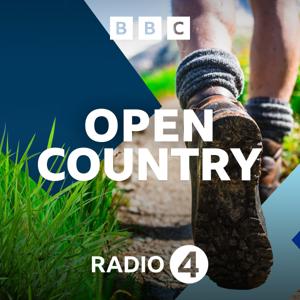
Countryside magazine featuring the people and wildlife that shape the landscape of the British Isles
Ranked by our users in the last 21 days

7,601 Listeners

1,044 Listeners

5,487 Listeners

1,790 Listeners

1,834 Listeners

1,040 Listeners

1,912 Listeners

2,025 Listeners

485 Listeners

39 Listeners
63 Listeners

283 Listeners

266 Listeners

247 Listeners
161 Listeners

110 Listeners
250 Listeners

101 Listeners

4,180 Listeners

3,209 Listeners

706 Listeners

245 Listeners

58 Listeners

24 Listeners

684 Listeners