
Sign up to save your podcasts
Or



👉 Complete the 30 Sec Survey & Find Your Best PHT Recovery Plan
🎉 Sign up for the FREE PHT 5-Day Course HERE
💪 Overcome PHT Yourself with Brodie's PHT Blueprint Online Course
For all other PHT resources, go to: https://proximalhamstringtendinopathy.info/
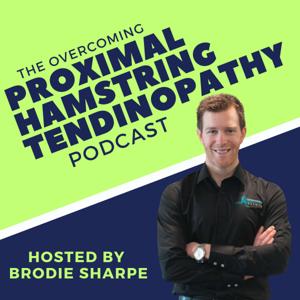
In today’s episode, we dive into Kate’s inspiring journey of overcoming Proximal Hamstring Tendinopathy (PHT). Kate shares her experience, including the onset of her symptoms, the challenges she faced with traditional rehab methods, and the turning point that transformed her recovery. Her story reveals how addressing emotional and psychosocial factors played a critical role in her healing process. If you're navigating your own PHT recovery, this episode is filled with actionable insights and encouragement.
What You’ll Learn in This Episode:
Key Highlights:
Quotes from the Episode:
Resources Mentioned:
Final Takeaways:
----------------------------------------------------------------
MEDICAL & EDUCATIONAL DISCLAIMER
The information provided in the Overcoming Proximal Hamstring Tendinopathy (PHT) Podcast, YouTube channel, associated websites, social media, and other educational content produced by Brodie Sharpe is provided for general educational and informational purposes only. It is not intended to constitute, and should not be relied upon as, individual medical, physiotherapy, diagnostic or treatment advice.
Although Brodie Sharpe is a qualified physiotherapist, consuming this content does not establish a physiotherapist-patient or other healthcare professional-patient relationship. Any discussion of symptoms, diagnoses, rehabilitation strategies, exercises, loading programs, running modification, medications, supplements, injections, medical procedures or other treatment options is general in nature and may not be appropriate for your individual circumstances.
Musculoskeletal pain can have multiple causes, and symptoms that appear consistent with proximal hamstring tendinopathy or another tendon disorder may arise from other conditions. Appropriate assessment, diagnosis and treatment depend upon an individual's medical history, symptoms, examination findings, medications, health conditions, training history and other factors that cannot be adequately assessed through general online content.
Do not use this content as a substitute for assessment, diagnosis or treatment from an appropriately qualified healthcare professional.
Before starting, stopping or substantially modifying an exercise or rehabilitation program, medication, supplement, injection, procedure or other treatment discussed in this content, seek advice from an appropriately qualified healthcare professional who can consider your individual circumstances.
Exercise, rehabilitation and medical treatments carry inherent risks. These may include increased pain, symptom flare-ups, aggravation of an existing condition, new injury, adverse reactions or other complications. Individual responses vary and no particular outcome, improvement, recovery timeframe or return to sport can be guaranteed. If an activity or intervention causes significant, unusual or worsening symptoms, stop and seek appropriate professional advice.
References to research, clinical studies, treatment approaches, products or opinions of guests are provided for educational purposes. Scientific evidence evolves over time, may be incomplete or conflicting, and findings from research populations may not apply to every individual. Discussion of a treatment or product does not necessarily constitute an endorsement or recommendation for its use. Views expressed by podcast guests or other contributors are their own and do not necessarily represent the views of Brodie Sharpe.
To the extent permitted by applicable law, Brodie Sharpe and associated businesses, contractors and contributors accept no liability for loss, injury, damage or adverse outcomes arising from reliance upon or use of this general educational content. Nothing in this disclaimer is intended to exclude, restrict or modify any right, guarantee, remedy or liability that cannot lawfully be excluded, restricted or modified under applicable law.
If you believe you may have a serious injury or medical condition, or you develop severe, rapidly worsening or otherwise concerning symptoms, seek prompt assessment from an appropriately qualified healthcare professional. In an emergency, contact your local emergency service.
👉 Complete the 30 Sec Survey & Find Your Best PHT Recovery Plan
🎉 Sign up for the FREE PHT 5-Day Course HERE
💪 Overcome PHT Yourself with Brodie's PHT Blueprint Online Course
For all other PHT resources, go to: https://proximalhamstringtendinopathy.info/
Episode Summary: In this episode, we explore the fascinating role of Vitamin C in tendon recovery, collagen synthesis, and tendinopathy prevention. Brodie dives into the latest research to examine how Vitamin C-enriched supplements, when combined with exercises, can potentially enhance tendon healing and performance.
He discusses two key studies:
1.) Vitamin C–enriched gelatin supplementation before intermittent activity augments collagen synthesis
2.) Effect of Vitamin C on Tendinopathy Recovery: A Scoping Review
The conversation highlights the potential benefits and limitations of Vitamin C in injury recovery, offering practical insights for runners and those dealing with tendon injuries.
Key Takeaways:
Why Listen? Whether you're recovering from an injury or looking to optimize your tendon health for peak performance, this episode offers valuable insights. With research-backed information and practical advice, Brodie simplifies the complex science behind tendon recovery and how you can potentially leverage Vitamin C for faster recovery and stronger tendons.
----------------------------------------------------------------
MEDICAL & EDUCATIONAL DISCLAIMER
The information provided in the Overcoming Proximal Hamstring Tendinopathy (PHT) Podcast, YouTube channel, associated websites, social media, and other educational content produced by Brodie Sharpe is provided for general educational and informational purposes only. It is not intended to constitute, and should not be relied upon as, individual medical, physiotherapy, diagnostic or treatment advice.
Although Brodie Sharpe is a qualified physiotherapist, consuming this content does not establish a physiotherapist-patient or other healthcare professional-patient relationship. Any discussion of symptoms, diagnoses, rehabilitation strategies, exercises, loading programs, running modification, medications, supplements, injections, medical procedures or other treatment options is general in nature and may not be appropriate for your individual circumstances.
Musculoskeletal pain can have multiple causes, and symptoms that appear consistent with proximal hamstring tendinopathy or another tendon disorder may arise from other conditions. Appropriate assessment, diagnosis and treatment depend upon an individual's medical history, symptoms, examination findings, medications, health conditions, training history and other factors that cannot be adequately assessed through general online content.
Do not use this content as a substitute for assessment, diagnosis or treatment from an appropriately qualified healthcare professional.
Before starting, stopping or substantially modifying an exercise or rehabilitation program, medication, supplement, injection, procedure or other treatment discussed in this content, seek advice from an appropriately qualified healthcare professional who can consider your individual circumstances.
Exercise, rehabilitation and medical treatments carry inherent risks. These may include increased pain, symptom flare-ups, aggravation of an existing condition, new injury, adverse reactions or other complications. Individual responses vary and no particular outcome, improvement, recovery timeframe or return to sport can be guaranteed. If an activity or intervention causes significant, unusual or worsening symptoms, stop and seek appropriate professional advice.
References to research, clinical studies, treatment approaches, products or opinions of guests are provided for educational purposes. Scientific evidence evolves over time, may be incomplete or conflicting, and findings from research populations may not apply to every individual. Discussion of a treatment or product does not necessarily constitute an endorsement or recommendation for its use. Views expressed by podcast guests or other contributors are their own and do not necessarily represent the views of Brodie Sharpe.
To the extent permitted by applicable law, Brodie Sharpe and associated businesses, contractors and contributors accept no liability for loss, injury, damage or adverse outcomes arising from reliance upon or use of this general educational content. Nothing in this disclaimer is intended to exclude, restrict or modify any right, guarantee, remedy or liability that cannot lawfully be excluded, restricted or modified under applicable law.
If you believe you may have a serious injury or medical condition, or you develop severe, rapidly worsening or otherwise concerning symptoms, seek prompt assessment from an appropriately qualified healthcare professional. In an emergency, contact your local emergency service.
👉 Complete the 30 Sec Survey & Find Your Best PHT Recovery Plan
🎉 Sign up for the FREE PHT 5-Day Course HERE
💪 Overcome PHT Yourself with Brodie's PHT Blueprint Online Course
For all other PHT resources, go to: https://proximalhamstringtendinopathy.info/
Episode Summary:
In today’s episode, we dive into new research that explores an innovative MRI technique for diagnosing Proximal Hamstring Tendinopathy (PHT) with greater accuracy. We'll break down a study titled 'Magnetic Resonance Imaging With a Novel Hip Flexion Scanning Position for Diagnosing Proximal Hamstring Tendinopathy' including the study's findings and discuss how this new hip flexion scanning position may help identify PHT pathology that traditional MRI positions could miss.
Key Takeaways:
What You’ll Learn:
By tuning into this episode, you'll gain valuable insights into the evolving science behind PHT diagnosis and learn how to be a more informed participant in your own recovery process.
----------------------------------------------------------------
MEDICAL & EDUCATIONAL DISCLAIMER
The information provided in the Overcoming Proximal Hamstring Tendinopathy (PHT) Podcast, YouTube channel, associated websites, social media, and other educational content produced by Brodie Sharpe is provided for general educational and informational purposes only. It is not intended to constitute, and should not be relied upon as, individual medical, physiotherapy, diagnostic or treatment advice.
Although Brodie Sharpe is a qualified physiotherapist, consuming this content does not establish a physiotherapist-patient or other healthcare professional-patient relationship. Any discussion of symptoms, diagnoses, rehabilitation strategies, exercises, loading programs, running modification, medications, supplements, injections, medical procedures or other treatment options is general in nature and may not be appropriate for your individual circumstances.
Musculoskeletal pain can have multiple causes, and symptoms that appear consistent with proximal hamstring tendinopathy or another tendon disorder may arise from other conditions. Appropriate assessment, diagnosis and treatment depend upon an individual's medical history, symptoms, examination findings, medications, health conditions, training history and other factors that cannot be adequately assessed through general online content.
Do not use this content as a substitute for assessment, diagnosis or treatment from an appropriately qualified healthcare professional.
Before starting, stopping or substantially modifying an exercise or rehabilitation program, medication, supplement, injection, procedure or other treatment discussed in this content, seek advice from an appropriately qualified healthcare professional who can consider your individual circumstances.
Exercise, rehabilitation and medical treatments carry inherent risks. These may include increased pain, symptom flare-ups, aggravation of an existing condition, new injury, adverse reactions or other complications. Individual responses vary and no particular outcome, improvement, recovery timeframe or return to sport can be guaranteed. If an activity or intervention causes significant, unusual or worsening symptoms, stop and seek appropriate professional advice.
References to research, clinical studies, treatment approaches, products or opinions of guests are provided for educational purposes. Scientific evidence evolves over time, may be incomplete or conflicting, and findings from research populations may not apply to every individual. Discussion of a treatment or product does not necessarily constitute an endorsement or recommendation for its use. Views expressed by podcast guests or other contributors are their own and do not necessarily represent the views of Brodie Sharpe.
To the extent permitted by applicable law, Brodie Sharpe and associated businesses, contractors and contributors accept no liability for loss, injury, damage or adverse outcomes arising from reliance upon or use of this general educational content. Nothing in this disclaimer is intended to exclude, restrict or modify any right, guarantee, remedy or liability that cannot lawfully be excluded, restricted or modified under applicable law.
If you believe you may have a serious injury or medical condition, or you develop severe, rapidly worsening or otherwise concerning symptoms, seek prompt assessment from an appropriately qualified healthcare professional. In an emergency, contact your local emergency service.
👉 Complete the 30 Sec Survey & Find Your Best PHT Recovery Plan
🎉 Sign up for the FREE PHT 5-Day Course HERE
💪 Overcome PHT Yourself with Brodie's PHT Blueprint Online Course
For all other PHT resources, go to: https://proximalhamstringtendinopathy.info/
On today's episode, Brodie answers all the PHT questions submitted from the PHT facebook groups.
----------------------------------------------------------------
MEDICAL & EDUCATIONAL DISCLAIMER
The information provided in the Overcoming Proximal Hamstring Tendinopathy (PHT) Podcast, YouTube channel, associated websites, social media, and other educational content produced by Brodie Sharpe is provided for general educational and informational purposes only. It is not intended to constitute, and should not be relied upon as, individual medical, physiotherapy, diagnostic or treatment advice.
Although Brodie Sharpe is a qualified physiotherapist, consuming this content does not establish a physiotherapist-patient or other healthcare professional-patient relationship. Any discussion of symptoms, diagnoses, rehabilitation strategies, exercises, loading programs, running modification, medications, supplements, injections, medical procedures or other treatment options is general in nature and may not be appropriate for your individual circumstances.
Musculoskeletal pain can have multiple causes, and symptoms that appear consistent with proximal hamstring tendinopathy or another tendon disorder may arise from other conditions. Appropriate assessment, diagnosis and treatment depend upon an individual's medical history, symptoms, examination findings, medications, health conditions, training history and other factors that cannot be adequately assessed through general online content.
Do not use this content as a substitute for assessment, diagnosis or treatment from an appropriately qualified healthcare professional.
Before starting, stopping or substantially modifying an exercise or rehabilitation program, medication, supplement, injection, procedure or other treatment discussed in this content, seek advice from an appropriately qualified healthcare professional who can consider your individual circumstances.
Exercise, rehabilitation and medical treatments carry inherent risks. These may include increased pain, symptom flare-ups, aggravation of an existing condition, new injury, adverse reactions or other complications. Individual responses vary and no particular outcome, improvement, recovery timeframe or return to sport can be guaranteed. If an activity or intervention causes significant, unusual or worsening symptoms, stop and seek appropriate professional advice.
References to research, clinical studies, treatment approaches, products or opinions of guests are provided for educational purposes. Scientific evidence evolves over time, may be incomplete or conflicting, and findings from research populations may not apply to every individual. Discussion of a treatment or product does not necessarily constitute an endorsement or recommendation for its use. Views expressed by podcast guests or other contributors are their own and do not necessarily represent the views of Brodie Sharpe.
To the extent permitted by applicable law, Brodie Sharpe and associated businesses, contractors and contributors accept no liability for loss, injury, damage or adverse outcomes arising from reliance upon or use of this general educational content. Nothing in this disclaimer is intended to exclude, restrict or modify any right, guarantee, remedy or liability that cannot lawfully be excluded, restricted or modified under applicable law.
If you believe you may have a serious injury or medical condition, or you develop severe, rapidly worsening or otherwise concerning symptoms, seek prompt assessment from an appropriately qualified healthcare professional. In an emergency, contact your local emergency service.
👉 Complete the 30 Sec Survey & Find Your Best PHT Recovery Plan
🎉 Sign up for the FREE PHT 5-Day Course HERE
💪 Overcome PHT Yourself with Brodie's PHT Blueprint Online Course
For all other PHT resources, go to: https://proximalhamstringtendinopathy.info/
In this episode, we dive deep into groundbreaking research that could revolutionize how we understand and treat chronic tendon pain. Our host explores a new paper that suggests chronic tendon pain might be driven by neuropathy—dysfunctional nerves—rather than just degenerative or inflammatory disorders. This shift in understanding opens up exciting possibilities for more effective treatments and pain relief strategies.
Key Talking Points:
Why You Should Listen: This episode is a must-listen for anyone dealing with chronic tendon pain, as it uncovers new research that could significantly impact your treatment approach. Whether you're a runner, athlete, or someone struggling with tendinopathy, this discussion will provide valuable insights and practical advice to help you better manage your condition.
Takeaways:
Tune in to explore these exciting developments in chronic tendon pain research and learn how you can apply these insights to your own recovery journey!
----------------------------------------------------------------
MEDICAL & EDUCATIONAL DISCLAIMER
The information provided in the Overcoming Proximal Hamstring Tendinopathy (PHT) Podcast, YouTube channel, associated websites, social media, and other educational content produced by Brodie Sharpe is provided for general educational and informational purposes only. It is not intended to constitute, and should not be relied upon as, individual medical, physiotherapy, diagnostic or treatment advice.
Although Brodie Sharpe is a qualified physiotherapist, consuming this content does not establish a physiotherapist-patient or other healthcare professional-patient relationship. Any discussion of symptoms, diagnoses, rehabilitation strategies, exercises, loading programs, running modification, medications, supplements, injections, medical procedures or other treatment options is general in nature and may not be appropriate for your individual circumstances.
Musculoskeletal pain can have multiple causes, and symptoms that appear consistent with proximal hamstring tendinopathy or another tendon disorder may arise from other conditions. Appropriate assessment, diagnosis and treatment depend upon an individual's medical history, symptoms, examination findings, medications, health conditions, training history and other factors that cannot be adequately assessed through general online content.
Do not use this content as a substitute for assessment, diagnosis or treatment from an appropriately qualified healthcare professional.
Before starting, stopping or substantially modifying an exercise or rehabilitation program, medication, supplement, injection, procedure or other treatment discussed in this content, seek advice from an appropriately qualified healthcare professional who can consider your individual circumstances.
Exercise, rehabilitation and medical treatments carry inherent risks. These may include increased pain, symptom flare-ups, aggravation of an existing condition, new injury, adverse reactions or other complications. Individual responses vary and no particular outcome, improvement, recovery timeframe or return to sport can be guaranteed. If an activity or intervention causes significant, unusual or worsening symptoms, stop and seek appropriate professional advice.
References to research, clinical studies, treatment approaches, products or opinions of guests are provided for educational purposes. Scientific evidence evolves over time, may be incomplete or conflicting, and findings from research populations may not apply to every individual. Discussion of a treatment or product does not necessarily constitute an endorsement or recommendation for its use. Views expressed by podcast guests or other contributors are their own and do not necessarily represent the views of Brodie Sharpe.
To the extent permitted by applicable law, Brodie Sharpe and associated businesses, contractors and contributors accept no liability for loss, injury, damage or adverse outcomes arising from reliance upon or use of this general educational content. Nothing in this disclaimer is intended to exclude, restrict or modify any right, guarantee, remedy or liability that cannot lawfully be excluded, restricted or modified under applicable law.
If you believe you may have a serious injury or medical condition, or you develop severe, rapidly worsening or otherwise concerning symptoms, seek prompt assessment from an appropriately qualified healthcare professional. In an emergency, contact your local emergency service.
👉 Complete the 30 Sec Survey & Find Your Best PHT Recovery Plan
🎉 Sign up for the FREE PHT 5-Day Course HERE
💪 Overcome PHT Yourself with Brodie's PHT Blueprint Online Course
For all other PHT resources, go to: https://proximalhamstringtendinopathy.info/
Welcome to today's episode, where we delve into the management of proximal hamstring tendinopathy (PHT), exploring both surgical and non-surgical treatment options.
Episode Highlights:
----------------------------------------------------------------
MEDICAL & EDUCATIONAL DISCLAIMER
The information provided in the Overcoming Proximal Hamstring Tendinopathy (PHT) Podcast, YouTube channel, associated websites, social media, and other educational content produced by Brodie Sharpe is provided for general educational and informational purposes only. It is not intended to constitute, and should not be relied upon as, individual medical, physiotherapy, diagnostic or treatment advice.
Although Brodie Sharpe is a qualified physiotherapist, consuming this content does not establish a physiotherapist-patient or other healthcare professional-patient relationship. Any discussion of symptoms, diagnoses, rehabilitation strategies, exercises, loading programs, running modification, medications, supplements, injections, medical procedures or other treatment options is general in nature and may not be appropriate for your individual circumstances.
Musculoskeletal pain can have multiple causes, and symptoms that appear consistent with proximal hamstring tendinopathy or another tendon disorder may arise from other conditions. Appropriate assessment, diagnosis and treatment depend upon an individual's medical history, symptoms, examination findings, medications, health conditions, training history and other factors that cannot be adequately assessed through general online content.
Do not use this content as a substitute for assessment, diagnosis or treatment from an appropriately qualified healthcare professional.
Before starting, stopping or substantially modifying an exercise or rehabilitation program, medication, supplement, injection, procedure or other treatment discussed in this content, seek advice from an appropriately qualified healthcare professional who can consider your individual circumstances.
Exercise, rehabilitation and medical treatments carry inherent risks. These may include increased pain, symptom flare-ups, aggravation of an existing condition, new injury, adverse reactions or other complications. Individual responses vary and no particular outcome, improvement, recovery timeframe or return to sport can be guaranteed. If an activity or intervention causes significant, unusual or worsening symptoms, stop and seek appropriate professional advice.
References to research, clinical studies, treatment approaches, products or opinions of guests are provided for educational purposes. Scientific evidence evolves over time, may be incomplete or conflicting, and findings from research populations may not apply to every individual. Discussion of a treatment or product does not necessarily constitute an endorsement or recommendation for its use. Views expressed by podcast guests or other contributors are their own and do not necessarily represent the views of Brodie Sharpe.
To the extent permitted by applicable law, Brodie Sharpe and associated businesses, contractors and contributors accept no liability for loss, injury, damage or adverse outcomes arising from reliance upon or use of this general educational content. Nothing in this disclaimer is intended to exclude, restrict or modify any right, guarantee, remedy or liability that cannot lawfully be excluded, restricted or modified under applicable law.
If you believe you may have a serious injury or medical condition, or you develop severe, rapidly worsening or otherwise concerning symptoms, seek prompt assessment from an appropriately qualified healthcare professional. In an emergency, contact your local emergency service.
👉 Complete the 30 Sec Survey & Find Your Best PHT Recovery Plan
🎉 Sign up for the FREE PHT 5-Day Course HERE
💪 Overcome PHT Yourself with Brodie's PHT Blueprint Online Course
For all other PHT resources, go to: https://proximalhamstringtendinopathy.info/
Episode Description: In this powerful episode, we share Emily's inspiring journey from chronic pain to recovery through the discovery and treatment of Tension Myoneural Syndrome (TMS). Emily opens up about her struggle with pain over the past few years, the emotional and psychological battles she faced, and the transformative strategies that helped her reclaim her life.
Key Discussion Points:
Resources Mentioned:
Emily's email: [email protected]
Follow Emily on Instagram: @painexplained_tms
----------------------------------------------------------------
MEDICAL & EDUCATIONAL DISCLAIMER
The information provided in the Overcoming Proximal Hamstring Tendinopathy (PHT) Podcast, YouTube channel, associated websites, social media, and other educational content produced by Brodie Sharpe is provided for general educational and informational purposes only. It is not intended to constitute, and should not be relied upon as, individual medical, physiotherapy, diagnostic or treatment advice.
Although Brodie Sharpe is a qualified physiotherapist, consuming this content does not establish a physiotherapist-patient or other healthcare professional-patient relationship. Any discussion of symptoms, diagnoses, rehabilitation strategies, exercises, loading programs, running modification, medications, supplements, injections, medical procedures or other treatment options is general in nature and may not be appropriate for your individual circumstances.
Musculoskeletal pain can have multiple causes, and symptoms that appear consistent with proximal hamstring tendinopathy or another tendon disorder may arise from other conditions. Appropriate assessment, diagnosis and treatment depend upon an individual's medical history, symptoms, examination findings, medications, health conditions, training history and other factors that cannot be adequately assessed through general online content.
Do not use this content as a substitute for assessment, diagnosis or treatment from an appropriately qualified healthcare professional.
Before starting, stopping or substantially modifying an exercise or rehabilitation program, medication, supplement, injection, procedure or other treatment discussed in this content, seek advice from an appropriately qualified healthcare professional who can consider your individual circumstances.
Exercise, rehabilitation and medical treatments carry inherent risks. These may include increased pain, symptom flare-ups, aggravation of an existing condition, new injury, adverse reactions or other complications. Individual responses vary and no particular outcome, improvement, recovery timeframe or return to sport can be guaranteed. If an activity or intervention causes significant, unusual or worsening symptoms, stop and seek appropriate professional advice.
References to research, clinical studies, treatment approaches, products or opinions of guests are provided for educational purposes. Scientific evidence evolves over time, may be incomplete or conflicting, and findings from research populations may not apply to every individual. Discussion of a treatment or product does not necessarily constitute an endorsement or recommendation for its use. Views expressed by podcast guests or other contributors are their own and do not necessarily represent the views of Brodie Sharpe.
To the extent permitted by applicable law, Brodie Sharpe and associated businesses, contractors and contributors accept no liability for loss, injury, damage or adverse outcomes arising from reliance upon or use of this general educational content. Nothing in this disclaimer is intended to exclude, restrict or modify any right, guarantee, remedy or liability that cannot lawfully be excluded, restricted or modified under applicable law.
If you believe you may have a serious injury or medical condition, or you develop severe, rapidly worsening or otherwise concerning symptoms, seek prompt assessment from an appropriately qualified healthcare professional. In an emergency, contact your local emergency service.
From the publisher's feed
Ranked by our users in the last 21 days

11,739 Listeners

1,341 Listeners

8,325 Listeners

3,608 Listeners

7,922 Listeners

200 Listeners
138 Listeners

201 Listeners
1,874 Listeners
40 Listeners
462 Listeners

16 Listeners

2,052 Listeners

1,218 Listeners
364 Listeners