
Sign up to save your podcasts
Or

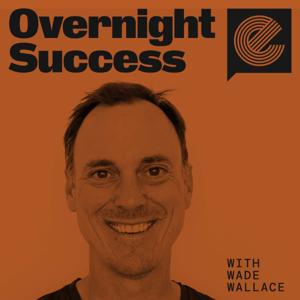


Most businesses we’ve spoken to in this podcast have had a relatively straightforward journey, but Wahoo Fitness does not fit that mould. Chip Hawkins is the company’s founder and believe it or not, the Wahoo business started off in boat docks. That’s right, floating boat docks. But it was a good business with interesting problems that Chip loved to solve.
Chip is an engineer, an entrepreneur, a tinkerer, and most importantly, someone who loves to throw himself neck deep into fixing problems to make something better. And it usually starts with him and his own needs.
Chip’s story is one that proves that if you see a problem and you care enough to solve it for yourself and maybe a few friends, there’s likely a market out there for a business to take shape. And as Chip points out, the most important thing is that you have to try.
Escape Collective is entirely member-funded. If you like this podcast please consider supporting us by becoming a member: https://escapecollective.com/member/
---
Strava has become ubiquitous in the lives of over 50 million athletes and is arguably the most relevant social network to anyone who loves to sweat.
The co-founders of Strava, Michael Horvath and Mark Gainey, have been lifelong friends and have quite literally changed how we interact with our cycling in both real life and with each other online.
The reason I was so interested in hearing Michael and Mark’s story was not only because they’ve created an amazing brand and product that most of us use, but because they went about it in a very different way than most of the companies you’ll hear about in this podcast.
Creating Strava wasn’t their first trip to the rodeo. They were experienced, successful, and knowledgeable entrepreneurs that made some very deliberate decisions early on about the foundations of the company. Those decisions have taken Strava to where it is today and should help take it into the next 20 years.
Strava started from nothing but a single idea with only passion fuelling the fire, and as you’ll discover, creating Strava hasn’t been the straightforward journey that you might think about when you log on every day.
Rocket Espresso is not a cycling brand per se, but it’s arguably the best known coffee brand who are part of the orbit in our own little cycling world.
It’s only a recent phenomenon that cycling and coffee have gone hand in hand, and most cyclists have an appreciation for beautiful, mechanical, craftsmanship which Rocket does so wonderfully.
New Zealander Andrew Meo is the co-founder of Rocket Espresso and it’s no coincidence that the brand found its way into cycling. Andrew is a lifelong avid cyclist and his passion for coffee didn’t come until a bit later in his life...
Coverart photo by Augustus Farmer (augustusfarmer.com)
Hosted on Acast. See acast.com/privacy for more information.
Hosted on Acast. See acast.com/privacy for more information.
But what many people don’t know is that as wildly successful Cervelo was up until 2011, it was a pressure cooker of constant financial challenges which ultimately led to Cervelo needing to sell the business to Dutch holding company, PON. 2008-2011 saw the perfect storm for Cervelo with the global financial crisis, setting up a professional team that was far more successful than ever imagined, and a private lender which led to the company’s turn of events.
Hosted on Acast. See acast.com/privacy for more information.
Indoor training has been around for longer than I can remember, but it was in 2014 when Zwift came along that it changed this market forever. It came into the world with bold ambitions, reimagined the space and what it could become, and has grown the market to a size that nobody could have imagined.
As far back as I can recall the earliest pioneers in the indoor virtual world space were the likes of Computrainer and Tacx - that would have been in the late 90’s, early 2000’s. But they never really delivered on the promise making indoor training much more enjoyable. They can’t be blamed for lack of vision or not trying - the technology wasn’t even there at the time. Social networks didn’t exist, multi player online games weren’t around, broadband speeds were slow and wireless protocols such as ANT+ and BTLE hadn’t been invented yet.
But, in 2010 when a gaming software developer in Southern California named Jon Mayfield began tinkering with his kinetic trainer and finding ways for it to communicate with a virtual world he built, he had no idea how big this would become.
Hosted on Acast. See acast.com/privacy for more information.
There’s so much to Castelli’s checkered history but most recently an American by the name of Steve Smith came onto the scene in 2000. He had no Italian heritage, no real cycling industry experience, but he did have a love cycling. By his own admission, he wasn’t an amazing cyclist, technical innovation was where his interest always strayed so he could stay competitive.
Steve’s email signature says ‘Castelli Brand Manager’, but I always got the feeling from speaking with him over the years that he did far more than that. As I dug into his story deeper, he’s part owner of the business, steers the ship, and is ultimately the man who turned Castelli around into what we know it as today.
Hosted on Acast. See acast.com/privacy for more information.
When pro cyclist Mitch Docker announced his retirement I was in the middle of producing Christian Meier’s story, much of the background I got from Mitch’s podcast, Life in the Peloton. So it got me thinking about Life in the Peloton. Is it a business for Mitch? How did he start this? What makes him tick? Where might it go? Mitch is clearly a smart, talented and hard working guy, so why not document his story now at this point of his journey rather than 10 years from now?
Maybe I’m shoe horning this into a theme where it doesn’t belong, but here’s my justification: Mitch Docker’s Life in the Peloton is arguably the best and most prolific cycling podcast out there of its kind. He’s flipped the traditional model of journalism on its head and he’s created something truly unique. Not only that – he’s stuck with it for 6 years now with consistency and he keeps making better.
For those not familiar, Life in the peloton is Mitch’s way of telling the world quite simply, what the life of a professional cyclist is like, and translates it everyone can understand. It’s not Mitch’s monologue and self-indulgent hour on-air. Quite the opposite. In this day and age of social media, quick likes and shares that serves as a self promotional tool, Mitch has opted to tell other people’s stories in long-form audio, that also reflects elements of his life. He has unique place in the sport to be able to do this, but also skillset as an interviewer, conversationalist, mastery of the podcast medium, and relatable nature that documents the sport like we haven’t experienced before.
Hosted on Acast. See acast.com/privacy for more information.
Hosted on Acast. See acast.com/privacy for more information.
Getting into the cycling apparel business could now be one of the lowest barrier to entry segments in the industry. Anyone with an Instagram account and some design ability can directly access factories in Italy or China and create a clothing ‘brand’ these days, and it’s incredibly tough to cut through in this crowded market. That’s not to say some don’t break through and create legitimate and worthy businesses this way – I know firsthand a few who have. And this low barrier to entry has enabled some wonderful brands to get started and flourish. But because of this it is a crowded market now, and it’s tough to discern who are doing great work and innovating, and who are just pumping out disposable fashion.
Every once in a while however a new brand comes along with people from a track record of success, expertise and you just know they’ll be around for the long haul.
From the moment I first discovered 7mesh a few years ago I knew this was one of those brands in its infancy.
For those who don’t know, 7mesh are a apparel brand based in Squamish, Canada who make some top quality clothing made for the demands of mountain biking, gravel and road.
The three founders, Tyler Jordan, Ian Martin and Calum Davidson aren’t three random people who got together to do a passion project however. They were three early staff members and integral to the success of outdoor clothing juggernaut, Arc'teryx.
Tyler was the CEO, Ian was Design Director, and Calum was Director of Supply Chain – and all were (and still are) nuts for cycling. They were also great friends in their days at Arcteryx and were having fun, pushing boundaries, and getting shit done.
But as the saying goes, all good things come to and end and as the three oversaw tremendous growth in the business they all gave everything up to go off on their own and create something from scratch.
To tell the story of 7mesh, we need to get to know Tyler, Calum and Ian in their early days at Arctaryx …
Hosted on Acast. See acast.com/privacy for more information.
From the publisher's feed
3,628 Listeners
922 Listeners

0 Listeners
250 Listeners
3,368 Listeners
730 Listeners

303 Listeners
114 Listeners
68 Listeners
777 Listeners
262 Listeners
853 Listeners

295 Listeners

144 Listeners

47 Listeners

122 Listeners

74 Listeners

71 Listeners
9 Listeners
9 Listeners

17 Listeners