
Sign up to save your podcasts
Or

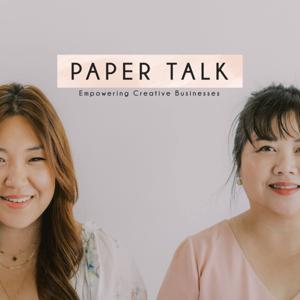


This week on our Paper Talk Podcast, we want to talk about when it's ok to work for free with our friend, Kate Alarcon.
As much as we hate to admit it, we've all made paper flowers for "free" in one way or the other. Often, it's in the early stages of our paper flower journey, when we're desperate for exposure when we don't have the guts to ask for the right kind of compensation (or any compensation at all) when we're not all that confident about work.
If we're lucky, we come out of it a better artist or entrepreneur with opportunities that we never dreamed of. On the other hand, if those opportunities aren't fruitful, we might feel slightly disappointed, even resentful perhaps.
When would you work for free? In this episode, each of us explains when we've worked for free and why those opportunities were or were not ones that we would ever do again.
Read the transcript here.
Last week on our podcast, Paper Talk, we dove into the world of branding with Kalisa Jenne-Fraser and Missy Palacol of Kalyx Group. We loved and learned so much from our conversation that we extended into this week’s episode. Our focus shifted from finding the heart of your business (in short, the brand) to the ins and outs of marketing your business.
If you haven't listened to "How and Why Branding and Marketing Go Hand in Hand (Part 1)" be sure to listen to that Episode!
Let's learn a bit about Kalisa and Missy:
1. Introduce yourself to us (again)!
Kalisa Jenne-Fraser is co-founder of Kalyx Group, a brand, and marketing consulting firm headquartered in Seattle. Kalisa is a brand marketing consultant who specializes in strategic brand planning, content marketing, and digital media strategy. She has spent almost her entire professional life delivering marketing strategies and insights to global brands, non-profits, and startups alike.
In 2016, after nearly 20 years in corporate marketing and consulting, she left her comfort zone to take on new challenges, expand her skillset, and hopefully help build something awesome from the ground up in Kalyx Group. Through Kalyx Group, she offers consulting and training programs that teach entrepreneurs and small business owners how to translate their passions into actionable brand strategies that work.
Missy Palacol is a Seattle-based, nationally published brand photographer, digital marketing expert, and speaker. She teaches people and companies how to capture their authentic visual brand and how to leverage social and digital media to grow their businesses.
In 2014, Missy left her full-time career in corporate marketing and struck out on her own with Missy Palacol Photography, capturing rich and memorable imagery for brands. In 2016, she co-founded Kalyx Group, where she combines her enjoyment of photography with her deep knowledge of marketing and digital storytelling.
2. Tell us about your brand and marketing business, Kalyx Group.
We founded Kalyx Group in 2016. We’re are a team of brand and marketing strategists with over 30 years combined experience helping companies – from global Fortune 100s to local startups and solopreneurs – develop and implement strategies that drive results. We especially have a passion for small businesses – we bring a simple, effective, affordable approach to marketing that starts with brand clarity and ends with a well-thought-out strategic marketing plan. It’s our mission to help brands streamline their marketing approach by consulting on the right tactics to employ at the right time.
3. Given the consistent disruptions we’ve seen in 2020, how should brands think about shifting their marketing for the new normal?
We are in the acknowledge-and-adapt phase of the Covid-19 pandemic. But we also have to plan for life beyond the crisis. As we navigate what we know, businesses must work externally to keep their brands and customer journeys as a whole as possible, while working internally to do three things:
Understand the impact of business interruption and continue to triage the unexpected.
Lean into digital ways of working and connecting with customers, knowing that this will likely have lasting effects.
Mitigate risks to the customer experience by thinking realistically from the outside in.
4. How should brands think about building resilience in the new normal?
If you use this time to reset and reimagine your new interactions with your customers, you can actually survive and thrive in uncertain times. With any business, the customer journey and keeping your customers satisfied are important to your business’ growth.
For example, we work with a local gym that offers a bootcamp program. Before the pandemic, all classes were in person. Like most businesses, they had to figure out a way to switch to an online model in order to survive these uncertain times. The goal with their new online class model was to not only support their existing clients but draw new clients in too.
We helped our client think about a tiered model that would incentivize their existing clientele to still pay the monthly fee for a new online class by offering extra value -adds to their clients through things like weekly check-ins and bonus content. These efforts helped their brand to continue to build trust with their clients who then started recommending their online classes to their friends…and their client’s friends weren’t just fellow local people. Because of their flexibility with their business approach, they grew their business outside of their local area and are now able to reach new clients nationally – this was an unexpected outcome for them and not just helping them survive right now, but thrive!
5. Should brand’s stop advertising during uncertain times?
The brands that are finding success through these uncertain times didn’t completely halt their advertising, but they did take a pause. It’s kind of like crossing the street of a busy road, it’s best to stop, look, and listen first before you proceed. You want to make sure that your marketing efforts are not only relevant but don’t become tone-deaf to the times we were in.
Once you’ve figured out how to make any necessary shifts to your marketing then, advertising in uncertain times like today can be really successful. For starters, social media platforms like Facebook and Instagram have seen a huge increase in daily users since the beginning of the COVID-19 pandemic.
With more people working from home and looking for ways to stay connected they are turning to social media for that. And a lot of businesses and brands have pulled back on their marketing spend, so advertising avenues such as paid or sponsored ads on Facebook and Instagram have come down in price lately, meaning your $50 budget for a sponsor ad currently goes further than it used to in pre-pandemic times.
6. During these uncertain times, what would you say are the do's and don’ts?
The DO's
Pause and listen so you can approach any disruption in the best way possible for your business and brand.
Present with empathy and transparency when times are uncertain -People feel vulnerable right now. Empathy is critical. Most major airlines, for example, were quick to implement a “Peace of Mind Policy”, waiving cancel and change fees for those that don’t feel comfortable traveling during the pandemic or have a sudden change of plans because of the pandemic.
Associate your brand with good - People will remember brands for their acts of good in a time of crisis, particularly if done with a true heart and generosity. This could take the form of donating to food banks, providing free products for medical personnel, or continuing to pay employees while the company’s doors are closed. For example, consumers will likely remember how Ford, GE, and 3M partnered to repurpose manufacturing capacity and put people back to work to make respirators and ventilators to fight coronavirus.
The DON'T'S
Don’t try to do it all. Call in an expert to help if you aren’t sure how to proceed.
Don’t completely stop all of your communication, advertising or marketing efforts in uncertain times – it’s in these times, more than ever, that your consumers what to hear from you.
Don’t stop creating content - instead, double down on content creation, and make sure some of your content addresses key questions your customers might have as they go through the disruptions we are currently facing while also creating other types of content; these pieces of content will give you a massive advantage when things settle down.
READ THE PODCAST TRANSCRIPT HERE
GET YOUR FREEBIES!
HEAD OVER to the Kalyx Group website to download a free PDF copy of the Brand Readiness Checklist: How to Prepare for Disruption!
Learn more by following Kalisa, Missy, and the Kalyx Group on social media:
WEBSITE | Kalyx Group | Missy Palacol Photography
INSTAGRAM | @missy.palacol
We’ve all taken different paths to the wonderful world of paper flowers, but one thing that unites us is a love of our craft. It’s no surprise that many of us want to turn that passion into a business. But even if you make the most amazing, creative flowers, you may have found yourself feeling a bit over your head when it comes to the branding and marketing side of things.
That's why we reached out to two incredible ladies: Kalisa Jenne-Fraser and Missy Palacol. They are the talented duo behind the consulting firm, Kalyx Group, and in this podcast episode, they share insights and tips to help businesses succeed.
First, let's learn a bit about Kalisa and Missy:
1. Introduce yourself to us!
Kalisa Jenne-Fraser is co-founder of Kalyx Group, a brand, and marketing consulting firm headquartered in Seattle. Kalisa is a brand marketing consultant who specializes in strategic brand planning, content marketing, and digital media strategy. She has spent almost her entire professional life delivering marketing strategies and insights to global brands, non-profits, and startups alike.
In 2016, after nearly 20 years in corporate marketing and consulting, she left her comfort zone to take on new challenges, expand her skillset, and hopefully help build something awesome from the ground up inKalyx Group. Through Kalyx Group, she offers consulting and training programs that teach entrepreneurs and small business owners how to translate their passions into actionable brand strategies that work.
Missy Palacol is a Seattle-based, nationally published brand photographer, digital marketing expert, and speaker. She teaches people and companies how to capture their authentic visual brand and how to leverage social and digital media to grow their businesses.
In 2014, Missy left her full-time career in corporate marketing and struck out on her own with Missy Palacol Photography, capturing rich and memorable imagery for brands. In 2016, she co-founded Kalyx Group, where she combines her enjoyment of photography with her deep knowledge of marketing and digital storytelling.
2. Tell us about your brand and marketing business, Kalyx Group.
We founded Kalyx Group in 2016. We’re are a team of brand and marketing strategists with over 30 years combined experience helping companies – from global Fortune 100s to local startups and solopreneurs – develop and implement strategies that drive results. We especially have a passion for small businesses – we bring a simple, effective, affordable approach to marketing that starts with brand clarity and ends with a well-thought-out strategic marketing plan. It’s our mission to help brands streamline their marketing approach by consulting on the right tactics to employ at the right time.
3. Let's dive right into your expertise. Why are marketing and branding important?
First of all, we’d like to take a sec to explain the differences between branding and marketing. Many people think they are one and the same. In a nutshell, branding is WHO your company is and why it exists. It provides your business with a real identity. The ideas, the emotions, the beliefs, the values, the looks, the experience of your business. Marketing is HOW you build awareness. It’s the activities that you do to create the awareness and power of your brand. Marketing teaches consumers who you are and why you matter to them and the value of your goods and services.
Having a good branding strategy for your business helps to improve recognition in your industry, creates trust, communicates your professionalism, builds financial value, and inspires your potential consumers. Having a solid marketing plan that aligns with your brand strategy is important because it helps you let people know who you are, expands your audience, and reaches your sales goals.
4. What is the number one thing that new entrepreneurs do wrong?
We tend to see our entrepreneur clients try and do everything and then get so overwhelmed that they let their brand and marketing efforts fall by the wayside which leads to them working harder at operating their business without a plan in place. We get it, small business owners especially, are stressed, overwhelmed, strapped for time, and have limited budgets.
On the other hand, we see small business owners that do have a budget for branding and marketing support, hire a professional to help them, but the hired professional efforts fall short because of their lack of clarity of your brand – they aren’t sure who the brand is and how to reach that ideal consumer on your behalf. -Their marketing work ends up being more complex and time-consuming than it needs to be at your expense. Consistency always wins.
5. What is a realistic marketing/branding budget for a small business? What if I only have a small budget?
The good news though, is that a little effort can go a long way. Small business owners do not have to spend significantly more time or money to get better results. So long as you have clarity about what you want to do and a strongly defined brand.
For example, logo creation. If you have clarity of what your brand is and what it stands for, it’s easy to hire a logo creator through a service provider/platform to do that work for a few hundred dollars or less. If you haven’t done the work to define who your brand is and what your brand stands for, it’s very difficult for the service provider to do their job, which ends up costing you more because time is money.
6. There's a lot of hype about selling with a story. What are your thoughts on that?
We strongly believe in storytelling because it’s easy for the brain to understand and doubles down the, “know + like + trust formula.” Storytelling allows your consumers to get to know you better, which then turns them into liking you, and then the liking turns to trust and when a person trusts a brand, they are 100% more likely to buy from them.
READ THE PODCAST TRANSCRIPT HERE
GET YOUR FREEBIES!
HEAD OVER to the Kalyx Group website to download a free PDF copy of The Brand Audit Worksheet!
Learn more by following Kalisa, Missy, and the Kalyx Group on social media:
WEBSITE | Kalyx Group | Missy Palacol Photography
INSTAGRAM | @missy.palacol
In this Episode, we talk to our friend and fellow paper florist Anna Chedid about how she is handling social distancing during this unique time in our history.
For many of us, it's been weeks since "normal." We no longer leave our houses without hand sanitizer and a face mask. We count the number of people present when we hang out with our neighbours, friends, or family. Our food cravings are now conditioned around what exists in our fridge and pantry. All of our interactions are now more... complicated.
As artists, we are used to working from home or our studio, often working alone for hours. But that is by choosing. So what happens when we're forced to be isolated from others for a long period of time? How do we stay healthy?
First, let's learn a bit about Anna:
1. Tell us about yourself! Who is Anna Chedid?
That's probably the hardest one to answer! I'm Anna, Brazilian, designer, paper artist, crazy cat lady, coffee drinker, chocolate lover! I was born and raised in Brazil, lucky to have a very caring, warm, and supportive family. I married a lovely guy that is also a designer, photographer, musician and cooks all sorts of delicious food. We moved to the USA two years ago, the husband is to blame, with our two cats and I have been dedicating my time to @floresdaannita full time.
2. Tell us how you started making paper flowers.
I started making paper flowers after I got married. I made a lot of things to decorate my wedding party and some accessories too, so my husband told me that I should start to make those things and sell them online. I had NO IDEA how to make things happen, had no experience in the business area at all! But he helped me set up an online shop and with product photography as well.
Having a background in fashion helped a lot too. So one day I was looking for tutorials on how to make fabric flowers and I ended up finding a Martha Stewart tutorial about paper flowers, that was the official beginning for me on the paper flower world. I have memories of my mother making paper flowers for birthday parties, for my grandparent's 50th anniversary as well when I was a child.
She even made me a pair of paper angel's wings so I could be one of the little angels at the Coronation of Our Lady of The Rosary, it's a Catholic thing! I guess the only books about paper flowers available at the time, 2013, were Livias's and Rebecca's. I bought them and I found some antique digitalized PDFs with paper flower making tutorials and used a lot of fabric flower-making tutorials as well to help me create blooms.
3. It sounds like your creations had a lot of potential from the start. How have you been able to make your paper flower voice stand out in the crowd?
I think it's due to several factors. I was exposed to a lot of plants and flowers when I was a child, I always have a good aesthetic sense, I'm not bragging just being realistic. As a child and in my teenage years I was exposed to art, music, architecture, design, and was very encouraged to create things with my hands. I was always drawing, painting, and being "annoyingly creative" sometimes!
I have a Fashion design degree, and that helped me with the technical part and also the bureaucratic stuff that is always a pain to deal with for me. A lot of the research part that I do when I wanna start a project, for example, comes from the methodology that I've learned in fashion school.
You have to use all the tools you have to make it work, I use my personal experiences and all the skills I acquired over the years to express something visually. I think that if you respect your creative desires and use the tools that you have in a good way, you can make good stuff and people can relate to it. Just do what makes you happy at first, and improve from there. It can sound simplistic and naive, but it's the truth!
4. What are some of the challenges you've faced as an artist?
Oh, I think the major challenge is about making money. In the beginning, it was painful. I had no idea how to price my product and how to keep track of my expenses and income. I had to figure it out by trial and error, and there were a lot of tears and self-doubt, lots of unwanted advice from people with zero experience in business but for some reason thought that they should give them.
The money factor and all that comes with it, made me have lots of negative thoughts about what I was doing and if it was worth all that pain. That can impact in a very bad way when you are the one dealing with all the demands of a business, but especially on your creative and productive side.
5. Since moving from Brazil to the United States, you've had to put your business on hold. How do you feel not being able to sell your art?
It was a tough decision to make! I was finally making money with paper flowers, I had lots of brides, art directors, prop designers that reached out for collabs and projects, I was getting recognized as an artist in Brazil and that is a big deal. But living abroad was in my plans, actually was something that my husband and I talked about since we met, so I've already had a plan in case that happened.
I also already knew that I was not going to be able to work under the visa I currently am, so I took advantage of this to focus on evolving my work. I wish I could sell my pieces, for sure, but I know I can't and I have to live with that. I focus on other things instead of trying to find some illegal way to sell my pieces, that's just not me!
6. Tell us about your hashtag #ordinarycolorful. What inspired you to start this hashtag?
I was just trying to elevate my photography skills. I love to organize things by color so I started to look for objects around the house that have similar colors and put them together like a mood board that I could take a pic from above.
I liked it so much that I decided to post some of those pics and it wasn't my intention to make it a collaborative project. It was Janita, @mywoollymammoth, that planted the seed in the back of my mind. I'm responsible for the name, but she is the one to blame, she encouraged me and gave a lot of support spreading the word about the #ordinarycolorful. So It's not just mine, it's Janita too!
7. You've been exploring different ways to present, style, and photograph your paper flowers lately, sometimes focusing on colour, and at times, parts of a flower, and you even had a series of flowers native to your homeland, Brazil. What drives you towards these experimentations?
I've learned over the years that if you have an urge to create something, you have to allow yourself to fail, to make things that have nothing to do with what you are currently working, to learn something new completely unrelated to what you do for a living. When you practice this, when you put yourself in an uncomfortable position, you free yourself and the way you relate to your work.
It also makes you not take for granted what makes you the person you are, your identity. I love to organize my thoughts by colors, for example, I do that since I was a child. This is something that I can do almost naturally, so why not take advantage of that? Or why not look to my homeland and try to replicate the beautiful plants and flowers that made my childhood so special?
8. As a seasoned paper florist, what advice would you give to a paper florist who is starting out today?
Enjoy the HUGE amount of information that you have available now and practice a lot! When I started there was so little info about paper flowers, it was basically none. Now, there's a lot of tutorials, books, videos available, a lot of good stuff out there, and some of that for free. Also, stop sharing the work you make to get other people's approval! Share for you, make for you. Use your personal references to evolve your style. I grew a lot when I stopped looking into other floral paper artists' work for inspiration. Look for other sources of inspo, music, architecture, fashion, etc.
9. Do you have any paper flower making tips to share with our listeners?
Be kind to yourself and practice a lot! Explore the materials, especially crepe paper. Stretch, torn, bleach, paint, fold, cut, glue, play with your papers!
10. Do you have a favourite tool you use on a daily basis?
I would say my hands, but having good scissors are a game-changer. And I don't have a brand that I recommend because it's a very personal tool. Try some to find the one that works the best. For me, the scissors have to be light and not too big, my hands are kinda small.
Thank you Anna for chatting with us today and sharing your invaluable experience!
Be sure to follow Anna and her beautiful paper flowers on social media!
INSTAGRAM | https://www.instagram.com/floresdaannita/
WEBSITE | https://floresdaannita.com/
Today we talk to Lucia Balcazar, the author of Build a Flower: A Beginner's Guide to Paper Flowers. Lucia has an easily recognizable signature style of deep colours and strong graphic lines in her paper flower art. Formerly a statistician, she changed her career path to follow her love for the fine arts, and her art reflects a maturity and confidence that is a hallmark of later-in-life artists. Her first book, Build a Flower, provides a refreshing take on paper flowers by exploring different types of paper materials and techniques. It's a perfect book for beginners who are keen on trying different mediums and ideal for crafters/artists who want to take on something fun.
Listen to us chat with Lucia about her new book, how she manages her tendonitis, and how she balances her mom-life with her art.
First, let's learn a bit about Lucia:
1. Who is Lucia Balcazar?
I'm a statistician turned paper flower artist. I was born in St. Paul, Minnesota but grew up in La Paz, Bolivia. I went to college in Chicago, moved to Berlin, travelled through Asia, and lived in Tanzania for a while. I changed careers and went to art school in Boston, where I live now with my husband Jose Andres and baby Matilde.
2. How and why did you start making paper flowers?
The first time I made paper flowers was during a massive snowstorm in Boston. We had been stuck at home for days. I had come across paper flowers online while researching ideas for my wedding and fell in love with the idea right away. I gathered whatever materials I had at home and made my first (very wonky!) paper flower. I used blue painter's tape instead of floral tape, thick modeling wire instead of floral wire, and fine art paper with no stretch. The results weren’t great but I felt really proud of my first attempt.
3. What are some of the challenges you've faced during your paper flower journey?
I’ve had to deal with tendonitis pain on both my wrists. When the pain gets really strong, the idea of making flowers is so daunting and it’s hard to push through the pain to finish projects. I got cortisone shots on both hands, but they only alleviated the pain on my right wrist.
For the left wrist, I wore a brace for a long time and the pain has gotten much better but it’s not completely gone. I think a lot of artists in our community deal with this type of pain, unfortunately. I need to get better at practicing hand exercises. Another challenge I have faced is also very common amongst artists and crafters. For the longest time, I struggled with pricing my work and I often undervalued myself.
4. How have you made your paper flower voice stand out in the crowd?
There are so many amazing paper flower artists out there and it can be intimidating sometimes. But something that helped me stand out was to incorporate my creative (and non-creative) background into my paper flower making. For example, I love art history (20th-century art in particular) and created a series that recreates modern art paintings using paper flowers (#modernartpaperflowers).
I also used experiences from my travels as inspiration to make orchids from exotic places and a series of travelling paper flowers, where I hold a paper flower against a city background in the places I visit (#travellingpaperflowers).
Also, I’ve come to embrace the fact that my botanical knowledge is very limited. I think this has allowed me to approach flower making with fresh eyes and to focus on color and shape, not so much on botanical correctness. I’m not concerned with getting the botanical details right, I just want to make colorful things. If I want to add a blue center to a magnolia, I just go for it, I don’t feel bad taking as many creative licenses as I want.
5. Tell us about Build a Flower: A Beginner's Guide to Paper Flowers.
The book is targeted towards beginners and explores 5 different types of paper with 5 flower tutorials: a cardstock wall flower, a doublette crepe tulip, a florist crepe peony, a fine crepe ranunculus, and a tissue paper dahlia. I incorporated basic paper flower techniques into these 5 tutorials that the reader can then apply to other flowers. I'm hoping the book will excite beginners into further exploring the world of paper flower crafting. My publisher is Abrams Books from New York, I feel so lucky to have worked with such a great team.
6. How do you balance working at home and raising a young child?
This has been tough, of course, and my creative output has gone down considerably. I don't post to Instagram as often as I would like and I don't take as many commissions as before, but I try to find time in the evenings to create. I have an 18-month-old and I take care of her full time. She is very sweet and funny and I feel very fortunate to be able to spend so much time with her.
But I do miss having time to make art. I get a couple of hours when she is finally asleep and before I also start closing my eyes while operating a hot glue gun! I've had to pull all-nighters to work on commissions for events because that's the only time Matilde is not rummaging through my paper. And working on the book was especially hard because she was going through a sleep regression (waking up every 2 hours!).
7. What advice would you give to a paper florist that is starting out today?
Explore all the different papers that are available to discover which one feels right for you. Experiment with the different paper crafting techniques and soon you will develop your own style. Also, the paper flower community is very welcoming. It is definitely not about competition, your creative voice matters and is appreciated.
8. Do you have any paper flower making tips to share with our listeners?
Lately, I’ve been laminating most of my paper, petals, leaves, stamens. Laminating is basically just glueing two pieces of paper together. This makes the paper sturdier and more durable, and you can get very sculptural shapes while the glue is still wet. I work mostly with doublette crepe, which lends itself to this technique because it is not as textured as a florist crepe and not as thin as a fine crepe. It takes longer but I love the end result.
Learn more about Lucia Balcazar by following her on social media:
WEBSITE | www.LuciaBalcazar.com
INSTAGRAM | @luciabalcazar
From the publisher's feed
38,702 Listeners

36,217 Listeners

2,509 Listeners
438 Listeners
346 Listeners

1,251 Listeners

1,094 Listeners