
Sign up to save your podcasts
Or

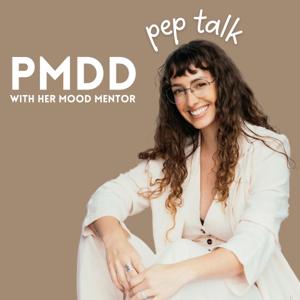


If you've ever been told to just calm down during PMDD, this episode is for you. Jes Fleming breaks down why nervous system regulation is about more than calming activities, how PMDD affects your stress response and emotional intensity, and why true healing requires dynamic range — not self-suppression.
What You'll Learn in This Episode:
• Why nervous system regulation for PMDD is not the same as being calm all the time
• How PMDD affects stress sensitivity, emotional regulation, and nervous system flexibility in the luteal phase
• The role of allopregnanolone, GABA, cortisol, and autonomic nervous system dysregulation in PMDD
• The difference between suppression and repression — and how unprocessed emotions can worsen PMDD symptoms
• Why calming activities alone may not be enough if your body needs movement, expression, boundaries, or stress-cycle completion
• How to shift from trying to fix yourself into true PMDD healing through Jes's H.E.A.L. framework
• Why symptoms and strong emotions may be communication from the body, not proof that you are broken
Resources Mentioned:
• Her Mood Mentor programs and the H.E.A.L. framework
• Carl Jung: "Wholeness is not achieved by cutting off a portion of one's being, but by integration of the contraries." / "Until you make the unconscious conscious, it will direct your life and you will call it fate."
• Dr. Jill Bolte Taylor's 90-second emotion framework
• Research on PMDD, allopregnanolone, GABA, heart rate variability, cortisol, and stress physiology
Citations Mentioned:
• Hantsoo L, Epperson CN. Allopregnanolone in Premenstrual Dysphoric Disorder (PMDD): Evidence for Dysregulated Sensitivity to GABA-A Receptor Modulating Neuroactive Steroids Across the Menstrual Cycle. Curr Psychiatry Rep. 2020;22(9):45.
• Hantsoo L, Payne JL. Towards understanding the biology of premenstrual dysphoric disorder: From genes to GABA. F1000Research. 2023;12:F1000 Faculty Rev-410.
• Landén M, Wennerblom B, Tygesen H, et al. Heart rate variability in premenstrual dysphoric disorder. Psychoneuroendocrinology. 2004;29(6):733–740.
• Hamidovic A, Davis J, Soumare F, et al. Allopregnanolone Is Associated with a Stress-Induced Reduction of Heart Rate Variability in Premenstrual Dysphoric Disorder. Psychoneuroendocrinology. 2023.
• Hamidovic A, Davis J, Soumare F, et al. Blunted Cortisol Response to Acute Psychosocial Stress in Women With Premenstrual Dysphoric Disorder. Psychoneuroendocrinology. 2024.
• Beddig T, Reinhard I, Kuehner C. Stress, mood, and cortisol during daily life in women with Premenstrual Dysphoric Disorder (PMDD). Psychoneuroendocrinology. 2019;109:104372.
• Bolte Taylor J. Popularized the 90-second emotional wave concept in My Stroke of Insight.
HMM Resources + Services
https://courses.hermoodmentor.com/pmdd-resources
_________________________________
Watch the episode on Youtube:
https://youtu.be/KRfl9fmAEAw
_________________________________
You can find Jes:
Instagram: @hermoodmentor
Youtube: @hermoodmentor
Website: https://hermoodmentor.com/
_________________________________
Looking for support, resources, or want to work with us? 👇🏻
https://hermoodmentor.com
Athena's PMDD Story: From 15 Symptomatic Days a Month to Reclaiming Her Life
Opening Hook (The "Before" State)
When Athena joined us on the podcast, she shared her journey with PMDD — a condition that had taken over nearly half of every month of her life. For one to two years, she had been experiencing severe mood swings, debilitating physical symptoms, and a creeping sense of isolation that was quietly pulling her away from the people, events, and experiences she loved most.
The Struggle (Symptoms & Challenges)
Athena's challenges included:
The Turning Point
After working with a naturopath who confirmed her estrogen and progesterone imbalances, Athena still felt stuck. She knew something deeper needed to shift. As someone who described herself as "hippie, woo woo" and drawn to alternative healing, she wasn't willing to default to birth control or antidepressants — she wanted a sustainable foundation. After hitting rock bottom in December/January, she finally reached out to Her Mood Mentor and said: "Okay. I'm worth it."
The Transformation (The "After" State)
Through the PMDD Rehab one-to-one program with Her Mood Mentor — a four-month intensive that combined nutritional therapy, Hair Tissue Mineral Analysis (HTMA), nervous system regulation practices, and mindset work — Athena experienced a profound shift. She went from spending 15 days a month in survival mode to feeling equipped, empowered, and genuinely hopeful about her hormonal future — including future life seasons like pregnancy and menopause.
In Her Own Words
Here's what Athena shared on the podcast:
👉 "Knowledge is power — education is empowerment for sure."
👉 "I feel like I became an adult, almost like a mature woman with my health. To have these tools in my toolbox is a game changer."
👉 "Speaking my needs — I can't emphasize that enough. I didn't think I would get that out of working with you, but here I am. I feel more empowered to share my needs."
👉 "It's a practice. I trust myself and I am playful, not perfect — getting rid of the people-pleasing and perfectionism tendencies and stepping into my power."
👉 "It's no longer in the hole, the dark cave. There's a light at the end of the tunnel. You might not see it now, but you will get there."
The Bigger Picture (Key Takeaway)
Athena's story shows that PMDD doesn't have to define you — or take away half your life. Through a root-cause approach that addressed minerals, nervous system regulation, cycle literacy, and self-advocacy, she found not just symptom relief, but a deeper relationship with herself, her body, and the people around her.
What This Means For You
Athena's transformation proves that PMDD doesn't have to steal the best weeks of your month, your relationships, or your sense of self. With the right approach and support, you can:
❤️ If this podcast has ever made you feel seen, less alone, or more hopeful in your healing—please take a moment to subscribe, rate, and review PMDD Pep Talk. Your words don’t just help us grow—they help someone in the depths of their cycle find this support when they need it most. Every subscribe click, rate, and review helps us reach more people who are still suffering in silence.
Listen to the episode on the PMDD Pep Talk Podcast:
___________________________________
Watch the episode on Youtube
https://youtu.be/BTTc_tj-ZyQ
You can find Jes:
Instagram: @hermoodmentor
Youtube: @hermoodmentor
Website: https://hermoodmentor.com/
_________________________________
Looking for support, resources, or want to work with us? 👇🏻
https://hermoodmentor.com
Results vary. This is one woman's experience and is not a guarantee of the results you may experience. Although there is currently no cure for PMDD, our work aims to support the reduction and improved management of symptoms over time. Our services are designed to work alongside care from appropriately licensed healthcare providers, not in place of it. Her Mood Mentor does not provide medical advice, medical treatment, or medication management.
The PMDD Warrior Trap – What Actually Works
The language we use to describe our PMDD experience matters more than you think. In this episode, Jes challenges the popular "PMDD warrior" mentality and reveals why positioning yourself at war with your body might be the very thing hindering your healing. She offers a compassionate reframe that transforms how you relate to your symptoms and ultimately supports true healing.
What You'll Learn in This Episode:
Resources Mentioned:
PMDD awareness saves lives. Your 30-second review could be the reason another woman finally finds this podcast and discovers she's not alone, she's not "crazy," and there is hope. The woman who finds us because of your review might be in her darkest moment, searching for answers just like you once did. Please take a moment to rate PMDD Pep Talk and share how this podcast has helped you.
Every review spreads awareness. Every bit of awareness has the power to save lives.
_________________________________
Watch the episode on Youtube:
https://youtu.be/vxIjPxkEglw
_________________________________
You can find Jes:
Instagram: @hermoodmentor
Youtube: @hermoodmentor
Website: https://hermoodmentor.com/
_________________________________
Looking for support, resources, or want to work with us? 👇🏻
https://hermoodmentor.com
When Emma joined us on the podcast, she shared her journey with PMDD that had shaped her life for 17 years before she could even name it. For nearly two decades, she had been dealing with debilitating mood swings, depression, and overwhelming symptoms that were affecting her work, relationships, and ability to function in daily life.
Since her teenage years, Emma experienced these cycles but dismissed them, thinking they were just part of life—until they became impossible to ignore.
Emma's challenges included:
Two full weeks of symptoms every cycle, starting at ovulation
Severe depression and mood swings that felt like "a different person"
Crushing fatigue and complete lack of motivation
Overwhelming irritability where normal daily messes felt like "the absolute end of the world"
Inability to maintain plans with friends, constantly canceling last minute
Struggling to work even a low-stress job, having to reduce hours
A constant feeling of being overwhelmed with "swirling, whirling, icky feelings" she couldn't name
Deep resentment toward her body and her cycle
Questioning her sanity and desperately searching for treatments that worked
After years of trying various treatments—SSRIs, birth control, psychiatric medications—Emma found some relief but didn't want to stay on medications long-term. She knew she wanted to have children in the future and was concerned about unknown long-term health impacts. Despite fears that she had "tried everything" and worries about extreme dietary restrictions, Emma decided to invest in an integrative approach to PMDD through Her Mood Mentor's program.
Through a personalized, self-led integrative program focused on nutrition, lifestyle, mindset work, and nervous system regulation, Emma experienced a dramatic transformation in just four months. Her symptom burden dropped by 221 points (from 513 to 292 on a comprehensive symptom assessment), and she went from two weeks of moderate-to-severe symptoms down to just 3-4 days of mild-to-moderate symptoms—with one completely symptom-free cycle.
Most remarkably, Emma was able to safely taper off birth control and lithium (medications she'd been on for three years) with zero negative side effects, and is now preparing to taper off her SSRI as well.
Here's what Emma shared on the podcast:
👉 "I feel like my world is opening up."
👉 "I'm able to do things and show up in my life."
👉 "I feel like I can look ahead at the future and see possibilities and not just be in survival mode."
👉 "I'm a lot more capable than I thought I was."
👉 "I can't believe I'm smiling at work on day two of my cycle."
Emma's story shows that PMDD recovery isn't just about symptom reduction—it's about complete life transformation. Through a collaborative, paced approach that honored her lifestyle, combined nutritional therapy, lab testing, mindset work, and nervous system regulation, she found freedom from symptoms that had controlled her life for 17 years. The work wasn't extreme or restrictive; it was personalized, compassionate, and sustainable.
Emma's transformation proves that PMDD doesn't have to define your life or limit your future. With the right integrative support, you can:
Reduce symptom duration from weeks to just days
Lower symptom severity from debilitating to manageable
Show up reliably for work, relationships, and your life
Safely reduce or eliminate medications (with medical supervision)
Build a foundation of health for future goals like pregnancy
Develop sustainable lifestyle changes without extreme restrictions
Transform your relationship with your body from resentment to compassion
Move from survival mode to seeing possibilities for your future
Looking for PMDD support?
❤️ If this podcast has ever made you feel seen, less alone, or more hopeful in your healing—please take a moment to subscribe, rate, and review PMDD Pep Talk. Your words don’t just help us grow—they help someone in the depths of their cycle find this support when they need it most. Every subscribe click, rate, and review helps us reach more people who are still suffering in silence.
_________________________________
Watch the episode on Youtube
https://youtu.be/XuuOssTfPv4
_________________________________
You can find Jes:
Instagram: @hermoodmentor
Youtube: @hermoodmentor
Website: https://hermoodmentor.com/
_________________________________
Looking for support, resources, or want to work with us? 👇🏻
https://hermoodmentor.com
Results vary. This is one woman's experience and is not a guarantee of the results you may experience. Although there is currently no cure for PMDD, our work aims to support the reduction and improved management of symptoms over time. Our services are designed to work alongside care from appropriately licensed healthcare providers, not in place of it. Her Mood Mentor does not provide medical advice, medical treatment, or medication management.
If you're only working on your PMDD when symptoms hit, you're stuck in damage control mode—and it's keeping you from real healing. In this episode, Jess breaks down the PMDD damage control cycle that traps so many women and reveals why the best time to address your hormonal mood symptoms is actually when you feel good. Discover how to shift from reactive management to proactive healing with a whole-cycle approach that actually creates lasting change.
_________________________________
• The PMDD damage control cycle and why it keeps you feeling like you're always playing catch-up in life
• Why waiting until you're symptomatic to address PMDD is the #1 mistake keeping you stuck (and what to do instead)
• The difference between PMDD whiplash, PMDD amnesia, and PMDD denial—and how they work together to sabotage your healing
• Why you can't build a foundational system while you're peak symptomatic (and when you actually can)
• The critical distinction between reduction strategies and management techniques—and when to use each one
• How the damage control cycle perpetuates shame, guilt, and negative beliefs about yourself month after month
• Why most women are losing six months of their year to PMDD symptoms and how a whole-cycle approach changes everything
• The neurochemical and nervous system shifts behind PMDD whiplash that make you feel like two different people
_________________________________
Instagram Posts
Podcast Episodes
Blog Articles
Free Resource
PMDD awareness saves lives. Your 30-second review could be the reason another woman finally finds this podcast and discovers she's not alone, she's not "crazy," and there is hope. The woman who finds us because of your review might be in her darkest moment, searching for answers just like you once did. Please take a moment to rate PMDD Pep Talk and share how this podcast has helped you.
Every review spreads awareness. Every bit of awareness has the power to save lives.
_________________________________
Watch the episode on Youtube:
https://youtu.be/mthJG4wQyHQ
_________________________________
You can find Jes:
Instagram: @hermoodmentor
Youtube: @hermoodmentor
Website: https://hermoodmentor.com/
_________________________________
Looking for support, resources, or want to work with us? 👇🏻
https://hermoodmentor.com
Discover 13 foundational, free (or low-cost) strategies that can transform your PMDD symptoms without spending a dime. Jes breaks down why these basics matter more than expensive supplements or complicated protocols, and shares practical ways to implement them even when you're struggling with worthiness or overwhelm.
• Why foundational supports are non-negotiable—even the best supplements won't work without them
• How to optimize your light relationship for better sleep, hormones, and mood regulation
• Simple hydration strategies that support cellular communication and hormone detoxification
• Sleep hygiene practices that work with your circadian rhythm
• Nutritional foundations that don't require perfection or a big budget
• How to navigate the mindset blocks that keep you from prioritizing free self-care
"You can meditate all day. You can pray all day. If you're not eating food, if you're not eating food regularly, if you're not eating to your total daily energy expenditure, if you're not eating macronutrient balanced meals, you will have symptoms."
"Just because your symptoms are so severe, it doesn't mean you need a severe intervention to match that. The cumulative effect of many small changes and many small supports can make a huge difference."
"Correcting, monitoring, and managing your relationship with light will change your life. Mic drop, end of story."
"You don't need a lobotomy. You probably don't need a surgery. You don't even potentially need invasive medications."
• Episode 5: "The Secret to Healing PMDD"
• Episode 6: "Rest versus Distraction"
• Episode 9: "What Healing PMDD Actually Looks Like"
• Episode 25: “Healing Through Subtraction for PMDD”
• Seasonal Depression and PMDD Workshop
• Her Mood Mentor blog post on Vitamin D and PMDD
• Her Mood Mentor programs and courses
_________________________________
Watch the episode on Youtube:
https://youtu.be/ZW7fVxwBNwc
_________________________________
You can find Jes:
Instagram: @hermoodmentor
Youtube: @hermoodmentor
Website: https://hermoodmentor.com/
_________________________________
Looking for support, resources, or want to work with us? 👇🏻
https://hermoodmentor.com
When Alaina first reached out, she was drowning in a cycle of worsening PMDD symptoms while juggling work stress and ADHD. What started as occasional "waves of burnout" had escalated into a predictable pattern of debilitating symptoms affecting her for more than half of each cycle.
Her Initial Challenges:
❤️🩹 Severe fatigue and brain fog
❤️🩹 Overwhelming anxiety and overstimulation
❤️🩹 Difficulty concentrating at work
❤️🩹 Digestive issues and bloating
❤️🩹 Painful cramps and headaches
❤️🩹 Emerging depressive episodes with tearfulness
"I was noticing that it's not just a few days or a week. This was something where I feel like this is affecting me more than it's not," Alaina shared. "I was watching things get worse, but I was having such a hard time getting traction on my own."
Over four transformative months in our PMDD Rehab & Nutritional Therapy Program, Alaina didn't just manage her symptoms – she reclaimed weeks of her life and discovered new levels of clarity and confidence.
Here's What Alaina Says Now:
👉 "I haven't had any totally sad days."
👉 "I'm thinking more clearly."
👉 "My baseline anxiety has definitely improved."
👉 "I'm able to sit with challenging feelings and recruit the skills and tools that I have."
👉 "I'm feeling like I'm able to take action more readily."
Alaina's story shows that even when PMDD symptoms are escalating and previous treatments have plateaued, transformation is possible. Through targeted nutritional therapy and structured support, she found relief and developed sustainable strategies for long-term management.
Her symptom transformation demonstrates that with proper support, you can:
• Break free from the cycle of worsening symptoms
• Develop clarity and confidence during challenging phases
• Reduce baseline anxiety and emotional overwhelm
• Improve sleep quality and energy levels
• Learn to manage symptoms proactively rather than reactively
• Regain control over your monthly cycle
❤️ If this podcast has ever made you feel seen, less alone, or more hopeful in your healing—please take a moment to subscribe, rate, and review PMDD Pep Talk. Your words don’t just help us grow—they help someone in the depths of their cycle find this support when they need it most. Every subscribe click, rate, and review helps us reach more people who are still suffering in silence.
_________________________________
Watch the episode on Youtube
https://youtu.be/5gxJjW0eO3E
_________________________________
You can find Jes:
Instagram: @hermoodmentor
Youtube: @hermoodmentor
Website: https://hermoodmentor.com/
_________________________________
Looking for support, resources, or want to work with us? 👇🏻
https://hermoodmentor.com
Results vary. This is one woman's experience and is not a guarantee of the results you may experience. Although there is currently no cure for PMDD, our work aims to support the reduction and improved management of symptoms over time. Our services are designed to work alongside care from appropriately licensed healthcare providers, not in place of it. Her Mood Mentor does not provide medical advice, medical treatment, or medication management.
When Jade first reached out, she was facing a heartbreaking cycle of physical and emotional symptoms that controlled her life. She shared that for over two decades, she had been preparing for and bracing against two weeks of debilitating PMDD symptoms every single month.
For 23 years, 10–14 days each cycle were overwhelmed by a 575 point symptom burden—a mix of chronic pain, mood shifts, and emotional exhaustion.
Her Initial Struggles:
The medical system offered her three options: birth control (which hadn't worked), antidepressants (which left her feeling "flat" all month), or a hysterectomy. None of it made sense. None of it addressed why this was happening.
Jade realized she was about to let PMDD ruin another relationship. Every time things got serious enough to move in together, her symptoms destroyed it. She couldn't hide the two weeks of chaos anymore. At 37, facing potentially another decade or more of this, she refused to accept that future.
Over just four months in our PMDD Program, Jade's symptom burden dropped by 314 points—from 575 to 221.
Within her first month, she had barely any symptoms. By month three, she hadn't cried once. And here's the most remarkable part: Jade did our podcast interview on day 23 of her cycle—a day when she previously would have been sobbing on the couch in pajamas with a tub of ice cream.
Here's What Jade Says Now: 👉 "I thought I was pregnant because I didn't have any symptoms. It's day 27 with nothing and I thought, 'This can't be a thing.'"
👉 "I have not cried once this month. I'm on day 23 doing this interview. I would NEVER have done this on day 23 before."
👉 "I have so much more free time because I'm not overthinking everything—I just go and do stuff now instead of spending hours in rumination spirals."
👉 "I'm not scared of my cycle anymore. I'm not actively avoiding life and scheduling everything around it."
👉 "I didn't think it could get this much better in this short of time. Even if I'd gotten a quarter of where I am now, it would've been worth it."
Jade went from 10-14 days of moderate-severe symptoms each cycle to interviewing with us on day 23 feeling completely normal. She's attending family events without needing alcohol to cope. She's making plans without checking her cycle tracker first. She's living her full life—all 30 days of it.
What Changed Everything: This wasn't about perfection or rigid restrictions. Through personalized nutrition, targeted supplementation based on her specific lab results, nervous system regulation, and shifting from "something's wrong with me" to "what's causing this?"—Jade found lasting freedom.
She didn't overhaul her entire life. She made targeted changes that fit her routine: healthier versions of the meals she was already cooking, strategic supplements for her specific deficiencies, and mindset work that broke the cycle of self-blame and rumination.
Jade's story proves that PMDD doesn't have to steal half your life, no matter how long you've been suffering.
You don't have to choose between antidepressants that flatten you all month or a hysterectomy. You don't have to keep canceling plans, ending relationships during luteal, or living in fear of your own cycle. You don't have to spend another 20 years like this.
With the right support, you can:
Jade went from 10–14 days of moderate to severe symptoms to just 1–2 days of mild to moderate symptoms—a 314-point reduction in symptom burden (from 575 to 261).
Jade didn't just reduce her symptoms—she got her life back. And after 20 years of suffering, she did it in four months.
🎧 Listen to Jade's full episode to hear how she went from two decades of PMDD chaos to symptom-free cycles—and what she wishes she'd known sooner.
_________________________________
❤️ If this podcast has ever made you feel seen, less alone, or more hopeful in your healing—please take a moment to subscribe, rate, and review PMDD Pep Talk. Your words don’t just help us grow—they help someone in the depths of their cycle find this support when they need it most. Every subscribe click, rate, and review helps us reach more people who are still suffering in silence.
_________________________________
Watch the episode on Youtube
https://youtu.be/0Ar1W71La5s
_________________________________
You can find Jes:
Instagram: @hermoodmentor
Youtube: @hermoodmentor
Website: https://hermoodmentor.com/
_________________________________
Looking for support, resources, or want to work with us? 👇🏻
https://hermoodmentor.com
Results vary. This is one woman's experience and is not a guarantee of the results you may experience. Although there is currently no cure for PMDD, our work aims to support the reduction and improved management of symptoms over time. Our services are designed to work alongside care from appropriately licensed healthcare providers, not in place of it. Her Mood Mentor does not provide medical advice, medical treatment, or medication management.
What if managing your PMDD symptoms isn't about adding more to your plate—but about removing what's making things worse? In this eye-opening episode, Jes introduces the powerful concept of "healing through subtraction" and reveals how strategically removing certain foods, habits, relationships, and environmental factors can dramatically improve your PMDD symptoms. If you've felt stuck despite trying everything, this fresh perspective on healing might be exactly what you need to finally see real progress.
• Why healing through subtraction is often more powerful than constantly adding new treatments and how this overlooked approach can break through healing plateaus
• The specific dietary subtractions that support hormone balance including alcohol, caffeine, refined carbohydrates, artificial sweeteners, and inflammatory oils—and exactly why each one impacts your PMDD symptoms
• How toxic relationships, obligation clutter, and people-pleasing drain your capacity to manage symptoms and practical ways to create boundaries during your luteal phase
• Environmental and digital factors that overstimulate your nervous system from doom scrolling and news consumption to physical clutter and constant background noise
• A simple framework for deciding what to subtract first by identifying what's actively harming you versus what's just draining your energy
• Why symptom mapping is essential when making subtractions so you can actually see what's working instead of telling yourself "nothing helps"
"Healing through subtraction is not about perfection or deprivation. It's about reclaiming your energy, reclaiming your moods, reclaiming your hormone balance, reclaiming your sense of self."
"PMDD isn't just about what you add. Sometimes the most powerful medicine is removing what doesn't serve you. Your body has incredible capacity to rebalance when given the chance, and subtraction creates space for true healing."
"We're always thinking about what do I need to do? What do I need to add? What needs to change? It's always in the lens of adding more, doing more things, and sometimes that's needed. But healing through subtraction is not discussed enough."
[03:05] - Introduction to healing through subtraction and why this approach is rarely discussed in PMDD treatment
[06:56] - Dietary subtractions: How alcohol disrupts estrogen metabolism and liver detoxification
[08:59] - Why caffeine increases cortisol and disrupts the HPA axis (and how to transition to water-processed decaf)
[11:22] - The impact of highly processed foods on inflammation, gut health, and the estrobolome
[14:43] - Relational and social subtractions: Evaluating toxic relationships and work demands that worsen symptoms
[18:32] - Mental and environmental load: Addressing physical clutter, digital chaos, and obligation overload
[21:03] - The controversial but life-changing decision to subtract news media consumption
[25:05] - Lifestyle subtractions: Over-exercise, sleep disruptors, and the people-pleasing trap
[27:59] - Framework for prioritizing subtractions: What's actively harming you vs. what's draining your energy
• Her Mood Mentor Symptom Mapping Kit - Track your symptoms as you make subtractions to see what's actually working:
• Episode 11: The "I've Tried Everything for PMDD" Mindset - Reframing the damaging belief that nothing helps
• Episode 6: Rest vs. Distraction - Understanding the difference between true rest and doom scrolling
• Her Mood Mentor One-to-One Program - Where values work begins after symptom mapping to align your life with what matters most
_________________________________
Ready to start healing through subtraction? Begin by choosing just one area from this episode—whether it's swapping to water-processed decaf, reducing screen time before bed, or setting boundaries with draining relationships. Map your symptoms for 2-3 cycles to see the impact, and share your subtraction journey with Jes via DM. Remember: sometimes the most powerful healing happens when you remove what doesn't serve you.
_________________________________
PMDD awareness saves lives. Your 30-second review could be the reason another woman finally finds this podcast and discovers she's not alone, she's not "crazy," and there is hope. The woman who finds us because of your review might be in her darkest moment, searching for answers just like you once did. Please take a moment to rate PMDD Pep Talk and share how this podcast has helped you.
Every review spreads awareness. Every bit of awareness has the power to save lives.
_________________________________
Watch the episode on Youtube
_________________________________
You can find Jes:
Instagram: @hermoodmentor
Youtube: @hermoodmentor
Website: https://hermoodmentor.com/
Website: https://hermoodmentor.com/
_________________________________
Looking for support, resources, or want to work with us? 👇🏻
https://hermoodmentor.com
In this solo episode of PMDD Pep Talk, Jes Fleming—Board-Certified Nutritional Therapist and PMDD Coach—shares how to confidently advocate for yourself in medical settings when seeking help for PMDD (Premenstrual Dysphoric Disorder) or PMS-related mood symptoms. You’ll learn what to bring to your appointment, how to talk to your provider, and how to protect yourself from medical gaslighting so you can finally feel heard, validated, and supported.
Whether you’re early in your PMDD journey or trying to find a doctor who takes you seriously, this episode gives you the tools and mindset to walk into your next appointment feeling prepared and empowered.
• Why it takes women an average of 20 years to get an accurate PMDD diagnosis—and how to shorten that timeline
• How to collect and present your PMDD symptom data for better medical support
• The essential questions to ask your doctor or healthcare provider
• A simple advocacy phrase that can shift power dynamics in your favor
• How to recognize red flags and when to walk away from dismissive providers
• Post-appointment steps that keep your healing on track
> “You are the steward of your health—and you’ll always be the best steward of your health.”
> “If a provider refuses testing or treatment, ask them to document in your chart that you requested it and it was denied.”
> “Treat your appointment like an interview—you’re hiring them as much as they’re treating you.”
• Free Symptom Mapping Kit– Track your cyclical symptoms and patterns for your provider
• PMDD Diagnostic Criteria (DSM-5) – Print and bring to your appointment
• IAPMD (International Association for Premenstrual Disorders) – Educational handouts on PMDD
• Episode 11 – The “I’ve Tried Everything for PMDD” Mindset
• Episode 21 – Shocking PMDD Statistics No One Talks About (Plus My Dad’s Reaction)
• Her Mood Mentor One-to-One Comprehensive Program – Functional lab testing, nutritional therapy, and personalized support
Chan K, Rubtsova AA, Clark CJ. Exploring diagnosis and treatment of premenstrual dysphoric disorder in the U.S. healthcare system: a qualitative investigation. BMC Womens Health. 2023 May 17;23(1):272. doi: 10.1186/s12905-023-02334-y. PMID: 37198676; PMCID: PMC10193729.
Osborn E, Wittkowski A, Brooks J, Briggs PE, O'Brien PMS. Women's experiences of receiving a diagnosis of premenstrual dysphoric disorder: a qualitative investigation. BMC Womens Health. 2020 Oct 28;20(1):242. doi: 10.1186/s12905-020-01100-8. PMID: 33115437; PMCID: PMC7594422.
PMDD, Premenstrual Dysphoric Disorder, PMS, menstrual health, hormone imbalance, women’s health, PMDD podcast, PMDD diagnosis, PMDD treatment, patient advocacy, medical gaslighting, holistic health, Her Mood Mentor, Jess Fleming, PMDD coach, mental health for women, cycle awareness, hormone health, PMS mood symptoms
Looking for support, resources, or want to work with us? 👇🏻
https://hermoodmentor.com
From the publisher's feed

56,384 Listeners

24,521 Listeners

6,601 Listeners

1,224 Listeners
251 Listeners
838 Listeners
43 Listeners

15,403 Listeners

850 Listeners
4,137 Listeners

18,833 Listeners
427 Listeners

12,498 Listeners

1,213 Listeners