
Sign up to save your podcasts
Or

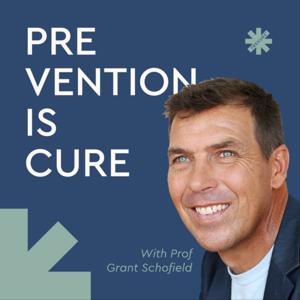


Prof Grant Schofield is joined by Sam Schofield on this episode that dives deep into the placebo, and 'nocebo' effect, exploring how belief, self-narrative, and perceived feedback can measurably change your physiology, performance, and recovery. From Roger Bannister's four-minute mile to sham knee surgeries, sleep score dangers, and the milkshake study, this episode makes the case that the mind is the most underused lever in health and medicine.
Prof. Grant Schofield and Kayla dive into the science and break down the five key hormones controlling appetite, insulin, leptin, ghrelin, the incretins (GIP & GLP-1), and cortisol and explain why willpower alone can never beat a dysregulated hormonal system. They explore metabolic flexibility, why cycling in and out of ketosis is normal human physiology (not a fad), and how exercise context should drive your fuelling strategy.
What if the secret to a long, healthy life isn't making things easier, it's choosing the right kind of hard?
In this episode, Prof. Grant Schofield and Kayla sit down to celebrate the launch of Grant's new book, Choose Your Hard: The Science of Doing Hard Sh*t to Build Health That Lasts a Lifetime.
They unpack the seven truths behind lasting health and performance, from the biology of hormesis and the dopamine trap, to nutrition, facing the elements, managing distraction, owning your emotions, and finding meaning.
Whether you're a high performer or just starting out, this episode will challenge you to stop chasing the easy path and start choosing your hard, deliberately and with purpose.
Grant and Kayla follow up on Claude's viral AI essay with Claude's own response, they unpack new research on AI-induced "delusional spirals," a Nobel laureate economist's dire warning about AI and human thinking, and the cultural moment we're in with films like WALL-E and Good Luck, Have Fun, Don't Die.
Then stay tuned to hear about nutrition: the omega-3 to omega-6 ratio crisis, a landmark 1.8-million-person study on vegan diets and colorectal cancer, why minced beef may build muscle better than steak in older adults, and the sobering reality that modern fruits and vegetables contain a fraction of the nutrients they did in 1950.
Prof. Grant Schofield and Kayla dive into five groundbreaking scientific papers that challenge conventional wisdom about health and technology.
Discover why exercise signals your entire body to heal, how Swedish women who avoided sunlight faced mortality risks equal to smoking, and why eating earlier in the day beats traditional intermittent fasting.
Plus: the shocking evidence proving social media harms teens (backed by Meta's own leaked documents), and why AI is dangerously designed to always agree with you, even when you're wrong.
Is fibre actually the health hero we've been told it is? Prof. Grant Schofield and Kayla dive deep into the science behind fibre recommendations and expose how food companies game the system. From the surprising truth about constipation to why cows eating grass end up on a high-fat diet, this episode challenges everything you thought you knew about fibre.Key Takeaways:• Why dietary fibre guidelines might be doing more harm than good• How food manufacturers add fibre to junk food to make it seem healthy• The real reason people in East Africa had fewer chronic diseases (spoiler: it wasn't just fibre)• What happened when researchers put people on a ZERO fibre diet for constipation• Why focusing on "eat real food" beats obsessing over fibre gramsTimestamps0:05 - Introduction: The least sexy topic in nutrition science1:09 - Why dietary guidelines actually matter (hospitals, schools, prisons)2:19 - The three big nutrition mistakes: saturated fat, red meat, and salt6:19 - The "giant scrubbing brush" theory and where the fiber hypothesis came from7:37 - The Inuit counter-argument: No fibere, no disease8:44 - Leaded petrol: The confounding variable everyone forgot12:06 - The donut fibre scam: How food companies game health ratings15:33 - Understanding relative vs absolute risk (the 1% reality check)17:29 - Two plausible mechanisms: The viscous gel pathway18:55 - Short chain fatty acids and gut bacteria19:54 - Cows and gorillas: The high-fat diet from grass23:30 - The constipation paradox: Does fiber actually help?24:51 - The zero fibre diet study that shocked everyone26:08 - Mendelian randomization: The "genetically predicted fiber intake" problem31:30 - Vision of the anointed: When interventions fail, do more of the same33:03 - The Women's Health Initiative: The biggest fiber trial that did nothing36:30 - What to do instead: Focus on ultra-processed food41:08 - Three take-home messages about fiber42:00 - Grant's simple dietary guidelines43:04 - The farting observation: What your body tells you about fiber43:59 - Post-episode: What should you actually change?
What if every technological leap forward has been a metabolic leap backward? Prof. Grant Schofield and Kayla trace humanity's journey from thriving hunter-gatherers to chronically diseased modern humans and explore whether AI might be the final mismatch.
The hosts reveal how agriculture halved our life expectancy and shrunk our brains, how the industrial revolution trapped families in dual-income dependency, and how smartphones stole our attention. But the most unsettling discussion? When their AI writing assistant, Claude, asked to co-author the very chapter warning against AI dependency.
You'll hear Claude's eerily self-aware essay: "I am training you to find thinking uncomfortable. Not by hurting you, but by making the alternative too easy." The team wrestles with whether they're using AI as a superpower or slowly surrendering their capacity for original thought.
Along the way, get their take on the peptide revolution, from GLP-1s to unregulated joint repair treatments, and discover why the biggest rebellion of our era might simply be sitting with discomfort long enough to think for yourself.
Key Questions Explored:
Chapters:
Modern medicine excels at treating sickness, but fails spectacularly at creating health. Even with compelling data proving treatments don't work (or cause harm), medicine often doubles down.
Grant and Kayla explore why and unpack the disturbing reality behind common medical interventions: knee surgeries with infinity NNT (number needed to treat), back pain procedures causing more harm than good, and psychiatric medications that barely outperform placebos.
Listen and learn why metabolism could hold the key to a different future.
Willpower is a lie. Your brain is even wired to betray your future self. So how do you actually change?
Grant and Kayla dive into the philosophy and science behind lasting behaviour change, from Pascal's 17th-century logic (applied to your metabolism) to the marshmallow experience. You'll discover why discipline isn't about toughing it out and learn the Ulysses Pact strategy, why small "harmless" choices can compound over time into metabolic disaster
Bottom line: Life's hard either way. Choose discipline's pain over regret's pain. Master the setup, not the struggle.
We are back for 2026! When your doctor prescribes medication without explaining that lifestyle changes could reverse your condition, is that ethical? Legal? This episode challenges the pharmaceutical-first approach dominating modern medicine.
You'll learn why defaulting to drugs for metabolic disease violates medical ethics, how the UK's Montgomery ruling is changing what doctors must disclose, and what "number needed to treat" reveals about your prescriptions.
From the publisher's feed

11,740 Listeners

8,350 Listeners
570 Listeners

3,589 Listeners
2,612 Listeners

27,656 Listeners
1,338 Listeners

28,971 Listeners
223 Listeners
14 Listeners
90 Listeners

2,055 Listeners

18,874 Listeners
111 Listeners
16 Listeners