
Sign up to save your podcasts
Or

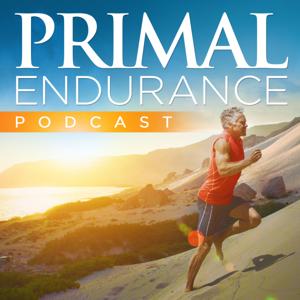


Host Brad Kearns talks to old friend Tyler Curley, one of the famous caveman Curley twins who have had a legendary role at PrimalCon over the years. Tyler is a huge devotee of primal living and has pushed the edges of peak performance in ultra distance running, CrossFit, and power lifting. Tyler offers some interesting commentary about how his disparate athletic goals have made him an all around primal athlete. He mentions possible benefits to endurance performance from strength training, and how to do it correctly instead of getting exhausted and injured.
Tyler is a world traveler who has done everything from cutting trails in high mountain camps for the forest service, to leading tourists on mountain bike adventures in Turkey, to bolting civilized life for extended excursions like surfing in Costa Rica, trekking in Thailand, or studying art in Europe with MacKenzie.
Spend a little time with a real primal guy and get the straight scoop from Tyler Curley.
Host Brad Kearns speaks with the fastest golfer in the world, Rob Hogan, who’s from Galway, Ireland. Rob is the 2013 Speedgolf World Champion and 2014 runner-up. He covers a championship caliber course in under 40 minutes while shooting in the 70s! Rob is a professional athlete dedicated full-time to Speedgolf and running at an elite level. (01:00)
Rob details the fascinating flow-state elements of this sport that make it a truly Primal activity. Indeed, Speedgolf is a far cry from the time consuming, over-analytical, non-exertive game (which uses carts for transportation) that most are familiar with. (06:20)
Rob tells an engaging story about how he had powerful visions of a Fanta orange soda during a 17-mile training run, which he endured without added calories or hydration. Because he pushed on despite “bonking” (depleting blood glucose levels), he possibly rewired his appetite hormone, called ghrelin, which led his body to prefer fat and ketones instead of glucose. Remarkably, Rob reports that his sugar cravings ceased following that episode. (11:50)
Dr. Cate Shanahan weighs in with some commentary about the scientific aspects of this incredible anecdote from Rob’s run. (17.10)
Today, Rob’s dietary patterns are not strictly defined, but he avoids sugar and chooses his carbs carefully, emphasizing potatoes and sweet potatoes like a good Irishman. (18:00)
Brad asks, “How do we choose which carbohydrates to keep in our diet?” (21:30)
Rob talks about his daily training regimen for golf and long distance running. He says that a slow paced run is the best way to train in all sports that require running and stopping. (22:26)
Check out the interesting sport of Speedgolf by watching Rob do his thing on YouTube. You can also follow Rob on Twitter.
Brad Kearns talks to British Olympic 400 meter runner Andrew Steele of DNAFit.com. DNAFit offers cutting edge genetic testing to identify your athletic and dietary attributes, enabling you to develop a strategy honoring your genetic particulars.
Andrew is the athletics specialist for the operation and is still an active professional runner pointing for the 2016 Olympic Games. He shares his own remarkable story of reaching the highest level of world performance. This British national champion ran a 44.96 and made the Olympic semi-finals in Beijing. Unfortunately he succombed to serious injuries and illness in preparation for the London Olympics in 2012. By chance, he was exposed to DNAFit's genetic testing and his information revealed exactly how his training methods had failed him. In a quest to improve another half-second and contest for an Olympic medal, he had transitioned from what his body naturally thrived on to an overly stressful program that caused an Achilles blowout and an 18-month battle with mono.
The company is stacked with PhD's in biochemistry, molecular genetics, and nutrigenomics, as well as fellow Olympian Craig Pickering, a Summer Games 100-meter runner and Winter Games bobsledder for the UK. This stuff is the real deal! The algorithms that calculate your results are based on highly respected scientific studies. Your DNA Fit test is a road map to help you choose the optimal training, dietary and lifestyle habits for peak performance. Learn more at DNAFit.com and enjoy the show!
Host Brad Kearns welcomes Tawnee Prazak to discuss endurance training, racing, and coaching. Tawnee is the host of the popular Endurance Planet podcast and is a personal coach to triathletes and distance runners. Tawnee comments on many of the hot topics in the endurance scene today, including:
Mark Sisson follows up his essay reading last week with an engaging discussion with host Brad Kearns about the dangers of chronic cardio, and some tips to help avoid the drawbacks of chronic exercise patterns. Brad and Mark discuss numerous real-life case studies of elite athletes in endurance sports such as ironman triathlon and long distance running, who have suffered serious heart problems. Mark and Brad mention the tragic deaths of multisport athlete Steve Larsen at age 39 (heart attack while running), and Ryan Shay (heart attack while racing the US Olympic trials marathon), along with an assortment of other high profile athletes and their ordeals.
Mark presents a compelling solution in essay form, pulling highlights from some popular follow-up blog posts on the subject. Mark mentions eating Primally, downscaling the "filler" workouts that happen between challenging "breakthrough" sessions, and realizing that interval and sprint workouts can deliver a training effect superior to long-duration workouts, while also alleviating the risks of drifting into a chronic pattern. For a good takeaway sound bite, Mark reiterates a message from a popular post about burning a total of only around 4,000 calories per week during structured exercise sessions. This is a general rule of thumb that correlates with an impressive assortment of different types of workouts that develop broad-based functional fitness, and helps protect against the excesses of chronic exercise.
Mark Sisson tries something new with this podcast episode, as he reads an essay based on one of his most popular posts ever on MarksDailyApple.com: “A Case Against Cardio.” The original post, published in June 2007, helped shed light on the concept that extreme endurance training can actually compromise health and increase disease risk. Mark published several follow up posts over the years on the topic of chronic exercise and the ways to avoid the stress and damage caused when exercise patterns drift away from optimal stress/rest balance and into the extreme category.
Mark’s essay covers the original landmark post, along with assorted commentary from follow up posts. For devoted fitness enthusiasts with passions for Crossfit, marathons, triathlons, heavy gym class participation, or even high-energy weekend warriors who are balancing exercise goals with hectic daily life, this is a very important podcast to absorb and ponder carefully how your own exercise and stress management patterns are looking these days.
Next week, Mark will continue the theme with a Chronic Cardio Part 2 podcast where he and host Brad Kearns talk about some of the real-life cases of elite athletes being stricken with serious heart problems, some of the science behind what happens to the body when it’s pushed too hard with insufficient rest, and how you can avoid these negative consequences.
Brad Kearns joins popular guest Andrew MacNaughton, founder and head coach of TheAthletesPotential.com. On his third podcast appearance, he does not disappoint, and offers an assortment of memorable tips and insights for how to train in a healthy, balanced manner.
Andrew describes how The Athletes Potential approach differs from conventional cookie cutter coaching based on workout programming and how he prefers to focus on total health and optimal lifestyle with his clients. He discusses his focus on how it’s possible to be too motivated and too driven to succeed, when patience is preferred.
Andrew and Brad agree that a major mistake endurance athletes make is to go too moderate too often. Consequently, when it’s time to actually go hard, people perform poorly because they have no reserve and insufficient fitness.
The two talk about how to overcome the excessive, obsessive training regimens that overrun the endurance world by focusing on performing well as a form of fun. He talks about his early career successes and encourages athletes to approach the sport in the right way: with an eye toward peak racing performance instead of filling logbooks, downscaling goal event distances to sync with life responsibilities, and trying to go fast instead of just surviving.
He also details a step-by-step plan to essentially take over the sport, but the microphone malfunctioned so his plans remain top secret…until perhaps the next show!
Host Brad Kearns talks with Gordo Byrn, ultra-endurance athlete, coach, and prolific writer who cranks out a current series of incredibly insightful blog posts. On his blog, he covers the prominent topics in his amazing life’s journey while emphasizing Fitness, Family & Finances. After a decade in a highly intense and successful career as a partner in a private equity firm, Gordo walked away from a seat at the “Big Boy's Table” to pursue his calling as an endurance athlete.
Soon after his arrival onto the ultra scene, Gordo established himself as a world champion competitor, writer, popular coach, and performer of mighty endurance feats with the likes of sidekick-in-suffering Scott "The Terminator" Molina. Gordo's Ultraman World Champion title was earned in a 3-day competition consisting of a 10k swim, 90-mile bike ride on day one, 173-mile bike ride on day two, and 52-mile run on day three. He also took second at Ironman Canada at 8:29 and wrote the bestselling book, Going Long (with Joe Friel), considered by many to be the most comprehensive guide to preparing for Ironman distance events.
Gordo goes all-in with everything he does, and today he has settled into family life in Boulder, Colorado with his wife Monica and their three young children. He writes over 100 brief and extremely thoughtful posts on his blog every year, which you can visit at coachgordo.wordpress.com. Or, you can follow him on Twitter @gordo_68. Whoever you are, and whatever your goals, Gordo's insights will inspire you and get you thinking about the big picture.
In this episode, Mark Sisson has a discussion with Dr. Timothy Noakes of South Africa, who is an author and well-known expert in exercise physiology and human performance. As a physician, former longtime marathon runner, and co-founder of the Sports Science Institute of South Africa, Dr. Noakes has spearheaded efforts to advocate a low carb/high fat diet despite opposition in the mainstream medical community.
Host Brad Kearns talks to legendary old school pro triathlete Andrew MacNaughton. Andrew, a Canadian, was based in Los Angeles during his career on the circuit from 1986-1993. He and Kearns were training partners who both burst onto the scene in the late 1980s to compete at the highest level from seemingly nowhere. Andrew kicked off his 1987 season with seven consecutive victories, including taking down reigning Triathlete of the Year, Mike Pigg.
Known for his cycling prowess, many historians designate Andrew as arguably the finest pure climber the sport of triathlon has ever seen. Andrew amassed leads of over 10 minutes off the bike at Wildflower on a couple of occasions, led the brutally hilly 75-mile Nice World Championships bike ride by 7 minutes in T2, and torched many other bike courses—especially hilly ones—all over the globe.
After his career, Andrew became a sought-after coach with a unique, eminently sensible, and highly practical approach to the sport. Never one to mince words, Andrew is an extremely interesting interview with numerous memorable insights offered up in this show. He has agreed to be a regular guest on the Primal Endurance podcast.
In this episode, Andrew and Brad reminisce about the old days and the many changes, including the high tech influences, that have come to the sport over the years. They also talk a bit about Tim Noakes’ Central Governor Theory—how the brain is actually the ultimate limiter of performance rather than the muscles. Enjoy the show!
From the publisher's feed

16,039 Listeners

1,163 Listeners

7,182 Listeners

4,972 Listeners

11,754 Listeners
12,111 Listeners
1,344 Listeners

8,301 Listeners
1,558 Listeners

4,070 Listeners

4,863 Listeners

9,155 Listeners

7,935 Listeners

29,171 Listeners

2,049 Listeners