
Sign up to save your podcasts
Or

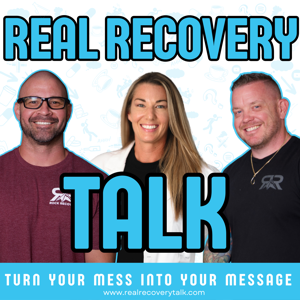


If you or a loved one have tried a 12-Step program like Alcoholics Anonymous or Narcotics Anonymous and weren't successful this episode is for you.
Find out what works and what doesn't work in the typical 12-step recovery program.
Our guest, Ron, will also teach you what it takes to conduct an intervention to get someone you love into treatment for their alcohol or substance abuse issues.
"There are two kinds of people in this world: people in recovery who think they're not and people in recovery who think they are."
Tullian Tchividjian
Today, I'll be talking with Tullian Tchividjian, a pastor and active in the addiction community that Ben and I have gotten to know very well. He has come to Rock Recovery Center to share his experience and strength with our clients. Tullian is a pastor for The Sanctuary, a church in Jupiter, Florida.
Tullian grew up in a laid-back Christian home that was supportive and friendly. In the middle of seven children, he always had a family at hand. At the age of 16, Tullian started to dabble in drugs and alcohol. His parents gave him the choice of giving up drugs and alcohol or leaving home. Tullian decided to live life on his own.
First, he enjoyed his newfound freedom. Then, at age 21, he realized "there's got to be more to life than what I'm experiencing." With his parents laying a good foundation, Tullian realized he needed to go back to God, similar to the Prodigal Son story in the Bible. "I was so taken by God's amazing grace and his unconditional love in coming after a train wreck like me that I wanted to spend the rest of my life telling the world about this God."
At the age of 41, his entire world came crashing in with a divorce, losing friends, and book deals. "Dealing with the guilt, shame, regret, and loss of all of this and beginning my life of recovery from this ordeal" felt to Tullian as if he was in recovery and dealing with many of the same feelings although he hadn't been an addict.
His second wife, Stacey, came into his life and was an active part of recovering his life. At this point, non-Christians were the people who helped him feel "less alone," which resulted in Tullian having no interest in leading a church as a pastor again. His belief is that we all have a negative connection to something in this world and that we are all in constant recovery to reach the next level of our own humanity.
Listen to his amazing story of how he came to transform and reinvent himself, his new congregation and his message of Christianity for everyone.
Bio
Tullian is a south Florida native. The middle of seven children, he dropped out of high school and got kicked out of his house at 16 years old. After a few years of running from God, God captured him and gave him a burning desire to reach a broken world with God's boundless grace. He eventually graduated from Columbia International University, where he earned a degree in philosophy, and Reformed Theological Seminary in Orlando, where he earned his Master of Divinity degree.
At Rock Recovery Center, we take a humanistic approach to recovery, teaching our clients how to live independently in a sober world. We care about the success and safety of each and every one of our clients from the moment they step into our center to the future of their well-being.
Check out my new website where you can download any episode right from my site along with other useful information for those in recovery.
Show Notes:
Episode Links and Resources
Alex Uslar is the manager of the Hybrid Gym and the Director of Operations for the online company Hybrid Performance Method. Alex is a powerlifting, weight lifting, and crossfit coach. The Hybrid Performance Method is a virtual gym that provides accessible, affordable, and effective online workout programs to athletes of all skill and experience levels.
In this episode, we talk about Alex's journey and how he used nutrition and working out to stay sober. Like many addicts, Alex had a rough start and turned to alcohol and drugs. Unlike many, he discovered what he wanted to do at a young age. He was then able to harness that desire and use it as fuel for sobriety. We talk about his journey and how he was able to turn his experience into a positive.
Show Notes
Links and Resources:
Today, I'll be talking about how to handle talking to your loved one to find out if they have a problem with addiction. Parents can have denial about their children's addiction, and family members may not recognize signs of addiction. Find out how you can recognize the signs of addiction and what language to use in the delicate conversation of talking to your loved one who may be addicted to drugs and alcohol.
How we frame our message in the conversation is important, such as, "I want to allow you to get help." Be patient and don't demand that they reach out for help. It is a privilege to be able to have the resources to obtain assistance to become clean. However, many times the addict doesn't want to become clean and sober, even if they can participate in a rehab center.
Be tactful when approaching your loved one. Make sure to have guidance on how to have this conversation. Create an open conversation to not push your child or loved one away from moving them towards recovery.
Also, make sure to have options that you have vetted put into place before you speak with your loved one. If they agree to be treated, you want to keep that momentum going and have options already in place to offer to them. The next step should be readily available, and they should be ready to go within 24 hours of agreeing to treatment.
If they refuse, use leverage points to make them uncomfortable and want to go. For example, if you provide a car, home, food, cell phone, or other necessity, take it away until they decide to recover. When you provide these things for them, it is easier for them to use their cash to buy drugs or alcohol.
At Rock Recovery Center, we take a humanistic approach to recovery, teaching our clients how to live independently in a sober world. We care about the success and safety of each and every one of our clients from the moment they step into our center to the future of their well-being.
Check out my new website where you can download any episode right from my site along with other useful information for those in recovery.
Show Notes:
Episode Links and Resources
Ben and I talk to Sean, who works for Behave and Detox here in South Florida in today's episode. He is here to share his story of addiction and his recovery process. Sean shares what to look for in a detox center and details about the detox process.
Born in the Bronx, Sean moved to Brooklyn with his mom when his parents separated. Brooklyn was a tough place filled with violent crime, drugs, and alcohol - similar to his household. Today, his father has over 30 years of sobriety, and Sean follows in his footsteps.
His mother was physically violent with him from an early age. "What I got as corporal punishment back then is considered child abuse now." He didn't get into drugs or selling drugs because he was too afraid of his mother beating him.
At 12, Sean developed addictive behaviors as drugs and alcohol were easy to hold in his town. "That was when crack had first come out, and I rarely went to school in the 8th grade. He was offered his first drug in junior high during 6th grade. "When I really got in trouble in the neighborhood, my mother decided to take me out of there." He and his mother moved to Florida for a better life when he was 14.
Once in Florida, he started doing drugs and alcohol. Every summer, he would visit his family in New York without rules or boundaries. An addict at 18, he had to change high schools five times before receiving his diploma. His mother wanted him to go to community college. "I said, save your money, I'm going to a party. That's what I wanted to do because that's all my friends did."
Getting into the plumbing industry at the age of 22, he quickly spent his money on drugs and alcohol. As per tradition, apprentices in the union didn't pay for alcohol at the bar. For five years, he never paid for a bar tab. "That was the deal, Thursday at lunch we'd cash our paychecks, we'd go to the bar, and I'd drink for free. Then I'd go home and have my own party."
Listen in to find out why Sean was constantly drinking and drugging, how he made excuses for not going to rehab and the events that led him to check in to rehab for the first time at the age of 33.
At Rock Recovery Center, we take a humanistic approach to recovery, teaching our clients how to live independently in a sober world. We care about the success and safety of each and every one of our clients from the moment they step into our center to the future of their well-being.
Check out my new website where you can download any episode right from my site along with other useful information for those in recovery.
Show Notes:
Episode Links and Resources
In today's episode, I talk to Jeremy about his story of addiction. He has decided to be a guest today to inspire others to also start their journey to sobriety. This is Jeremy's eighth attempt at sobriety and learning to live a clean life.
Jeremy is now medically retired from the army at age 39 as a result of PTSD. He served our nation for nine years, starting at age 23.
Brought up in Concord, North Carolina, Jeremy was a household child who taught respect and manners. He grew up with two siblings, an older brother, and a younger sister. "My childhood was really great. I was involved in baseball, football, and dirt bike racing." He remembers his friends not having the same solid family foundation, so his parents would take them under their wing and support his friends.
At the age of five, however, Jeremy was sexually molested by a member of his church. He wasn't sure how to handle this emotional trauma. As a result, his teen years were an emotional turmoil as his previous trauma bubbled to the surface. His doctors prescribed him anti-anxiety, antidepressants, and sleep medications. "It progressed from there, I just started numbing myself out. Even at that young of an age, I would abuse benzos." He quickly found out that he could "reach for a substance for comfort" early in his life.
"About 16 years old, I started drinking with my girlfriend and drinking with friends." From this teen experience, he evolved to keg parties with high school kids. At this point, he also experimented with cocaine. At 18, a friend introduced him to oxycontin. He soon realized this type of drug took away his social awkwardness and made him feel more comfortable around people.
Jeremy went back and forth with his addiction until, at age 20, he went to a methadone clinic for a year. From this point, he decided to get clean on his own. At age 23, he talked to an army recruiter as he liked the aspect of military life, and "I knew that's what I wanted to do once I got sober."
Listen in to find out why Jeremy's growth was stagnant on methadone treatment, how he became addicted again through his military experience, and why Jeremy believes in healing physically and spiritually.
At Rock Recovery Center, we take a humanistic approach to recovery, teaching our clients how to live independently in a sober world. We care about the success and safety of each and every one of our clients from the moment they step into our center to the future of their well-being.
Check out my new website where you can download any episode right from my site along with other useful information for those in recovery.
Show Notes:
Episode Links and Resources
In today's episode, Ben and I talk to Kat, who shares her experiences, the strength she found in her recovery, and the hope she has for her future. Kat's home is in Louisiana, and she is a current resident at Rock Recovery Center. At 32, Kat's second attempt at recovery, with her previous attempt at a different location.
Kat started using at the age of 15 and quickly chose heroin as her drug of choice. Much of her drug use has been with family and friends, such as her mother and younger sister. Her mother denies that she is addicted, however; she supports Kat in her journey to become free of drug use.
Drugs are a normalized part of her family life. In her 17 years of addiction, she has experienced the same detox treatment center ten times, and one other recovery center in addition to her stay here at Rock Recovery Center.
If you or your loved one has been to numerous treatment centers, and you are wondering why you can't come clean of your addiction, many times, it's the person's mindset that is preventing them from coming clean of their dependency. To successfully move through treatment, you or your loved one needs to be there because you want to be free of your habit.
After being arrested and thrown in jail, Kat came to the realization that she would either be spending a lot of time in jail unless she could free herself of drugs. She understood, "I would get my kids back, I would get my family back, I'll get everything I want back if I put my mind to it and do it!"
Parents and families ask us, "when do we throw in the towel on people and give up," and the fact is that we never give up to get an addict free of their habit. We consistently reach out to potential clients to see when they are ready to join others in their journey to freedom and a better life.
Listen in to find out how the Rock Recovery Center has surpassed Kat's expectations, the benefits of treatment at Rock, and how her support system has been key to Kat's recovery.
At Rock Recovery Center, we take a humanistic approach to recovery, teaching our clients how to live independently in a sober world. We care about the success and safety of each and every one of our clients from the moment they step into our center to the future of their well-being.
Check out my new website where you can download any episode right from my site along with other useful information for those in recovery.
Show Notes:
Episode Links and Resources
In today's episode, Ben and I talk with Vince, a 25-year-old recovering addict from Philadelphia. He stole a bottle of vodka and drank the entire bottle in sixth grade. In the summer of his freshman year of high school, Vince started smoking pot. Cocaine became a weekend sports celebration during his junior year of high school. Vince became an addict after his team coach gave him a prescription narcotic drug in his second college year.
Vince was involved in sports as early as he could remember. His family consisted of three sisters, one of the older and two of them younger than him. Both of his parents were supportive of him and good, hard-working people. "Growing up, I was instilled with morals and values." He was brought up to respect elders, women, and to have good social manners.
"I remember going to this fight in third grade. Everybody started cursing and fighting. Immediately after that, I said my first curse word, then I went home and started watching fighting videos." He isn't sure if this one incident brought him down a negative road, but his life was very different after this experience. The next year in fourth grade, he ended up getting kicked out of school for fighting. "I was fighting and cursing and doing things kids that age shouldn't be doing."
He felt a purpose playing sports as he was always asked to play with the older kids in the next league up. "Everything on the outside just mattered so much, and I thought that was who I was. I thought that I was based on all external things." However, if anything went wrong, he immediately turned to anger and aggression, which he remembers his father modeling for him at an early age.
His school discipline record was horrible. However, the school let him slide because of his athletic abilities. Vince remembers not having any consequences for fighting during his high school years. This enabled him to continue this behavior, along with smoking pot with his friends.
Listen in as Vince tells his story of how he lost his scholarship to Rutgers, what happened when he became addicted to opiate drugs, and his multiple attempts at getting sober.
At Rock Recovery Center, we take a humanistic approach to recovery, teaching our clients how to live independently in a sober world. We care about the success and safety of each and every one of our clients from the moment they step into our center to the future of their well-being.
Check out my new website where you can download any episode right from my site along with other useful information for those in recovery.
Show Notes:
Episode Links and Resources
In today's episode, Ben and I talk with Nick, a client here at Rock Recovery Center. Nick originates from Cleveland, Ohio, and this is his first time in recovery at the age of 27. Listen in to this episode to find out how he became addicted to drugs at 11.
At a very young age, his first experience was smoking pot at age 11 and had his first drink at 12. Nick is close to his sister, whom he spent many afternoons after school hanging out.
Nick followed his dad, playing the same sports. His father was "more of a coach than a dad," coaching Nick in the sports he participated in as young as age three. His father always pushed him to be good at what he did in life. He also remembers his father hiding alcohol bottles around the house and drinking for hours by himself in the garage. In addition, Nick's dad would pass out in the hallway, drunk in the hotels, at sporting competitions. His mother is clean and has never been addicted to drugs.
At 13, Nick was in a fight and had several teeth knocked out. This led him to take narcotic pain medication. He quickly realized that taking a pain killer was a release from the physical pain from playing multiple sports. His parents did not monitor his pain medication and worked full-time. At 16, he had teeth pulled and had narcotics prescribed. Nick's doctor trusted he would take the narcotics as directed and is the reason he is addicted to drugs.
When he moved out of his house at 17 to play hockey, he moved in with three guys addicted to pain medication from multiple sports injuries. Nick brought the pot, and his friend came with narcotic drugs. Drugs ended up being a commonality between the two for the next four years.
He was kicked out of college and lost his scholarship. At this point, Nick returned home and went to community college and worked at a car dealership. Daily drinking eventually turned into a "game," where he and his friend would binge drink driving home from work. Nick finally realized that he needed help when his daughter was born, and he couldn't spend time with her because he needed to use drugs.
At Rock Recovery Center, we take a humanistic approach to recovery, teaching our clients how to live independently in a sober world. We care about the success and safety of each and every one of our clients from the moment they step into our center to the future of their well-being.
Check out my new website where you can download any episode right from my site along with other useful information for those in recovery.
Show Notes:
Episode Links and Resources
In today's episode, Ben and I will talk about how addicts can get accustomed to the lifestyle of alcohol and drugs. It's often problematic for addicts to comprehend how to live a "normal" life without the use of illegal substances. Ben and I are both AA graduates, and our experience of sobriety results from working hard to successfully complete the 12 steps of sobriety outlined in AA. This work brought a spiritual foundation into my life, and this is what my sobriety hinges on today.
There are multiple modalities and programs in which you can find sobriety, the 12 step program being one program. If this program doesn't work for you, please seek out a drug and alcohol program that appeals to you and gives you hope. Whatever way you choose, sobriety is your goal. The fruits of sobriety will give your life the positive change you are looking for to live a better life.
In section 83 of the AA book, there is a section titled "The Nine-Step Promises." One promise, "We are going to find new freedom and a new happiness." Freedom and happiness are different for each person. Freedom can be relief from feeling the physical trauma to feeling mentally free from the reliance on addiction.
Serenity and peace are two other aspects we are focusing on today. When you acquire these two feelings, you are OK sitting by yourself, without anxiety, want, or fear. Conflict resolution is a large part of achieving these two qualities for yourself. There are tools we learn to create change within ourselves or our situation, even if we can't change the world around us. These tools lead to achieving peace and serenity inside ourselves.
The Big Book talks about the fear of uselessness and self-pity. When you feel like you don't amount to anything, self-pity creeps into your life. You may feel like you will never have a family, go to college, or be happy. This is a destructive cycle for addicts, which disappears when you become clean.
Some grapple with the higher power aspect of AA. If a "higher power" isn't in your life, you can also shoot for a higher purpose. What is your purpose? Find a positive change to make in someone else's life. When you are sober, your outlook on life will change because your mind will clear, and you will see situations differently.
At Rock Recovery Center, we take a humanistic approach to recovery, teaching our clients how to live independently in a sober world. We care about the success and safety of each and every one of our clients from the moment they step into our center to the future of their well-being.
Check out my new website where you can download any episode right from my site along with other useful information for those in recovery.
Show Notes:
Episode Links and Resources
From the publisher's feed

1,604 Listeners

11,906 Listeners
2,216 Listeners

622 Listeners

2,548 Listeners

46,851 Listeners

1,061 Listeners

193 Listeners

7,541 Listeners

1,671 Listeners

10,562 Listeners

18,895 Listeners

261 Listeners
252 Listeners
0 Listeners