
Sign up to save your podcasts
Or



Based on Podcast App listening data
We are on the cusp of a significant transformation in the world of work, with HR and Talent teams currently at the frontline of change. CHROs face unprecedented questions about the impact of agentic AI on the structure of organisations and the continuing need for agility and adaptation as skills go in and out of relevance at an ever-accelerating pace.
The most innovative CHROs are looking in two directions - collaborating with IT teams in entirely new ways and studying how product teams operate with their test-learn-iterate mindset.
Over the last few years, talent acquisition has often been more exposed to constant tech experimentation and workflow optimization than their HR colleagues. So could TA Leaders play a significant role in driving this workforce transformation?
My guest this week is Amy Schultz, VP Market Development & Operations for RPO at Korn Ferry ANZ. Amy brings a unique perspective from a career spanning agency, RPO, and senior in-house roles at LinkedIn and Canva. In our conversation, she shares her belief that TA's natural product mindset and tech experience well-position recruiting teams to guide HR's evolution from fixed programs towards an agile, iterative product development mindset. This is a fascinating discussion!
In the interview, we discuss:
Follow this podcast on Apple Podcasts.
Follow this podcast on Spotify.
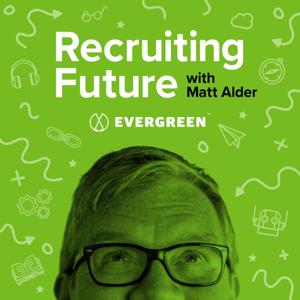
Recruiting Future is a podcast that helps Talent Acquisition teams drive measurable impact by developing their strategic capability in Foresight, Influence, Talent, and Technology.
This episode is about Foresight.
The pace of change has become relentless. Economic volatility, AI adoption, hybrid work challenges, and geopolitical shifts are forcing companies to completely rethink their workforce strategies. Organizations that once planned in five-year cycles now refresh their approaches on a quarterly or even monthly basis. This unprecedented disruption demands immediate action - but many HR and talent teams remain paralyzed by uncertainty. Traditional recruitment and development approaches simply can't keep pace with how rapidly skills requirements are evolving. What concrete steps should companies take today to build resilience into their talent strategies?
My guest this week is Peter Miscovich, Global Future of Work Leader at JLL. Peter has spent 25 years helping Fortune 100 companies navigate workforce transformation and has never been busier than right now. In our conversation, he shares practical insights on building adaptive talent strategies, why continuous learning has become non-negotiable, and the specific skills companies must prioritize immediately to remain competitive in a constantly changing environment.
In the interview, we discuss:
Follow this podcast on Apple Podcasts.
Follow this podcast on Spotify.
Recruiting Future is a podcast that helps Talent Acquisition teams drive measurable impact by developing their strategic capability in Foresight, Influence, Talent, and Technology.
This episode is about Talent.
After years of hype surrounding skills-based hiring, the data is showing that it is really happening at scale and becoming strategically important across all sectors and company sizes, with some surprising patterns emerging. Organizations are seeing benefits beyond just filling roles, and the implications for TA and HR are significant. What's driving this shift, and what do TA teams need to know?
My guest this week is David Wilkins, Chief Product and Strategy Officer at Talent Neuron. David has produced some exclusive data insights for Recruiting Future that paint a clear picture of where skills-based hiring stands today. In our conversation, he shares where the market is, what specific companies are doing, the real benefits they're seeing, and his thoughts on how AI might change everything in the future.
In the interview, we discuss:
Follow this podcast on Apple Podcasts.
Follow this podcast on Spotify.
A full transcript will appear here shortly
Budgeting has long been challenging for talent acquisition teams, but the stakes have never been higher in today's volatile economic environment. Many TA leaders find themselves stuck in a cycle of defending past decisions, managing cuts, and struggling to align budgets with business strategy. Meanwhile, CFOs expect data-driven proposals, ROI insights, and long-term planning that TA teams often aren't equipped to deliver.
So, how can talent acquisition leaders transform their approach to budgeting, build trust with the C-suite, and position themselves as strategic business partners
My guests this week are Madeline Laurano, founder of Aptitude Research, and Joshua Secrest, VP of Client Advocacy at Paradox. We discuss Aptitude's new report, The Talent Acquisition Budget Playbook, which contains actionable strategies to move beyond reactive spending, harness automation for efficiency, and demonstrate clear ROI to unlock longer-term investment.
In the interview, we discuss:
Follow this podcast on Apple Podcasts.
Follow this podcast on Spotify
The rapid evolution of AI is reshaping talent acquisition, but many TA teams are struggling to keep pace. While AI offers the potential to revolutionize processes, reduce friction, and improve candidate experiences, adoption rates remain low. At the same time, businesses are under pressure to boost productivity and efficiency, leaving TA teams vulnerable to being left behind—or worse, having changes imposed on them without their input.
So, how can talent acquisition leaders embrace AI and use it to align themselves with broader corporate objectives?
My guest this week is Adam Godson, CEO of Paradox, a pioneer in conversational AI for talent acquisition. Adam shares valuable insights from working with industry leaders like McDonald’s and Chipotle, exploring how AI is transforming recruitment at scale. He discusses how TA leaders can harness AI to future-proof their organizations, deliver tangible ROI, and create hiring systems that prioritize speed, efficiency, and better candidate experiences.
In the interview, we discuss:
Follow this podcast on Apple Podcasts.
Follow this podcast on Spotify.
Recruiting Future is a podcast that helps Talent Acquisition teams drive measurable impact by developing their strategic capability in Foresight, Influence, Talent, and Technology.
This episode is about Influence.
The importance of data is universally recognized in TA, but the real opportunity lies in going beyond basic metrics and using data to shape business strategy. Forward-thinking TA leaders are moving beyond operational dashboards to connect hiring decisions with business outcomes like revenue generation and team performance. This shift requires not just better metrics but a fundamental change in how we communicate value to the organization. The challenge is that many teams remain stuck at the operational level, measuring activity rather than impact.
So, how can you be more strategic about data and analytics?
My guest this week is Leandro Cartelli, founder of a staffing and recruiting agency specializing in Latin American talent. With nearly 20 years of experience working in recruiting and talent acquisition, Leandro brings deep insights into building data-driven TA functions. In our conversation, he shares his framework for evolving TA metrics through three maturity stages and explains how connecting recruiting data to business outcomes transforms organizational influence.
In the interview, we discuss:
Follow this podcast on Apple Podcasts.
Follow this podcast on Spotify.
Recruiting Future is a podcast that helps Talent Acquisition teams drive measurable impact by developing their strategic capability in Foresight, Influence, Talent, and Technology.
This episode is about Talent and Technology.
Timely and effective measurement of the quality of hire has long been a significant frustration for talent acquisition, with meaningful data often trapped in subjective performance reviews that arrive too late to be of any help.
But what if AI could help connect interview assessments, onboarding metrics, and performance data in ways that reveal which hires are going to succeed, creating real-time feedback loops that continually improve hiring decisions?
So, how exactly can employers build these types of connected systems?
My guest this week is Mark Linnville, Head of Talent at Garner Health. In our conversation, he reveals how to identify accurate leading indicators for quality of hire, why authentic interview experiences help predict performance, and how AI helps connect the dots we've been missing.
In the interview, we discuss:
Follow this podcast on Apple Podcasts.
Follow this podcast on Spotify.
Recruiting Future is a podcast that helps Talent Acquisition teams drive measurable impact by developing their strategic capability in Foresight, Influence, Talent, and Technology.
This episode is about Talent.
While we're seeing a growing awareness of ageism, the reality is that it is regularly ignored as an inclusion factor. The impact of this is staggering. AARP estimates that ageism costs the US economy $850 billion in lost GDP annually, and research shows that intergenerational teams consistently outperform age-segregated ones in terms of productivity and innovation. Yet, unlike other forms of discrimination, age bias is openly accepted in hiring via things like age-coded job descriptions and ATS systems that filter by graduation dates.
So what will it take for organizations to recognize that age discrimination isn't just morally wrong - it's actively destroying their competitive advantage?
My guest this week is Maureen Wiley Clough, host of the 'It Gets Late Early' podcast and advocate against ageism on a mission to expose this universal form of discrimination. In our conversation, she reveals practical strategies for both employers and job seekers to combat age bias while building truly inclusive workplaces that work for everyone.
In the interview, we discuss:
Follow this podcast on Apple Podcasts.
Follow this podcast on Spotify.
Recruiting Future is a podcast that helps Talent Acquisition teams drive measurable impact by developing their strategic capability in Foresight, Influence, Talent, and Technology.
This episode is about Influence and Technology.
Talent Acquisition leaders are navigating a uniquely challenging period, juggling rapid advancements in AI with ongoing operational demands. The opportunity to automate routine tasks is clear, but the real challenge is determining where AI ends and human intervention begins.
With AI technologies rapidly reshaping the recruitment landscape, how can employers ensure they deploy AI strategically rather than superficially?
My guest this week is Chris Riche-Webber, VP Business Intelligence and Analytics at SmartRecruiters. Chris shares valuable insights into defining clear outcomes for AI deployment, experimenting effectively, and building genuine trust with technology vendors.
In the interview, we discuss:
Follow this podcast on Apple Podcasts.
Follow this podcast on Spotify.
Recruiting Future is a podcast that helps Talent Acquisition teams drive measurable impact by developing their strategic capability in Foresight, Influence, Talent, and Technology.
This episode is about Foresight and Talent
Some of the most significant innovations in talent management and talent acquisition originated in the tech sector. From Edison's revolutionary use of teamwork to Netflix's principle of Talent Density, cutting-edge thinking about technology has often also involved cutting-edge thinking about talent.
What might the history of technology teach us about the future impact of AI on talent practices?
My guest this week is Jamie Dobson, CEO of Container Solutions and author of the forthcoming book, “Visionaries, Rebels and Machines,” on the history of technology. In our conversation, Jamie identifies some of the talent innovations the tech sector has given us, shares how he applied some of this thinking to his own business, and we discuss what the future might look like
In the interview, we discuss:
Follow this podcast on Apple Podcasts.
Follow this podcast on Spotify.
From the publisher's feed

335 Listeners

43,315 Listeners

1,460 Listeners
16,843 Listeners

120 Listeners
508 Listeners

111,791 Listeners

89 Listeners

98 Listeners

9,059 Listeners

654 Listeners
104 Listeners

856 Listeners

87 Listeners

6,447 Listeners

423 Listeners
3,032 Listeners

538 Listeners

54 Listeners
26 Listeners

19,028 Listeners

580 Listeners
21 Listeners