
Sign up to save your podcasts
Or

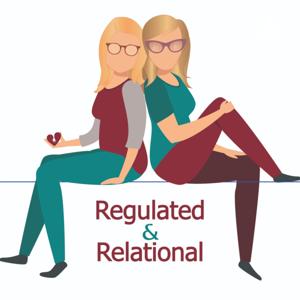


Join Ginger and Julie as they wrap up the season by talking about brain lessons.
A little basic brain knowledge can go a long way in understanding behaviors and supporting children in your home or the classroom. Understanding brain development enables us to respond compassionately and helps children—and adults—thrive.
Brains grow from the bottom up and the inside out. Although babies are born with brain structures in place, the development and activation of areas of the brain happen sequentially - from the bottom up and inside out.
Brain development occurs sequentially, from the bottom up and inside out. Neural growth depends on environmental experiences, relationships, and developmental readiness—stages cannot be skipped. Chronic stress and trauma can disrupt this process, wiring the brain to expect stress and react to it intensely. However, due to neuroplasticity, the brain can adapt, heal, and reorganize itself, offering hope for those affected by trauma.
Building resilience involves managing stress through deep breathing, meditation, proper sleep, hydration, nutrition, and healthy relationships. Caregivers play a vital role by offering responsive, nurturing care that supports neural tuning (strengthening) and pruning (removing unused connections). These processes help children learn trust, self-regulation, and efficient learning. Storytelling also fosters brain development by soothing stress responses and enhancing connection.
Supporting Resources
Dr. Wendy Suzuki
https://www.wendysuzuki.com/
Good Anxiety
https://a.co/d/7jsv01N
Dr. Lisa Feldman Barrett
https://lisafeldmanbarrett.com/
7 ½ lessons on the brain book
https://a.co/d/fq0zTlx
Dr. Bessel Van der kolk -Trauma Research Institute
https://traumaresearchfoundation.org/programs/faculty/bessel-van-der-kolk/
Jessica Sinarski- Light up the Learning Brain
https://a.co/d/fR1gXhb
Join Julie and Ginger as they speak with Dr. Lori Desautels
Dr. Lori Desautels has been an Assistant Professor at Butler University since 2016, teaching undergraduate and graduate programs in the College of Education. The Applied Educational Neuroscience Certification, created by Lori in 2016, is specifically designed to meet the needs of educators, counselors, clinicians, and administrators who work with children and adolescents who have experienced adversity and trauma.
https://revelationsineducation.com/
Lori has written 6 books
https://revelationsineducation.com/the-book/
Register for her symposium here
https://www.butler.edu/education/education-neuroscience-symposium/
Register for her summer cohort certification in educational neuroscience here
https://www.butler.edu/education/graduate-programs/applied-educational-neuroscience/
Dr. Lori will be doing a 3-hour deep dive during our Academy Day/Pre-Con at our Creating Trauma-Sensitive Schools Conference in Feb in Atlanta! Register now!
Here are a couple of favorite takeaways from our episode that Lori beautifully teaches.
“Touchpoints are moments of connection that, when any of us feel heard and seen, just changes our biology. When someone sees, feels, or hears us…wow, that’s a lift. A dopamine hit or a serotonin hit. It feels so nourishing to us. “
“We have this beautiful nervous system, which is the brain and body, in constant communication; there’s this bi-directional highway. Our nervous system’s priority is survival. Anytime we sense or feel something in our environment, relationship, or experience that feels threatening or unsafe, our nervous system goes into a state of protection.”
Join Julie and Ginger as they speak with Anashay Wright, a national award-winning educator, speaker, consultant, and founder of Authentic Disruption and Disruptive Partners, a community-based leadership development program.
https://www.anashaywright.com/
Anashay describes her journey by telling a story of inclusive school leaders who surrounded her family with community resources when they were in need. She says that school and district leaders prioritized people over policy, which led to Anashay falling in love with helping children, and she is now paying it forward.
Here are some great takeaways from Anashay:
The curriculum can’t save you.
Brainwash them into greatness.
Use the community as a connector.
Use tech and AI to educate.
Kids don’t need Saviorism; they need servant leaders.
Kids can read! They read what they want. You can drive solutions with what kids CAN do. If they argue, teach them to argue like an attorney.
Beware of the cycle of impoverished thinking.
Give them the power to express themselves, and then listen to them.
Beware of deficit thinking that shames people.
What are the gifts and talents that you bring into the space?
Let them dream. Lead with what’s possible. It starts with the adult dreaming.
Make their vision your mission.
Lead with radical, disruptive love.
The question isn’t how we protect kids from trauma; it’s how we help them respond to it when they encounter it.
Our favorite quote from Anashay:
When we start to lead with what’s possible and the promise, shift our thinking, and actually believe in ourselves and then in our children, we will disrupt the system. Disruptive Innovation means building something better and ignoring what we currently have. In a classroom, that means if all the other teachers are writing kids up, I’m not going to write kids up. I’m simply gonna ask kids, “What’s wrong, what’s the solution, and how are you feeling?” The big and small moves you make every day when nobody is looking disrupt the system.
Join Julie and Ginger in speaking to Occupational Therapist, Kelly Mahler about Interoception and the body-mind disconnect.
Kelly teaches that as caregivers and educators, we should be curious without expectation of a response from the children we work with.
She also explains that we all have different internal experiences; our first step is to believe others and their experiences.
Kelly tells us that before we start working on helping and healing the body-mind connection, we really need to work towards a place of regulation and help that person feel safe in their body and environment.
Check out her website here:
https://www.kelly-mahler.com/
And her Big Book of Interoception Games (and other resources) here:
https://www.amazon.com/Books-Kelly-Mahler/s?rh=n%3A283155%2Cp_27%3AKelly+Mahler
Join Julie and Ginger in speaking to Carey Sipp talking about early childhood intervention.
Carey is a solutions journalist and “Neuro-Nurturing ®” advocate who has written about the science of adverse childhood experiences* (ACEs) for about 15 years. She has also worked in communications for nonprofit organizations and for-profit organizations for some four decades. As a person with the experience of trauma and depression, Sipp’s inherent empathy is reflected in all her work, be it writing, speaking, or advocating. An avid nature photographer, shew also loves taking photographs of children and families. Sipp is thrilled that her children, now “thirty-somethings”, are living their dreams of active outdoor lifestyles and careers in recreation and healthcare in Montana.
Carey refers to the following resources:
PACEs science
Deb McNelis Neuro-Nurturing ®” -https://www.braininsightsonline.com/
“First 60 Days” booklet: Leveraging author’s work and movement could spark revolution to prevent and heal trauma, one precious baby, child, and caregiver at a time.
Carey’s book: https://a.co/d/eyAGX7q
Bruce Perry and Oprah Winfrey “What happened to you?” https://a.co/d/0HqYxfD
Dr. Christina Bethel
https://pubmed.ncbi.nlm.nih.gov/31498386/
Ed Tronick-The Power of Discord
https://a.co/d/e5KfXUq
https://www.pacesconnection.com/blog/exciting-news-paces-connection-is-back
Still face baby experiment video
https://www.youtube.com/watch?v=f1Jw0-LExyc
How to raise a Viking
https://a.co/d/1gEhVle
Join Ginger and Julie as they talk to Mathew Portell. Mathew has dedicated a decade and a half to education in his role as a teacher, instructional coach, teacher mentor, and school administrator before joining PACES Connection as the director of communities in March 2022. He spent seven years as principal of Fall-Hamilton Elementary, an internationally recognized innovative model school for trauma-informed practices in Metro Nashville Public Schools. Mathew is now back in the building as a principal and has written a book along with Ingrid Cockrhen, Julie Kirtz, Julie Nicholson, and Tyesha Noise entitled Reducing Stress in Schools.
Check out Mathew’s book: Reducing Stress in Schools: Restoring Connection and Community
Mathew gives the following advice: Don’t get caught up in the job and forget about the work. Get back to the basics and listen for what the fundamental truths are in trauma-informed educational environments.
Mathew tells us that “Kids can’t achieve academics if their social and emotional health needs aren’t met.”
He also says, “We have to base all our decisions on what we say and who we say we are. If we say we are student-focused and adult-supported, then the decision we make has to mirror that. It’s huge when developing a school culture that is looking to reduce stress. You gotta know who you are first, establish your identity as an individual school then document it. Create your core values and then as you make decisions align them with who you say you are.”
Be sure to view the "Every student Known" video.
In this episode Ginger and Julie talk to Dafna Lender who is an international trainer, EMDR therapist, and supervisor for practitioners who work with children and families. She is a certified trainer and supervisor/consultant in Dyadic Developmental Psychotherapy and Theraplay. Dafna’s expertise is drawn from 25 years working with families with attachment issues in many settings. She is a leader in family therapy from an attachment perspective and is passionate about her work and regularly co-trains with Bessel van der Kolk, Peter Levine, Ed Tronick, and Dan Hughes. She is the author of Integrative Attachment Family Therapy and Theraplay: The Practitioner’s Guide.
https://www.dafnalender.com/
Listen in as Julie and Ginger talk with Dafna about therapeutic parenting, attachment, and more!
Listen in as Julie and Ginger talk to Ginger Lewman about Bullying.
Ginger Lewman is a national consultant & keynote speaker with ESSDACK, a non-profit education service center based in Hutchinson Kansas. She holds a Master of Science in Psychology and Special Education and Gifted Education, With 30 years in education, she inspires and helps all levels of educators figure out the hard hurdles for innovative teaching and learning.
Why do people bully? There are many reasons but Ginger boils it down to the messages we hear as kids and feeling a lack of safety, dignity and/or belonging.
Ginger encourages us to get upstream and gives great strategies and tools and states that these and other tools are best utilized in an environment steeped daily in the foundation of the science of trauma and resilience-building and utilizing restorative practices whenever conflict arises anywhere.
“Once we become unafraid of our own stories, we all become safer.” ~ Steve Halley
Resources:
www.stopbullying.gov
https://www.essdack.org/
Peaceful Schools and Families: https://www.essdack.org/psf
Favorite takeaways:
It is difficult work for someone who is hurt, for someone who has hurt other people to move toward conflict. They’ve got to listen to them and they can only do that if I feel safe.
When we’re talking about bringing people into circle toward conflict this is an opportunity for each person to examine what their role has been. It’s not just “you did it”, it’s “we are experiencing this and this is not good for any of us in our community, this isn’t about you just cleaning up what you did wrong”. It’s all of us.
In Episode 82, Ginger & Julie dig into Oxytocin. Oxytocin is often called the “love” or “cuddle” hormone.
High levels of oxytocin correlate with the speed of wound healing. Research is documenting the positive effects of oxytocin in treating many conditions including heart disease, schizophrenia, diabetes, and certain kinds of cancer.
For children who have experienced early adversities with attachment disorders and trauma-based impacts, increasing their oxytocin levels holds the promise of helping them emotionally, socially, relationally, and physically.
Besides physical touch and affection other things that increase oxytocin:
The following additional resources were mentioned
Dr. Stephen Porges https://www.stephenporges.com/
Amelia and Emily Nagoski https://www.burnoutbook.net/about-the-authors
Dr. Louis Cozolino https://www.drloucozolino.com/
Drs. Dan Hughes and Jon Baylin -Brain-Based Parenting book- https://a.co/d/gUWRjQF
In this episode Julie and Ginger interview ATN’s dear friend, Dr. Melissa Sadin. Melissa teaches us about Hope Theory based on the work of Gwinn and Hellman and their book Hope Rising. You can check out Dr. Sadin’s books and work here: http://www.traumasensitive.com/, https://a.co/d/9x4lPtk.
What is the definition of hope? Hope is setting a goal that you desire, creating a pathway toward the goal, and utilizing the willpower necessary to achieve the goal through connection to another person.
Dr. Sadin further states that Hope Builds Resilience and Resilience Builds Hope. She tells us that through the following three-step process we can build hope and resilience in our children at home and students at school:
1. Set an achievable goal
2. Set the pathway -the WAYPOWER
3. Get a cheerleader- the WILLPOWER, who will help revise and check-in
Melissa teaches us that:
- Hope builds executive functioning capacity
- Students with high hope have better attendance than students with low hope
- Students with high hope have better academic outcomes than students with low hope- despite cognitive ability
- Students with hope are more likely to find success in career or college sooner than students with low hope
Listen in and join us in building hope!
From the publisher's feed

8,840 Listeners
78,389 Listeners

30,698 Listeners
38,675 Listeners
2,592 Listeners
679 Listeners
14,658 Listeners

369,570 Listeners

5,080 Listeners
119 Listeners
367 Listeners
248 Listeners

29,191 Listeners
4,498 Listeners