
Sign up to save your podcasts
Or

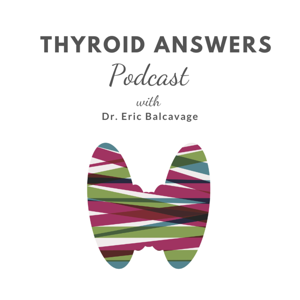

Why do so many people still feel hypothyroid when their labs look "normal"?
In this episode of Thyroid Answers, Dr. Eric Balcavage completes the thyroid lab conversation by addressing three of the most misunderstood tests in thyroid care: reverse T3, T3 uptake, and thyroid antibodies.
You'll learn:
What reverse T3 actually represents—and why it rises or falls
Why high reverse T3 does not mean blocked T3 receptors
How T3 medication lowers reverse T3 by suppressing T4, not by improving physiology
What the T3 uptake test measures and why it still matters
Why free T4 and free T3 can be misleading without total hormone levels
How binding proteins, estrogen, liver function, inflammation, and medications affect interpretation
What thyroid antibodies do—and do not—tell us about thyroid damage and disease activity
This episode is essential listening if you've been told your thyroid is "optimized," yet symptoms persist—or if you're trying to understand why thyroid medications work for some people and cause instability for others.
This discussion sets the stage for the February series on thyroid medication physiology, including T4-only therapy, T3 therapy, combination therapy, and desiccated thyroid.
 View all episodes
 By Dr Eric Balcavage

4.6
147147 ratings
Why do so many people still feel hypothyroid when their labs look "normal"?
In this episode of Thyroid Answers, Dr. Eric Balcavage completes the thyroid lab conversation by addressing three of the most misunderstood tests in thyroid care: reverse T3, T3 uptake, and thyroid antibodies.
You'll learn:
What reverse T3 actually represents—and why it rises or falls
Why high reverse T3 does not mean blocked T3 receptors
How T3 medication lowers reverse T3 by suppressing T4, not by improving physiology
What the T3 uptake test measures and why it still matters
Why free T4 and free T3 can be misleading without total hormone levels
How binding proteins, estrogen, liver function, inflammation, and medications affect interpretation
What thyroid antibodies do—and do not—tell us about thyroid damage and disease activity
This episode is essential listening if you've been told your thyroid is "optimized," yet symptoms persist—or if you're trying to understand why thyroid medications work for some people and cause instability for others.
This discussion sets the stage for the February series on thyroid medication physiology, including T4-only therapy, T3 therapy, combination therapy, and desiccated thyroid.

3,949 Listeners
779 Listeners

723 Listeners
3,466 Listeners

9,238 Listeners
340 Listeners

172 Listeners
1,096 Listeners
1,774 Listeners
841 Listeners
513 Listeners
562 Listeners

57 Listeners
259 Listeners
53 Listeners