
Sign up to save your podcasts
Or

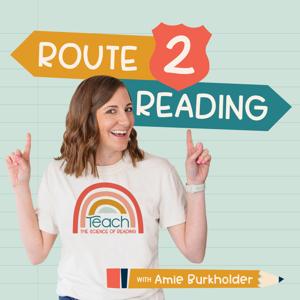


In today's episode, I sit down with literacy legend Dr. Jan Hasbrouck — researcher, author, consultant, and co-creator of the widely used Oral Reading Fluency (ORF) norms. Known for her unmatched expertise in reading fluency, assessments, instructional coaching, and dyslexia, Dr. Hasbrouck brings decades of wisdom to this powerful conversation.
Together, Jan and I unpack myths about learning to read, the truth behind the "95% of kids can learn to read" statistic, what dyslexic learners really need, how fluency develops, and why teachers are essentially performing "brain surgery by instruction." This episode is packed with clarity, encouragement, and inspiration for educators at every level.
CLICK HERE FOR FULL SHOW NOTES
Have you ever wondered what it takes to write your own decodable books—or how to make them both phonics-aligned and fun to read? In this episode of the Route2Reading Podcast, Amie sits down with Brooke Vitale, former children's book editor turned author and co-creator of Charge Mommy Books, to talk about how she began writing decodable texts during the pandemic and what she's learned along the way.
Brooke shares her journey from working with top publishers like Penguin and Disney to creating her own line of decodable readers that blend phonics progression, story engagement, and authentic language. Together, Amie and Brooke unpack practical tips for teachers who want to fill gaps in their phonics sequence or even try writing their own decodables.
CLICK HERE FOR FULL SHOW NOTES
Are you using decodable books the right way? In this episode, we're breaking down six of the most common mistakes teachers make with decodable texts—and how to fix them. You'll learn how to align books to your phonics lessons, prep students before reading, balance decoding with meaning, and know when it's time to move beyond decodables. Practical, honest, and grounded in the Science of Reading—with insights from experts like Wiley Blevins, Heidi Anne Mesmer, and Jeanne Chall.
READ FULL SHOW NOTES HERE
What if I told you morphology isn't too advanced for young readers—it's actually the missing piece that makes decoding, spelling, and vocabulary stick?
In this episode, I'm joined by two of my favorite literacy leaders, Michelle Sullivan and Sarah Paul, to talk all things morphology. We unpack what it is, why it matters from the very start of reading instruction, and how to make it engaging and approachable for even our youngest students.
CLICK HERE FOR FULL SHOW NOTES
Syllables can feel "big" or confusing—but they don't have to be. In this episode, I chat with reading specialist Savannah Campbell (Campbell Creates Readers) about how to make syllable instruction clear, doable, and effective from k–5. We cover the six syllable types, how (and whether) to teach division patterns, set-for-variability, and simple multisensory tools that help kids read and spell multisyllabic words with confidence.
FULL SHOW NOTES HERE
In this episode, I'm excited to share a conversation I originally had on the Triple R Teaching Podcast with Anna Geiger (The Measured Mom). Together, we dive into my book Literacy Unlocked: How to Implement the Science of Reading with Young Learners and explore how to bridge research with practical classroom application.
We cover the real-life challenges teachers face when it comes to foundational literacy skills and the shifts required to move from balanced literacy to the science of reading. This episode is packed with actionable ideas that you can take straight into your classroom.
FULL SHOW NOTES HERE
In this episode of Literacy Unlocked, I'm joined by Susan Lambert, host of the Science of Reading: The Podcast by Amplify, to dig into one of the most essential—and often overlooked—components of reading success: language. Susan shares personal stories and professional insights that make a powerful case for elevating language development right alongside decoding.
We explore:
FULL SHOW NOTE HERE
In today's episode, Amie breaks down eight essential, research-backed strategies for teaching letter sounds in ways that are practical, effective, and rooted in the science of reading. These aren't trendy tricks or rigid programs—they're flexible, powerful routines that actually work in real classrooms with real kids.
From why we should teach letter names and sounds together, to what letters to teach first, and how to move beyond the outdated "letter of the week" model, this episode will walk you through the what, why, and how of early alphabet instruction. You'll also learn simple ways to embed multisensory routines, keep the pace moving, and build automaticitythrough daily review—without burning out or overcomplicating your day.
See Full Show Notes Here
In this episode, I'm joined by the brilliant Dr. Shayne Piasta — a developmental psychologist, early literacy researcher, and professor at The Ohio State University. Her work has deeply influenced how I think about alphabet instruction, and I couldn't wait to sit down with her to talk about what the research actually says about teaching letter names, sounds, and formation — and how to make it practical for real classrooms.
So many teachers are told conflicting things: Should I teach letter names or sounds first? Uppercase or lowercase? Do I teach handwriting at the same time? Is "letter of the week" okay?
Dr. Piasta brings clarity to all of those questions and more. She breaks down the current research and provides thoughtful insights that help us move beyond one-size-fits-all approaches. Whether you're using a boxed curriculum, piecing together resources, or trying to adjust instruction for student needs, this episode will help you feel more confident and informed.
See Full Show Notes Here
In this heartfelt episode, Amie Burkholder takes you behind the scenes of her new book, Literacy Unlocked. If you've ever felt overwhelmed by the nonstop buzz around the Science of Reading or unsure how to turn research into real-life instruction, this episode is for you.
Amie walks through each chapter of the book, sharing how Literacy Unlocked bridges the gap between research and classroom practice — one step, one strategy, and one student at a time. You'll hear stories, classroom examples, and why this book is packed with not just knowledge, but tools you can use tomorrow.
Whether you're a K–2 teacher, a literacy coach, an interventionist, or a parent looking for clarity, Literacy Unlocked was written with you in mind.
FULL SHOW NOTES HERE
From the publisher's feed
7,198 Listeners
439 Listeners
622 Listeners
645 Listeners
49 Listeners
205 Listeners

41,351 Listeners
132 Listeners
59 Listeners

18,916 Listeners
82 Listeners

10,626 Listeners
43 Listeners

52 Listeners

24 Listeners