
Sign up to save your podcasts
Or



Based on Podcast App listening data
If you want to succeed at any job, make yourself invaluable. Go the extra mile; make them never be able to imagine what life without you there would be like. – Ross Mathews
Selling in a crisis is tough. Losing your job during an economic downturn is worse. Now more than ever, you need your income. If you lose your job, there is a much higher probability that you will take a pay cut when you land your next one or end up in a role or company that you dislike.
The good news for you and sales professionals everywhere is that most organizations and their leaders are smart. They understand that in volatile times like this, they need productive salespeople more than ever. Businesses cannot survive without a steady stream of new sales and loyal customers.
The optimum word here is productive. In a recession, everything and everyone will be examined for its value. If you drain resources rather than generating sales and profits, you are gone. There is no mercy for anchors when the ship is sinking.
The bottom line is, when your leadership team is faced with making decisions about sales force reductions, the dead wood gets cut first. Therefore you need to be indispensable to your boss and organization.
Mediocrity, just like excellence, is a choice. Therefore, the most effective way to protect your job is to make the decision to be excellent. Here’s how you become indispensable and advance your career in a crisis:
Change your way of thinking about work. Devote yourself to your company’s survival. Make a commitment to prove your worth to your boss, company, prospects, and customers every day. Be and become a person that your organization cannot live without.
Going the extra mile is powerful in a world where mediocrity is the norm and most people won’t. These things may seem small, but in today’s world the majority of your competition fails in these obvious areas:
There are no traffic jams on the extra mile. When you are there, you will stand out and your career will flourish.
Jeb Blount’s NEW book Selling is a Crisis gives you the tactics and inspiration you need to stay motivated and increase sales in ant economy. Get it now on Amazon.
Kaizen is a theory that developed in Japan after World War II and revived the country, their spirit, and their commerce. It’s similar to what we call “feeding the pipeline,” and involves the art of cumulative prospecting. If you set aside time every day for prospecting, you will find a steady flow of success and less stress!
I recently posted a podcast of my discussion with Kristin Austin, where we talked about the importance of perseverance in life and sales and how you can apply the same theory of continuously moving forward to finding satisfaction and success in both.
Japan was in ruins after World War II, and the nation had the task of cleaning up the devastation and overcoming the hopelessness and helplessness that had taken hold. A movement developed that is now a part of their national ideation to this day. It’s called “Kaizen,” and is similar to what Kristin and I discussed.
Kaizen in Japanese means “a change for continuous improvement.” In this case, it’s a business philosophy rooted in making small progress every day to improve your life and find success. Kaizen is based on the idea that it isn’t so much about the grand changes and ideas that we have; change is found in the small steps that add up to large-scale and lasting habits that lead to success.
After hitting rock bottom, the Japanese realized that thinking about the gravity of the destruction and what they had to do to overcome it could become paralyzing. The same is true of sales. The enormity of hitting quota, closing a big sale, and feeding the pipeline can be overwhelming. This can put many salespeople in a state of paralysis where they miss the methodical and gradual steps to get there.
After Kristin was in an accident that permanently altered her life, she had the choice to either give up and retire, or take small steps to get back to her career, pick up the business she had built, and do what she loved again. It initially seemed like a daunting task, so she took minuscule steps, as she called them. One was picking up the Fanatical Prospecting book to gain inspiration.
Then every day, she would do one small thing that would bring her closer to her goal. She didn’t try to set the world on fire; she set out to make one small daily improvement toward rebuilding her life. Kristin emphasized, “If you are moving in the right direction even slightly, you are moving, which differs from being paralyzed.”
In the podcast, we also discussed the notion of “feeding the pipeline.” The mistake I often see salespeople make is that they fill the pipeline by prospecting up front, but once the sales start coming in, they stop feeding it.
They’re on a roll, so they aren’t paying attention to the fact that their pipeline is emptying. And when they do notice, they recognize that nothing is coming down the pipeline because it has gone dry. That puts them in a situation where they become desperate and focus on closing the sale, rather than solving the problems that their clients are having and making an improvement in their lives.
So the key to being successful in prospecting is not letting your pipeline run dry. Let’s face it: not many people enjoy cold-calling others and asking them to buy something they may or may not want. However, that’s not what pipelining is.
Filling your pipeline means seeking out those people who not only need your product or service; it means finding the people who would most benefit from what you’re offering. When you change your mindset from closing to helping, you increase your satisfaction, decrease your stress, and stop feeling the weight of paralyzing stress.
By taking one small and continuous step every day, or putting aside time to prospect for just one hour a day, you will improve your career, your life, and feed your pipeline so that you can prevent it from running dry. Believe me, we have all been there, and that is not a great or inspirational place to be.
I had many takeaways from my sit-down with Kristin, but the theory of Kaizen and the pipeline are especially important – not just for your success as a salesperson, but for your continual growth and satisfaction in your professional and personal career.
“Prospecting is one thing that you have to do that most people don’t want to. When you fill up your pipeline, it frees you up to do a better job. Setting aside an hour every morning for prospecting, which I call the ‘chop the wood,’ has a cumulative impact because it begins to build up like compound interest. The moment you begin to stop prospecting is the moment your pipeline runs dry. The fuller the pipeline, the pickier you can be about your prospects. A little bit every day is all that you need.” – Jeb Blount
Jeb Blount’s book, Fanatical Prospecting, gives salespeople, sales leaders, entrepreneurs, and executives a practical, eye-opening guide. It outlines the most important activity in sales and business development – prospecting. Download our free Fanatical Prospecting Book Club Guide HERE.
“Life is short. Hug the people that you love and make sure that they know you love them without hesitation. Anything can happen to anyone, at any time. We all live with this concept that we are safe if we can control everything, but sometimes the Universe has different plans. That applies to sales too. Sometimes you think you have a sale in the bag and it all falls apart without anything that you have done. You have to roll with it and keep on keeping on.” – Kristen Austin
When Kristin Austin was hit by a car, her world fell apart. On this episode of the Sales Gravy Podcast she shares how she climbed out of a deep hole to resurrect her business and life, one prospecting call at a time.
There is no doubt that we all find ourselves hitting roadblocks that seem impossible to overcome. If you are in that situation, Kristin’s story is sure to inspire you to take action and get past whatever is holding you back. You’ll learn how to get back up when life knocks you down.
Kristin Austin was hit by a vehicle in May 2018. After regaining consciousness, she began two-years of recovery. This required her to rebuild her life from the ground up.
Kristin owned a business for over ten years that was rooted in marketing and sales; she was a university instructor, a wife, and a mother – and suddenly it all stopped. She was forced to put things in place to keep her business running in her absence and focus on the basics of relearning how to be Kristin.
Forced to stay home and slow her pace, she decided to go back to the basics. Her mission was to get out of her own head and figure out how to get back to the life she left behind out of necessity.
The Fanatical Prospecting Book awakened her spirit because it put her back into a mindset of figuring out a plan about what she had to do, how she was going to do it, and how to get back out there. Throughout her life, Kristin was a salesperson, starting early as a child selling watermelon on Bondi Beach, and moving on to ultimately being a pharmaceutical rep.
The message from Fanatical Prospecting that inspired Kristin was, “If you do the work, the sales gods will reward you.” Once she read that phrase, she immediately got onto LinkedIn and posted about it. And the same day, people responded by coming out of the woodwork to inspire her with words of encouragement to get back up and do what she did best: SELL.
At her lowest, Kristen stuck in her house recovering, feeling worthless, insecure, and shut down. Then the pandemic presented a surprise opportunity when Kristin took over as head of sales with a new company.
There was still the negative self-talk and insecurity. She focused an important lesson from Fanatical Prospecting: “The more you prospect, the luckier you get.” This inspired her to keep moving forward.
Some days were really hard, and others were like shooting fish in a barrel – but above all, she was back in the game and this gave her life purpose.
Kristen’s story teaches us that when life knocks you down, you can get back up. You just have to put in the work. We can all become paralyzed with fear, negativity, and hopelessness – but the trick is to move forward. Kristin, even at her lowest, found the faith to know that if you continue trudging ahead, things will change.
“Nothing happens until you move. Nothing happens until someone sells something. The big lesson I learned is that you have to do something. If what you are currently doing isn’t working, then do something else. Don’t keep doing the same old thing.”
When Kristin hit rock-bottom, she turned to Sales Gravy University, knowing that it might be a small step to go back to the basics, but it was a step nonetheless. If things weren’t converting on a daily basis, she had to take a breath and not freak out. Kristin developed the faith to believe that as long as she was moving forward, opportunities would convert – and they did. If you do the right things consistently, a little bit every day, you are going to win.
To learn more about Sales Gravy University go to https://learn.salesgravy.com
Are you willing to do whatever it takes to reach your goals and dreams, build your business, climb the sales leaderboard at your company, or bounce back from failure?
Lot’s of people have dreams but few actually grind it out and turn those dreams into reality. The good news is that you can defy the odds to get everything that you want in business and in life if you are willing to do whatever it takes.
On this episode of the Sales Gravy Podcast, Jeb Blount and Brandon Bornancin dive into what it really means to be willing to do what ever it takes.
No matter who you are or where you come from, your education, or your network, you can create the life you want and build the business you’ve only dreamed about.
Brandon’s journey is all the proof you need.
He graduated college flat broke. He started a business that was an epic failure. Then he turned it all around – before he was 30 – closing over $100 million in sales for Google and IBM and founding two multimillion-dollar companies, the second named “LinkedIn’s Top 50 Startups.”
How did he do it? By doing Whatever It Takes.
Listen above or watch the video below:
Download a free chapter of Jeb Blount’s brand new book Selling the Price Increase here: https://salesgravy.com/selling-the-price-increase-free/
On this episode of the Sales Gravy Podcast Jeb Blount, Jr sits down with author Andy Paul to discuss what it means to Sell Without Selling Out. Together they discuss why it is so important to make selling more human.
You’ll learn that persuasion is not a sales skill. Instead it is a blunt instrument of last resort that sellers use when they don’t know how to influence the choices buyers make.
Get a leg up on your sales career with our free sales training resources. Check them out here: https://salesgravy.com/resources/
Video messaging is hot and it is a core component of effective prospecting sequences because it works! At Sales Gravy we love using video messages to grab the attention of prospects.
Our favorite tool for sending those messages is Vidyard. That’s why we were thrilled when Vidyard CEO and Co-Founder, Michael Litt agreed to sit down with Jeb Blount, Jr. on the Sales Gravy Podcast to discuss the future of video messaging.
If you are the kind of person that likes to be on the leading edge of sales technology and techniques, you will love this episode!
On this Sales Gravy podcast episode, Jeb Blount and Daniel Disney discuss the real secrets to becoming a LinkedIn selling machine. You’ll learn the keys to to filling your pipeline with qualified opportunities, building your personal brand, improving your closing ratios, and increasing your income.
LinkedIn is one of the greatest tools ever created for sales professionals. It ranks right up there with the car, telephone, and the internet.
Leveraging LinkedIn gives you the ability to connect with and learn more about prospects and customers than at any other time in history. Sales professionals who master LinkedIn quickly rise to the top of the ranking report.
LinkedIn offers a huge opportunity for salespeople, but it isn’t easy and not everyone was born with the skills to use it. Salespeople need to learn and practice using LinkedIn. It isn’t something that you can jump into headfirst and be successful.
As salespeople, you tend to automatically sell, but with LinkedIn, you have to take a step back from your regular habits. It is all about the long game and building relationships, not quick sales.
Another problem that most salespeople have when using LinkedIn is that they have a hard time finding a balance.
We are so used to using social media in our personal lives that when we have to use LinkedIn professionally, it feels strange and can become a balancing act between being our professional self and staying social.
When you get it, however, it is a very powerful tool.
LinkedIn is about nuance and building familiarity to create awareness for your product, and it is also a direct message tool.
One thing to remember is that people have different preferences when it comes to engaging. Some like the phone, some like email, while some don’t have the time to talk and others have full email boxes.
LinkedIn is a different way to reach someone to start a conversation, so in some respects, it can be a pirate’s way in – but only if you use it effectively.
The key is reaching the prospect with the right message at the right time, and that often takes sequencing your communication so that it is cumulative and encompassing.
When you think about the numerous ways that we now communicate, you can’t just use one channel, be it email, telephone, instant messaging, or snail mail. You have to be the master of all of them and master using LinkedIn’s marketing power.
If you only choose one silo, then statistically you are going to miss prospects. And if you do, you miss building familiarity through a channel and the cumulative effect.
Success lies not in one over the other; it is about using all the tools and being persistent in an authentic way.
Persistence is a mental skill for people, and it demonstrates that you care about them and believe that you have the solution to help them.
Also, when you are persistent on a genuine level of obligations, you develop a certain amount of reciprocity.
When someone does something nice for you, and you are in the right place at the right time, you are likely to gain their business. You have to blend and sequence all the channels that you have to reach your prospect, which involves cumulative messaging.
People have so many different ways of communicating that you need to hit them from every angle you have at your disposal. Using LinkedIn’s marketing power comprehensively can help you achieve that!
The key to LinkedIn is consistency. If you walk into a conference room and you stand in the corner and don’t say a word, you aren’t going to make any connections.
If you walk in, however, and you strike up conversations with people, you are going to create connections that will generate business. That is the nature of LinkedIn.
If you show up consistently and people see you more and more, they build familiarity with you and get to know you. It is all of those cumulative layers where every time they see your face or your name, they come to recognize you and ultimately build a relationship with you.
Without consistency, it becomes harder for you to pitch.
Familiarity leads to liking. The more I see you, the more I like you. It is like a song that you hear; often you have to hear it many times before the tune catches on, and once it does, you feel a connection to it.
We call it LCS – like, comment, share – that creates a connection.
Like feeding your pipeline, LinkedIn requires building a routine so every day you are doing a little bit more to create brand familiarity.
Set time aside like you would with prospecting and feeding the pipeline – whether it is 30 minutes or an hour – and commit to posting. After three months, it will become routine.
Repetition leads to habit and some days are going to be harder than others, but consistency is a must. Putting in the work will be a game-changer.
Sometimes you can get burnout from creating new content and it can feel like a grind. Curated content gives you some breathing room and allows you to step back and recharge your social batteries. Going completely MIA could jeopardize the progress made.
This is where your professional and personal persona have to balance. Putting more of “you” into your engagements leads to authenticity and diving deeper into relationships with people.
We get so caught up in scoring the highest likes, but likes don’t always convert as well as quality. It is about how well you are “speaking” to the audience and giving them something value-added that is relevant to them personally.
Find ways to be creative while still staying within the parameters of your overall marketing message.
LinkedIn is not something that you jump into too deeply. It is important not to get burned out and not to get into trouble. Disclose parts about yourself, but don’t be too self-disclosed.
Whatever it is that you do well, do it on LinkedIn. It is all about being “you” since you are your own brand. When you connect as a person, it is 100% more impactful.
Try not to get into your own head and overthink being “creative.” Sometimes the best engagement is found in just being authentic and genuine.
There are good ways and bad ways to connect on LinkedIn. The “bait and switch” is one of the quickest ways to turn someone off. It involves sending a connection request with something that is favorable to your prospect, and then going in for the hard sell when they accept.
It makes you appear disingenuous, leading to the prospect feeling manipulated. You wouldn’t make a prospecting call where you pretended to be interested in your prospect and the very next second try to sell them something, so don’t do it on LinkedIn.
As salespeople, sometimes we go on autopilot and all we think about is the sale and close.
When you switch off autopilot, that is when the real sales happen. Hyper-personalization is the key to creating relationships. The more you make your message about them, the more conversions you will create.
Don’t try to lure them in or you will lose them right out of the gate. The “spray and pray” campaign doesn’t work anywhere else, so don’t think that it is appropriate on LinkedIn.
If you remain genuine in your conversation with someone, they are much more likely to grant you a sit-down.
LinkedIn is one of the best sales resources out there to build your brand and create relationships. But you have to be consistent, add variety, and build relationships not sales.
For more tips, check out Jeb Blount’s book Fanatical Prospecting. It provides you all you need to be a marketing guru, using cumulative prospecting and the channel sequencing you need to get your message across.
NEW BOOK: Jeb Blount’s new book, Selling the Price Increase is an essential handbook for sales professionals, account managers, customer success teams, and other revenue generation leaders looking for a page-turning and insightful roadmap to navigating the essential—and nerve-wracking—world of price increases. Get your copy here: https://www.amazon.com/Selling-Price-Increase-Ultimate-Customers/dp/111989929X/
The buyers in procurement are professionally trained to negotiate. Salespeople not so much. This can put you at a huge disadvantage when you are forced to negotiate with them. But not anymore.
On this fascinating Sales Gravy Podcast episode, Jeb Blount who is the author of the sales negotiating book INKED and Mike Landers an ex-procurement buyer turned sales trainer teach you the secrets to playing to win, when negotiating with procurement.
You’ll learn the keys to mastering the sales negotiating chessboard and going toe to toe with professional buyers who are paid to extract maximum concessions from you.
Want more tips on effective sales negotiation? Then download our free training guide on the Seven Rules of Sales Negotiation here: https://salesgravy.com/7-rules-sales-negotiation-guide/
On this special episode of the Sales Gravy podcast you’ll step into the shoes of a Senior Vice President of Sales. Jeb Blount, Jr. (A.K.A. JBJ) interviews Ammon Woods who is the Senior Vice President of Sales for Shred-It and Communication Solutions at Stericycle.
If you love sales and sales origin stories you’ll enjoy this wide ranging interview on the keys to high-performance in sales. If you aspire to rise to the upper echelons in your organization, this episode will give you a peak behind the curtain into what it’s like lead a large, national sales team.
Looking for more free resources to help you boost your sales career? We’ve got them here: https://salesgravy.com/resources/
From the publisher's feed
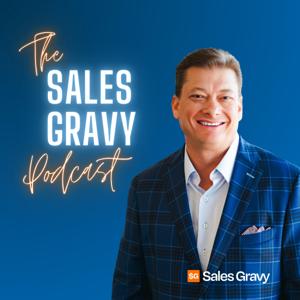
From the author of Fanatical Prospecting and the company that rewrote the rules of modern selling, the Sales Gravy Podcast helps you sell more, win more, and earn more.
Ranked by our users in the last 21 days

3,898 Listeners
1,116 Listeners
346 Listeners
16,852 Listeners

1,934 Listeners
322 Listeners

13,957 Listeners
578 Listeners

4,458 Listeners

1,201 Listeners
70 Listeners

395 Listeners

145 Listeners
257 Listeners

162 Listeners