
Sign up to save your podcasts
Or

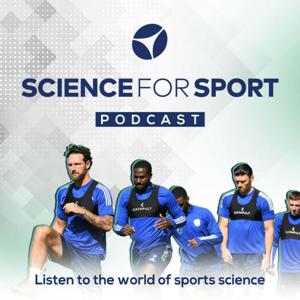


This week on the Science for Sport Podcast, Richard Graves is joined by Rachel Muse, one of the leading performance chefs working with elite athletes across professional sport.Rachel is the founder of Talk Eat Laugh, a specialist performance-chef service supporting athletes in their own homes. Her work bridges the gap between performance nutrition science and real-life eating habits, ensuring athletes follow precise nutritional plans without meals becoming clinical, restrictive, or culturally disconnected.In this episode, Rachel shares her unconventional journey from mathematics graduate to elite performance chef, and explains how chefs, nutritionists, and sports science teams work together to deliver periodised nutrition away from the training ground. The conversation explores how macronutrient targets are delivered in practice, how food preferences and cultural background shape compliance, and why fuelling the brain is just as important as fuelling the body.This is a rare insight into a part of the performance system that is often overlooked, but critical to recovery, consistency, and late-game performance.
In this episode, you will learn
About Rachel Muse
FREE 7d SCIENCE FOR SPORT ACADEMY TRIAL
SIGN UP NOW: https://bit.ly/SFSepisode241
Learn Quicker & More Effectively
Creatine is now one of the most widely used and well-researched supplements in elite sport — but few people know the story of how it first made its way into Olympic performance programmes.
In this episode of the Science for Sport Podcast, Richard Graves sits down with Steven Jennings, one of the key figures behind the early adoption of creatine in elite sport, to unpack a remarkable story that begins long before creatine was common knowledge.
Steven takes us back to the early 1990s — a pre-internet era where sports nutrition research travelled slowly, secrecy mattered, and a single kilogram of creatine played a role in reshaping performance preparation ahead of the Barcelona 1992 Olympic Games. From working directly with pioneering researchers at the Karolinska Institute to navigating Olympic-level scrutiny, this is a rare, first-hand account of how science moved from the lab to the field.
Beyond performance sport, the conversation also looks forward. Steven shares why he believes we are only just beginning to understand creatine’s wider potential — from cognition and ageing to plant-based diets and long-term health.
This is an essential listen for practitioners who want to understand not just what works in performance nutrition, but how evidence, trust, regulation, and timing shape real-world impact.
In this episode you will learn
About Steven Jennings
Over the past three decades, Steven has remained closely connected to the evolution of creatine research, from elite performance applications to emerging work in health, cognition, and ageing. Today, he continues to focus on education, innovation, and the future direction of creatine science.
FREE 7d SCIENCE FOR SPORT ACADEMY TRIAL
SIGN UP NOW: https://bit.ly/SFSepisode241
Learn Quicker & More Effectively
This week on the Science for Sport Podcast, Richard Graves is joined by Brian Roy, a strength and conditioning coach who has spent the past decade working at the sharp end of action and lifestyle sports, including Olympic BMX Freestyle.
In this episode you will learn
About Brian Roy
In this episode of the Science for Sport Podcast, host Richard Graves welcomes back Michael Fennell for a deep dive into one of the most misunderstood periods of the performance calendar: winter training.
In this episode you will learn:
About Michael Fennell
FREE 7d SCIENCE FOR SPORT ACADEMY TRIAL
SIGN UP NOW: https://bit.ly/SFSepisode241
Learn Quicker & More Effectively
The festive period can be one of the most challenging times of the year for athletes and practitioners trying to balance performance, recovery, wellbeing and real life.
In this episode you will learn:
About Dan Richardson
FREE 7d SCIENCE FOR SPORT ACADEMY TRIAL
SIGN UP NOW: https://bit.ly/SFSepisode241
Learn Quicker & More Effectively
This week, Richard Graves sits down with Lew Porchiazzo, Assistant Director for Strength & Conditioning for Olympic Sports at the University of Michigan.
Lew brings more than 16 years of experience at one of the most successful athletic departments in the NCAA. His journey from a Division III football lineman to a leader shaping the development of athletes in softball, gymnastics, men’s soccer and more, is filled with hard-earned lessons, humility, and an unwavering commitment to supporting people first.
In this conversation, Lew dives into:
In this episode, you will learn:
About Lew Porchiazzo
FREE 7d SCIENCE FOR SPORT ACADEMY TRIAL
SIGN UP NOW: https://bit.ly/SFSepisode241
Learn Quicker & More Effectively
This week, host Richard Graves sits down with one of the most energetic and thought-provoking voices in modern performance: Niklas Virtanen, Head of Sports Science at FC Midtjylland.
If you’ve ever wondered how a club without the financial muscle of Europe’s giants consistently outperforms bigger teams, beating Nottingham Forest away, winning at Celtic, and challenging at the top of the Danish Superliga, this conversation tells you exactly how they do it.
Niklas is a rare blend of passion, creativity and evidence-based practice. His presentation at a recent Catapult event had the entire room hooked, and this episode delivers the same energy. From dismantling traditional GPS limitations to redefining how football teams train for micro-actions, set pieces, and physical dominance, Niklas pulls back the curtain on the processes driving Midtjylland’s success.
This episode goes deep into the real-world application of sports science, the balance between data and intuition, and why sometimes the most powerful competitive advantage is simply learning to “solve problems without money.”
Things You Will Learn
About Niklas Virtanen
FREE 7d SCIENCE FOR SPORT ACADEMY TRIAL
SIGN UP NOW: https://bit.ly/SFSepisode241
Learn Quicker & More Effectively
This week, host Richard Graves sits down with former Great Britain and England international basketball player Kofi Josephs, an athlete whose journey through elite sport has been anything but ordinary.
From growing up in Birmingham to playing in front of Michael Jordan at the Jordan Brand Classic, suffering two major hip surgeries in the US collegiate system, becoming the British Basketball League’s highest-scoring British player, and navigating the hidden psychological battles behind performance… Kofi’s story is raw, real, and deeply relevant for anyone working in elite sport.
Now the founder of WhyNotI, a preventative mental health tech platform designed specifically for elite athletes, Kofi is on a mission to reshape how professional environments understand – and support – the person behind the performer.
This episode offers an unfiltered look at the pressures, cultural challenges, expectations, and mental load that athletes carry, and the systemic changes needed to truly support sustainable high performance.
What You’ll Learn
The hidden mental toll of elite sport and why performance alone never tells the full story.
How perfectionism, pressure, and identity shape athlete wellbeing – and where support structures fall short.
Why mental health must be preventative, not reactive, if teams want consistency and longevity in performance.
Insights into the collegiate system in the US and its cultural, emotional, and psychological challenges for young athletes.
Why separating “the athlete” from “the person” is flawed, and how reframing this changes support strategies.
The crucial role of coaches, GMs, and ownership in building environments where mental health is prioritised.
How WhyNotI is using technology, psychology, and data to influence policy, culture, and player care across elite sport.
About Kofi Josephs
Kofi Josephs is a former professional basketball player who represented England at the Commonwealth Games and Great Britain at EuroBasket, competing across elite leagues worldwide including Germany, Spain, Switzerland, Saudi Arabia, and Iceland.
A psychology graduate and outspoken advocate for athlete mental health, Kofi has built a platform that blends his lived experience with scientific insight. He is the founder of WhyNotI, a preventative mental health tech solution designed to provide bespoke support for elite performers while equipping organisations with the data needed to improve culture, care, and decision-making.
Kofi now works across sport, safeguarding, and policy, collaborating with leaders from national governing bodies, Olympic sports, and high-performance environments to drive systemic change.
FREE 7d SCIENCE FOR SPORT ACADEMY TRIAL
SIGN UP NOW: https://bit.ly/SFSepisode241
Learn Quicker & More Effectively
This week, host Richard Graves sits down with Charlie Binns, Lead Nutritionist for the England men’s cricket team, fresh from Perth as preparations ramp up for the Ashes. Charlie lifts the lid on what elite fuelling actually looks like across five-day Tests, why recovery is an arms race, and how his team builds simple, repeatable habits the players will actually use, from colour-coded carb periodisation to the humble banana bread on the snack table.
What you’ll learn from the episode
About Charlie Binns
This week on the Science for Sport podcast, host Richard Graves is joined by boxing legend Johnny Nelson MBE, the longest-reigning cruiserweight world champion in history. With a story that spans early losses, a transformative mentorship under Brendan Ingle, mental resilience, structural discipline, and elite-level performance, Johnny offers a rare window into the mindset and preparation of a world-class athlete.
You’ll Learn
About Johnny Nelson
FREE 7d SCIENCE FOR SPORT ACADEMY TRIAL
SIGN UP NOW: https://bit.ly/SFSepisode241
Learn Quicker & More Effectively
From the publisher's feed

1,990 Listeners

165 Listeners

316 Listeners
1,195 Listeners

8,343 Listeners

4,052 Listeners

7,911 Listeners

21 Listeners

663 Listeners

187 Listeners

619 Listeners

29,036 Listeners

408 Listeners

15 Listeners
28 Listeners