
Sign up to save your podcasts
Or



Based on Podcast App listening data
“Doing the work” is a phrase often heard when talking about racial justice. We heard it a lot after the death of George Floyd in 2020. And we need to continue talking about it—but there’s an important aspect of “the work” that’s been missing. On this episode of How To!: Courtney Martin brings in Garrett Bucks, author of The Right Kind of White and founder of The Barnraisers Project, to help Elizabeth Doerr talk to fellow white parents about the implications of opting out of their kids’ public school.
If you liked this episode check out: “How To Fight Racism in Your Town”
CAST YOUR VOTE FOR HOW TO! IN THE 2024 WEBBY AWARDS! https://vote.webbyawards.com/PublicVoting#/2024/podcasts/shows/advice-how-to
Do you have a problem that needs solving? Send us a note at [email protected] or leave us a voicemail at 646-495-4001 and we might have you on the show. Subscribe for free on Apple, Spotify or wherever you listen.
How To’s executive producer is Derek John. Joel Meyer is our senior editor/producer. The show is produced by Rosemary Belson and Kevin Bendis.
Slate Plus members get bonus segments and ad-free podcast feeds. Sign up now at slate.com/howtoplus.
Learn more about your ad choices. Visit megaphone.fm/adchoices
Joel Anderson, Stefan Fatsis, and Josh Levin, discuss the death of O.J. Simpson and everything his life and his murder trial dredged up. They’re also joined by Vincent Goodwill of Yahoo Sports for a breakdown of the NBA playoffs.
O.J. Simpson's legacy (2:05): Reckoning with the meaning of O.J.
NBA Playoffs (23:45): Breaking down the upcoming playoff picture.
Afterball (41:42): Joel on O.J. Simpson’s long and not so successful sportscasting career.
(Note: time codes are only accurate for Slate Plus members, who listen ad free.)
Want more Hang Up and Listen? Subscribe to Slate Plus to immediately unlock weekly bonus episodes. Plus, you’ll access ad-free listening across all your favorite Slate podcasts. Subscribe now on Apple Podcasts by clicking “Try Free” at the top of our show page, or visit slate.com/hangupplus to get access wherever you listen.
Hosted on Acast. See acast.com/privacy for more information.
This week, host Isaac Butler talks to Anthony McGill, principal clarinetist for the New York Philharmonic. In the interview, Anthony describes his weekly routine, which includes practicing lots of different pieces at any given time, rehearsing, and playing multiple shows per week. He also talks about his meditation practice, his ability to play and be swept away by the music at the same time, and his Grammy-nominated album American Stories.
After the interview, Isaac and co-host Ronald Young Jr. discuss the different preparation timelines of musicians and actors.
In the exclusive Slate Plus segment, Anthony talks about meeting some of his musical heroes.
Send your questions about creativity and any other feedback to [email protected] or give us a call at (304) 933-9675.
Podcast production by Cameron Drews.
If you enjoy this show, please consider signing up for Slate Plus. Slate Plus members get an ad-free experience across the network and exclusive content on many shows—you’ll also be supporting the work we do here on Working. Sign up now at slate.com/workingplus to help support our work.
Learn more about your ad choices. Visit megaphone.fm/adchoices
Candice Lim is joined by Slate culture writer Nadira Goffe to discuss their takeaways from Quiet on Set: The Dark Side of Kids TV, a documentary series that details the toxic work environment, child abuse and disturbing events that occurred on the set of creator Dan Schneider’s shows. Schneider was the mind behind some of Nickelodeon's most-watched programming including All That, The Amanda Show and iCarly. But several dark truths were unearthed following the arrest of two child predators who worked on his sets, along with accusations of gender discrimination, sexual harassment and alleged sexual behavior by Schneider himself. Following the docuseries’ release, former child actors have used social media to make statements and speak about their experiences on Nickelodeon sets. But has the internet’s reaction from both viewers and former child actors helped or hurt the purpose and aim of the docuseries itself?
This podcast is produced by Se’era Spragley Ricks, Daisy Rosario, Candice Lim and Rachelle Hampton with production assistance by Jared Downing.
Hosted on Acast. See acast.com/privacy for more information.
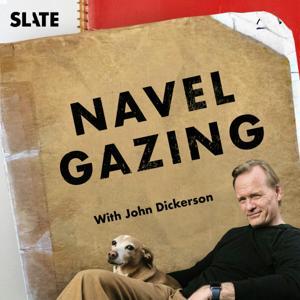
In this week’s essay, John remembers dropping his son off at college, and trying to hold onto moments and feelings while you can.
Notebook Entries:
Notebook 75, page 6. September 2021:
They chose you.
Notebook 15, page 4. April 2004:
Sitting with Brice by waterfall. Throwing rocks in stream. Loading sand from dump truck and loader and back again.
References:
What Got You Here, Won’t Get You There by Marshall Goldsmith
Songwriter Nick Cave
Tomorrow, and Tomorrow, and Tomorrow by Gabrielle Zevin
Podcast production by Cheyna Roth.
Email us at [email protected]
Want to listen to Navel Gazing uninterrupted? Subscribe to Slate Plus to immediately unlock ad-free listening to Navel Gazing and all your other favorite Slate podcasts. Subscribe now on Apple Podcasts by clicking “Try Free” at the top of our show page. Or, visit slate.com/navelgazingplus to get access wherever you listen.
Host
John Dickerson
Learn more about your ad choices. Visit megaphone.fm/adchoices
When you hear “boy band,” what do you picture? Five guys with precision dance moves? Songs crafted by the Top 40 pop machine? Svengalis pulling the puppet strings? Hordes of screaming girls?
As it turns out, not all boy bands fit these signifiers. (Well…except for the screaming girls—they are perennial.) There are boy bands that danced, and some that did not…boy bands that relied entirely on outside songwriters, and those that wrote big hits…boy bands assembled by managers or producers, and quite a few that launched on their own.
From Frankie Lymon and the Teenagers to New Kids on the Block, the Monkees to the Jonas Brothers, Boyz II Men to BTS, New Edition to One Direction, and…yeah, of course, Backstreet Boys and *N Sync, boy bands have had remarkable variety over the years. (In a sense, even a certain ’60s Fab Four started as a boy band.)
Join Chris Molanphy as he tries to define the ineffable quality of boy band–ness, walks through decades of shrieking, hair-pulling pop history, and reminds you that boy bands generated some of our greatest hits, from “I Want You Back” to “I Want It That Way,” “Bye Bye Bye” to “Dynamite.” Help him “bring the fire and set the night alight.”
Podcast production by Kevin Bendis.
Hosted on Acast. See acast.com/privacy for more information.
When you hear “boy band,” what do you picture? Five guys with precision dance moves? Songs crafted by the Top 40 pop machine? Svengalis pulling the puppet strings? Hordes of screaming girls?
As it turns out, not all boy bands fit these signifiers. (Well…except for the screaming girls—they are perennial.) There are boy bands that danced, and some that did not…boy bands that relied entirely on outside songwriters, and those that wrote big hits…boy bands assembled by managers or producers, and quite a few that launched on their own.
From Frankie Lymon and the Teenagers to New Kids on the Block, the Monkees to the Jonas Brothers, Boyz II Men to BTS, New Edition to One Direction, and…yeah, of course, Backstreet Boys and *N Sync, boy bands have had remarkable variety over the years. (In a sense, even a certain ’60s Fab Four started as a boy band.)
Join Chris Molanphy as he tries to define the ineffable quality of boy band–ness, walks through decades of shrieking, hair-pulling pop history, and reminds you that boy bands generated some of our greatest hits, from “I Want You Back” to “I Want It That Way,” “Bye Bye Bye” to “Dynamite.” Help him “bring the fire and set the night alight.”
Podcast production by Kevin Bendis.
Learn more about your ad choices. Visit megaphone.fm/adchoices
In this episode, Anna Sale (host of Death Sex and Money) joins Prudie (Jenée Desmond-Harris) to answer letters from readers about how to navigate being the friend who always initiates plans, how to handle entitled stepdaughters moving into your home, and how to stop being a mean girl to other moms.
If you want more Dear Prudence, join Slate Plus, Slate’s membership program. Jenée answers an extra question every week, just for members.
Go to Slate.com/prudieplus to sign up. It’s just $15 for your first three months.
This podcast is produced by Se’era Spragley Ricks, Daisy Rosario, and Jenée Desmond-Harris, with help from Maura Currie.
Learn more about your ad choices. Visit megaphone.fm/adchoices
Commentator Candace Owens’ messy fall from grace in conservative media coincided with her appearances on popular Black chat shows. That includes The Breakfast Club, led by radio host and personality Charlamagne tha God.
Once a minor social media personality who condemned Donald Trump as racist, Owens became one of the former president’s chief defenders, and a leading Black voice of anti-Black rhetoric. So is Owens saying anything new in Black media, and were those outlets doing the right thing by inviting her?
On today’s episode of A Word, Jason Johnson is joined by Michael Harriot. He’s a columnist for The Grio, and the author of Black AF History: The Un-Whitewashed Story of America. Harriot recently wrote for The Guardian, criticizing the choice to platform Owens in African American media.
In this interview and an earlier version of this episode description, we incorrectly stated and implied that Candace Owens’ interviews on Joe Budden’s podcast and The Breakfast Club happened after The Daily Wire announced her separation from the outlet on March 22. They both occurred before, with the Budden interview recording the week of February 27, and being published in mid-March. The Breakfast Club discussion was recorded on March 18 and aired on March 21. We regret the error.
Guest: Writer Michael Harriot
Podcast production by Kristie Taiwo-Makanjuola
Want more A Word? Subscribe to Slate Plus to immediately access ad-free listening across all your favorite Slate podcasts. Subscribe today on Apple Podcasts by clicking “Try Free” at the top of our show page. Or, visit slate.com/awordplus to get access wherever you listen.
Learn more about your ad choices. Visit megaphone.fm/adchoices
Magazines have fallen on hard times – especially the weekly news, fashion, and celebrity mags that once dominated newsstands. The revenue from magazine racks has plummeted in recent years, and many magazines have stopped appearing in print or shut down altogether.
And yet, there is something growing in the checkout aisle: one-off publications, each devoted to a single topic, known as “bookazines.” Last year, over 1,200 different bookazines went on sale across the country. They cover topics ranging from Taylor Swift, Star Wars, the Kennedy assassination, K-Pop, the British royal family, and as host Willa Paskin recently observed, the career of retired movie star Robert Redford.
In today’s episode, Willa looks behind the racks to investigate this new-ish format. Who is writing, publishing, and reading all these one-off magazines – and why? Is the bookazine a way forward for magazines, or their last gasp?
Voices you’ll hear in this episode include Caragh Donley, longtime magazine journalist turned prolific writer of bookazines; Eric Szegda, executive at bookazine publisher a360 media; and Erik Radvon, comic book creator and bookazine fan.
This episode was produced by Max Freedman and edited by Evan Chung, who produce the show with Katie Shepherd. Derek John is Executive Producer. Merritt Jacob is Senior Technical Director.
If you haven’t yet, please subscribe and rate our feed in Apple Podcasts or wherever you get your podcasts. And even better, tell your friends.
If you’re a fan of the show, please sign up for Slate Plus. Members get to listen to Decoder Ring and all other Slate podcasts without any ads and have total access to Slate’s website. Your support is also crucial to our work. Go to Slate.com/decoderplus to join Slate Plus today.
Hosted on Acast. See acast.com/privacy for more information.
From the publisher's feed
Hosted on Acast. See acast.com/privacy for more information.
Ranked by our users in the last 21 days

90,569 Listeners

37,876 Listeners

6,788 Listeners
11,552 Listeners

3,926 Listeners

8,458 Listeners
1,377 Listeners
2,841 Listeners
992 Listeners

1,025 Listeners
7,646 Listeners
5,621 Listeners
2,617 Listeners

1,531 Listeners

53 Listeners
2,075 Listeners
242 Listeners
23,880 Listeners
2,113 Listeners
1,283 Listeners
1,196 Listeners
435 Listeners
737 Listeners
60 Listeners

669 Listeners
708 Listeners
48 Listeners
100 Listeners

6 Listeners
131 Listeners
0 Listeners
45 Listeners