
Sign up to save your podcasts
Or

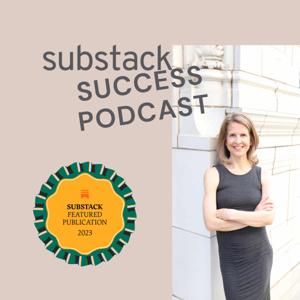


Listen to the podcast version ↑
I’m so happy you’re here—always. I’m amazed by the work you are and everyone in Substack Writers at Work is doing. So committed.
Now is the time to go all in on your Substack.
Which is why we’re talking about your Substack DNA.
On a purely mercenary level, it’s really hard to get, engage, and keep subscribers if your Substack is vague or doesn’t feel like there’s a person behind it.
Those Substack creators who chase the latest “hack” and “trick” are missing out. Substack is so much richer than that. It’s deep work, the kind you find yourself in and achieve things you never thought possible.
I see it in my clients all the time.
And it requires knowing your Substack DNA.
What your Substack DNA is:
DNA is the genetic code that makes us different from anyone else. It’s the blueprint that defines our characteristics, appearance, and what we do.
Your Substack’s DNA is the part of you that is your Substack.
It’s what obsesses and preoccupies you, what you could write and talk endlessly about and never get bored.
What your Substack DNA isn’t
* It’s not the “stuff” you offer—posts, chat, whatever. It’s what makes the stuff you offer make sense.
* It’s absolutely not your marketing “niche.”
DNA isn’t a perfect metaphor. Substacks can change (DNA supposedly can’t). We aren’t (I don’t think) trying to propagate our Substacks. And Substacks that have no DNA don’t cease to exist; mainly, they just flounder and atrophy.
But the idea that your Substack grows and develops when we establish the core of what we do, and can communicate it to others, holds.
Case studies from my clients
One of the main things I do as a Substack strategist is to help my clients and Mastermind members discover what their Substack DNA is.
When they do, they take off.
To show you exactly how this might play out (in real life, not Substack-growth-hacker-nonsense land) here’s what happened with two of my clients.
Your Substack DNA may be narrower than you think: Petya Grady
Petya K. Grady is the creator of A reading life.
* Petya changed her Substack from Lifequakes, about life transitions, to A Reading Life—a wonderful Substack about how we can reclaim our intellectual and reading lives and take responsibility for our inner landscape.
With your Substack DNA comes growth:
* Within a year of figuring out her Substack DNA, she went from 400 subscribers to over 7500.
* In the eight or so months following, she was also featured by Substack three (3!) times.
(If you’re interested in a basic overview of how Substack decides whom to feature, read “How to Be a Featured Substack.”)
* A key moment came during one of our sessions when she realized she should focus on who she wants to be “talking with” rather than “talking to.” (I love this too.)
* It happened when she stopped asking What am I an expert in? and instead focused on What am I most interested in? and (I love this) What activates my gossip nerves?
* Once she identified her core interest in reading despite having a busy life, she simply decided to talk to the people who shared that interest.
* That clarity made everything fall into place so easily. The logistics took care of themselves.
Your Substack DNA may be broader than you think: Emma Vivian
Emma Vivian is the writer behind Attempts at Optimism by Emma Vivian.
* Her story of being diagnosed with breast cancer at 29, shortly after her best childhood friend was also diagnosed, and being the only one to survive it is remarkable and the topic of her memoir.
* Her Substack, as we discovered while working together, is larger than that.
* Initially, her Substack was called Am I Cured Yet? but then realized she didn’t want to write about cancer all the time.
* We talked through what her posts had in common. As Emma put it, “I had cancer. I am not cancer.” The experience shaped her outlook, which was far more interesting for a Substack.
* The DNA, the core, of her Substack is her outlook on life: attempting optimism despite our natural human pessimism (and without toxic positivity).
* Emma had two Notes go viral, which came after we pivoted away from her posting about cancer and instead tapping into her life more generally and the essence of always trying.
* Viral Note #1: Introducing herself and her “new” Substack:
* Viral Note #2: She had been posting Notes about cancer. When she went broader and more in line with Attempts at Optimism, her Notes got engagement and reached more people:
Having clarity about her Substack DNA gave her a framework that generated new ideas and made her excited about writing again. She didn’t worry about running out of things to say each week.
It didn’t change what she was writing; it just made her Substack clearer to readers and subscribers.
The noise about Substack growth “hacks” is exhausting. They’re also a waste of your time. Real growth, long-term growth, joyful growth comes from knowing what your Substack is truly about—and loving it.
If you want more help with your Substack DNA and want the Substack white-glove treatment, I see a limited number of private clients—book your Single Strategy Intensive here or 3-Session Substack Accelerator Package here.
©2025 Substack Writers at Work
In case you missed our live with two amazing Substack writers and humans, who are also my clients, I’m going to give you the full recap (below) and the replay (above).
Emma Vivian is the creator of Attempts at Optimism by Emma Vivian.
Petya K. Grady is the creator of A reading life.
We talk about how they discovered the core of their Substacks while working with me.
What is your Substack?
* 00:52 Understanding Your Substack DNA
* 03:03: Petya’s A reading life
* 04:49 Emma's Attempts at Optimism by Emma Vivian
* 05:41 Petya’s Substack journey
* 08:16 Emma’s Substack journey
* 10:57 Importance of finding your Substack DNA
* 14:52 How Petya went from Lifequakes to A Reading Life and 400 subscribers to over 7500 in one year and being featured by Substack three (3!) times
* 15:30 How Emma came to Substack with her cancer story Am I Cured Yet? and shifted to Attempts at Optimism and grew from 0 subscribers to over 500 in just four months
* 20:43 Learning from Other Substacks
* 33:05 Navigating paid subscriptions
* 36:34 Building a community on Substack
* 42:28 What draws people is the person behind the Substack—you are your Substack DNA
* 50:37 Your Substack DNA is the conversation you want to have with your readers
* 53:27 Value of exploration in finding your Substack DNA
* 55:02 Sharing your unique worldview
Notes Boost Challenge
* (00:00:22) Introduction to the Notes Boost Challenge
* Created when Substack introduced notes
* Notes is now 2 years old and offers phenomenal growth potential
* (00:01:21) Purpose of the Notes Boost Challenge
* Created to connect Substack writers with each other
* Helps writers gain visibility through engagement
* Not about frequency but quality of engagement
* (00:03:11) How the Notes Boost Challenge works
* Writers share notes in comments
* Others can boost notes they genuinely like
* Creates community and connection between writers
* (00:04:05) Mental health considerations
* Emphasis on keeping Notes a mentally healthy space
* Recommendation to limit time in the main notes feed
* Notes Boost helps avoid toxic aspects of social media
* (00:06:01) Participation process
* Post your note in the comments
* Others find and boost notes they genuinely like
* Will separate into categories (culture, health, literature, etc.)
* (00:07:32) Timing of Notes Boost
* Emails go out at 9 AM daily
* Being early increases traction
* Will add afternoon boost at 2 PM (everything closes at 5 PM)
* (00:09:49) Types of notes that get traction
* Tweet-like short posts
* Facebook-style life updates
* Instagram-style photos with captions
* Longer text-only posts with a story/narrative
* Avoid links in posts
* (00:14:13) SEO in notes
* Using keywords helps visibility
* Search for your topic to see what works
* Curate your feed for better experience
* (00:16:44) Importance of authentic voice
* Don't use AI - readers can tell
* Voice and tone are what AI can't duplicate
* Personal stories and authentic voice get traction
* (00:18:01) Growth potential
* Example of client gaining 5,000 subscribers from one note
* Email lists are valuable assets for authors
* (00:20:59) Export your subscribers monthly
* Critical safety tip after someone accidentally deleted their Substack
* Export CSV files regularly to protect your subscriber list
* (00:22:54) Time management advice
* Don't engage with notes constantly
* Just be in Notes Boost once a day during the 21-day challenge
* Takes about an hour a day to participate meaningfully
* (00:36:33) Final tips
* Post an "introduce yourself to Substack" note
* The challenge runs for 21 days, then you get time off
* Take advantage of the growth opportunity while it lasts
Thank you all for being on our live about why Notes and a carefully chosen community are the key to real Substack growth.
Our amazing guests also shared how going viral—when done right—can lead to meaningful connections.
Katherine discusses her Substack The Wild and Holy Moment and shamanic practices and how one of restacks went viral. Jessy talks about her Substack AFTER/WORDS by Jessy Easton, her memoir, writing process, and how being personal and authentic has helped her engage more readers. Lucy discusses her note that went viral, gaining over 15,000 likes and 251 subscribers, and the importance of being seen and engaging with her audience.
I’ll have a full post about what’s going viral on Notes and the Notes Boost Challenge for you tomorrow; in the meantime, below are some of the featured Notes. Everyone featured participated in the April Notes Boost Challenge.
Join us for May’s Notes Boost Challenge, May 7-28.
* 00:00 Introduction and welcome
* 00:17 Introducing the Substack: The wild and holy moment
* 01:26 Exploring shamanic practices and death initiations
* 03:03 Highlighting the Substack's impact and community engagement
* 04:31 The power of Notes: strategies and success stories
* 06:18 Katherine's viral Notes and their impact
* 12:32 Restacks and their potential
* 20:51 Jessy’s journey: sharing hard stories on Substack
* 27:09 Publishing industry challenges
* 27:37 Substack and personal branding
* 28:08 Engaging with your audience
* 28:59 The importance of voice
* 31:32 Notes Boost Challenge insights
* 33:32 Consistency and intentionality
* 42:45 The power of authenticity
* 49:50 Preparing for the Notes Boost Challenge
* 51:43 Final thoughts and encouragement
Subscribe to Substack Writers at Work: www.substackwritersatwork.com
Today, we talk about subvocalization and how important it is to reading and voice and how important it is to writing. Voice is one of the hardest craft skills to teach and learn. If more Substack writers and authors had it, a lot more of them would be earning an income.
The most profound subvocalization-causing effects—your authentic voice, i.e., you—are rendered during the messy middle of the writing process. Past brainstorming and drafting, we get into revision and editing, where you render your voice into silent words.
I loved getting to talk about the importance of really (really) tending to your mental health on Substack.
Mental health is a word that gets thrown around a lot. It’s different for all of us. We get to decide what being “mentally healthy” looks like.
And Substack is such a wonderful platform, but it’s still a platform, meaning it is visible and very public and that can do weird things to our brains.
The amazing Alyssa Polizzi came on and shared so much wisdom for how to manage the mental and emotional strain that comes from being a human on this thing we call the internet.
01:38 My personal mental health journey
03:37 Serialization and Substack
05:28 Navigating Substack as a writer
11:25 Understanding jealousy and envy
15:13 Engagement and authenticity on Substack
24:17 Harnessing emotions for creative fulfillment
24:47 Learning from famous Substack creators
25:36 The importance of asking for support
26:39 Authenticity in writing
27:51 Dealing with envy and jealousy
29:19 Substack growth strategies
32:52 The early days of Substack
35:01 Interview with Alyssa
36:34 Building a sustainable creative practice
45:03 Final thoughts and community support
A summit on what it means to have a 100% human-produced Substack with Rosana Francescato and Matthew Long!
Thank you Joy Sullivan, Henry Oliver, Danielle Bean, Britany Robinson, Aimee Liu, and many others for tuning into my live video with Seth Werkheiser!
Should Seth and I turn this into a regular show?
If so, what should we call it???
Suggestions:
* S&S on Substack
* Substack Entrepreneurs at Work
Subscribe to Substack Writers at Work www.substackwritersatwork.com to get real Substack guidance and proven strategies that have worked for thousands of Substack writers and creators.
Today, I talk with david roberts and Gregory Garretson about how to get engagement on Substack.
So much great advice from two great Substack writers who have vibrant comments sections.
From the publisher's feed
Ranked by our users in the last 21 days

37,857 Listeners

16,030 Listeners

576 Listeners

14,900 Listeners

39 Listeners
3,302 Listeners

2,607 Listeners

269 Listeners
783 Listeners
678 Listeners

1,627 Listeners

18,827 Listeners
17 Listeners

6,168 Listeners

5 Listeners