
Sign up to save your podcasts
Or

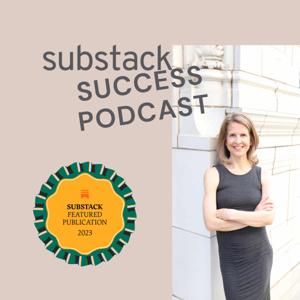


* Substack Welcome email best practices for 2025
* Your Welcome Email Audit
* Your 2025 Welcome Email Template
* Answers to your burning questions:
* Do Welcome emails matter?
* What’s the ideal length for a Welcome email? (It’s changed!)
* Should you use images?
* Should you ask them to upgrade?
* What about deliverability issues?
→ Go through the full process with me in the workshop replay above or below.
Preventing people from unsubscribing and encouraging them to engage starts long before they receive your first post.
It starts the moment they subscribe.
And it’s sealed by your Welcome email.
To keep and convert subscribers, you need to experience your Welcome email the way your subscribers do.
SUBSTACK WELCOME EMAIL BEST PRACTICES FOR 2025
Your welcome email is the highest-performing email you’ll ever send.
But most writers overdo it, ignore it, or haven’t updated it since 2022 or 2023 or 2024.
Best practices in 2025 are much different than they were even six months ago.
If you haven’t updated your Welcome email lately, it’s out of date.
In the replay and below, you won’t just randomly revise your Welcome email. You’ll put it in the context of what people experience when they subscribe to your email and what you want them to feel and think after reading your all-important Welcome email.
Do Welcome emails matter?
Yes! Welcome emails outperform everything else.
* Open rates: ~60–80 percent
* Click-through rates (clicking a URL): ~25 percent
What’s the ideal length for a Welcome email in 2025?
* 50–150 words!
* ~200 words max if your writing is tight and easy to scan
Why short?
* Average attention span =
* If we’re being generous, 50 to 60 seconds per email
* If not, 10 seconds
* 50–125 words delivers optimal response rates of ~50 percent in studies of response-driven emails (Beehiiv Blog)
* Emails around 200 words (roughly 20 lines of text) often yield highest click-through rates, while going longer drops engagement (Omnisend)
* Subscribers are skimming
* A long welcome email feels like a pitch
* Think cell phones
* Most opens are on phones
* About 60 percent of readers scan vertically for ~10 seconds
* You don’t have to tell them everything
* You just met them at a party—less you, more them
Should you use images?
* One photo of you with alt text is fine–build trust—real, not a headshot.
* Text only can mean better deliverability: slower to load and lower engagement, image-only emails can end up in promotions or spam.
* You must have alt text! 30-50 percent of your subscribers’ email blocks images by default.
Should you ask them to upgrade?
* Up to you but two CTAs max.
* They shouldn’t be related (e.g., upgrade and buy my novel)
* One “above the fold,” i.e., in the first 75–100 words.
* One in the P.S.
* For both, provide two links: hyperlinked text and a button.
* You just met, so asking them to upgrade should be done elegantly. Let them know about the option.
What do you want people to do after reading your welcome email?
* Read a post
* Engage by joining the chat or some other community event
* Chat
* An introductions post
* Upgrade to paid
* Buy your book, enroll in a course, etc.
How do we use it to counter future deliverability issues?
Unfortunately, we don’t get stats for the open rates of our welcome emails. Total bummer. But there are two ways to help with deliverability:
* Ask them to reply to your Welcome email
* Whitelist / Move to Primary tab
EXAMPLE: If you're using Gmail, drag this into your Primary tab—or just add me to your contacts—to be sure you get the most out of your subscription.
Can you ask people to opt in or out of sections?
If you use sections, you can direct them to update their preferences and subscribe to certain sections of your Substack. This can encourage trust and (especially if you post a lot) prevent people from unsubscribing.
If you’re confused about sections, watch my 4-minute overview.
Remember, a section is like having a separate Substack/email list within your email list.
You might say something like:
EXAMPLE: Choose how often you hear from me. You can manage your subscription here.
YOUR SUBSTACK WELCOME EMAIL AUDIT
Run an audit of what it’s like to receive your Welcome email—not in a vacuum but after going through the Substack’s subscription flow (which isn’t ideal).
How to run the audit (step-by-step):
** Use the Know Your Subscribers Implementation Guide PDF below to make this much easier.
Too often, when we try to get subscribers or likes or conversions, we don’t even know who we’re trying to engage or upgrade to paid.
The tricky part is that our person changes and we change and Substack is always changing, so we always have to be checking in.
In marketing-speak, they call it your “avatar.” Sometimes it can be helpful to approach it in the usual ways. But the world has changed and people have changed and their buying habits have changed and their subscribing habits have changed.
In a world where AI can spit out information, we need to connect as actual humans. That means knowing exactly whom we’re writing for.
What we cover
I walk you through my process for getting to know your actual readers—not some made-up avatar, but the real people reading your work. We dug into where they’re reading you, what they're Googling at 2am, what they’re sick of reading about, and more.
* (00:00:50) - Forget the Substack drama. Focus energy on “you and your people” rather than getting caught up in speculation about Substack’s future changes.
* (00:02:59) - Move beyond traditional “avatar” marketing speak to understand your actual readers and their real experiences.
* (00:08:27) - For Writers: Ask three key questions about your readers.
* (00:10:03) - For Creators/Coaches/Teachers: Use these three questions to get at the problems your audience faces
* (00:18:56) - Using this guide to find ideas for your next posts.
* (00:23:47) - Differentiate from AI by sharing your experiences rather than just information.
* (00:29:41) - Better CTAs than “support my work.”
* (00:38:29) - On Substack, you play five roles: You’re writer, editor, publisher, salesperson, and publicist.
Fill this out during our live workshop. If you’re watching the replay, set a timer for each, so you keep this short.
Save this document. Bring it to the paid-subscriber-only workshop on Friday, 8/1, where we’ll go through your entire subscriber flow to grow your Substack. Details to come.
Thank you Rachel Botsman, Darien Gee, Petya K. Grady, Debbie Weil, Alexander Verbeek, and many others for tuning into my live video! Join me for my next live video in the app.
Use the Know Your Subscribers Implementation Guide PDF below.
Word version:
* https://tinyurl.com/3fz88zyp
PDF:
This Ask Me Anything expands on what I cover in today’s post:
Note: Please watch the entire live to understand the full picture. All the information shared is publicly available. I don’t work or speak for Substack. Opinions are my own.
Very excited for tomorrow’s 7-Day Notes Boost Challenge.
Take an hour and get all your Notes ready for the seven days in advance, so you aren’t scrambling during the Challenge.
* I take you through seven of the 12 Essential Notes Templates.
* We also workshop people’s Notes, so you can see how a “great Note” works.
***Put your potential Notes in the comments for all to see!
The Notes Boost Challenge is an amazing opportunity to connect and support each other as a community and (bonus!) get engagement on your Notes.
12 ESSENTIAL SUBSTACK NOTES TEMPLATES
FIND OUT EVERYTHING ABOUT THE NOTES BOOST CHALLENGE HERE:
See you soon!
I love getting to do this with all of you.
This goal-setting session is the best 40 minutes you can spend. I’m not just saying that. I did it this morning, too.
Participating in this session will transform the next three months for you.
Let me guide you for 40 minutes.
You’ll leave knowing what matters to you and who you want to become; where to focus; and where to spend your time, attention, energy, and (yes) money.
The 4 steps to achieving your Substack goal
Having a goal is and isn’t about achieving the goal.
It’s about four things: Having a ritual of appreciation, discovering what’s most important to you right now, knowing where to focus your efforts, and becoming the person you want to be.
Step 1: Ritual of Appreciation
Having a goal is about having a ritual to appreciate what you’ve done during a certain period of time, regardless of the goal, and what and who helped you get there.
Right now: Write down three successes in your Substack.
Those could be:
* Subscribers
* Paid subscribers
* Producing posts you’re really proud of
* Making connections
* Getting engagement in the comments
* Getting likes
* Having people restack your posts
* Showing up in the Notes Boost Challenge
* Revenue
Take a moment. Celebrate these. Really feel them in your body.
Now, who helped you achieve them?
* Family
* Colleagues and friends on Substack
* Friends
* Substack guides/teachers
* Substack—the platform
* Food in your fridge that nourished you
* Animals (maybe your cats :)
* Sunlight and fresh air on your walks
* The yoga mat you stretched on
* The water in your tap that hydrated you
* The bed you slept on
Maybe send them a thank you.
Step 2: What matters most to you (right now)
Choosing a goal helps us discover what’s most important to us right now.
* Choose one Substack goal for Q3 (July, August, September).
One goal.
The beauty of goal setting is that it also helps you determine what matters most to you right now.
Start by eliminating from this list what’s non-essential:
* Subscribers
* Paid subscribers
* Producing posts you’re really proud of
* Make more connections
* Get engagement in the comments
* Get more likes
* Have people restack your posts
* Show up in the Notes Boost Challenge
* Revenue
That will lead you to the one goal that’s essential to you right now.
Write it down.
Step 3: Become who you want to be
Trying to achieve a goal is about who you want to become.
If I just want money or subscribers or likes or even connection, it will likely feel empty whether I achieve it or not.
* Who do you need to become to achieve your goal?
* Fill in the blank:
* Someone who ______.
Write as many as apply.
Step 4: Focus your time, attention, energy, and money
Where will you focus your time, attention, energy, and money in Q3 to achieve your goal in a way that going for it brings you more calm and health?
* Time
* Attention
* Energy
* Money
From these, write down two small teeny action steps you can take and take them!
Thank you (!) Meghan Daum, Susie Bright, Debbie Weil, Amy Gabrielle, Francesco Turrisi, and many others for tuning in.
Share your goal or any part of this process with us. And then find someone to meet and say hello.
Also, if you’re new or haven’t been to our paid-subscriber chat (!), please go and introduce yourself and your Substack. Our community is one of the best parts of your subscription. Don’t miss it!
Substack offers many features when it comes to posting. In this quick-guide, we go through them all.
Some of the many highlights:
* All your content is distributed simultaneously as both blog posts and emails, streamlining the publishing process.
* Substack’s interface allows you to create text, video, or audio posts, with options to filter and organize content by date, subscriber access, and post type.
* Formatting features include headings, text styles, image handling, audio embedding, and custom buttons for subscriber engagement.
* Very important! You can preview your posts before posting to see what they’ll look like across mobile, desktop, and email formats before publishing.
* And more…
00:00 Getting Started with Posting
00:22 Creating and Styling Your Post
00:54 Adding Media to Your Post
02:03 Advanced Formatting Options
02:17 Customizing Post Interactions
03:34 Managing Post Settings
04:39 Finalizing and Publishing Your Post
* Want more help? As a paid member, you get 24/7 Substack help from the Substack Writers at Work community in the chat here.
* And don’t forget to bookmark the Substack Writers at Work homepage, where you’ll find everything that’s part of your paid subscription.
So many writers want to be featured by Substack.
It can bring thousands of new subscribers. Being featured signals you're producing authentic work, not AI content. It puts you in excellent company with other quality creators.
Today, we're talking about the one thing that actually matters for Substack success—and it's not posting more, growing faster, or any of the surface-level tactics everyone's obsessing over.
I take you inside how Substack decides who to feature.
Go to www.substackwritersatwork.com and get the workflow I created to help you raise the quality of your posts to featured-Substack level.
Subscribe to Substack Writers at Work: www.substackwritersatwork.com
Main takeaway: We have to ask people to pay. Yup. No way around.
Some of us just expect people to pay. And writers and creators/creatives tend to dislike asking, but there’s no way around it.
I’ll be talking about how to ask people to pay without feeling icky and salesay 6/10 and in our paid-subscriber workshop on 6/13.
Highlights from our live!
Substacks mentioned and to subscribe to:
* Stephanie Bennett Vogt: The Journey Home
* Caroline Donahue: Book (& Craft) Alchemy
* Simon Haisell: Footnotes and Tangents
* haley larsen, phd: Closely Reading
* Meghan Daum: The Unspeakeasy with Meghan Daum
3 Components of a Substack Bestseller:
* Know what your Substack is (your Substack DNA)
* Know what you offer
* Articulate that offer to people
Please check out and subscribe to Caroline Donahue and Stephanie Bennett Vogt. Their Substacks are terrific.
* 00:00:30 - Caroline's Substack
* 00:07:07 - Stephanie's Substack
Core Concepts
* 00:03:05 - 3 components of bestseller
* 00:21:05 - What people pay for
Paid Strategies
* 00:14:15 - Business models
* 00:19:04 - Paywalling tips
* 00:35:42 - 3 paid models
* 00:43:16 - Calls to action
* 00:45:37 - Discounts and special offers
* 00:52:54 - Nurturing subscribers
Sustainability
* 00:54:02 - Avoiding overwhelm
* 00:55:30 - Consistency
For the comments: What’s worked for you in converting paid subscribers?
To listen to the full episode and watch the workshop, become a paid subscriber: www.substackwritersatwork.com/subscribe
Too often on Substack, we feel pressure to constantly produce lengthy, polished posts. Or we think that “quality” = more: longer posts or simply more “stuff,” i.e., video, audio, etc.
We end up overextended and stressed, feeling like “nothing is working,” which really is a signal that we’re working too hard, i.e., putting too much energy into Substack in ways that don’t benefit us or our readers.
What if we could make Substack much, much easier on ourselves and (maybe) give our readers more?
→ Enter the Nugget post.
00:00 Welcome and Introduction
00:20 The Stress of Growing on Substack
01:34 The Relaxing Approach to Substack
04:31 Introducing the Substack Nugget Post
08:26 Examples of Substack Nugget Posts
11:22 Creating Your Own Nugget Post
14:12 Sharing and Personalizing Your Nugget Post
22:51 Sharing Personal Experiences and Insights
23:37 The Concept of Roundup Posts
24:24 Staying Within Your Niche
25:37 Creating Genuine Content
26:42 The Importance of Authenticity
27:27 Balancing Paid and Free Content
27:55 Modeling Desired Behaviors
29:00 Engaging with Your Audience
30:46 Overcoming Perfectionism
31:36 Practical Tips for Content Creation
36:30 Final Thoughts and Encouragement
* Become a paid subscriber to listen to the replay: www.writersatwork.net
Are you feeling confused, overwhelmed, or pretty much lost on Substack?
Get clear, feel at ease, and feel confident that you belong on the platform.
From the publisher's feed
Ranked by our users in the last 21 days

37,863 Listeners

16,036 Listeners

576 Listeners

14,908 Listeners

39 Listeners
3,301 Listeners

2,607 Listeners

269 Listeners
782 Listeners

678 Listeners

1,634 Listeners

18,838 Listeners
17 Listeners

6,157 Listeners

5 Listeners