
Sign up to save your podcasts
Or

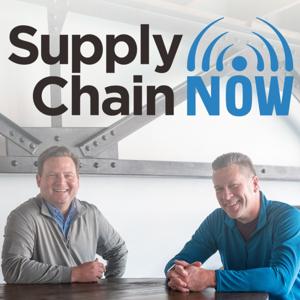


The data doesn't lie, and in Q1 2026, it's telling a story the freight industry hasn't seen in years.
In this special episode of Supply Chain Now, Scott W. Luton and Karin Bursa welcome Bobby Holland, Director of Freight Business Analytics at U.S. Bank, and Bob Costello, Chief Economist and Senior Vice President at the American Trucking Associations, for a deep dive into the latest U.S. Bank Freight Payment Index for Q1 2026.
The episode unpacks seven critical takeaways from the quarter, including a historic 12.9% spike in freight spending, a rare supply-side recovery driven by tightening capacity and surging fuel costs, and regional breakdowns across the West, Southwest, Midwest, Northeast, and Southeast, with stops on tariff impacts, cross-border trade with Canada and Mexico, and what a $7.22-per-gallon diesel price in California means for the broader economy.
Together, they explore why this recovery is unlike anything we've seen since the pandemic boom, what the Goldman Sachs recession outlook gets right (and wrong), and how supply chain leaders can use real, verified freight data, not feelings, to make smarter decisions in an unpredictable 2026.
Jump into the conversation:
(00:00) Intro
(03:29) Introducing the dynamic duo: Bobby Holland & Bob Costello
(06:23) Bobby's headline summary
(09:47) How industry leaders use the Freight Payment Index
(10:01) National-level results: spending jumps 12.9%
(10:54) A rare supply-side recovery
(13:10) West region: highest shipment levels since 2023
(17:20) Southwest region: 10th straight quarter of declines
(21:40) Midwest region: strongest quarter since Q1 2018
(26:05) Winter storms break the streak
(28:11) Canada & Mexico trade: tariff impact on cross-border freight
(33:20) Southeast region: the only region posting declines
(41:32) Goldman Sachs vs. economic reality
(44:28) Freight market forecast: what's ahead in 2026
Additional Links & Resources:
This episode was hosted by Scott Luton and Karin Bursa and produced by Trisha Cordes, Joshua Miranda, and Amanda Luton. For additional information, please visit our dedicated show page at: https://supplychainnow.com/analysis-q1-2026-us-bank-freight-payment-index-1588
In this episode of The Buzz, we explore the accelerating pace of supply chain transformation—from AI and automation to talent challenges, micro-fulfillment, and the evolving role of leadership in a volatile business environment. Welcome to The Buzz, powered by OptiLogic!
Hosts Scott Luton and Rick McDonald unpack some of the biggest developments shaping global supply chain today, including Amazon’s expanding supply chain services model, the growing pressure on traditional logistics providers, and the continued rise of AI-first operations. The conversation also dives into key takeaways from MODEX 2026, highlighting trends in warehouse automation, robotics, talent development, forecasting, and change management. Along the way, the episode draws leadership lessons from legendary Atlanta Braves manager Bobby Cox and explores what today’s supply chain leaders must do to stay resilient, competitive, and customer-focused in an era defined by disruption and rapid innovation.
Key Learnings & Takeaways
As supply chains face mounting complexity, rising customer expectations, and constant disruption, organizations that embrace innovation, invest in talent, and execute with agility will separate themselves from the competition. This episode delivers practical insights and forward-looking perspectives for leaders navigating the next era of supply chain transformation.
Additional Links & Resources:
This episode is hosted by Scott Luton and Rick McDonald and produced by Trisha Cordes, Joshua Miranda, and Amanda Luton. For additional information, please visit our dedicated show page at: https://supplychainnow.com/the-buzz-supply-chain-leaders-must-adapt-faster-than-ever
The content in this episode, including all audio, videos, visuals, and graphics, is the property of Supply Chain Now and is protected by copyright law. Unauthorized use, reproduction, distribution, modification, or re-uploading of this content in any form is strictly prohibited without explicit written permission from Supply Chain Now.
For licensing inquiries or permissions, please contact us at [email protected]
© 2026 Supply Chain Now. All rights reserved.
Hosted by Simplecast, an AdsWizz company. See pcm.adswizz.com for information about our collection and use of personal data for advertising.
Most organizations don't have a technology problem. They have a focus problem.
In this episode of Supply Chain Now, Scott W. Luton, together with co-host Kim Humphrey, President and CEO of AME, is joined by Rami Goldratt, CEO of Goldratt Group, for a practical, no-fluff deep dive into the Theory of Constraints and what it actually takes to drive breakthrough performance in today's business environment. From why most companies are automating what they can instead of what they should, to the danger of spreading resources thin across too many initiatives, Rami brings decades of real-world experience helping organizations across manufacturing, retail, automotive, engineering, and logistics unlock significant gains in throughput and lead time reduction. Kim adds her lens on why continuous improvement and constraints-thinking are more intertwined than ever, and why the principles Rami's father Dr. Eliyahu Goldratt pioneered are not just still relevant but urgently needed right now.
The conversation spans the full arc: inherent simplicity, managing uncertainty with buffers and fast feedback loops, the tug of war between local efficiency and global performance, and what it looks like when an entire engineering organization aligns behind a single constraint to achieve the impossible. The Mazda story alone is worth the listen. If you're navigating complexity, chasing results that keep falling short, or trying to build an organization that can actually adapt and execute, this one's for you.
Jump into the conversation:
(00:00) Intro
(08:43) Rami's career journey and key lessons learned
(15:26) The legacy and simplicity of Dr Eliyahu Goldratt
(18:30) Biggest trends and challenges facing businesses today
(23:39) What is Theory of Constraints and the three fears
(28:09) Why forecasts keep getting less accurate over time
(31:35) Common TOC misconceptions and local vs global efficiency
(38:09) Why supply chain variety is destroying forecast accuracy
(47:15) The Mazda case study and TOC in action
Additional Links & Resources:
This episode was hosted by Scott Luton and produced by Trisha Cordes, Joshua Miranda, and Amanda Luton. For additional information, please visit our dedicated show page at: https://supplychainnow.com/why-theory-constraints-more-relevant-than-ever-before-1586
The content in this episode, including all audio, videos, visuals, and graphics, is the property of Supply Chain Now and is protected by copyright law. Unauthorized use, reproduction, distribution, modification, or re-uploading of this content in any form is strictly prohibited without explicit written permission from Supply Chain Now.
For licensing inquiries or permissions, please contact us at [email protected]
© 2026 Supply Chain Now. All rights reserved.
Hosted by Simplecast, an AdsWizz company. See pcm.adswizz.com for information about our collection and use of personal data for advertising.
Every year, Americans return nearly a trillion dollars’ worth of products. But once those items leave our hands, most of us never think about where they go—or what happens next.
In this Supply Chain Now Classic Episode, first published in early Februry 2026, host Deborah Dull takes listeners inside the little-known world of reverse logistics, where returned products are sorted, resold, recycled, repaired, or too often, discarded. What emerges is a complex and fragmented system struggling to capture more than $200 billion in lost value—along with critical materials that could power a more resilient, sustainable economy.
This special feature explores the people, processes, and infrastructure behind returns, revealing both the challenges and the massive untapped opportunity hidden in plain sight. From outdated systems and disconnected networks to innovative approaches reshaping how products are recovered and reused, Remade in America uncovers what’s really happening after “return” is clicked.
Along the way, Deborah asks a provocative question: Is “Made in America” still the right goal—or is the future about something more powerful?
What if the real opportunity isn’t just making more, but making better use of what we already have?
Through expert insights, real-world stories, and on-the-ground perspectives, Remade in America redefines how we think about returns, recovery, and the future of supply chains in a resource-constrained world.
This is a story about waste, value, resilience—and how reimagining reverse logistics could help reshape American industry for the next generation.
Additional Links & Resources:
This episode is hosted by Deborah Dull and produced by Trisha Cordes, Joshua Miranda, and Amanda Luton. For additional information, please visit our dedicated show page at: https://supplychainnow.com/remade-america-1541
The content in this episode, including all audio, videos, visuals, and graphics, is the property of Supply Chain Now and is protected by copyright law. Unauthorized use, reproduction, distribution, modification, or re-uploading of this content in any form is strictly prohibited without explicit written permission from Supply Chain Now.
For licensing inquiries or permissions, please contact us at [email protected]
© 2026 Supply Chain Now. All rights reserved.
Hosted by Simplecast, an AdsWizz company. See pcm.adswizz.com for information about our collection and use of personal data for advertising.
In this episode of The Buzz, we explore the future of reverse logistics, circularity, supply chain design, and the growing role of AI in transforming how businesses move, manage, and reuse products. Welcome to The Buzz, powered by OptiLogic!
Hosts Scott Luton and Richard Donaldson break down several major supply chain developments, including the rise of AI-first supply chain design, the growing need for visibility in big and bulky retail deliveries, and Amazon’s expanding supply chain services. Special guest Sender Shamiss, CEO and co-founder of ReturnPro, joins the conversation to unpack why reverse logistics is becoming a major strategic opportunity, not just a cost center. From returns management and recommerce to circularity, fraud detection, and the future of reusable materials, this episode offers a practical look at how supply chain leaders can unlock value, reduce waste, and rethink what happens after the sale.
Key Learnings & Takeaways
As supply chains become more complex, the biggest opportunities may come from rethinking what already exists: returned products, reused materials, smarter networks, and better visibility. This episode is a must-listen for leaders looking to turn reverse logistics from a challenge into a competitive advantage.
Additional Links & Resources:
This episode is hosted by Scott Luton and Richard Donaldson, and produced by Trisha Cordes, Joshua Miranda, and Amanda Luton. For additional information, please visit our dedicated show page at: https://supplychainnow.com/buzz-reverse-logistics-reshaping-retail-recommerce-1584
The content in this episode, including all audio, videos, visuals, and graphics, is the property of Supply Chain Now and is protected by copyright law. Unauthorized use, reproduction, distribution, modification, or re-uploading of this content in any form is strictly prohibited without explicit written permission from Supply Chain Now.
For licensing inquiries or permissions, please contact us at [email protected]
© 2026 Supply Chain Now. All rights reserved.
Hosted by Simplecast, an AdsWizz company. See pcm.adswizz.com for information about our collection and use of personal data for advertising.
AI in the supply chain has moved well beyond the pilot stage, but for many organizations, it still hasn't moved far enough.
In this episode of Supply Chain Now, Scott W. Luton, together with co-host Jorge Morales, Global COO of ISCEA, is joined by Prabhat Pinnaka, Lead Product Manager for Supply Chain at Lowe's Companies, Inc., and Advisory Board Member at ISCEA for a practical, been-there-done-that deep dive on AI-driven supply chain transformation. From what separates organizations that actually scale AI from those stuck in endless experimentation, to the guardrails every enterprise needs before letting AI execute autonomously, Prabhat brings a hard-won perspective from working with Fortune 50 companies across fulfillment, warehouse operations, and enterprise decision support. Jorge adds his lens on what it means to be AI-competent, not just AI-aware, and why that distinction will define the next generation of supply chain professionals.
The conversation spans the full arc: change management, data integrity, bonded autonomy, and what it looks like when AI shifts a DC manager's role from operational execution to strategic governance. If you're navigating your own AI journey or building the next generation of supply chain talent, this one's for you.
Jump into the conversation:
(00:00) Intro
(06:03) Prabhat's career: lessons in adoption
(08:29) AI competence: finding the sweet spot
(11:26) Building AI foundations for success
(18:21) Moving AI from pilots to scale
(23:50) Recommendations vs. execution in AI use
(28:04) Establishing guardrails for autonomous AI
(33:44) Computer vision example in supply chain
(47:06) Getting AI competent in six months
Additional Links & Resources:
This episode was hosted by Scott Luton and produced by Trisha Cordes, Joshua Miranda, and Amanda Luton. For additional information, please visit our dedicated show page at: https://supplychainnow.com/secret-sauce-tips-leaders-want-scale-ai-effectively-1583
The content in this episode, including all audio, videos, visuals, and graphics, is the property of Supply Chain Now and is protected by copyright law. Unauthorized use, reproduction, distribution, modification, or re-uploading of this content in any form is strictly prohibited without explicit written permission from Supply Chain Now.
For licensing inquiries or permissions, please contact us at [email protected]
© 2026 Supply Chain Now. All rights reserved.
Hosted by Simplecast, an AdsWizz company. See pcm.adswizz.com for information about our collection and use of personal data for advertising.
National Supply Chain Day started with a simple idea: the people who keep the world moving deserve to be seen.
In this special episode of Supply Chain Now, Scott W. Luton and Mary Kate Love, President of Supply Chain Now, welcome Dr. Stephanie Thomas, Associate Professor at the University of Arkansas and Executive Director of WISE, for a conversation on the people powering the global supply chain.
The episode also features a keynote from Billy Ray Taylor, CEO and founder of LinkedXL, plus award recognition for Keith Moore of AutoScheduler.AI and Jim Opoka, recently retired from FEMA.
Together, they celebrate the people behind hospital shelves, disaster relief, warehouse execution, and the next generation entering the field, while exploring clarity, ownership, people skills, AI, and why every supply chain professional should tell their story.
Jump into the conversation:
(00:00) Intro
(02:07) The mission behind National Supply Chain Day
(03:08) Celebrating the anniversary: A look back at the first NSCD
(06:11) Billy Ray Taylor keynote begins
(07:13) Deliberate clarity & the 17-inch standard
(10:59) Deliberate ownership
(18:23) Unpacking Billy Ray's key takeaways
(21:25) 2026 supply chain pressures & macro disruptions
(31:03) Dr. Stephanie Thomas joins WISE & inspiring the next generation
(32:39) Celebrating unsung heroes in supply chain
(41:40) Supply chain trends, AI, resilience & people-first thinking
(55:00) Leadership challenge
Additional Links & Resources:
This episode was hosted by Scott Luton and Mary Kate Love and produced by Trisha Cordes, Joshua Miranda, and Amanda Luton. For additional information, please visit our dedicated show page at: https://supplychainnow.com/celebrating-national-supply-chain-day-1582
The content in this episode, including all audio, videos, visuals, and graphics, is the property of Supply Chain Now and is protected by copyright law. Unauthorized use, reproduction, distribution, modification, or re-uploading of this content in any form is strictly prohibited without explicit written permission from Supply Chain Now.
For licensing inquiries or permissions, please contact us at [email protected]
© 2026 Supply Chain Now. All rights reserved.
Hosted by Simplecast, an AdsWizz company. See pcm.adswizz.com for information about our collection and use of personal data for advertising.
In this special marketing edition of The Buzz, we explore the hidden supply chain behind one of the world’s biggest fashion and branding events—the Met Gala. From global sourcing and luxury logistics to influencer marketing and AI-driven fashion trends, this episode uncovers how artistry, supply chain precision, and marketing strategy all intersect—welcome to The Buzz, powered by OptiLogic!
Hosts Mary Kate Love and Amanda Luton break down the massive global supply chain operation behind the Met Gala—from sourcing luxury fabrics and handcrafted beadwork across multiple countries to managing white-glove transportation, security, and just-in-time execution for one of fashion’s biggest nights. The conversation explores how viral fashion moments now directly influence manufacturing schedules, demand forecasting, and fast-fashion response times, while also examining the growing role of AI, wearable tech, and influencer marketing in shaping consumer trends. This episode offers a fascinating look at how logistics, branding, creativity, and technology come together behind the scenes of a global cultural event.
Key Learnings & Takeaways
The Met Gala may look like a night of glamour and celebrity fashion, but behind every iconic look is a deeply connected global supply chain. This episode highlights how modern supply chains power cultural moments, influence consumer behavior, and drive rapid innovation across industries. Whether you work in logistics, marketing, procurement, or retail, there are valuable lessons here about speed, precision, creativity, and adaptability.
Additional Links & Resources:
This episode is hosted by Mary Kate Love and Amanda Luton and produced by Trisha Cordes and Joshua Miranda. For additional information, please visit our dedicated show page at: https://supplychainnow.com/buzz-supply-chain-powering-met-gala-1581
The content in this episode, including all audio, videos, visuals, and graphics, is the property of Supply Chain Now and is protected by copyright law. Unauthorized use, reproduction, distribution, modification, or re-uploading of this content in any form is strictly prohibited without explicit written permission from Supply Chain Now.
For licensing inquiries or permissions, please contact us at [email protected]
© 2026 Supply Chain Now. All rights reserved.
Hosted by Simplecast, an AdsWizz company. See pcm.adswizz.com for information about our collection and use of personal data for advertising.
Most warehouse automation projects don't fail because of the technology. They fail because of the approach.
In this episode, Scott W. Luton sits down with Don DeLash, Sales Director, Logistics Automation at SICK Sensor Intelligence, for a candid conversation on what it actually takes to modernize warehouse operations, and how to avoid the pitfalls that derail even well-funded initiatives. With more than 25 years spanning project management, finance, sales leadership, and logistics automation, Don brings a refreshingly grounded perspective. Ditch the glossy pitch, focus on real operational impact, and lead with curiosity and clear communication.
Together, they paint a vivid picture of today's warehouse floor, quieter, cleaner, and increasingly populated by AGVs, mobile robots, unmanned forklifts, and sensor-driven systems. Don walks through the full automation journey, from planning and piloting to scaling and long-term support, covering how to choose the right partners, define success upfront, build flexibility into implementation plans, and invest in aftercare. The conversation also digs into how AI and vision technology are reshaping decisions around package inspection, palletizing, and damage detection, and how smart automation ultimately frees people to focus on higher-value work.
Jump into the conversation:
(00:00) Intro
(05:48) Don’s career path in logistics automation
(07:24) What SICK Sensor Intelligence brings to modern warehouses
(09:09) Earning trust as a technology partner
(11:01) Don’s guideposts for supply chain success
(13:15) What today’s warehouses look and sound like
(15:03) Why smart automation matters more than ever
(16:57) The role of experimentation in supply chain technology
(21:02) Planning for successful automation projects
(23:39) Choosing the right partners and defining success
(26:08) Scaling automation from pilot to enterprise-wide impact
(35:38) How vision technology and AI are improving warehouse decisions
Additional Links & Resources:
This episode was hosted by Scott Luton and produced by Trisha Cordes, Joshua Miranda, and Amanda Luton. For additional information, please visit our dedicated show page at: https://supplychainnow.com/smart-logistics-101-modern-warehouse-operations-1580
The content in this episode, including all audio, videos, visuals, and graphics, is the property of Supply Chain Now and is protected by copyright law. Unauthorized use, reproduction, distribution, modification, or re-uploading of this content in any form is strictly prohibited without explicit written permission from Supply Chain Now.
For licensing inquiries or permissions, please contact us at [email protected]
© 2026 Supply Chain Now. All rights reserved.
Hosted by Simplecast, an AdsWizz company. See pcm.adswizz.com for information about our collection and use of personal data for advertising.
AI is everywhere in supply chain, but more AI does not always mean better decisions.
In this episode, Scott W. Luton and special co-host Mike Griswold, Vice President Analyst at Gartner, sit down with Lindsay Azim, Senior Director Analyst for Supply Chain at Gartner, for a forward-looking conversation on how chief supply chain officers can lead into the autonomous business era.
Lindsay shares why AI should not be treated as a standalone strategy, but as an enabler tied to a broader vision for the future. She also previews her Gartner Supply Chain Symposium keynote, centered on three priorities for leaders preparing for what comes next: autonomous-ready operations, autonomous-ready intelligence, and an autonomous-ready workforce.
They also discuss the risks of AI sprawl, the importance of stronger human-machine partnerships, and why supply chain leaders need to rethink decision-making through a “decision stack” that combines data, knowledge assets, and human judgment. From documenting tribal knowledge to preparing for “job chaos” rather than a job apocalypse, Lindsay and Mike offer practical insight for leaders navigating disruption, workforce change, and the rising role of versatile talent.
Jump into the conversation:
(00:00) Intro
(02:11) Listener shoutouts and the AI workforce impact
(04:38) Meet Lindsay Azim, Senior Director Analyst at Gartner
(11:22) Lindsay’s path from sustainability to Gartner
(14:55) Storytelling for supply chain leaders
(18:41) Today’s top supply chain priorities
(22:41) Why vision must come before AI
(23:25) How leaders can avoid AI sprawl
(25:34) Leading supply chains into the autonomous era
(28:20) Building autonomous-ready operations
(31:16) Introducing autonomous-ready intelligence
(36:09) The idea behind the autonomous-ready workforce
(39:52) Why leaders should attend Gartner Symposium
(41:50) Pop culture lessons for supply chain leaders
Additional Links & Resources:
This episode was hosted by Scott Luton and produced by Trisha Cordes, Joshua Miranda, and Amanda Luton. For additional information, please visit our dedicated show page at: https://supplychainnow.com/three-big-thoughts-leading-supply-chain-autonomous-era-1579
The content in this episode, including all audio, videos, visuals, and graphics, is the property of Supply Chain Now and is protected by copyright law. Unauthorized use, reproduction, distribution, modification, or re-uploading of this content in any form is strictly prohibited without explicit written permission from Supply Chain Now.
For licensing inquiries or permissions, please contact us at [email protected]
© 2026 Supply Chain Now. All rights reserved.
Hosted by Simplecast, an AdsWizz company. See pcm.adswizz.com for information about our collection and use of personal data for advertising.
From the publisher's feed
Ranked by our users in the last 21 days

10,910 Listeners

1,289 Listeners

4,345 Listeners

1,644 Listeners

150 Listeners
60 Listeners
26 Listeners

9,058 Listeners

6,057 Listeners

8 Listeners

10,177 Listeners

160 Listeners
7 Listeners
10 Listeners
12 Listeners
7 Listeners

10 Listeners
3 Listeners

66 Listeners

89 Listeners

155 Listeners
4 Listeners
4 Listeners

0 Listeners