
Sign up to save your podcasts
Or

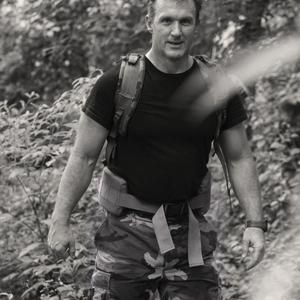


Jim Edwards discusses the process of writing a book and what most people fail to do after completion (if they complete it) - market it properly. We have a guest author Larry Carter (retired Air Force / Police Chaplain) who has incredible stories to share with first responders and those who teach in the stress mitigation space.
Learn more with the advice Jim Edwards gives for what to do next after completion of the book. Learn more about Jim's Write Your Book Challenges at https://www.writeyourbook.ai. Check out the Facebook Group – Sales Copy and Content Marketing Hacks at https://www.facebook.com/groups/copywritingandcontenthacks
and for more information on the wizards used to make outstanding sales copy check out https://www.CopyandContent.ai
So I decided to start a new podcast and make it a LIVE QA session on top of discussing The Never Quit Mindset. With guests and without focused on those important moments in our lives when we decided to get tougher and not quit. Standby for more information, but I wanted to get a quick discussion on another potential change that is occuring within Air Force Special Warfare.
For more info on AFSW training check out: https://www.stewsmithfitness.com/products/ebook-mil-air-force-pararescue-special-tactics-cct-past-workout
Air Force IFT Clinic: https://www.stewsmithfitness.com/blogs/news/air-force-past-test-clinic-crush-the-past-by-creating-a-strategy-for-success
Stew Smith and Nick Barringer PhD (nutrition) discuss eating to gain weight for the "hard gainer". We define the term plus discuss training and eating options that best put on lean muscle mass. We also share a post from his instragram page: https://www.instagram.com/nickbarringer.phd.rdn/
I highly recommend following Nick if you want to get smarter with training, nutrition, recovery, and even cool tactical fitness science.
From his page: Want to Gain Muscle, Not Fat? The Science Says...
Intentional weight gain isn’t about “dirty bulking” — it’s a strategic process that few truly master. Recent research shows that even with a calorie surplus and resistance training (RET), gaining mostly lean body mass (LBM) is no easy feat. ⚖️💪
Here’s what the evidence reveals:
🔥 Target Gain: 0.23–0.45 kg (½–1 lb) per week — any faster, and you’re likely packing on fat.
🍽️ Surplus Sweet Spot: +350–500 kcal/day, ideally from nutrient-dense, energy-rich foods like nut butters, dried fruit, and liquid calories (think smoothies over solids!).
🏋️♀️ Train Smart: Muscle growth happens across a spectrum of rep ranges, but training volume is the kingmaker. Mix it up, train to failure occasionally, and hit total rep targets (30–60 per session).
🥤 Fuel Strategies: Liquid calories can help sidestep satiety barriers. Think fruit smoothies, whole milk, and carb-protein shakes to stay in surplus without feeling stuffed.
🧬 Still not gaining? You’re not alone. Some athletes are “non-responders” due to adaptive thermogenesis — your body fights weight gain via increased metabolism and reduced appetite. That’s why personalized approaches matter.
🚨 Bottom Line: Gaining clean mass takes more than protein shakes and reps. It’s a fine-tuned balance of surplus, smart training, and metabolic awareness.
Ref:Larson-Meyer, D. E., Krason, R. K., & Meyer, L. M. (2022). Weight gain recommendations for athletes and military personnel: a critical review of the evidence. Current Nutrition Reports, 11(2), 225-239.
Check out other videos of combat swimmer stroke, workouts, and other spec ops related training. See http://www.stewsmithfitness.com for more information about military, law enforcement, special ops, fire fighting training programs.
Don't get beat down by the heat and humidity whether you work or work out outside this summer. Prepare your bag for hydration, electrolytes, cooling, and change of clothes options. If you do this right, you may find yourself tougher, more resilient to the extreme temps (over time) and still improve performance. It all comes down to body heat - Half of your fatigue is due to body heat. Cool down = second wind. See more training ideas at https://www.stewsmithfitness.com
Retired Army Lt. Col. Nick Barringer, PhD, helps us break down some of the recent science behind training, testing, nutrition, and what makes a good spec ops candidate. Check out his Instagram - https://www.instagram.com/nickbarringer.phd.rdn
We also did the following podcasts topics in the past:
TFR 212 - Talking Nutrition Optimal Performance / Longevity
https://www.youtube.com/watch?v=dVKBMEaBh2I
TFR 219 - Talking Nutrition for Spec Ops Selection - https://www.youtube.com/watch?v=tfewfhZ6Zs4
TFR 226 - Talking Nutrition for Joint Health
https://www.youtube.com/watch?v=pl9kxHpQuPw
Thanks for joining us again! Check out other videos of combat swimmer stroke, workouts, and other spec ops related training. See http://www.stewsmithfitness.com for more information about military, law enforcement, special ops, fire fighting training programs.
Spec Ops Swimming Tests: Learning the CSS to get TO and THROUGH Spec Ops Selection - https://www.stewsmithfitness.com/blogs/news/css-help-series-quick-fix-to-crushing-the-swim
The RULES: First, the 500yd Navy Physical Screening Test (PST) allows for the elementary side stroke, the breaststroke, or the modified side stroke nick-named the Combat Swimmer Stroke. The general theme is that these strokes must be "underwater recovery strokes."
However, beyond the PST (getting accepted into training) will require the addition of swimming and SCUBA diving with fins mostly in open water. 99% of your swimming will be done in fins once you are accepted into the training. So, if you choose to use breaststroke as your PST stroke, you will also need to learn the side stroke with fins to succeed beyond Day 1 of training/selection and get THROUGH the training.
The Combat Side Stroke is about conserving energy and maintaining a low profile in the water. Avoid too many kicks, popping up to breathe, and not gliding long enough to maximize your efficiency. Pay attention to your body position and ensure your movements are streamlined and efficient. Count how many strokes it takes to get across the pool (note distance). Typically, we try to get our folks down to 4-5 strokes per 25-yard pool at a yard-per-second pace. See if you need help with any of the following steps of the CSS in the CSS HELP article series:
The CSS HELP Series: Breakdown of the Stroke (all links to below found here: https://www.stewsmithfitness.com/blogs/news/css-help-series-quick-fix-to-crushing-the-swim )
CSS Help: Fix Your Kick
CSS Help: To Add Flutter kicks or Not?
CSS Help: Fix Your Arm Pulls (top & bottom)
CSS Help: Fix Your Glide
CSS Help: Fix Your CSS Sequence of the Stroke - Pull - Breathe - Kick - Glide
CSS Debate: To Pullout or Not Pullout (Breaststroke Pullout Issues)
Master the Stroke (at 50yd in 50 secs or faster) THEN Get Into Swimming Shape: Spend time in the water, swimming, jumping in, and treading. The more comfortable you are in the water, the more confident you'll feel when executing the Combat Side Stroke during the military swim test. Remember, swimming proficiency takes time, watching videos, practicing, and getting feedback to correct incorrect techniques. THEN you have to get in swimming shape. This will add to your training time, but you can do it quickly if you put in the time 4-5 times a week.
Check out https://www.stewsmithfitness.com for more articles, programs, and coaching on all things tactical fitness.
If you have never heard of EMDR - listen up:
Dan walks us through his career and calling to serve and many of the things he has learned in the last 40 years of serving his community and now his fellow officers.
EMDR therapy, or Eye Movement Desensitization and Reprocessing, is a form of psychotherapy designed to assist individuals in processing and coping with traumatic memories and other distressing experiences. It entails activating memories while simultaneously engaging in bilateral stimulation, such as eye movements or tapping, which aids the brain in processing and desensitizing those memories.
Our Tactical Fitness Report Guest Dan WIllis - 30 year retired Police Capt / SWAT Commander and now for the last 10 years has been teaching people in the tactical professions about recovering from stress/trauma. His new book is called:
Bulletproof Spirit, is required reading at the FBI National Academy and has won two national awards: Bulletproof Spirit, Revised Edition: The First Responder’s Essential Resource for Protecting and Healing Mind and Heart.
You can find more about him at his website: https://firstresponderwellness.com/
Here is a top ten list of “What Makes Your Workout the Best”:
1 - The one you do consistently. The number one rule for exercise and physical activity is to make it more than a workout of the day, but something that fits into your schedule and becomes your lifestyle.
2—The one designed for your goals. Doing workouts that do not address your specific goals is generally unhelpful if you hope to see the results you want. Goals vary from aesthetics, health, and wellness to optimal performance for competition or sport. What are you looking to accomplish with your fitness routine? If you have goals, you will focus more on assessing yourself and seeing improvements.
3 - The one that works on both your strengths and weaknesses. Whether you have muscular imbalances or specific activities are more challenging than others, designing a plan to help you maintain strengths and improve your weaknesses will help you be more well-rounded. For the military professional, the fewer weaknesses you have, the more you will develop and maintain your abilities to be an asset in any situation.
4 - The one that works endurance, strength, and flexibility. Both optimal performance and longevity require a solid balance between the three main elements of fitness. Having a foundation of strength develops overall durability. Endurance helps with work capacity, and flexibility/mobility can be essential for injury prevention and more stable movements.
5 - The one that helps you with weight maintenance. Most Americans need to improve two things: moving more and eating smarter. Portion control is one of our most significant issues, as we have a habit of gaining weight every year, until 10-15 years later, we are 50 lbs. overweight. Weight gain sneaks up on you and soon becomes linked to many chronic illnesses that slowly take away our performance and, later in life, our independence.
6 - The one that fits into your schedule. We all have the same 24-hour time each day. Short, quick workouts can be as effective as longer workouts, depending on your abilities and goals. How we arrange our work, leisure, and family time into the day can limit our time to exercise. Combining physical activity with other events can be a useful source of time management. For instance, walking around a field your kids are using for sports practice. Or, taking a 10–15-minute walk during an hour lunch period.
7 - The one that has exercises that you enjoy. Nobody likes all of the exercises they have in a program. But you must like something about the workout, otherwise you will never show up to the workout in the first place. If you balance a workout routine with more things you like to do than do not like to do, you may find that, because you are doing new things, you see solid improvements quickly.
8 - The one you call a lifestyle change. Fitness is not a destination, but a journey. This quote describes a mindset that is needed for all of us. You are not supposed to stop when you reach your goal weight, PT test scores, or a competitive event you trained so hard to do. Instead, move on to the next goal of the month. It makes training fun when you have different goals each month or a long-term goal.
9 - The one personally designed for you. Having someone like a coach or trainer help develop a program that fits your abilities, time per day, days per week, equipment available, and goals will help you avoid the frustration of training programs that take too long and do not address your abilities.
10—The one that integrates nutrition.
Stew Smith and Mark Christiani discuss the transition from military service into coaching and how the Army has evolved in it's creation of training programs for active duty and reserve soldiers with the H2F program.
If you are interested in becoming a coach with military units, check this out. If you are a soldier and looking for answers on how to train, the Army has a group of highly trained coaches to help you.
Some references to consider:
H2F Program - https://h2f.army.mil/
O2X - Contract for hiring trainers - https://www.o2x.com/
Who is Stew Smith CSCS? Coach, Trainer, Writer, Podcaster: I'm the former Navy SEAL that tactical candidates go to for books, ebooks and online coaching to prepare themselves to get to and through intense tactical assessment and selection programs and qualify for service in their chosen tactical profession. See More at StewSmithFitness.com
(NEW - Consulting Call) - Need personal help adjusting workouts? Worried if you are on the right track? Let Stew help.
Join Stew Smith, Alex Gendzier, and former Navy SEAL Officer Rob Sarver on the type of preparation needed to transition from the military into civilian life optimally.
See more at https://www.heroes-journey.net
The new book, Warrior to Civilian - The Field Manual to the Hero's Journey Amazon - https://amzn.to/4l1QI4v is a 5-year research project by Alex, Rob, and dozens of veteran experts on the process of making a smooth transition out of the military and into the rest of your life.
Much like how I recommend you to prepare for the challenges of military life, you need a similar focus on the next chapter of your life as you transition from a career (or a single enlistment) in military service.
Check out other videos of combat swimmer stroke, workouts, and other spec ops-related training. See http://www.stewsmithfitness.com for more information about the military, law enforcement, special ops, and fire fighting training programs.
From the publisher's feed
This is the Tactical Fitness Report with Stew Smith podcast. We will post these each week and discuss a variety of topics focused on Tactical Fitness Training for Military, Special Ops, Police, and…

14,280 Listeners

30,712 Listeners

38,070 Listeners

7,111 Listeners
5,945 Listeners

11,028 Listeners
6,470 Listeners

7,971 Listeners

46,062 Listeners

1,672 Listeners
3,287 Listeners
2,407 Listeners

29,186 Listeners

2,900 Listeners

159 Listeners