
Sign up to save your podcasts
Or

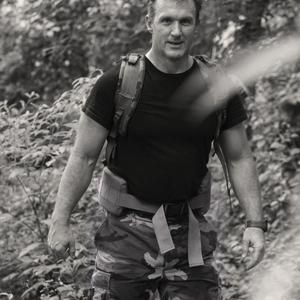


Most people, even scientists studying physiology and psychology, are puzzled by the mind-body connection. While we can classify and function areas of the brain, developing them determines toughness, attitude and why you want to do something challenging to achieve. The areas of the brain we understand well are thinking and feeling, but thoroughly understanding the "doing" part of the brain is complex.
For this topic, I went down a rabbit hole in psychology and physiology studies. While these are useful in naming the chemical processes that occur when people succeed at accomplishing tough things, the debate about what makes you tougher as an individual is a diverse list of options that work for others before you.
The rabbit hole traveled for this article taught me about the CAC model: Cognition, Affection and Conation. This trilogy of the mind has been studied for decades and primarily involves creating marketing strategies to urge customers to buy products and services. What makes us buy something after seeing an advertisement? In a basic nutshell, it's getting a person to think (cognition) that they need something, feel (affection/sensation) they want something, and pull the trigger and make the purchase (conation). What gets us to do something, especially when our thinking and feeling parts of the brain tell us the opposite?
Get Used to Making Things Uncomfortable
As a coach, my special operations prep workouts are scheduled first thing at 6 a.m. Many participants drive an hour to attend. We also work out outside year-round when the temperatures can vary from the low 20s to the high 90s. I have found that the time and temperature of the workout affect the sensory part of the brain and require an override of the part telling us that it is too cold, and you are so comfortable in bed; why are you doing this to yourself? Then, as a coach, prescribing a workout that requires competition and a high level of intensity takes this process of getting tougher to the next level. There are days when the temperature, time and intensity combine perfectly to make someone dig deep and build toughness. This allows the brain to converse with each section and find an answer to the question: Why are you doing this? Having a solid why must be part of the process. What is Your 'Why'?
Applying this process to special ops selection performance requires you to push yourself to a point where it becomes mentally and physically challenging. There needs to be a time when you do not feel like working out, but you do anyway. There needs to be a time when you are running or rucking and want to stop, but you finish what you started. There needs to be a standard that you must reach, and then you must understand that exceeding the standard is the standard. This is all about your attitude.
The more you prepare, the better you are conditioned to handle the physical challenges, which helps you gain self-confidence. This attitude permeates everything you do as your confidence improves your cognition with experiences and lessons learned. You can start to understand
that there is no impossibility factor to achieving a special ops dream. The sensory (feel) part of the brain has begun to adapt to what was once extreme levels of discomfort and pain. You are now acclimated to doing hard things in challenging conditions. Because you are progressively preparing yourself for your future goals, you are willing to go above and beyond others' perceived limitations to attain them.
Check out other videos of combat swimmer stroke, workouts, and other spec ops related training. See http://www.stewsmithfitness.com for more information about military, law enforcement, special ops, fire fighting training programs.
See latest article - https://www.stewsmithfitness.com/blogs/news/dont-do-these-things-with-your-css-technique-and-training
INTRO to LIVE QA - Look at all the health and wellness benefits you may be neglecting by not exercising your legs:
Burn More Calories - You burn more calories whenever you decide not to skip a leg day. Because of the larger muscle groups working (legs, glutes, and back), you use more energy to train in the given time of your training session. Working hard is tough—maybe that is why people skip leg days. You are turning your body into a calorie-burning machine by simply doing leg day. Recovering from Leg Day takes extra time, and you burn more calories for a longer period of rebuilding after a leg workout.
Build Strong Foundation - Consistently working on your legs allows you to build a rock-solid foundation. Strong legs contribute to powerful hips, resilient knees, and sturdy ankles—essential elements that play a critical role in nearly every movement you make. Whether you’re sprinting to catch the bus or simply getting up from your desk, the strength of your legs supports all your daily activities.
Improves Balance and Stability—Moreover, improving your leg strength significantly enhances your balance and stability, especially if you mix in single-leg balance exercises. When you walk on uneven terrain without issue or trip but catch yourself from falling, that stability comes from powerful legs. This benefit alone can reduce your risk of falls and injuries, especially as you age. You'll feel more agile and secure as you take on physical challenges.
Get Bigger— Lifting weights with your legs increases human growth hormone production and testosterone. However, this does not mean you will look like a bodybuilder just because you do squats. Gaining weight also depends on your food intake, but you will build stronger muscles and connective tissue and lose fat when you lift. Building muscle (not losing muscle) is something we all need to do and maintain as we age.
Stronger Bones and Better Posture—The benefits of leg day extend far beyond the gym. Stronger bones lead to a healthier life with longevity, reducing the risk of osteoporosis and other bone-related issues. A straight, confident posture can enhance your overall presence, personally and professionally, making you feel more secure and confident about your future health.
Strong Muscles = Strong Joints and Less Pain - Let’s not forget the connection between solid bones, muscles, and healthy joints. By fortifying your legs, you’re actively reducing joint pain and crafting a resilient body that can withstand the tests of time.
The only days you should skip a scheduled leg day are when you are sick, injured, or sore. Also, 1-2 solid leg days per week are a must. On the other days of the week, you can work your legs by walking, jogging, swimming with fins, rucking, biking, rowing, and carrying things from one place to another. Each exercise will keep your legs active, ensuring you cultivate the strength base necessary for all aspects of life
This book focuses solely on our most recent Fall transition phase. The transition from high-repetition calisthenics to a high-mileage running phase is a reverse progression. Mileage and reps are reduced throughout the weeks as you focus on shorter and faster runs and heavier repetitions of calisthenics using some weights, sandbags, weight vests, TRX, and other tools to make calisthenics more difficult.
Running Miles: THIS WORKOUT Program (FALL): Running Starts at 25 miles per week and regresses to 20 miles per week in the first six weeks with a focus on running speed (6-7 min mile pace). We maintain a 20-25 miles per week running base for 6 weeks, then drop again toward the end of the cycle to be in the 15-20 miles per week for the lifting cycle that starts toward the Winter months. Running can be adjusted 5-10 miles per week (up/down) as needed for abilities with optional nonimpact cardio given each day.
The Winter months will drop the miles to the 10-15 miles per week zone purely as a cardio base maintenance. You can do these runs at goal pace intervals or steady state aerobic base maintenance. The goal in these months is to build strength, durability, and put on some mass if needed.
Rucking Miles – If you need more rucking miles, replace some of the running miles with more rucking. There will be opportunities to do 8-10 mile rucks if you prefer or split in half with run / ruck.
Lifts and Calisthenics Mix - We call the Fall transitions the 50-50 Split as the balance between calisthenics and cardio and the added lifts per week develop into about a 50% split. Then the progression into heavier lifting and less total mileage will peak during the following Winter Lift Cycle.
Fall: October – Nov – December: Sometimes, we will start the Fall Transition a few weeks or even a month early as it depends on how we are feeling with our high level of calisthenics and cardio from the peak Summer Cycle. The Fall Transition is like the 50-50 Spring phase just in reverse. We lift more /drop the high reps – increase weight for strength / power. Running volume tapers into sprints / short runs and more non-impact cool down cardio after lift workouts. Consider Rucking and more swimming with scuba fins in the winter climates for cardio workouts. Obviously, if going Army or USMC – add rucking. If going Navy SEAL / SWCC / Diver, add in more swimming and swimming with fins. Both activities are great post-leg day lift workout cardio options. If you do not need to swim, replace some of the swim workouts with a ruck, extra run, or easy non-impact cardio session if you need to take it easy on the joints for a day. The Fall 50-50 cycle is fun and the decrease in mileage / increase in speed will yield results in the weight room as well.
https://www.stewsmithfitness.com/blogs/news/fall-transition-seasonal-tactical-fitness-periodization-series
Want to create live streams like this? Check out StreamYard: https://streamyard.com/pal/d/6164612443013120
Stew Smith (https://www.stewsmithfitness.com) and Jeff Nichols (https://www.performancefirstus.com) discuss what being fatigue resistance is and how to build it. Check out the wide spectrum of ways to build it and how to feed it throughout all the phases of tactical fitness and special ops selection prep.
#1 – FUEL / HYDRATION - ALL THE TIME
PERIODICALLY - 1-2 TIMES A WEEK:
#2 – Hills, beach, stair stepper, weighted (rucks, sleds)– that makes running harder
#3 – Higher volume lifting, calisthenics, weighted calisthenics…after runs or rucks
#4 – Mix in leg PT with running or swimming. Mix in upper body PT with running or swimming.
#5 – Cooldown run or bike after workouts (lifts / intervals / load bearing etc) OR flip IT.
#6 – Take DE-LOAD weeks – reduce miles, reps, weight 30-75%. Increase movement, flexibility/mobility.
#7 – Constantly pursue RECOVERY. This type of training requires more recovery (food, water, electrolytes, sleep, breathing, relaxing, aka de-stressing the CNS).
# 8 – Don’t forget rest days / mobility days…
When you feel like the tank is empty and it will be at some point of your training. Finding the fuel when the tank is empty is something else. How bad you want it and your discipline to continue training leads to a mental toughness that will get you though when tired.
Tactical Fitness Report 240 - Top Ten Questions About Tactical FItness and Selection Prep
See link for article version: https://www.stewsmithfitness.com/blogs/news/transforming-weakness-the-top-ten-questions-received-by-readers-podcast-listeners
It is no secret that I receive countless emails, DMs, and texts from readers of my articles and listeners to my podcasts and LIVE QA sessions (Mon/Tues) each week. I enjoy answering them as they also give me ideas to write articles (StewSmithFitness/ Military.com) and even full programs and books.
Here is a list of the ones I said, "great question" before I answered it. There are links to additional articles and videos in these questions as individually, some of these have been answered previously.
Peak performance or just surviving hard training days in extreme weather conditions can be blamed on or sustained by the quantity and quality of the fuel entering the body. Hydration, adding electrolytes, and nutrition choices are critical to success regardless of the intense activity, but your strategy of re-filling and re-fueling matters in high temperatures.
Start with the basics of hydration, adding electrolytes when sweating profusely, and nutrition. Find foods and hydration supplements that work well for you. Here is a list of ideas for you to try and see what works best for you and your situation:
Before the workout - Adding extra water in the heat (or cold) is needed before a workout. Continue drinking/sipping water throughout the workout, especially if you are sweating. But do not forget to replace what you are sweating out of your body. Add carbohydrate options before training so that you do not “bonk” with low blood sugar numbers and start to feel ill. Many prefer bananas, apples, oranges, or plums. Find what tastes right to you and agrees with your stomach. You may find you prefer something different on running days than lifting days. I like bananas before working out before any workout.
During longer workouts, you may need to refuel and replenish the water and electrolytes you are losing in hot/humid training environments. Two essential things to remember when training hard in the elements are to hydrate and cool yourself. Find water sources (hose, pool, lake, etc.) to cover yourself with and help you cool your body. You may find that half of your fatigue is body heat-related. By cooling yourself, you may find a missing “second wind” and be able to continue training.
Replacing sodium and potassium when you're sweating is a must. It's equally important to keep sipping water throughout your workout. When sweating profusely, add sodium and potassium to your water through brands like Gatorade, Liquid IV, LMNT, or Drip-Drop. These are the priorities in my gym bag during the summer months. It is up to you to find what works, tastes, and agrees with your stomach.
After workouts, immediately strive to cool yourself with a cooldown swim, shower, or bath. Continue to rehydrate, eat carbohydrates and protein/fat sources to help you recover from the previous workout, and start the refueling process for tomorrow’s workout. A variety of protein, carbohydrate, and fat sources is recommended but find what you enjoy and keep them in a good balance. Find a ratio of macro-nutrients that works best for you as well. Many like 40-50% carbs, 30-40% protein, and 10-20% fats. But many diets are available with more protein/fats, less carbs, and the opposite. Finding what works for you is a series of trial and error.
Still, suppose you want professional help with making a more personalized approach to hydrating and eating. In that case, a sports nutritionist will be an investment that might save you more errors with your attempts to find the perfect meals and drinks to go with your workouts.
See more articles and embedded videos at https://www.stewsmithfitness.com
The term “tactical” often finds its way into discussions to set apart the extraordinary as “military grade” or the stylishly functional as “tactic-cool.” About 15 years ago, this term extended into a new realm—tactical fitness, which focuses on the physical preparation essential for military, law enforcement, and firefighting professions. The transformation from athlete to tactical athlete is based on many similarities but some profound differences. Tactical fitness becomes your secret weapon when your mission demands versatility and resilience across a spectrum of athletic elements and tactical skills.
I look at it this way. As someone who has sought methods for over 25 years (and counting) to coach people preparing for military, police, and firefighter professions, I believe treating themselves as athletes is critical to being a capable sheepdog / public servant. One of the most essential rules for tactical athletes is treating oneself as an athlete, which is crucial for those preparing for roles as protectors and public servants. This mindset necessitates adopting the habits of an athlete—consistent training, proper nutrition, hydration, and recovery—to build a resilient and capable individual. You don’t have to be a world-class powerlifter or a triathlete, but you need a versatile combination of job-specific skills to perform efficiently without risking injury. In essence, your training should be as if the lives of your loved ones depended on it.
Similarities Between Tactical Fitness and Athletic Training - see more at
full article: https://www.stewsmithfitness.com/blogs/news/tactical-fitness-fully-explained-compared-to-athletics-sports-specific-training
Check out related article: https://www.stewsmithfitness.com/blogs/news/summer-training-what-is-your-weakness-that-you-are-ignoring
The summer presents a unique opportunity to elevate your performance as you prepare for military or special operations service. Learn about Seasonal Tactical Fitness Periodization - https://www.stewsmithfitness.com/blogs/news/seasonal-tactical-fitness-periodization-what-is-it-why-is-it-important
This is your chance to transform every weak link into a strength, to build a program that propels you towards the elite. Remember, it's not just about training hard, but about training smart. This is your time to shine.
Let's break it down: if you're predominantly an endurance athlete, it's time to hit the weights. Focus on enhancing your strength, power, speed, and agility. On the other hand, if you're more of a strength/power athlete, the running trails and swimming lanes should become your best friends. The goal is to be well-rounded, as special operations demand versatile capabilities.
Your summer training regimen should cover many activities, but a primary focus should be any glaring weaknesses you have. Start by integrating calisthenics and cardio into your daily routine. Push-ups, pull-ups, and various bodyweight exercises will increase muscular endurance and overall stamina. Throw in high-intensity interval training (HIIT) to keep your heart rate up and mimic the high-stress scenarios you'll face during selection.
See more at StewSmithFitness.com -
Here is a group workout I do with 800+ high school recruits / candidates at Naval Academy Summer Seminar. My goal is to teach them some strategies to improve on their entrance fitness test as well as the Naval Academy fitness test: Plank, Pushups, 1.5 mile run - taken every semester.
Warmup
100-meter run or 20 jumping jacks or jump rope, 10 push-ups, 10 squats
200-meter run or 20 jumping jacks or jump rope, 20 push-ups, 20 squats
300-meter run or 20 jumping jacks or jump rope, 30 push-ups, 30 squats
Light stretching throughout each set, focusing on arms and legs.
Core Exercises
Sit-ups and plank pose will be tested as part of the Candidate Fitness Assessment for admission to the Naval Academy and at the Academy each semester.
The CFA consists of the following exercises:
Kneeling basketball throw
Pull-ups
Shuttle run: 120 feet (4 x 30-foot runs as fast as you can)
Crunches two minutes
Push-ups two minutes
One-mile timed run
Crunches/Situps are still tested on the CFA, and sit-ups will be tested on the Navy SEAL/EOD/Diver PST if you're interested in that career path.
Once you get into the Naval Academy, you will be tested with the plank pose for time and cadence push-ups (up and down in two seconds). (Note: The cadence push-up is for the Naval Academy only and not a Navy-wide test.)
Crunches: Focus on a pace of 20 repetitions in 30 seconds
Flutter-kicks 20
Crunches 20 in 30 seconds
Leg levers 20
Crunches 20 in 30 seconds
Scissors 20
Crunches 20 in 30 seconds
Stretch stomach
The reason why we focus on a pace for crunches and sit-ups is to prepare for a two-minute test. You need to learn to maintain a sustainable pace, because most people fail this test by starting off too fast in the first 30 seconds and then failing to match their performance in the next 1:30.
By focusing on a pace of 20-25 per 30 seconds, you can find yourself in the 80-100 repetition range in a two-minute test. The extra hip flexor exercises are a fun addition to the workout to give it more of a Grinder PT feel.
Add PT Reset Exercises to balance out front-side pushing and core/hip flexor work. These exercises should be part of transitions or cooldown periods.
PT reset:
Rev push-ups 20
Birds 20
Arm haulers 20
Swimmers one minute
Death By Push-Ups! Plank and Push-Ups (New USNA and Navy Test)
Stay in a push-up "up" position or plank pose for 10 minutes. Do not drop your knee, but you can shake out an arm when in a side plank position. Every minute, do a step of the push-up pyramid, decreasing by one each minute on the minute.
The workout looks like this:
Minute 1: 10 push-ups. Stay in a plank pose for the remainder of one minute.
Minute 2: Nine push-ups.
Continue in "up" push-up position or plank pose nonstop for 10 minutes, increasing the push-up repetitions by one each minute:
Minute 3: Eight push-ups
Minute 4: Seven push-ups. Keep going to minute 10 and one push-up. That equals 55 pushups and 10 minutes of plank. We call it Death by Push-Ups, but it is more Death by Plank.
Advanced level athletes can try 10 push-ups every minute on the minute for 100 total reps if you prefer.
Cooldown:
30 push-ups, 30 squats, 300-meter run or one minute of jumping jacks
20 push-ups, 20 squats, 200-meter run or 40 seconds of jumping jacks
10 push-ups, 10 squats, 100-meter run or 20 seconds of jumping jacks
Light stretches throughout each set.
Tyler Koch has a degree in psychology and a master's degree in exercise physiology. Developed and implemented the first-ever S&C initiative for Undergraduate Pilot Training. Former Head Strength and Conditioning Coach for the 71st Flying Training Squadron. Former Head of Human Performance for the 158th Fighter Wing. Current Physician Assistant Student at Penn State University pursuing orthopedic medicine. For LinkedIn connection - go to - https://www.linkedin.com/in/tyler-koch-m-s-c-s-c-s-a0613963/
We talk about tactical fitness training and compare it to athletic training. Learning how to become a trainer is discussed with resources mentioned, such as the National Strength and Conditioning Association (https://www.nsca.com) and getting the CSCS certification. Also, numerous companies contract trainers to be military strength and conditioning coaches:
GAP Solutions
Booz Allen
Guardian Defense Group
T3i
The Tactical Fitness Report is a fitness discussion with professionals in the tactical arena. Check out https://www.StewSmithFitness.com for access to the podcasts (audio and video) and for books, ebooks, online coaching, and a wide variety of training/coaching advice.
From the publisher's feed
This is the Tactical Fitness Report with Stew Smith podcast. We will post these each week and discuss a variety of topics focused on Tactical Fitness Training for Military, Special Ops, Police, and…

14,280 Listeners

30,712 Listeners
38,070 Listeners

7,111 Listeners
5,945 Listeners

11,028 Listeners

6,470 Listeners

7,971 Listeners

46,062 Listeners

1,672 Listeners
3,287 Listeners
2,407 Listeners

29,186 Listeners

2,900 Listeners

159 Listeners