
Sign up to save your podcasts
Or

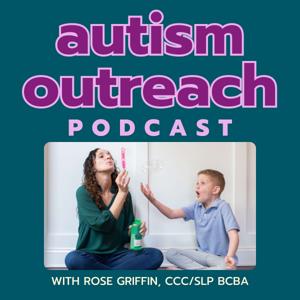


As a fellow busy SLP-BCBA, I know it's hard to keep up to date with research. That's why I’ve been combing through articles and inviting these researchers in our field on the podcast! I am on a mission to bridge the gap between research and practice.
Stephanie Gonzalez is a BCBA doctoral candidate at the University of Florida and the author of the article, Teaching Children to Respond to Questions About the Past: A Preliminary Analysis. While her research into this topic is ongoing, Stephanie and I had a great conversation about recall skills and how some may not see them as an available skill for their learners. The work she has done shows how this skill can be worked on alongside other important targets.
What did you do at school today? What did you do this weekend? What movie did you see? What toy did you play with? These are all valuable questions that recall the past and unlock conversations, especially for parents who want to know what their child is up to.
Using probe fading, Stephanie gradually builds a delay in recall, using differential reinforcements every time a learner correctly recalls. In fact, with the learners she's worked with, she has surprisingly built the 30 minute recall very quickly. Stephanie explains the base skills her learners have and how others may build this into their treatment package.
Be sure to read Stephanie’s article and stay tuned for more important research made accessible!
#autism #speechtherapy
What’s Inside:
Mentioned In This Episode:
Autism Outreach: #107 The Importance of Comprehension Skills with Dr. Merrill Winston
Teaching Children to Respond to Questions About the Past: A Preliminary Analysis
ABA SPEECH Connection Membership
While schools in the past have focused on a consultative model when it comes to BCBAs, it has become a growing trend in the field for schools to hire a district wide BCBA of their own. When you move from a consultant to an actual school employee this opens up a lot of room for dialogue. BCBA, Dr. Bruce Tinor joins me to chime in with this conversation.
Dr. Tinor agrees that hiring BCBAs is the right step but just one is not enough. There are certain roles in a school where 1 overseer is enough, but being an effective BCBA requires a lot of hands-on work and direct contact. If you do find yourself in the daunting task of being your district's only BCBA, Dr. Tinor has some great tips to systematically attack and support your school. Even if you are the only BCBA employee of the school, find a community to collaborate and share knowledge and support.
Along with all of his wisdom and insight for active school based BCBAs, he shares some advice that applies to even new BCBAs wherever they may land. Pair with your clients. This might mean students, parents, or even other staff but when you have paired up and built rapport, success and trust will follow.
#autism #speectherapy
What’s Inside:
Mentioned In This Episode:
ABA SPEECH Connection Membership
Joining me from Upstate Caring Partners is Dr. Erik Jacobson. The agency works with a large population of individuals with moderate to severe intellectual disabilities. Upstate CP is focused on changing lives with compassionate care.
During our conversation, Dr. Jacobson discusses how Upstate CP has reflected on their previous caretaking model, evaluating hand over hand crafts and goals that don’t last the lifespan. They have transitioned into an instructional model that builds strong relationships and creates a safe environment in a dignified way.
Dr. Jacobson shares how their staffing and teams have changed, starting with hiring their very first BCBA in 2019. With a focus on making their program less like school and more like life, they are making lasting changes that are going to positively impact the individuals in their care for life. You can find more about Upstate Caring Partners on their website.
#autism #speechtherapy
What’s Inside:
Mentioned In This Episode:
Upstate Caring Partners
ABA SPEECH Connection Membership
Acceptance and Commitment Therapy (or training), also known largely as ACT, is a relatively new premise in the field of ABA. Kate Nasuti who has been a BCBA for over a decade and in the field of ABA for 20+ years, joins me to discuss this important topic.
Kate shares her experience learning about ACT and how it's benefited her personally, even comparing “ACT Boot Camp” to a yoga retreat. It’s that impactful. She uses this technique now with parents and providers, giving access to this incredible therapy via coaching with individuals who would not otherwise benefit from ABA.
We go through some of the core processes of ACT: Mindfulness, Diffusion, Committed Action, Self as context, Values, and Acceptance. Kate describes some of these in detail, like Value Clarification. She uses this really beautiful quote from Michelangelo on his sculpture of David, “I just chipped all the way through the parts that aren’t David ''...to reveal that for clarification of our own values, we must just remove all the values that aren't ours.
Kate shares a ton of great resources, like the ACT course available on PRAXIS and Dr. Steven C. Hayes’ book, The Liberated Mind. ACT is such a beneficial addition to the science of ABA that I really encourage everyone to learn more!
#autism #speechtherapy
What’s Inside:
Mentioned In This Episode:
Get access to Kate’s ASHA and ACE course: Is It Really Burnout? Anxiety? How Words Can Get Us Stuck by joining the ABA SPEECH Connection Membership
Replay: Episode 107
As SLPs and BCBAs, we are tasked with teaching comprehension to our learners, but do they really understand these skills? Dr. Merrill Winston joined me to discuss not only reading comprehension but comprehension in everyday life and the building block skills to be successful.
What is comprehension?
Whether you're reading a book or listening to a statement, there are 3 markers for comprehension.
Dr. Winston and I get into the nitty gritty of that last marker and talk about it when it comes to comprehension of daily life. He says that a major prerequisite for reading comprehension is comprehending their day. You can check this by having your learner sequence, or "serieate," their day. (First I did this, then I did this, then we did that…)
With this skill, students are pulling information from the past and making a time reference. You can practice by working in smaller increments, like the last hour even. This doesn't have to be verbal; it can be in pictures or icons as well! But the important thing is to ask those questions!! Students may not be able to serialize their day simply because they aren't being asked these questions.
We also talk about goal setting and realistic expectations. If you're considering setting a comprehension goal for your learner, Dr. Winston says to be sure to ask: What is the end goal? Where is this skill going to take them? Every skill you spend time on should have a goal that extends across the lifespan and opens more doors and opportunities. He even goes as far as to say that working on a goal for too long without progress is careless!
This was such a great chat with a leader in the field of ABA, and I hope you found it helpful!
#autism #speechtherapy
What’s Inside:
Mentioned In This Episode:
Winston Behavioral Solutions
ABASpeechByRose - Rose Griffin - Instagram
Membership - ABA Speech
Replay: Episode 105
I love talking about joint attention, but a lot of my ideas and strategies in my courses may feel like they are geared toward older preschool age students. My tips today are for the youngest learners, toddlers age 2 to 3. Joint attention is an important foundational skill and it is never too early to get started with these strategies!
3 Ways to Get Started with Joint Attention with Your Toddler Today
Books
Books are the lifeline for learning and sharing activities and time with our little ones. For these young learners, when reading use a positive, energetic voice. Try using board books and interactive books with flaps. With your own child, make a goal to embed at least 15 minutes to read and interact with a book everyday!
Some of my favorites: Huggy Kissy and the Llama Llama series
Songs
Use YOUR Voice. Learn songs with motions to sing with your toddler. If toddlers aren't speaking they can join in by using the gestures and doing the motions as you sing. You can also use visuals like toys that match the song or printed visuals from my TPT store for early intervention songs.
Some of my favorites: Wheels on the Bus, 5 Little Monkeys, Happy and You Know It, Old McDonald
Play
Playing with toddlers is so fun and you never know what they will love and enjoy. Focus on not asking questions but just modeling simple language and narrating the activity.
Some of my favorites: Bubbles, Sensory Bins, Cars with Tracks
#autism #speechtherapy
What’s Inside:
Mentioned In This Episode:
Books For Speech Therapy For Toddlers
Songs for Early Intervention by ABA SPEECH | TPT
Membership - ABA Speech
GLP – Gestalt Language Processing, is taking social media by storm. BCBAs and SLPs alike are talking about it… But should it be something we follow and jump into without question? Dually Certified SLP-BCBA Sari Risen joins me to discuss her findings on GLP along with some warnings.
So what is GLP? It is basically a distinction against NLA – Natural Language Acquisition, in which NLA individuals learn by developing single words and increasing over time, whereas GLP individuals have longer and longer utterances and develop single words over time. Sari uses the example of a toddler who says “ohh da do” [meaning open the door] will eventually learn the words open, the, and door but would start with the longer utterance before knowing the words individually.
Sari took Marge Blanc's 15 hour course on the topic and explained the history of GLP when Dr. Ann Peters made this distinction between NLA and GLP in the 70s. While information on Gestalt is available, it is mostly anecdotal, with very few official studies or evidence.
Educate yourself so that you can understand and explain GLP when and if parents ask. Sari and I warn practitioners to think critically about the strategies and theories they use and not to follow something just because of social media.
#autism #speechtherapy
What’s Inside:
Mentioned In This Episode:
[email protected]
www.actionpotentialservices.ca
Membership - ABA Speech
It can be hard to stay up to date on research when you’re busy working with clients. That’s why I love being able to take these important topics and break them down into bite-sized chunks! Today, Landon Cowan, a Doctoral Candidate at Marquette University, shares with me his work on the research article, A Decision-Making Tool for Evaluating and Selecting Prompting Strategies.
I think sometimes it can be difficult to see the importance of basic ideas, so we break some of these ideas down to their core. Landon defines a prompt as anything that elicits a desirable response. These are as simple as vocal modeling, visual cues, and gestures, and they are even more frequently used in everyday life with digital alerts and sticky notes.
As we discuss the types of prompting and the need for relevant prompting strategies, Landon discusses common inconsistencies and cautions for some prompting. Always holding the final goal in view. The research article includes some really helpful flowcharts to help guide and make data-based decisions on prompting strategies that are relevant to your learner. Landon explains the charts and the other supplemental resources available that can not only assist therapists but can also aid in staff training for a consistent understanding of prompting.
Be sure to check out the full article and find Landon on Research Gate and LinkedIn for questions and to follow his other work. Did you like this episode? Please let me know if you want more easy-to-consume research content and what other topics you’d like to hear about!
#autism #speectherapy
What’s Inside:
Mentioned In This Episode:
Landon Cowan Marquette University · Department of Psychology (Behavior Analysis)
Landon Cowan on LinkedIn
A Decision-Making Tool for Evaluating and Selecting Prompting Strategies - PMC
Membership - ABA Speech
“Fell in love with teaching; fell in love with watching him learn." That's a quote from my guest, Dr. Bridget Taylor. She has a long list of accomplishments, among them being a BCBA and Licensed Psychologist. She shares about her journey into the field and something she has noticed changed since conference early in her career in the 90s.
At the time, the ABA profession was still growing, and conferences she spoke at were attended more by parents, with this momentum driven by families who wanted information to help their children. Now, parents are still an equal part of the process as ever, but those seats are filled by professionals who need to then transfer information, support, and training over to these families.
We discuss some of the work she has done in this area, including parent training and particularly compassionate care and relationship building. She points out a familiar phrase: ‘People don't care how much you know unless you show how much you care’. This really speaks to the way relationships with families create buy-in, collaboration, and ultimately more positive outcomes for the client.
Dr. Taylor describes compassion as empathy in action. She explains that it requires endurance through uncomfortable feelings and an emphasis on listening during those times so that you can understand and support families. As we close, she shares her recommendations on how clinicians can better help parents by attending training, reading articles, seeking mentorship, and truly practicing listening as a skill.
#autism #speectherapy
What’s Inside:
Mentioned In This Episode:
Building and Sustaining Compassionate Relationships with Caregivers | ABA Technologies
Membership - ABA Speech
Family and parent support and education are so important, especially when it comes to our youngest learners. Today, I am talking with Dr. Tracy Raulston. She is such a bright spot in the field, with so much information to spread and a great project in the works.
Dr. Raulston helps me discern the difference between Natural Environment Training and NDBI. When we are working with young learners in early intervention, play-based therapy is so crucial. Dr. Raulston explains how NDBI utilizes developmentally based instruction and strategies with child development front and center. Providers using NDBI are using protocols focusing on social connection, sensory exploration, and speech milestones.
The Mindful Routines Project is Dr. Raulston's initiative to provide clear and seamless tools to support parents and families. Being a parent is hard, and parents of autistic children are at an increased risk of stress. This project embeds mindful tools like noticing and validating thoughts and feelings without judgment and encourages parents to be more compassionate with themselves. As Dr. Raulston builds this project, she anticipates an 8-week curriculum for BCBA’s providing family guidance.
Families and parents are our learners' biggest influences and advocates. It is so great to hear about more awareness and tools for BCBAs to work to support these important members of our community.
#autism #speechtherapy
What’s Inside:
Mentioned In This Episode:
[email protected]
Dr. Tracy Raulston on LinkedIn
Membership - ABA Speech
From the publisher's feed
Join Rose Griffin, a dedicated Speech Therapist and BCBA from ABA SPEECH, as she shares her compassionate approach to supporting the communication needs of autistic individuals. With 20 years of…
This podcast is a resource for professionals and parents alike, offering practical strategies that honor each person's unique communication style. Rose covers a wide range of topics, including how to recognize and support autistic communication from an early age, the distinctions between autism and speech differences, and effective, respectful approaches to fostering communication, whether a child is non-speaking, minimally speaking, or verbal.
Through a mix of interviews and solo episodes, Rose explores how to enhance meaningful connections, address challenges with empathy, and celebrate the strengths of autistic individuals. Whether you're a parent, therapist, or educator, you'll find valuable insights and actionable advice to create supportive environments that empower communication and honor neurodiversity.
Hit subscribe and learn more at www.abaspeech.org.

7,678 Listeners

11,962 Listeners

626 Listeners
9,085 Listeners

25,789 Listeners
4,766 Listeners

46,924 Listeners
1,351 Listeners
627 Listeners
422 Listeners

15,410 Listeners

29,187 Listeners
60 Listeners

19,271 Listeners

10,153 Listeners