
Sign up to save your podcasts
Or



There may be two sides of the IEP table, but at the end of the day, we’re all on the same team — the learner’s.
I had the pleasure of chatting with Ryan Hogan, also known as @TheWorldsOkayestSchoolPsych, the creator behind the popular, lighthearted school psych meme account on Instagram.
We talked about the intersection of ABA, special education, and school-based work in the social media space. Ryan shared some great insights, especially the reminder that you control your own online space. Protect your peace: block people, delete comments. Thoughtful questions and concerns deserve a response; negativity for its own sake does not.
As both a school psychologist and an autism parent, Ryan brings a unique and deeply personal perspective to the IEP table. He knows firsthand what it feels like to be both the professional and the parent — and how overwhelming it can be. Sometimes, parents need not just data and research, but connection, empathy, and that parent-to-parent understanding.
It was a meaningful and insightful conversation — one that reminds us that compassion and collaboration go a long way (and so does a joke!).
#autism #speechtherapy
What’s Inside:
Mentioned In This Episode:
(@worldsokayestschoolpsych) on Instagram
Speech Membership - ABA Speech
ABA Speech: Home
Leila Farschian, Special Educator and Board Certified Behavior Analyst (BCBA), is someone who gets things done. She has lived these problems in the field and is actively working to solve them. Her story offers practical insight and inspiration to you in your daily work.
As founder of the Global Schoolhouse Project, Leila partners with the International Healthcare Network on Closing the Digital Divide, a project bringing digital devices into schools in Johannesburg, South Africa. It’s not just about providing tech. She works directly with teachers and students to train them in effective use while identifying the barriers and gaps that limit access.
Through her BCBA work, Leila also developed a range of lessons, curriculum, and tools. To share these more broadly, she created ABA Toolbox, a per-learner platform that automates and scales her resources across clinics. It supports her own practice and others in the district, all with a multidisciplinary, child-centered approach.
Leila’s work is a reminder that real progress often starts with individuals who take action. Whether she’s expanding tech access in underserved schools or streamlining care with practical tools, the best businesses are started by those who understand the problems.
#autism #speechtherapy
What’s Inside:
Mentioned In This Episode:
ABA Toolbox
Global Schoolhouse Project
Speech Membership - ABA Speech
ABA Speech: Home
I am talking all things biz with Mellanie Page, founder and CEO of The ABA Collective. Mellanie, a trailblazer in the field, creates high-quality programs that go beyond the traditional boundaries of ABA. Mellanie joins us to talk about entrepreneurship, finding your niche, and the value of starting before everything feels perfect.
If you’ve got that entrepreneurial spark, a voice nudging you toward something more —you’re in the right place. Mellanie shares how stepping into the gaps she saw in the field led her to build impactful offerings like CEUs, conferences, and the OBM Practitioners Program. This program offers a thoughtful blend of modules, mentorship, and community—a natural path for future business owners.
More and more clinicians are moving toward business ownership, and Mellanie’s story is a great reminder that there’s room for creativity and passion in this space. Her top advice? If the return is there, the investment is worth it. Think long-term. And most importantly, action creates clarity — you don’t have to have it all figured out to begin.
#autism #speechtherapy
What’s Inside:
Mentioned In This Episode:
Mellanie Page (@theabacollective) on Instagram
Mellanie Page | BCBA CEUs
Mellanie Page on LinkedIn
Speech Membership - ABA Speech
ABA Speech: Home
For BCBA Maggie Haraburda, founder of Unfurling Littles, play is anything that sparks joy. Her approach to ABA therapy blends child-led play with ACT-integrated strategies, centering on the child’s motivation and individuality.
In our conversation, Maggie highlights the “Dos and Don’ts” of play therapy: join the child’s world before introducing new elements, build from what already brings them joy, and act as a play partner—not a director.
Her neurodiversity-affirming lens means recognizing all forms of communication, supporting autonomy, self-regulation, and self-advocacy, and honoring each child’s unique strengths.
Maggie doesn’t shy away from anti-ABA concerns. She acknowledges past harms and invites curiosity over defensiveness, aiming always to grow and improve her practice.
She also offers an ACE-approved CEU, Supporting Play the Neurodiversity Affirming Way. Expanding your playbook is important. Explore more CEUs at ABA Speech Connection to deepen your understanding of language milestones and child-led support.
#autism #speechtherapy
What’s Inside:
Mentioned In This Episode:
Unfurling Littles LLC
[email protected]
Episode #146: Early Intervention and Project Impact with Anna Dvortcsak and Dr. Brook Ingersoll - ABA Speech
Membership - ABA Speech
ABA Speech: Home
As someone who goes to yoga a few times a week, I was intrigued at the possibility of integrating it into my therapy practice. Lindsay Watkins is a BCBA and Registered Yoga Teacher (RYT-200) with a passion for blending wellness and applied behavior analysis. Lindsay teaches continuing education (CEUs) to BCBAs on this topic on BehaviorLive (her next training is scheduled for June 2, 2025).
Here, Lindsay shares her journey from burning out as a special ed teacher to discovering yoga therapy and figuring out how to apply it to her own clients. We take a look at research studies that show the benefits of using yoga to modify behavior and discuss examples of the techniques in action.
Lindsay also shares how she advocates for this outside-the-box approach to therapy, the benefits of yoga across the lifespan, and tips to level up your own yoga practice.
#autism #speechtherapy
What’s Inside:
Mentioned In This Episode:
Lindsay Watkins on Instagram
Membership - ABA Speech
ABA Speech: Home
Have you ever considered adding ABA services to your speech therapy practice? Today I had a chat with Quintina Briscoe, founder of Pediatric Speech Lab, who shares her inspiring journey to opening her own clinic. Quintina discusses how she recognized a gap in services for children with autism and the importance of integrating ABA into speech therapy to better support her clients.
She reflects on the behavioral challenges many SLPs face and how inclusive, multidisciplinary therapy can make a lasting difference. Quintina also highlights the range of services her clinic offers—from in-clinic and teletherapy sessions to placing facilitators in Baltimore City schools.
We also dive into her empowering company culture, rooted in inclusivity, autonomy, transparency, and respect—and how she weaves these values into every layer of her business and team meetings.
#autism #speechtherapy
What’s Inside:
Mentioned In This Episode:
Quintina Briscoe M.S. CCC-SLP (@quintinabriscoeslp) on Instagram
Membership - ABA Speech
ABA Speech: Home
Lauren Ross is a proud member of a rare group—one of fewer than 500 professionals dually certified as both a Speech-Language Pathologist (SLP) and Board Certified Behavior Analyst (BCBA). In 2022, she founded Precision Therapy, a Medicaid-funded therapeutic consultation service designed to deliver impactful, client-centered care.
Her innovative model blends naturalistic developmental behavioral interventions (NDBIs) with hands-on caregiver training to support meaningful, individualized goals. What sets Lauren apart is her commitment to serving individuals beyond the “services cliff,” working with clients across the lifespan—including adults well into their 80s!
Through a thoughtful combination of Acceptance and Commitment Therapy (ACT), collaboration, and ongoing data-driven planning, Lauren and her team create customized support plans that fit both the client’s goals and the caregiver’s capacity.
At the heart of her work is the belief that true progress lies in generalization—the ability to apply learned skills in real-life settings. By using naturalistic interventions embedded in daily routines, Lauren helps adults not just build skills but live them.
#autism #speechtherapy
What’s Inside:
Mentioned In This Episode:
Precision Therapy PLLC
Precision Therapy PLLC (@precisiontherapyva) on Instagram
Membership - ABA Speech
ABA Speech: Home
Tracey Hawkins became part of the autism community in 2018 when both of her sons were diagnosed with autism—just seven months apart.
When it comes to autism, structure and routine are so important. But as a mother, Tracey couldn't find the right technology to support her family's needs. She knew she couldn’t change the diagnosis, but she could improve the support system around it.
So, she created the Thrive App—a tool designed to organize the chaos and connect parents with providers. In her own home, Tracey uses the app in multiple ways: to give her older son a clear after-school schedule and to enable real-time communication with her younger son’s care team through the chat feature.
This isn't just another calendar planning app. Thrive was built through a neurodivergent lens, offering clear directions, visuals, and resources for emotional regulation throughout the day. It’s designed to create a smoother path toward independence.
The Thrive App offers a 7-day free trial, with subscription options of $7.99/month or $49.99/year. It’s a valuable tool for families of all kinds—supporting kids of all ages and needs as they learn structure, routine, and self-sufficiency.
#autism #speechtherapy
What’s Inside:
Mentioned In This Episode:
Thriving on the Spectrum
Membership - ABA Speech
ABA Speech: Home
Stephanie Howard, a BCBA and mother, faced a turning point when her son was diagnosed with ADHD at age five. She realized the same executive functioning tools she used professionally could support both her parenting and her son's development.
Executive functioning—skills like planning, impulse control, and focus—is often disrupted in ADHD, autism, and trauma. It’s more than behavior; it’s about how the brain organizes and responds to the world.
Stephanie shares, for listeners, the Executive Functioning Skill Questionnaire and other free resources that have helped her understand and support her son’s needs. These tools are designed to guide both parents and professionals in identifying strengths and areas for growth.
She also shares some of the specific goals she’s set at home, showing how executive functioning skills can be built through everyday routines. Programs like the Flexible and Focused Program and ROPES help break down executive dysfunction into manageable steps.
To generalize these skills, Stephanie offers practical tips: use timers and task lists, give clear warnings before transitions, and turn tasks into games to hold attention. She highlights the power of caregiver education, understanding the difference between antecedents and consequences, and working with a team.
For Stephanie, it’s not just about managing behavior—it’s about supporting the brain.
#autism #speechtherapy
What’s Inside:
Mentioned In This Episode:
25 Executive Skills Questionnaire — Peg Dawson & Richard Guare Step I: Read each item below and then rate that item based
Executive Skills Questionnaire – Revised (ESQ-R) – NovoPsych
Membership - ABA Speech
ABA Speech: Home
Bombarding parents or colleagues with information can shut down meaningful dialogue. Instead, Dr. Monica Gilbert shares how we can use Motivational Interviewing (MI) to foster collaboration and encourage change through using the core principles—OARS + I:
Using motivational interviewing keeps conversations about change productive, builds trust, and supports meaningful discussions across all professional dialogue with parents and colleagues.
#autism #speechtherapy
What’s Inside:
Mentioned In This Episode:
Dr. Monica Gilbert
Motivational Interviewing Academy
Membership - ABA Speech
ABA Speech: Home
From the publisher's feed
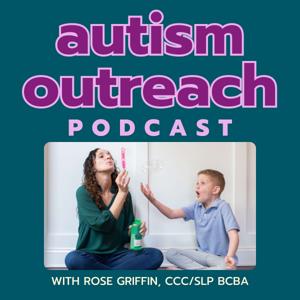
Join Rose Griffin, a dedicated Speech Therapist and BCBA from ABA SPEECH, as she shares her compassionate approach to supporting the communication needs of autistic individuals. With 20 years of…
This podcast is a resource for professionals and parents alike, offering practical strategies that honor each person's unique communication style. Rose covers a wide range of topics, including how to recognize and support autistic communication from an early age, the distinctions between autism and speech differences, and effective, respectful approaches to fostering communication, whether a child is non-speaking, minimally speaking, or verbal.
Through a mix of interviews and solo episodes, Rose explores how to enhance meaningful connections, address challenges with empathy, and celebrate the strengths of autistic individuals. Whether you're a parent, therapist, or educator, you'll find valuable insights and actionable advice to create supportive environments that empower communication and honor neurodiversity.
Hit subscribe and learn more at www.abaspeech.org.

7,660 Listeners

11,963 Listeners

623 Listeners
9,067 Listeners

25,703 Listeners
4,750 Listeners

46,888 Listeners
1,346 Listeners
629 Listeners
426 Listeners

15,409 Listeners

29,171 Listeners
61 Listeners

19,058 Listeners

10,200 Listeners