
Sign up to save your podcasts
Or



Getting an autism evaluation for a child can be a daunting process, fraught with long waitlists, high out-of-pocket costs, and navigating complicated systems. Every moment matters when it comes to early intervention, and Dr. Michael Perisa of Zest Pediatrics is working to simplify the journey for families.
Zest Pediatrics, the first pediatric direct primary care network in the country, offers a membership-based model that removes many of the headaches families face with traditional primary care. By operating outside of insurance restrictions, Zest Pediatrics delivers care in a way that prioritizes what children truly need, without delays or limitations.
Dr. Perisa and his team across Zest Pediatrics are uniquely equipped to provide timely autism evaluations. With specialized training and the flexibility to focus on individual patients, they can intervene quickly to ensure children are seen and supported. An autism evaluation at Zest Pediatrics includes a comprehensive history intake, a behavioral assessment, and a standardized questionnaire, all analyzed to determine a diagnosis or not.
Because Zest Pediatrics doesn’t bill insurance, they offer evaluations at a flat rate of $1,250 and are actively collaborating with communities and therapy centers to help reduce financial burdens for families. If you have concerns about your child and need a faster path to evaluation, visit zestpeds.com/autism to learn more.
Speaking with Dr. Michael Perisa highlighted the importance of making care more accessible for children and families navigating autism concerns. Early intervention is critical, and Zest Pediatrics is paving the way for better, more efficient solutions.
#autism #speechtherapy
What’s Inside:
Mentioned In This Episode:
Zest Pediatric Network
Autism - Zest Pediatric Network
ABA Speech: Home
Join the aba speech connection membership
Enjoy this replay of this favorite two-part episode!
In part one of my interview with Dr. Edythe Strand. A renowned speech pathologist and former professor at Mayo College, Dr. Strand has led groundbreaking research on developmental, acquired, and progressive apraxia of speech.
Dr. Strand explains that apraxia is not a medical diagnosis but a label for a speech-sound disorder impacting the movements required to produce speech. Unlike other speech disorders, apraxia affects programming and planning movements, leading to awkward transitions, distorted sounds, and inconsistency. Therapy focuses on movement, not just sound production. Using Dynamic Temporal and Tactile Cueing (DTTC), clinicians emphasize the physical gestures that create sounds rather than isolated phonemes.
Dynamic assessments are crucial for evaluating Apraxia. Dr. Strand’s own Dynamic Evaluation of Motor-Speech Skill (DEMS) provides insight into a child’s preferred cueing and severity of their disorder. This method contrasts with traditional static assessments, which rely on single responses to stimuli.
In part two of this interview, Dr. Strand delves deeper into DTTC, a treatment she developed for children with severe apraxia. Unlike typical therapies, DTTC involves a hierarchy of cues to teach motor speech skills. Dr. Strand highlights the importance of functional, fundamental words in therapy for children with severe Apraxia, particularly those with autism.
Dr. Strand’s passion for helping children communicate shines through her work, blending research and practice to improve lives. Don’t miss the valuable resources she shares in this episode and the links to her groundbreaking research!
#autism #speectherapy
What’s Inside:
Mentioned In This Episode:
ABA Speech: Home
Child Apraxia Treatment
Apraxia-kids: Home
Videos for Parents and Clinicians:
Overview of possible causes and types of problems in speech development
Definitions and Descriptions of Childhood Apraxia of Speech (CAS)
Examples of different levels of severity in Childhood Apraxia of Speech (CAS)
Differentiating Childhood Apraxia of Speech (CAS) from other types of speech sound disorders
Diagnosis of Childhood Apraxia of Speech (CAS)
Treatment of Childhood Apraxia of Speech (CAS)
How parents can help their child with Childhood Apraxia of Speech (CAS)
Childhood Apraxia of Speech (CAS): Other resources
Childhood Apraxia of Speech: Information for Parents
Childhood Apraxia of Speech -- by Dr. Edythe Strand, Ph.d. View video FOR FREE and receive ASHA CEUs!
Enjoy this replay of one of my favorite episodes! Executive functioning skills are essential for all ages, and in this episode, we dive into this critical topic with Sara Ward, an SLP specializing in executive functioning. Sara brings a unique perspective, sharing practical strategies for assessment and intervention that can transform how we support students.
Sara simplifies executive functioning for young children as “sequencing” and explains how it evolves into planning across growing windows of time and space for teens and adults. A neurotypical brain visualizes where it needs to be in the future to plan and act. However, parents and professionals often become a “prosthetic frontal lobe” by overprompting. Sara emphasizes the importance of teaching students to visualize and take ownership of their tasks.
One standout strategy Sara shares is using gestures to support task planning. When children physically act out steps with their hands, the connected language often follows, helping them internalize the process of execution.
For assessment, Sara suggests tools like the Barkley Deficits in Executive Functioning Scale, which distinguishes attention issues from executive skill deficits, and the Clinical Executive Function Inventory (CEFI) for behavior insights. She also advocates for viewing speech and language assessments through an executive functioning lens.
This episode is packed with actionable strategies and tools that I’m excited to bring to my therapy sessions and IEP meetings. I hope you find these insights as inspiring and practical as I did!
#autism #speectherapy
What’s Inside:
Mentioned In This Episode:
ABA Speech: Home
Cognitive Connections: Executive Function
Attending ASHA 2024, the largest conference for speech-language pathologists (SLPs), was an incredible experience for networking and professional growth. As the national association for speech therapy, ASHA’s annual event is a hub for innovation, collaboration, and learning.
I kicked off the conference by attending an insightful talk by the Speech Production Lab on speech motor chaining, setting a high bar for the days ahead. Later, the reception for CEU providers offered a fun and engaging opportunity to connect with peers and discuss the field's nuances.
Day two was packed with impactful sessions, covering topics like MTSS, group therapy for complex learners, and a critical appraisal of gestalt language processing—a particularly hot topic. I also relished conversations with other SLPs, dually certified SLP/BCBAs, former podcast guests, and ABA Speech members.
While some discussions highlighted tensions around controversial issues, this only strengthened my commitment to fostering kind and cohesive collaboration. The work we do as therapists and providers is vital, and this event reinforced how meaningful and inspiring our shared mission is.
What’s Inside:
Mentioned In This Episode:
Join the ABA SPEECH Connection - Professionals
Join the ABA SPEECH Connection - Parents
Rose Griffin (@abaspeechbyrose) on Instagram
Rob Harvey specializes in cooperative, fun social skills groups, using creative strategies to teach social language in ways that truly resonate. Today, we explore the transformative power of thinking outside the box when it comes to social skills development.
Rob’s innovative approach integrates therapy with theater and tabletop role-playing games like Dungeons & Dragons. Starting with theater, learners practice social skills by engaging with scripts during rehearsals and performing in front of an audience. This structured setting provides a safe space for learners to build confidence, interact, and refine their social abilities.
Seeking opportunities to promote improvisational skills, Rob turned to one of his passions: tabletop role-playing games. These activities go beyond scripts, encouraging learners to dive into spontaneous social interactions. They don’t just foster interest and motivation—they offer real-life experiences, helping learners develop initiation skills, express emotion, and create lasting connections that extend beyond the group.
"Lead with joy" is a message Rob passionately shares, and it’s his top tip for launching bold, innovative therapy ideas. Find someone who shares your excitement, and imagine the possibilities that emerge when you embrace silliness! Breaking that barrier opens the door to incredible engagement and connection.
#autism #speectherapy
What’s Inside:
Mentioned In This Episode:
Rob Harvey (@therapeuticdungeonmaster) - Instagram
Join the ABA SPEECH Connection - Professionals
Join the ABA SPEECH Connection - Parents
Rose Griffin (@abaspeechbyrose) on Instagram
Dr. Amanda Cash highlights the unique challenges and opportunities of transitioning from school to adult services. In adult settings, the fast-paced, skill-driven structure of school is replaced by a slower, more flexible approach focused on long-term growth. Without the looming deadline of graduation, the emphasis shifts to safety, happiness, and meaningful, lifespan-focused skill-building. Human rights and personal preferences become central, with care providers ensuring that all practices align with ethical standards and individual interests.
Self-advocacy is a cornerstone of this transition. Dr. Cash emphasizes the importance of teaching these skills early, such as how to request needs, make choices, and exit situations when necessary. These abilities empower individuals to navigate adult environments with confidence and independence, fostering greater self-determination and engagement in their lives.
To prepare effectively, schools should focus on rigorous skill development and provide opportunities for community and workplace experiences. Backward goal-setting, working from long-term objectives backward to current needs, ensures students are equipped for the demands of adulthood. Through thoughtful preparation and early advocacy, individuals can move into adult settings ready to thrive.
#autism #speectherapy
What’s Inside:
Mentioned In This Episode:
Join the ABA SPEECH Connection - Professionals
Join the ABA SPEECH Connection - Parents
Rose Griffin (@abaspeechbyrose) on Instagram
Rob Gorski, widely known as The Autism Dad, started his blog over a decade ago as a private space to document his family’s journey with autism. Today, it’s evolved into a business, podcast, and vital resource for autism families. Through his work, Rob shares insights on communicating about autism, helping families understand their children, and breaking down stigma.
Discussing autism with kids—whether autistic or not—requires sensitivity and simplicity. Autistic brains are wired differently, and kids don’t need complicated explanations. Small, clear insights can help them understand their differences without feeling isolated. Rob emphasizes that openness empowers autistic kids and avoids the distrust that can stem from hiding autism as a “taboo” topic. Every child is unique, and there’s no single right approach to this conversation.
To foster understanding, Rob suggests choosing a neutral, calm environment where children feel safe, sharing small pieces of information over time rather than a single, in-depth talk. Parents know their kids best, and trusting their instincts is essential. Mistakes are part of the journey—what truly matters is a willingness to adapt, grow, and create a supportive space for their children.
#autism #speectherapy
What’s Inside:
Mentioned In This Episode:
Visit The Autism Dad
Join the ABA SPEECH Connection - Professionals
Join the ABA SPEECH Connection - Parents
Rose Griffin (@abaspeechbyrose) on Instagram
Today, we're diving into empowering parents and the magic of early intervention through teletherapy with Glory Lichon, founder of Glow Bright Therapy. Glory’s journey started in school-based therapy, but like many SLPs, she faced burnout. That experience led her to create a teletherapy practice focused on early intervention, where parent involvement takes center stage.
Without the barrier of school-based settings, early intervention teletherapy actively involves parents, guiding them through strategies they can use in daily routines and their child’s natural environment. From evaluations to progress checks, families and therapists work together on a HIPAA-compliant Zoom platform, making it simple and secure. Each session kicks off by understanding the family’s recent experiences and observing the child in their environment, looking for natural opportunities to support communication and learning.
Glory’s approach is all about letting the child lead—she believes communication isn’t just about talking and prompting. She follows the “Observe, Wait, Listen” strategy, which allows kids to explore at their own pace, focusing on authentic engagement rather than prompting. She also shares practical, easy tips parents can try at home, like using bath time to practice verbal routines (“wash, wash, wash your hair...”) or learning body parts during soaping up.
Check out Glow Bright Therapy on Instagram or visit their website to learn more!
#autism #speectherapy
What’s Inside:
Mentioned In This Episode:
Glow Bright Therapy
glowbrighttherapy (@glowbright_therapy) on Instagram
Join us in the ABA SPEECH Connection Membership
Rose Griffin (@abaspeechbyrose) on Instagram
I connected with my guest Wall Street Journal and USA Today best-selling author, Dr. Paul Gavoni, on LinkedIn. His work focuses on creating positive and safe cultures by driving meaningful behavior change. He explains that learner behavior often reflects the actions of adults in their environment, a key idea in Organizational Behavior Management (OBM), an application of the science of ABA.
Dr. Gavoni describes OBM as "zooming out" to look at how adult behavior impacts learners. He shares a story of working with a community school, where implementing OBM strategies for the adults created momentum and encouragement while keeping the effort low and the outcomes valuable.
In our conversation, he also talked about the inspiration behind his 10 books, including Quick Wins and Positional Authority Ain’t Leadership, where he breaks down practical behavior management and leadership strategies that drive real change.
We wrapped up with his thoughts on becoming a keynote speaker and getting involved in conferences. His advice? Anyone can do it—it’s JUST behavior.
#autism #speectherapy
What’s Inside:
Mentioned In This Episode:
Translating the covenant: The behavior analyst as ambassador and translator - PMC
Paul "Paulie" Gavoni on Linqapp
Join us in the ABA SPEECH Connection Membership
Rose Griffin (@abaspeechbyrose) on Instagram
Today I am joined by Eileen Lamb, founder of the Autism Cafe. I recently shared a video of Eileen’s son, Charlie, that really struck a chord with my audience. It showed how his use of AAC (Augmentative and Alternative Communication) had progressed over time, offering a message of hope for others in similar situations.
Eileen talks openly about how tough it can be to share your family’s journey online. Her story started when Charlie began showing signs of autism at 18 months. What began as updates on her personal Facebook for friends and family soon grew into the platform she has today, with a large following across social media.
Among her involvement in the field, Eileen is also an author. Her first book, All Across the Spectrum, is an autobiography that explores her experience being diagnosed with autism after her son. It highlights the differences in severity and what it’s like to parent a child on the spectrum while being on the spectrum herself. Her second book, Be the One, is a collection of prose poetry about overcoming life’s challenges. Eileen’s third book, And Yet Here You Are, is coming out soon.
For parents raising children with autism, Eileen has some advice: Be mindful of social media. While it can be a great place for finding support, community, and information, it can also lead you into a lot of unnecessary controversy.
#autism #speectherapy
What’s Inside:
Mentioned In This Episode:
The Autism Cafe
Eileen Lamb (The Autism Cafe) on Facebook
Eileen Lamb (@theautismcafe) on Instagram
Eileen Lamb on TikTok
Join us in the ABA SPEECH Connection Membership
Rose Griffin (@abaspeechbyrose) on Instagram
From the publisher's feed
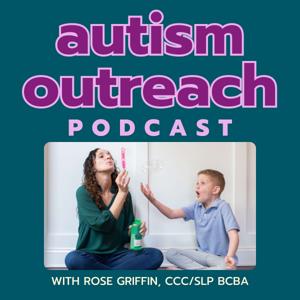
Join Rose Griffin, a dedicated Speech Therapist and BCBA from ABA SPEECH, as she shares her compassionate approach to supporting the communication needs of autistic individuals. With 20 years of…
This podcast is a resource for professionals and parents alike, offering practical strategies that honor each person's unique communication style. Rose covers a wide range of topics, including how to recognize and support autistic communication from an early age, the distinctions between autism and speech differences, and effective, respectful approaches to fostering communication, whether a child is non-speaking, minimally speaking, or verbal.
Through a mix of interviews and solo episodes, Rose explores how to enhance meaningful connections, address challenges with empathy, and celebrate the strengths of autistic individuals. Whether you're a parent, therapist, or educator, you'll find valuable insights and actionable advice to create supportive environments that empower communication and honor neurodiversity.
Hit subscribe and learn more at www.abaspeech.org.

7,683 Listeners

11,950 Listeners

626 Listeners
9,093 Listeners

25,787 Listeners

4,759 Listeners

46,879 Listeners
1,346 Listeners

625 Listeners
422 Listeners

15,404 Listeners

29,200 Listeners
59 Listeners

19,209 Listeners

10,193 Listeners