
Sign up to save your podcasts
Or



Today I am joined by Eileen Lamb, founder of the Autism Cafe. I recently shared a video of Eileen’s son, Charlie, that really struck a chord with my audience. It showed how his use of AAC (Augmentative and Alternative Communication) had progressed over time, offering a message of hope for others in similar situations.
Eileen talks openly about how tough it can be to share your family’s journey online. Her story started when Charlie began showing signs of autism at 18 months. What began as updates on her personal Facebook for friends and family soon grew into the platform she has today, with a large following across social media.
Among her involvement in the field, Eileen is also an author. Her first book, All Across the Spectrum, is an autobiography that explores her experience being diagnosed with autism after her son. It highlights the differences in severity and what it’s like to parent a child on the spectrum while being on the spectrum herself. Her second book, Be the One, is a collection of prose poetry about overcoming life’s challenges. Eileen’s third book, And Yet Here You Are, is coming out soon.
For parents raising children with autism, Eileen has some advice: Be mindful of social media. While it can be a great place for finding support, community, and information, it can also lead you into a lot of unnecessary controversy.
#autism #speectherapy
What’s Inside:
Mentioned In This Episode:
The Autism Cafe
Eileen Lamb (The Autism Cafe) on Facebook
Eileen Lamb (@theautismcafe) on Instagram
Eileen Lamb on TikTok
Join us in the ABA SPEECH Connection Membership
Rose Griffin (@abaspeechbyrose) on Instagram
From taping in my walk-in closet to experiencing incredible growth and change over the last 199 episodes, it's been an amazing journey. Today, as I record this special episode, I’m also celebrating my 16th wedding anniversary—with none other than today's guest, my husband, Patrick Griffin.
Seven years ago, I started ABA Speech with two physical products: Action Builder Cards and Double Up. Since then, I’ve branched out, and in recent years, I've focused heavily on this podcast. In this episode, listen in as my husband interviews me in a rapid-fire format, covering happenings, inspiration, and growth from episode 1 of Autism Outreach to where we are now.
There’s so much thought and intention that goes into each episode—from selecting guests to crafting meaningful takeaways to expanding the reach and impact I want to create. My goal is always to make a difference in the lives of individuals with autism, their parents, and practitioners.
Thank you for listening and celebrating this huge milestone with me!
#autism #speectherapy
What’s Inside:
Mentioned In This Episode:
Join us in the ABA SPEECH Connection Membership
Rose Griffin (@abaspeechbyrose) on Instagram
Joining me today is the SLP behind the Instagram account @language_processing, Kathleen Oppenheimer. She caught my attention because she consistently shares excellent information on her page about language processing and the research behind it.
Gestalt Language Processing (GLP) is a hot topic these days. Kathleen defines GLP as a hypothesis about how language is acquired, in contrast to Analytic Language Processing (ALP). It’s important to note that these terms are not commonly used outside this specific context, nor are they frequently found in research articles. For many in the autism community, GLP currently serves as an identity label for their echolalia, but it's crucial to distinguish this from its use as a clinical label to guide therapy.
We also discuss the abundance of ongoing research and debates in the field. If you’re not aware of what's available, you might not know what to trust. Kathleen emphasizes that pseudoscience can appear scientific but is not applied in a scientifically rigorous manner (e.g., ignoring parts of research, relying solely on anecdotal evidence, not being evidence-based, etc.). When navigating the internet, you may come across ASHA journals, clinical research, peer-reviewed articles, white papers, anecdotal articles, and viewpoint articles—it’s essential to understand the publication requirements for each before applying them to your practice.
As a final thought, Kathleen reminds social media consumers: You don’t know what you don’t know, especially when it comes to research and research methods. Be sure to check out her page for more insights on language processing!
What’s Inside:
Mentioned In This Episode:
Kathleen Oppenheimer - Google Scholar
What's Language Processing (@language_processing) on Instagram
@TheLanguageScientists
Join us in the ABA SPEECH Connection Membership
Rose Griffin (@abaspeechbyrose) on Instagram
Today, I learned about a new tool in therapy and AAC, speaking with guests Dr. David McNaughton and Dana Patenaude, who collaborated on the research article "Using Visual Scene Displays With Young Children: An Evidence-Based Practice Synthesis," published in the Journal of Special Education Technology.
Visual Scene Displays (VSDs) are interactive visual representations, such as photos or images, that depict scenes, objects, or events. They allow users to engage with elements within the image, providing a more immersive and interactive communication experience. VSDs can be used with Augmentative and Alternative Communication (AAC) tools, offering a more contextual and personalized way for users to communicate. This is not an either/or tool but a powerful resource that can be combined with other AAC methods.
This study found that VSDs are an evidence-based practice. Their use can be personalized with meaningful photos, tailored to individual interests. Children can even participate in creating and selecting "hot spots," giving them real-time language engagement with the parts of the scene that interest them most. There are also ways to create video VSDs or VSDs that incorporate literacy.
VSDs can be used for shared storybook reading, setting/environment photos, culturally responsive elements, and more! David and Dana do a great job of breaking down this comprehensive research and explaining how effective VSDs can be across various settings. Be sure to check out the links provided to access this open article and find resources on getting started with VSD apps.
#autism #speectherapy
What’s Inside:
Mentioned In This Episode:
Patenaude, D., McNaughton, D., & Liang, Z. (2024). Using Visual Scene Displays With Young Children: An Evidence-Based Practice Synthesis. Journal of Special Education Technology, 01626434241263061.
Video Visual Scene Displays (provides information on other studies that used video visual scene displays, including links to videos of research participants and links to apps that support VSDs and video VSDs)
Join us in the ABA SPEECH Connection Membership
Rose Griffin (@abaspeechbyrose) on Instagram
Approximately 25–30% of autistic children are minimally verbal, often requiring alternative communication methods like Augmentative and Alternative Communication (AAC). Jean Jarrett, SLP-BCBA, joins us to continue highlighting AAC during the month of October. Selecting the right AAC system can be overwhelming due to the many factors involved: communication partners, environments, and caregiver involvement. The process requires input from various disciplines, careful planning, and individualized support.
A common misconception is that children need to reach certain milestones before starting AAC, but there are no prerequisites. There is no need to wait or delay getting started with AAC to meet certain skills, but a learner’s skillset does play a critical part in the device chosen. When choosing an AAC system, factors to guide decision-making include device programming, environments in which it will be used, and potential insurance reimbursement.
Providers must be equipped to handle pseudoscientific approaches, such as Rapid Prompting or Spelling to Communicate, and focus on evidence-based practices like AAC, which can make a profound difference when used effectively. The journey with AAC doesn't end when the device is received; that's just the beginning.
#autism #speectherapy
What’s Inside:
Mentioned In This Episode:
Jean Jarrett on LinkedIn
[email protected]
Join us in the ABA SPEECH Connection Membership
Rose Griffin (@abaspeechbyrose) on Instagram
October is AAC Awareness Month! Today’s guest, Chris Bugaj, is the co-host of the *Talking with Tech* podcast, which explores the world of AAC, inclusive design, and the creators, providers, and users behind these systems. As an SLP, Chris realized early in his career that he had a knack for technology, which led to his role on his district's Assistive Technology Team for Inclusive Learning.
During our chat, we discussed the history of early AAC devices, their flaws, and how these limitations impacted our ability to set effective goals. We’re so fortunate that technology and access to it have improved dramatically for our learners over the past two decades. We also touched on the concept of a growth mindset—a philosophy focused on breaking free from fixed ideas about abilities and embracing the "power of yet," ensuring we don't limit any learners in any way.
Chris has his formula for professional development in AAC down to a science. It begins with a facilitation meeting to assess training needs, followed by teaching sessions where communication partners join in-person or online courses focused on modeling through a unique training and coaching format. Finally, there are follow-up practice sessions and feedback to reinforce learning.
When AAC training and coaching are effective, they impact not just one learner but every learner that provider or teacher will work with in the future. We offer many AAC courses at ABA Speech Connection, so don’t forget to check them out and join us!
#autism #speectherapy
What’s Inside:
Mentioned In This Episode:
Join us in the ABA SPEECH Connection Membership
Rose Griffin-Autism Speech Therapy Tips (@abaspeechbyrose) • Instagram
Are you ready to transform your approach to autism therapy with naturalistic interventions?
Introducing my new self-paced CEU course, Naturalistic Interventions for Autistic Learners – Next Steps. This 5-hour course is divided into 7 bite-sized modules covering essential topics like play, social skills, joint attention, parent support, and more!
Natural Environment Teaching (NET) is quickly becoming the standard in our field, but how do you get started? Play-based therapy is rich with nuance, and this course offers clear, practical guidance to help you create meaningful, functional, and evidence-based child-led therapy.
My life's work has been dedicated to reaching learners who are traditionally harder to engage and helping them find the best ways to learn and communicate. I’m passionate about bridging the gap between research and therapy, ensuring that effective strategies reach the therapy room.
Don’t miss out—sign up now for Naturalistic Interventions for Autistic Learners—Next Steps, available for a limited time. And while you're at it, explore my membership program, ABA Speech Connection!
#autism #speectherapy
What’s Inside:
Mentioned In This Episode:
Naturalistic Interventions For Autistic Learners – Get the Course for A Limited Time
Join us in the ABA SPEECH Connection Membership
Rose Griffin (@abaspeechbyrose) on Instagram
Dr. Rick Kubina, a distinguished Professor of Special Education at The Pennsylvania State University, has had a dynamic career, collaborating with prominent figures in the fields of special education and applied behavior analysis (ABA). In our discussion, we delve into a topic that is close to my heart as both a Speech-Language Pathologist (SLP) and Board Certified Behavior Analyst (BCBA): the critical role of data in effective decision-making. Dr. Kubina emphasizes that the foundation of quality decision-making lies in the integrity of the data collected. Without accurate baseline data, it's impossible to chart a meaningful course toward improvement. He advocates for standardized measurement tools, arguing that consistent data collection is key to achieving standardized outcomes, which are crucial for comparing and understanding progress across diverse populations.
In addition to his academic work, Dr. Kubina serves as the research director for CentralReach LLC, a company that provides innovative practice management and clinical solutions for therapy service organizations, particularly those focused on ABA, speech therapy, and occupational therapy. CentralReach's platform offers a comprehensive suite of tools for data collection, billing, scheduling, and staff management, all designed to streamline operations and enhance outcomes for clients, especially those with developmental disabilities like autism. As the field evolves, Dr. Kubina is keenly aware of the potential and challenges posed by artificial intelligence (AI). CentralReach is committed to harnessing the power of AI to improve data-driven decision-making while addressing concerns about its integration, ensuring that AI serves as a powerful, supportive tool for practitioners in the future of therapy and education.
#autism #speectherapy
What’s Inside:
Mentioned In This Episode:
Rick Kubina - CentralReach, LLC | LinkedIn
CentralReach
Join us in the ABA SPEECH Connection Membership
Register for our Naturalistic Interventions Course
Rose Griffin-Autism Speech Therapy Tips (@abaspeechbyrose) • Instagram
Linda Thoresen joins me today for a special Member Spotlight. She is an SLP and a member of ABA Speech Connection, and I first met her in her onboarding meeting. During this conversation, Linda shares about her journey from medical therapy to teletherapy.
As a seasoned therapist, Linda has been in the field for 20+ years. We discuss the changes in course work from her training to the present day, as well as the change in working with adults to now school-age and autistic learners. She has a great perspective to share on her membership with ABA Speech about her ASHA course library access and the comprehensive education available.
#autism #speectherapy
What’s Inside:
Mentioned In This Episode:
Join us in the ABA SPEECH Connection Membership
Register for our Naturalistic Interventions Course
Rose Griffin (@abaspeechbyrose) on Instagram
There’s been a noticeable shift in the field of behavior analysis, with more BCBAs being hired as full-time employees in public schools. This is a big change from the past, when BCBAs were typically brought in as outside consultants. Schools are now seeing the benefits of having these experts on staff to support students with specialized needs directly in their school environment, rather than sending them out of the district. Today, I spoke with Melissa Connor-Santos, someone I connected with on LinkedIn who is deeply passionate about improving behavior-analytic services for children in public schools. Melissa and I both believe in the power of public schools to provide the least restrictive environment for our learners, and she shared some valuable insights on how BCBAs can make the most impact in these settings.
Working as a BCBA in a public school comes with its own set of challenges and opportunities. Public schools are large systems where you might not have much control over certain decisions, so it’s crucial to focus on collaboration and relationship-building across the entire school team, from administrators to teachers and support staff. To thrive in this environment, BCBAs need to refine their skills to fit this setting. Melissa emphasized the importance of finding a mentor, even if they’re not a BCBA, but someone with experience in public schools who can provide guidance. She also warns that while public forums and online (Facebook) groups can be helpful, they need to be used wisely and carefully. And above all, sticking to the ethics code is non-negotiable—it’s the foundation of our work and crucial for maintaining trust and effectiveness in the school community.
#autism #speectherapy
What’s Inside:
Mentioned In This Episode:
Oceanview Behavior Solutions
[email protected]
Join us in the ABA SPEECH Connection for Parents
Join us in the ABA SPEECH Connection for Professionals
Rose Griffin (@abaspeechbyrose) on Instagram
From the publisher's feed
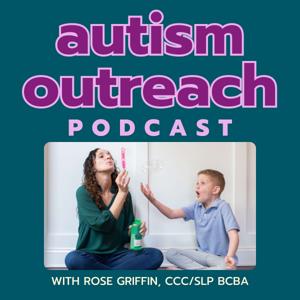
Join Rose Griffin, a dedicated Speech Therapist and BCBA from ABA SPEECH, as she shares her compassionate approach to supporting the communication needs of autistic individuals. With 20 years of…
This podcast is a resource for professionals and parents alike, offering practical strategies that honor each person's unique communication style. Rose covers a wide range of topics, including how to recognize and support autistic communication from an early age, the distinctions between autism and speech differences, and effective, respectful approaches to fostering communication, whether a child is non-speaking, minimally speaking, or verbal.
Through a mix of interviews and solo episodes, Rose explores how to enhance meaningful connections, address challenges with empathy, and celebrate the strengths of autistic individuals. Whether you're a parent, therapist, or educator, you'll find valuable insights and actionable advice to create supportive environments that empower communication and honor neurodiversity.
Hit subscribe and learn more at www.abaspeech.org.

7,684 Listeners
11,965 Listeners
625 Listeners
9,089 Listeners

25,789 Listeners
4,763 Listeners

46,901 Listeners
1,346 Listeners
625 Listeners
422 Listeners

15,409 Listeners

29,204 Listeners
59 Listeners

19,254 Listeners

10,179 Listeners