
Sign up to save your podcasts
Or



Hosted on Acast. See acast.com/privacy for more information.
Today we’re going to talk about keeping your company agile and the value of learning, iterating, and optimizing your business. Too many times companies spend vast amounts of time and effort creating something that is either not exactly what the market wants, or is not a feasible product or service for the company to offer as it grows over the long term.
Instead, an agile approach of creating and learning while being continually open to change and improvement can yield the best results. Today we’re going to hear from someone who did just that and has built a highly competitive product while inventing new solutions to challenges along the way.
To help me discuss this topic, I’d like to welcome David Wachs, CEO of Handwrytten, a handwriting service for brands.
Today we’re going to talk about the freelance economy and why it’s important that freelancers, contractors and the self-employed protect themselves and their future with insurance, retirement, and other methods of planning ahead.
Many freelancers are passionate about what they do and become independents so they can focus more of their time on what they love doing. They often find, however, that they need to learn about a wide variety of things such as accounting to send clients invoices, project management, and many other skills. This is in addition to ensuring that they are planning for their futures and the well-being of their families. Insurance, retirement, and other methods of planning are often taken for granted by full-time employees, but freelancers have to source and purchase this on their own. This can be prohibitive from both a time and cost perspective.
To help me discuss this topic, and offer some potential solutions, I’d like to welcome Steve Blair, who is part of the team at CareerGig, where he is VP of Benefits.
Hosted on Acast. See acast.com/privacy for more information.
Today we’re going to talk about the freelance economy and why it’s important that companies use verification and assessments to reduce risk and hire the best possible candidates.
One of the great things about the Web is that it is an often open place where people can participate from different locations and backgrounds. While in many cases this works well, companies can often have a hard time differentiating between freelancers and contractors who claim to have certain credentials and skills. How do you verify and certify that the person you are hiring is an expert at what they do before it’s too late?
To help me discuss this topic, and offer some potential solutions, I’d like to welcome Kelly Painter, who is part of the team at CareerGig, where she is VP of Sales.
Hosted on Acast. See acast.com/privacy for more information.
Hosted on Acast. See acast.com/privacy for more information.
Part 3 of 3: In times of disruption, organizations are forced to pivot in unexpected ways. While you can plan for potential events, it isn’t until a change occurs that the organization is tested. At the root of an organization’s response plan is data. When organizations understand how to leverage and optimize their business data solutions, data becomes a competitive advantage.
Change is constant. How organizations adapt to change is the variable. In this 3-part series of The Agile World, TEKsystems Data Analytics and Insights leaders discuss data’s evolution from a supporting asset, to a mission-critical component to success and the catalyst for change.
From the publisher's feed
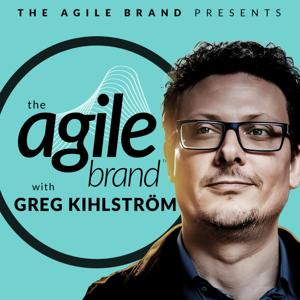
Marketing technology, AI, and customer experience, explained by the people building it. Three times a week, Greg Kihlström interviews CMOs, product leaders, and martech executives from platform…
Each episode runs 20–30 minutes: one guest, one specific problem, no filler. Recent conversations cover what changes when AI agents enter the discovery and purchase path, how to move past traditional A/B testing with reinforcement learning, closing the AI capability gap inside marketing teams, and where personalization stops paying off.
Who it's for: CMOs, VPs of marketing, martech and marketing operations leaders, and CX practitioners at enterprise brands and the platforms that serve them.
Greg Kihlström is an AI transformation advisor to leading brands, a martech futurist, a keynote speaker, and the author of over 25 books on marketing technology, including the Agile Brand Guide series. He has hosted The Agile Brand since 2019 — 900+ episodes, and highly rated across all podcast platforms.
New episodes drop at least three times a week. Follow the show so new episodes arrive automatically.
Hosted on Acast. See acast.com/privacy for more information.

21,049 Listeners
1,262 Listeners
308 Listeners

202 Listeners

9,568 Listeners

810 Listeners

15,412 Listeners
208 Listeners

616 Listeners
1,001 Listeners

36 Listeners

518 Listeners

404 Listeners