
Sign up to save your podcasts
Or

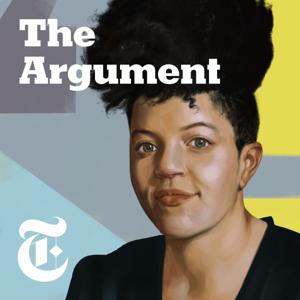


The Trump re-election strategy has revealed itself: Cast American cities as hotbeds of chaos, and place the blame entirely on the Democratic Party. Yet why is unrest being seen as a weakness for Joe Biden, and not the man in charge? Is the media unthinkingly accepting a Republican narrative? This week on the podcast, Frank, Michelle and Ross argue about the protests and counterprotests in Portland, Ore., and Kenosha, Wis., and disagree over the politicization of the clashes. They debate the lines between vigilantism and rioting and discuss the role coverage plays in the perception of the violence. And as a fitting parting gift on his final episode of “The Argument,” Frank recommends a short story that goes from jocular to chest-gripping grief in just 10 pages.
For background reading on this episode, visit nytimes.com/theargument.
Unlock full access to New York Times podcasts and explore everything from politics to pop culture. Subscribe today at nytimes.com/podcasts or on Apple Podcasts and Spotify.
What is the Republican election strategy? And is it working? This week on “The Argument,” the journalist Charlie Sykes joins Michelle and Frank to debate whether or not Trump has made a strong enough case for his re-election during the Republican convention and if his fierce message will translate to undecided voters. Then, they turn to a question facing many Biden conservatives, like Charlie: What is the future of the party? Plus, Charlie suggests a page-turner that will make time disappear.
For background reading on this episode, visit nytimes.com/theargument.
Unlock full access to New York Times podcasts and explore everything from politics to pop culture. Subscribe today at nytimes.com/podcasts or on Apple Podcasts and Spotify.
It’s a Democratic convention unlike any other. So who is it for? What does the party, and its presidential candidate, Joe Biden, need to accomplish? And how should they approach President Trump’s threats to a free and fair election? This week on the podcast, Frank Bruni and Michelle Goldberg are joined by Opinion columnist Jamelle Bouie and editorial board member Michelle Cottle for a round-table discussion of the virtual “nerd Coachella” that is the Democratic National Convention of 2020. Then, Michelle Cottle offers a homespun jukebox game that can take the whole family’s mind off politics and the pandemic.
For background reading, visit nytimes.com/theargument.
Unlock full access to New York Times podcasts and explore everything from politics to pop culture. Subscribe today at nytimes.com/podcasts or on Apple Podcasts and Spotify.
Five months after the editorial board’s science writer Jeneen Interlandi warned the hosts of “The Argument” that they should get comfortable in quarantine, she makes her return to the podcast to talk what comes next. Ross and Frank press Jeneen on herd immunity possibilities, how to fix the testing lags in the U.S., and the question on every parent and teacher’s mind: How can we open schools safely?
Then, Opinion writer Elizabeth Bruenig joins Frank and Ross for a debate on the moral obligations of the Roman Catholic Church in 2020. If the Movement for Black Lives is promulgating Catholic beliefs, why won’t the church say Black lives Matter? And how will Joe Biden’s Catholicism play a role in the election? Finally, Elizabeth recommends a break from omniscience.
For background reading on this episode, visit nytimes.com/theargument.
Unlock full access to New York Times podcasts and explore everything from politics to pop culture. Subscribe today at nytimes.com/podcasts or on Apple Podcasts and Spotify.
What do Trump supporters talk about when they talk about 2020? This week Ross hosts a special intra-right debate over whether conservatives should support Trump in 2020. He plays “moderate squish” (i.e., NeverTrumper) to Pro-Trump conservatives Dan McCarthy, the editor of Modern Age, and Helen Andrews, a senior editor of The American Conservative. They disagree with Ross about the president’s handling of the coronavirus and argue against his ultimate question for Republicans in 2020: Should conservatives actually hope for a Trump loss in November?
For background reading on this episode, visit nytimes.com/theargument.
Unlock full access to New York Times podcasts and explore everything from politics to pop culture. Subscribe today at nytimes.com/podcasts or on Apple Podcasts and Spotify.
How did the conservative defenders of classical liberal ideals like free speech and the rule of law wind up abetting authoritarians across the West? With Ross out for the week, Frank and Michelle are joined by Anne Applebaum, author of “Twilight of Democracy: The Seductive Lure of Authoritarianism,” to debate the origins of the center right’s schism over nationalism. Then, if you’ve got consternation over cancel culture, Michelle has “The Joke” for you.
For background reading on this episode, visit nytimes.com/theargument.
Unlock full access to New York Times podcasts and explore everything from politics to pop culture. Subscribe today at nytimes.com/podcasts or on Apple Podcasts and Spotify.
The long-held hope of a two-state solution has dwindled under Prime Minister Benjamin Netanyahu of Israel and his threat of annexation. After decades of calling for the preservation of the Jewish nation through two separate states, the political journalist and scholar Peter Beinart has changed his mind. This week on “The Argument,” he joins Ross and Michelle to make the case for a one-state solution. Then, Frank joins Michelle and Ross for a discussion about Barack Obama and George W. Bush, and what they should be doing to defeat President Trump in November.
For background reading on this episode, visit nytimes.com/theargument.
Unlock full access to New York Times podcasts and explore everything from politics to pop culture. Subscribe today at nytimes.com/podcasts or on Apple Podcasts and Spotify.
Senator Tammy Duckworth of Illinois joins the Frank, Ross and Michelle for a four-way interview about monuments and Tucker Carlson, Russian bounties in Afghanistan, Medicare for all and taking care of a multigenerational family in a pandemic. Plus, what’s harder: home schooling a 5-year-old or flying a Black Hawk helicopter? Then, Frank recommends an album that offers a little hope, even if hope is a dangerous thing to have.
For background reading on this episode, visit nytimes.com/theargument.
Editor’s note: At 18:58, Senator Duckworth says universal background checks are supported by 95 percent of Americans. Polling generally finds support for universal background checks between 84 and 94 percent.
Unlock full access to New York Times podcasts and explore everything from politics to pop culture. Subscribe today at nytimes.com/podcasts or on Apple Podcasts and Spotify.
Has Donald Trump already lost the election? This week on “The Argument,” Frank, Ross and Michelle debate whether Joe Biden already has the president beat in November, given historical precedent, polling and the president’s own predilections. Then, they turn to the question that every family of an American student is asking: How can school safely reopen in the fall? Plus, Michelle suggests you treat yourself to some escapism through “Self Care.”
For background reading on this episode, visit nytimes.com/theargument.
Unlock full access to New York Times podcasts and explore everything from politics to pop culture. Subscribe today at nytimes.com/podcasts or on Apple Podcasts and Spotify.
Is America finally going through a social revolution? Or will empty gestures and virtue signaling by corporations and elite institutions drown out demands to overturn the country’s economic inequities? This week on “The Argument,” Opinion columnist Jamelle Bouie joins Ross Douthat and Michelle Goldberg to debate whether the recent changes symbolize a true turning point, or whether institutions are merely placating a powerful movement that they in some ways fear.
Then, the columnists turn to rethinking memorials across America: Who deserves a statue? Whose statue should be torn down? And, going forward, what do we want America to commemorate as its collective inheritance?
For background reading on this episode, visit nytimes.com/theargument.
Unlock full access to New York Times podcasts and explore everything from politics to pop culture. Subscribe today at nytimes.com/podcasts or on Apple Podcasts and Spotify.
From the publisher's feed

8,826 Listeners

6,774 Listeners

3,927 Listeners

9,180 Listeners

1,508 Listeners
2,069 Listeners

144 Listeners

111,821 Listeners

2,402 Listeners

1,520 Listeners
12,626 Listeners

309 Listeners

7,136 Listeners

5,205 Listeners

466 Listeners
51 Listeners

2,347 Listeners

380 Listeners

6,679 Listeners

5,549 Listeners

15,911 Listeners
1,500 Listeners

10,678 Listeners

1,646 Listeners

3,538 Listeners
13 Listeners

612 Listeners
87 Listeners
0 Listeners