
Sign up to save your podcasts
Or

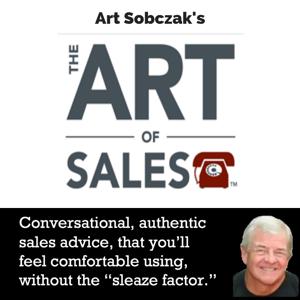


Some of the worst sales advice I've seen lately is, "Just make 1,000 calls."
Because if you're doing the wrong things 1,000 times, you're not developing skill. You're getting really good at being bad. And you might actually be training yourself to dread picking up the phone.
In this episode of The Art of Sales, I explain why repetition alone doesn't create mastery, why consuming endless sales training doesn't work either, and what actually DOES make someone better.
I'll also share how I went from turning expensive briskets into something resembling roofing material to producing competition-quality barbecue. Turns out, learning to smoke a brisket and mastering sales have quite a bit in common.
You'll hear how to use deliberate practice, feedback, and repetition to improve your opening statements, questions, responses to resistance, and overall sales conversations.
Plus, I'll explain why one of the most exciting applications of AI in sales isn't having AI do the selling for you. It's using AI to help you become a better salesperson.
Coming soon: I'm developing a new Smart Calling AI coaching tool designed to help you practice, improve, and master the human side of selling. I'll be sharing more about it in the coming months.
Want to start improving right now? Get the Smart Calling Prospecting and Sales App for B2B Professionals. It includes practical training, examples, exercises, and guidance to help you develop the skills that produce better conversations and better results.
Get it here: https://Studio.com/art
Because the goal isn't 1,000 more reps.
It's making the next rep better than the last one.
A four-year-old boy looked at me on an airport train and asked his dad, "Daddy, is that man sad?"
I wasn't. But apparently, that's what I was communicating.
And that's the point: You can't NOT communicate.
In this episode, I share that airport wake-up call and what it teaches us about sales conversations. Your facial expression, posture, energy, attitude, and even what you're doing while you talk can affect what people hear in your voice and how they react to you.
You'll get 11 simple, practical ways to become more aware of what you're projecting, sound more engaged and confident, and create a better experience for the people you speak with.
Because your prospect doesn't hear your intentions. They hear you.
To access the masterclass mentioned in the episode, go to http://SmartCallingTraining.com/speaking
"Send me some information."
Those five words have probably killed billions of dollars in potential sales. Because too many salespeople hear them, happily agree, send off a deck, case study, or PDF... and then spend the next month chasing a prospect who never wanted the information in the first place.
But sometimes they DO want it.
So how can you tell whether "send me something" is legitimate interest or simply a polite way to get you off the phone?
In this episode, you'll learn the specific questions to ask when you hear an information request, including one of my all-time favorites:
"If you like what you see, what happens next?"
I'll also show you how to uncover what the prospect really wants to know, use their request to learn more about their buying process, avoid sending information into a black hole, presell what you send so it actually gets looked at, and lock in a real next step before ending the conversation.
Plus, we'll look at how AI can make what you send dramatically more relevant without burying prospects under even more generic crap they didn't ask for.
The big takeaway:
Sending information is NOT a next step.
It's your cue to ask a question.
Twice in fifteen years of desert living, I've walked out my front door and found a rattlesnake curled up in the corner. That fear taught me something about persuasion that a famous psychology experiment proved decades ago. Dr. Albert Bandura cured severe snake phobics not with facts, and not by forcing them to confront the snake directly, but by having them watch someone else do it first. He called it vicarious experience, and it's the exact same reason your best sales stories work better than your best data.
In this episode: why a group of MBA students trusted a story about an old wine maker more than they trusted charts and figures, why "my cousin's neighbor" can beat a mountain of seatbelt statistics, and the real reason people can repeat a story I told them fifteen years ago but forget everything else from that same training. Plus, why the guys who get bitten by rattlesnakes usually aren't the ones who leave them alone, they're the ones who go after them with a shovel. There's a lesson in that for how you handle a skeptical prospect too.
You'll walk away with a simple exercise to build your own story bank from prospects you've already won over.
Most cold call advice you see celebrated on LinkedIn has one thing in common — it starts with an apology.
"You're going to hate me, but this is a cold call." "Did I catch you at a bad time?" "I'll be honest with you — this is a sales call."
Justin Michael has spent 20,000 hours on the phone and written 10 books disagreeing with all of it. And in this episode, he makes the case — backed by brain science — for why permission-begging openers kill your status, trigger the wrong response in the prospect's brain, and actually cause the rejection salespeople are trying to soften.
Justin is a former sales leader at Salesforce and LinkedIn whose methodology has generated over $1 billion in pipeline for more than 200 ventures. He's one of the sharpest minds in outbound sales, and Art ranks him among the top in the industry.
In this conversation, the two compare notes on everything from the neuroscience of cold call openers, to why personalization at scale is a myth, to the Route technique that gets executives talking without a single pitch.
Fair warning — this one gets opinionated. In the best possible way.
What you'll hear in this episode:
Why the croc brain fires the moment your prospect picks up — and what that means for everything you say in the first ten seconds
The Route technique — a dead-simple opener that works by asking a routing question instead of pitching or begging for time
Why email and phone require completely opposite psychological approaches
The difference between a comment and an objection — and why treating them the same is costing you conversations
Attraction selling, pronoia, and the mindset shift that separates reps who grind from reps who produce
Why the person listening is always in control — and what that means for how you open every call
What unconscious competence actually feels like, and how to get there faster
What if everything you believed about sales was wrong?
Art Sobczak sits down with Dr. Lorenzo Bizzi, professor at Cal State Fullerton and author of Myths Versus Science of Selling, to challenge the conventional wisdom that has dominated sales training for decades.
From "always be closing" to "people buy on emotion" to "extroverts make the best salespeople" — Dr. Bizzi has spent years collecting academic research that tells a very different story. And he's not just here to tear down the myths; he's here to make you think.
In this episode, you'll discover:
Whether you're new to sales or a seasoned pro, this conversation will challenge your assumptions and sharpen how you think about every customer interaction.
Grab Dr. Bizzi's book on Amazon and visit lhttp://lorenzobizzi.com to learn more.
What if your biggest sales problem isn't closing… but everything that happens before it?
In this episode, Art Sobczak sits down with sales trainer, speaker, and author Joe Dalton to break down what truly separates professionals from amateurs in sales.
Joe shares how he went from "just talking to people" to mastering a proven sales process, and why he now views selling as a craft, not a transaction.
You'll discover:
• Why most "closing problems" are actually discovery failures • The simple shift from selling to letting people buy • How curiosity instantly transforms your conversations • The 4–5 key question areas every salesperson must master • Why objections aren't objections… and how to handle them the right way • The danger of talking too much… and how salespeople unknowingly "buy the sale back"
If you want more natural, effective sales conversations… and fewer stalled deals… this episode will change how you approach every call.
You know that kid in the produce aisle who has no idea where the dill is? The one who starts apologizing and wandering around while your brain checks out?
That's what most prospecting calls sound like in the first 20 seconds.
In this episode, Art breaks down exactly what's happening in your prospect's brain the moment they pick up the phone, why most common openers actually trigger the resistance you're trying to avoid, and the simple 4-part framework that makes prospects lean in instead of push away.
You'll hear two side-by-side versions of the same call, one that sounds like the apple guy and one that sounds like a professional peer, so you can hear the difference for yourself.
Plus, one thing you can do before your very next call to close the gap between how you think you sound and how you actually sound.
This is all based on the new First 20 Seconds Formula Masterclass http://First20Seconds, showing you exactly what to say, and avoid, to get people wanting to talk to you, instead of trying to get rid of you.
Last episode I banned 26 sales words and phrases.
But the truth is… banning the words isn't the solution.
Because the words aren't the problem.
They're the emotional "cover" salespeople use when they don't feel confident—apologies, permission-begging, softeners, and filler phrases that are designed to make the seller feel safer.
Unfortunately, they do the opposite for the buyer.
In this episode, I'll show you how to eliminate insecure language by fixing the thinking behind it—and I'll give you a simple pre-call checklist that will change how you show up on every call.
(This originally appeared in the free, weekly, Smart Calling Report email newsletter. See the current and back issues, and subscribe at http://SmartCallingReport.com)
Also referenced in this episode, the Smart Calling Sales and Prospecting Coaching App for B2B Professionals: http://Studio.com/Art
Salespeople don't struggle because they lack tactics. They struggle because of the language they use—often without realizing what it reveals about how they're thinking.
In this episode, Art Sobczak shares 26 sales words and phrases he's banning in 2026. Not because they sound bad—but because they quietly lower status, create resistance, and sabotage confidence before the conversation ever begins.
You'll learn why phrases like "Sorry to bother you," "Just checking in," "Thoughts?" and "This is a cold call" don't just hurt response rates—they signal insecure thinking that prospects immediately pick up on.
This isn't about memorizing better scripts. It's about thinking, preparing, and showing up like a professional—so the language fixes itself.
What You'll Learn in This EpisodeWhy weak, apologetic sales language is a symptom—not the real problem
The hidden thinking behind permission-seeking and low-status phrases
How certain "best practices" actually trigger resistance
Why professionals don't replace phrases—they replace standards
How to start eliminating language that no longer belongs in professional sales
Art groups the 26 banned words into clear categories, explains what each phrase reveals about your thinking, and shows how this language quietly holds salespeople back—often without them realizing it.
Subscribe to the Smart Calling Report at http://SmartCallingReport.com
Get more info on the Smart Calling Prospecting and Sales Coaching and Training app at http://Studio.com/Art
From the publisher's feed

3,837 Listeners

3,894 Listeners
582 Listeners
1,118 Listeners

16,841 Listeners
3,826 Listeners

13,994 Listeners

577 Listeners

4,445 Listeners
70 Listeners
396 Listeners
910 Listeners

958 Listeners

165 Listeners

933 Listeners