
Sign up to save your podcasts
Or

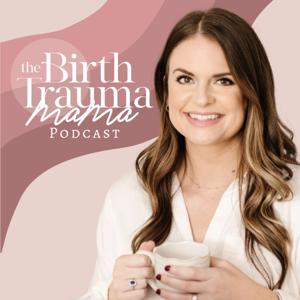


In this powerful episode of the Birth Trauma Mama Podcast, Kayleigh sits down with Amber, a midwife and mother of three, to share her story of a life-threatening pregnancy and birth experience with her twins in July 2019. What began as a relatively uneventful twin pregnancy quickly turned into a medical emergency involving acute fatty liver of pregnancy (AFLP), disseminated intravascular coagulation (DIC), and a prolonged ICU stay.
Amber shares the terrifying physical and psychological realities of her experience, including ICU delirium, hallucinations, and the lasting impact of feeling betrayed by the people she believed were trying to hurt her. She also opens up about her husband's trauma, the complicated emotions of meeting her babies after being separated from them, and the long road of processing what happened. This conversation highlights the importance of recognizing subtle warning signs, advocating for critically ill obstetric patients, and making space for the emotional aftermath of birth trauma, even years later.
In this episode, we discuss:
Content note: This episode includes discussion of life-threatening pregnancy complications, severe hemorrhage, the possibility of death, ICU delirium and hallucinations, and traumatic medical experiences.
Thank you to Amber for sharing her story with such honesty, humor, and vulnerability. Her experience is a powerful reminder of the importance of listening, advocacy, and compassionate care for birthing people and their families. 💛
You can follow Amber on Instagram and TikTok: @aflp_midwife
Please note: This episode shares Amber’s personal experience and is intended for educational and informational purposes. It is not a substitute for individualized medical advice.
For more birth trauma content and a community full of love and support, head to my Instagram at @thebirthtrauma_mama.
Learn more about the support and services I offer through The Birth Trauma Mama Therapy & Support Services.
Disclaimer - The views and opinions expressed by guests on The Birth Trauma Mama Podcast are their own and do not necessarily reflect the official stance, views, or positions of The Birth Trauma Mama Podcast. The content shared is for informational purposes only and should not be considered as professional or medical advice and/or endorsement.
If you’re rocking your baby in the middle of the night, replaying your birth experience for what feels like the hundred-thousandth time, this special mini episode of The Birth Trauma Mama Podcast is for you. ❤️🩹
In this deeply personal and grounding episode, Kayleigh speaks to the version of herself who once sat in the nursery at 2 AM, overwhelmed by memories, grief, and the fear that she had somehow gotten everything wrong. She offers the words she wishes she could have heard in those moments to anyone navigating the complicated emotions that can follow a traumatic birth.
This episode isn’t about fixing your feelings, finding the perfect coping strategy, or figuring everything out tonight. It’s about making the darkness feel a little less lonely, giving yourself permission to feel whatever comes up, and remembering that you don’t have to solve your birth story in the middle of the night. You deserve compassion, care, and support, exactly as you are. And this pain will not last forever. 🤍
✨ In this special mini episode, we explore:
💌 A reminder to take with you: This was not your fault. You are not failing. You are not alone. You don’t have to feel a certain way, and you don’t have to figure everything out tonight. You deserve care and compassion, and you are doing an incredible job.
If you’re listening at 2 AM, 3 AM, or any hour when the rest of the world seems to be asleep, let this episode be a gentle reminder that you are not alone in the darkness. Come back to it as many times as you need. We’re here with you. 🤍
For more birth trauma content and a community full of love and support, head to my Instagram at @thebirthtrauma_mama.
Learn more about the support and services I offer through The Birth Trauma Mama Therapy & Support Services.
Disclaimer - The views and opinions expressed by guests on The Birth Trauma Mama Podcast are their own and do not necessarily reflect the official stance, views, or positions of The Birth Trauma Mama Podcast. The content shared is for informational purposes only and should not be considered as professional or medical advice and/or endorsement.
In Honor of National Pregnancy and Infant Loss Remembrance Day, we are re-releasing one of our favorite episodes with The Adalyn Rose Foundation.
The Adalyn Rose Foundation was created in 2019 on what would have been Chloe and Adam Ciferri's daughter's second birthday. Chloe was having a seemingly normal pregnancy with her daughter Adayln, until about 20 weeks. Chloe and her husband were moving into a new home when Chloe's health began to decline. Chloe was admitted to the hospital and when she asked to hear Adalyn's heartbeat, there wasn't one.
The Adalyn Rose Foundation serves families grieving the loss of a baby through miscarriage, stillbirth, or during infancy. They walk families through every step of life after baby loss, from the first moments and all those that follow.
Adalyn Rose Foundation is going NATIONWIDE in 2024!!
You can learn more about the Adalyn Rose Foundation and the events, fundraising and resources they provide by visiting their website: https://adalynrose.org/
You can find the Adalyn Rose Foundation on Instagram: @adalynrosefoundation
Guest Bio:
Chloe Ciferri created the Adalyn Rose Foundation with her husband in honor of their daughter, Adalyn, who they lost unexpectedly during pregnancy. She strives to create a community of support for families who have experienced the devastation of baby loss. Chloe was a Special Education teacher for many years, until resigning to work at the foundation and stay home with Addie’s brothers and sister. She earned her Bachelor’s degree in Special and Elementary Education, and her Master’s degree in Educational Leadership. She most recently received her certificate in Non-Profit Leadership from Lasalle University. Aside from the work she does to support baby loss families, she is also passionate about Foster Care. Chloe enjoys spending time with family and going on family adventures with Adam, TJ, Enzo and Elle.
For more birth trauma content and a community full of love and support, head to my Instagram at @thebirthtrauma_mama.
Learn more about the support and services I offer through The Birth Trauma Mama Therapy & Support Services.
For more birth trauma content and a community full of love and support, head to my Instagram at @thebirthtrauma_mama.
Learn more about the support and services I offer through The Birth Trauma Mama Therapy & Support Services.
Disclaimer - The views and opinions expressed by guests on The Birth Trauma Mama Podcast are their own and do not necessarily reflect the official stance, views, or positions of The Birth Trauma Mama Podcast. The content shared is for informational purposes only and should not be considered as professional or medical advice and/or endorsement.
In this Mini Series episode, I dive into a nuanced conversation around gratitude practices for perinatal trauma survivors. While gratitude can be a powerful tool for healing, it often becomes complicated when paired with the experiences of trauma, grief, and loss.
Whether you’ve felt pressure to “just be grateful” or are searching for ways to reconnect with yourself and your story, this episode offers validation and actionable insight.
🔑 What You’ll Hear in This Episode:
📲 Connect & Learn More:
If this episode resonates with you, share it with a friend or leave a review to help others find this supportive space. 💜
Pugach CP, May CL, Wisco BE. Positive emotion in posttraumatic stress disorder: A global or context-specific problem? J Trauma Stress. 2023 Apr;36(2):444-456. doi: 10.1002/jts.22928. Epub 2023 Mar 29. PMID: 36987701; PMCID: PMC10101918.
Korem N, Duek O, Ben-Zion Z, Kaczkurkin AN, Lissek S, Orederu T, Schiller D, Harpaz-Rotem I, Levy I. Emotional numbing in PTSD is associated with lower amygdala reactivity to pain. Neuropsychopharmacology. 2022 Oct;47(11):1913-1921. doi: 10.1038/s41386-022-01405-2. Epub 2022 Aug 9. PMID: 35945274; PMCID: PMC9485255.
Litz BT, Litz BT, Gray MJ. Emotional Numbing in Posttraumatic Stress Disorder: Current and Future Research Directions. Australian & New Zealand Journal of Psychiatry. 2002;36(2):198-204. doi:10.1046/j.1440-1614.2002.01002.x
For more birth trauma content and a community full of love and support, head to my Instagram at @thebirthtrauma_mama.
Learn more about the support and services I offer through The Birth Trauma Mama Therapy & Support Services.
Disclaimer - The views and opinions expressed by guests on The Birth Trauma Mama Podcast are their own and do not necessarily reflect the official stance, views, or positions of The Birth Trauma Mama Podcast. The content shared is for informational purposes only and should not be considered as professional or medical advice and/or endorsement.
In this listener series episode of the Birth Trauma Mama Podcast, Kayleigh sits down with Lauren to hear the story of her traumatic pregnancy, unexpected diagnosis of placenta accreta, life-threatening hemorrhage, emergency hysterectomy, and the premature birth of her daughter at just 23 weeks and 6 days. Lauren shares what it was like to know throughout her pregnancy that her life was at risk, the anticipatory grief she experienced, and the long road of processing what happened after surviving such a traumatic birth.
Lauren also opens up about infertility after hysterectomy, IVF, adoption, and ultimately growing her family through a gestational carrier. She shares the complicated emotions that came with surrogacy after birth trauma, including grief, gratitude, anxiety, loss of control, and the powerful experience of being present for her daughter's birth. Her story is a beautiful reminder that healing isn't linear, that grief and gratitude can coexist, and that there is no "right" way to feel after birth trauma.
✨ In this episode, we talk about:
Lauren's story is a powerful reminder that surviving doesn't mean the experience stops affecting you and that you can be deeply grateful for where you are while still grieving what you lost.
For more birth trauma content and a community full of love and support, head to my Instagram at @thebirthtrauma_mama.
Learn more about the support and services I offer through The Birth Trauma Mama Therapy & Support Services.
Disclaimer - The views and opinions expressed by guests on The Birth Trauma Mama Podcast are their own and do not necessarily reflect the official stance, views, or positions of The Birth Trauma Mama Podcast. The content shared is for informational purposes only and should not be considered as professional or medical advice and/or endorsement.
What if part of you is actually afraid to heal?
We talk about healing from birth trauma as though the goal is to eventually feel completely okay with what happened. But what if healing doesn’t mean that at all?
In this solo episode of the Birth Trauma Mama Podcast, Kayleigh explores the complicated relationship many birth trauma survivors have with healing, including the fear that if the pain gets quieter, the experience will somehow matter less.
Because what happens when you stop thinking about your birth every day? When you can tell the story without falling apart? When the anger isn't as intense? When you don't feel the same need to explain what happened to everyone around you?
And it certainly doesn't mean that what happened to you was okay.
In this episode, Kayleigh talks about:
You can be grateful for your baby and devastated by your birth.
You can be thankful for the people who saved your life and angry about what happened.
You can love motherhood and hate your birth story.
You can be okay today and still know that what happened to you was not okay.
You don't have to stay in pain to prove that what happened to you mattered.
For more birth trauma content and a community full of love and support, head to my Instagram at @thebirthtrauma_mama.
Learn more about the support and services I offer through The Birth Trauma Mama Therapy & Support Services.
Disclaimer - The views and opinions expressed by guests on The Birth Trauma Mama Podcast are their own and do not necessarily reflect the official stance, views, or positions of The Birth Trauma Mama Podcast. The content shared is for informational purposes only and should not be considered as professional or medical advice and/or endorsement.
In this episode of the Birth Trauma Mama Podcast, Kayleigh sits down with Brittany to hear about two birth experiences that left a lasting impact on her. Brittany shares her experience with an initial molar pregnancy diagnosis that was later determined to be a healthy pregnancy, followed by a difficult first birth involving a third-degree tear and feelings of invalidation.
Years later, Brittany became pregnant again and hoped for a planned C-section because of her previous experience. Instead, she planned for a vaginal birth—and ultimately experienced a true emergency when her baby’s heart rate began to decelerate and an umbilical cord issue was discovered. She was rushed to the operating room and delivered her son under general anesthesia.
Brittany opens up about the anger, fear, postpartum disconnect, and delayed bonding that followed, as well as the therapy and time that helped her heal. Her story is also a powerful reminder that missing immediate skin-to-skin or the “golden hour” does not mean you won’t bond with your baby.
✨ In this episode, we talk about:
For more birth trauma content and a community full of love and support, head to my Instagram at @thebirthtrauma_mama.
Learn more about the support and services I offer through The Birth Trauma Mama Therapy & Support Services.
Disclaimer - The views and opinions expressed by guests on The Birth Trauma Mama Podcast are their own and do not necessarily reflect the official stance, views, or positions of The Birth Trauma Mama Podcast. The content shared is for informational purposes only and should not be considered as professional or medical advice and/or endorsement.
A special re-release:
In this episode of The Birth Trauma Mama Podcast, Kayleigh opens a gentle and honest conversation about the journey of considering pregnancy after birth trauma and introduces her new workshop, created specifically for this season.
The Pregnancy After Birth Trauma Workshop was designed as a supportive, trauma-informed space for anyone exploring a subsequent pregnancy after a difficult or traumatic birth. It offers guidance, reflection prompts, and tools to help you move through this process with clarity and a sense of agency. Whether you're actively trying, quietly wondering if you're ready, or still holding the question gently from a distance, this workshop honors the complexity of your experience and walks alongside you with care and grounding.
In today’s episode, Kayleigh speaks to the emotional landscape that so many survivors navigate when thinking about growing their family again. Rather than rushing answers, she reflects on the fears, hopes, and complicated "maybes" that live in this space, and why this decision deserves slowness, compassion, and support.
She explores:
💜 Why mixed emotions about another pregnancy are a completely normal trauma response
🫶 The grief, pressure, and self-doubt that can surface during this decision-making process
🤍 What it means to rebuild trust in your body and the systems that care for you
🧭 How to approach this season at your pace, without urgency or expectation
🌱 A grounding mindset shift to help you feel more supported and less alone
This episode is an invitation to breathe, soften around uncertainty, and remember that you don’t have to figure everything out all at once. Considering another pregnancy after trauma isn’t a test of readiness, strength, or certainty. It’s a deeply human process that unfolds in layers. And you deserve a safe place to land inside it.
Workshop & Resources
✨ Pregnancy After Birth Trauma Workshop: Get it Here
🌐 Learn more at HoldingHopePerinatal.com
💜 Connect with Kayleigh: @thebirthtrauma_mama
For more birth trauma content and a community full of love and support, head to my Instagram at @thebirthtrauma_mama.
Learn more about the support and services I offer through The Birth Trauma Mama Therapy & Support Services.
Disclaimer - The views and opinions expressed by guests on The Birth Trauma Mama Podcast are their own and do not necessarily reflect the official stance, views, or positions of The Birth Trauma Mama Podcast. The content shared is for informational purposes only and should not be considered as professional or medical advice and/or endorsement.
In this listener series episode of the Birth Trauma Mama Podcast, Kayleigh sits down with Melissa to hear her story of pregnancy, unexpected complications, premature birth, and an almost six-month NICU stay. Melissa shares how her experience at 25–27 weeks pregnant turned her birth plans upside down and how her son’s congenital heart defect and battle with NEC added layers of fear and uncertainty to an already traumatic experience.
But Melissa’s story doesn’t end in the NICU. Six years later, she reflects on the many pieces that have supported her healing: therapy, medication, movement, relationships, community, and ultimately finding meaning in what she experienced. Today, Melissa works as a NICU family support specialist, offering support to families walking through some of the same uncertainty she once experienced herself.
This conversation is a beautiful reminder that healing doesn’t erase the pain or grief of what happened. Sometimes, it means learning how to hold the pain and the beauty at the same time.
In this episode, we talk about:
Melissa’s story is a powerful reminder that you can grieve what happened while also creating a meaningful life beyond it. Healing doesn’t have to mean forgetting, minimizing, or finding a silver lining. Sometimes it simply means becoming curious about who you are now and finding the support you need along the way.
For more birth trauma content and a community full of love and support, head to my Instagram at @thebirthtrauma_mama.
Learn more about the support and services I offer through The Birth Trauma Mama Therapy & Support Services.
Disclaimer - The views and opinions expressed by guests on The Birth Trauma Mama Podcast are their own and do not necessarily reflect the official stance, views, or positions of The Birth Trauma Mama Podcast. The content shared is for informational purposes only and should not be considered as professional or medical advice and/or endorsement.
In this episode of the Birth Trauma Mama Podcast, Kayleigh sits down with Lo Mansfield, MSN, RNC-OB, CLC, an OB nurse, educator, mom of four, and creator of The Labor Mama. Lo shares her journey into nursing, what she calls the “art of nursing,” and how her experiences both as a nurse and as a mother have shaped the way she thinks about birth.
Kayleigh and Lo dive into the importance of nuance, autonomy, and hope in birth education, especially for people planning a hospital birth after a previous traumatic experience. They talk about the ways that interventions can become unnecessarily stigmatized, why informed consent means having choices in both directions, and how education can prepare you for what happens in a hospital without labeling every intervention as inherently good or bad.
They also discuss the power of staying curious, asking questions, understanding the physiological process of labor, and remembering that what happened in a previous birth does not necessarily determine what will happen next time.
In this episode:
🌿 Lo's journey into nursing — How her mother's experience with cancer opened her eyes to the profound impact healthcare providers can have on patients and families.
🩺 The “art of nursing” — Why the human-to-human connection between a healthcare provider and patient can be just as important as the clinical care itself.
💞 Where magic and trauma can happen — How the way a provider responds to a difficult or imperfect clinical situation can dramatically shape a patient's experience.
👩⚕️ Do you have to be a mom to be a great OB nurse? — Lo and Kayleigh discuss the assumption that healthcare providers need to have experienced something personally in order to understand or care for their patients well.
🏥 Can you have a positive hospital birth? — A nuanced conversation about hospital birth, home birth, birth centers, and the importance of respecting different people's choices about where they feel safest.
⚖️ Autonomy in both directions — Why true autonomy means supporting someone's choice to decline an intervention and someone's choice to have one.
💉 Reframing interventions as tools — Inductions, epidurals, cervical exams, and other interventions don't have to be categorized as inherently “good” or “bad.” Understanding the options allows people to make decisions that fit their circumstances.
📚 The importance of birth education — Lo explains why understanding what typically happens when you arrive at a hospital can help you feel more prepared and less overwhelmed.
🌈 Centering hope after birth trauma — Why a previous traumatic birth doesn't mean your next birth will unfold the same way, and why distinguishing between what is possible and what is probable can be so important.
🤝 The value of a doula — How an additional support person can provide advocacy and continuity, particularly for someone entering birth with a history of trauma.
❓ Stay curious — Ask questions, seek clarification, and understand what is happening rather than allowing your brain to fill in the gaps with fear.
🧠 Trauma-informed preparation — Kayleigh and Lo discuss the role that therapy and trauma-specific support can play when preparing for a subsequent birth.
✨ Look for what's going right, too — In the middle of worrying about what could go wrong, don't lose sight of the signs that labor is progressing and things are going well.
Connect with Lo
Lo Mansfield is an OB nurse, childbirth educator, lactation counselor, mom of four, and the creator of The Labor Mama, where she shares evidence-informed education about pregnancy, birth, and postpartum.
🔗 The Labor Mama: Connect with Lo and explore her birth education resources through her online platform.
For more birth trauma content and a community full of love and support, head to my Instagram at @thebirthtrauma_mama.
Learn more about the support and services I offer through The Birth Trauma Mama Therapy & Support Services.
Disclaimer - The views and opinions expressed by guests on The Birth Trauma Mama Podcast are their own and do not necessarily reflect the official stance, views, or positions of The Birth Trauma Mama Podcast. The content shared is for informational purposes only and should not be considered as professional or medical advice and/or endorsement.
From the publisher's feed
Birth trauma is the dark and sometimes scary side of pregnancy & postpartum that no one wants to talk about. But, we're here to change that! I'm Kayleigh, a licensed therapist and birth trauma…

2,170 Listeners

1,225 Listeners

1,036 Listeners

8,154 Listeners
457 Listeners

25,689 Listeners

726 Listeners
1,297 Listeners

746 Listeners
554 Listeners
662 Listeners

17,641 Listeners

3,447 Listeners

10,208 Listeners

306 Listeners