
Sign up to save your podcasts
Or

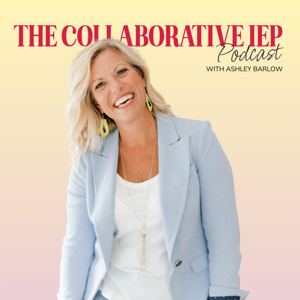


Advocating for your child can feel overwhelming—even when you know a lot. In this episode, I come back to the roots of The Collaborative IEP and refocus on the advocacy side of special education.
I revisit the three skills I believe are essential to advocating successfully for your child: understanding special education law, understanding special education practice, and having strong advocacy and negotiation skills. While we’ve spent a lot of time on practice, this episode zeroes in on the third skill—negotiation.
I walk through a mediation strategy I use to avoid piecemeal decision-making and protect flexibility during negotiations. Using a real-world example, I explain why resolving issues one at a time can limit outcomes and how a more strategic, visual approach can lead to better results at the IEP table.
In this episode, I cover:
If you’re feeling stuck, frustrated, or like you’re missing something in your advocacy, this episode will help you refocus on the skills that actually move the needle.
Advocating for your child can feel overwhelming—even when you know a lot. In this episode, I go back to the roots of The Collaborative IEP to break down the three essential skills every parent advocate needs to navigate special education with more confidence and less burnout.
Along the way, I share a very real “life lately” check-in, including the challenges of an unstructured holiday break, the emotional weight of comparison, and why even experienced advocates can feel knocked off their feet when it comes to their own kids.
You’ll learn:
This episode is equal parts practical guidance, honest reflection, and reassurance that you’re not doing this wrong—you’re doing something hard. Whether you’re brand new to advocacy or deep into the DIY phase, this conversation will help you refocus on the skills that actually move the needle for your child.
You’re not alone. And you don’t have to figure this out all by yourself.
And PS. I accidentally said Ray Nelson is speaking at the Conference. He's not. He's speaking to my Membership later this year! We'd love to have you!
If you’ve ever looked around at your life and thought, “Why does everything feel so hard and why am I handling it better than I expected?” — this conversation is going to feel like a long exhale.
Today, I’m joined by my friend Kara Riska, host of The Special Needs Mom Podcast and a seasoned coach who helps mothers navigate the emotional load of raising children with disabilities. What started as a totally different recording plan (long story) turned into a deeply honest conversation about stress, shifting seasons, burnout, identity, and what it actually looks like to feel grounded when life is objectively… a lot.
In this episode, we walk through:
This episode is messy, real, heartfelt, and full of those “oh wow… me too” moments that make you feel less alone in motherhood, advocacy, and the unpredictable seasons of life.
If you’re navigating stress you can’t simply “opt out” of — but you want to feel more grounded, more whole, and more like yourself again — this conversation may be a welcome companion.
Connect With KaraIf you’ve ever looked at your child and thought, “How can someone so smart fall apart over a planner, a backpack, or one tiny assignment?” — this episode is going to feel like a deep breath.
Today I’m talking about something I’m seeing everywhere right now: executive functioning struggles that masquerade as motivation or behavior issues. Between advocacy work, school visits, and conversations with families, I’m hearing the same themes — kids who want to do well but genuinely can’t keep up with the planning, organizing, remembering, and transitioning that school demands.
I break down what executive functioning really is, why it tanks for some kids (especially around puberty), and the simple supports that make a huge difference at home and at school.
Here’s what I cover:
• Why executive functioning struggles aren’t “won’t do” problems — they’re “can’t do yet”
• How visual agendas and checklists make task initiation and follow-through so much easier
• Using timers to support transitions, attention, and emotional regulation
• Chunking big assignments so kids don’t shut down before they even start
• Helping kids self-monitor and understand what “successful” looks like
• How to trial supports at home and then communicate what works to school teams
If you’re feeling overwhelmed or unsure where to start, you’re not alone. These quick wins can bring immediate relief — and give your child the structure and support they need to feel capable again.
If you’ve ever sat in an IEP meeting thinking, “How on earth are multilingual families supposed to navigate this?” — this episode is going to feel like a deep breath and a flashlight.
I’m joined by Colleen, a speech-language pathologist turned advocate who spends her days doing two things most people only talk about: supporting bilingual learners in early intervention and showing up at the IEP table alongside families who need a knowledgeable partner in their corner. She’s the real deal — part SLP, part advocate, and fully committed to helping parents participate meaningfully in a process that wasn’t designed with them in mind.
We dig into what actually gets in the way for multilingual families, why translation and interpretation aren’t “nice to have” but legally required, and how school teams can stop relying on Google Translate as a strategy (spoiler: it’s not a strategy).
In this episode, we discuss:
• The rights to translated documents and qualified interpreters — and why timelines are so murky
• How incomplete or software-generated translations derail meaningful participation
• The difference between a true language disorder and a language difference
• Why proper bilingual assessment matters (and what happens when it doesn’t)
• Classroom supports that help multilingual learners and everyone else
• Where families can start when they can’t find a bilingual advocate in their area
If you’ve been feeling frustrated, overwhelmed, or unsure how to help families who don’t speak English navigate the IEP process, take a breath — this conversation will leave you informed, encouraged, and better equipped to create a truly accessible path forward for every child.
Website
If you’ve ever wondered whether your child’s struggles with reading are actually connected to ADHD, learning differences, confidence, or all of the above, this episode is going to feel like a giant exhale.
I’m joined by Megan Penrod, founder of Developing Readers Academy, who brings a fresh, whole-child approach to literacy. Yes, she teaches phonics. Yes, she uses Orton-Gillingham. But she also teaches kids what neurons are, how their brains grow, and why a mistake isn’t a failure — it’s a “pot of gold” that helps build a new pathway. (Honestly? I want someone to talk to me like that.)
Megan and I dig into what actually helps struggling readers make progress, why confidence and self-talk matter just as much as decoding skills, and how parents can feel empowered instead of overwhelmed. Her approach blends evidence-based reading instruction with emotional resilience and brain science — and the results speak for themselves.
In this episode, we discuss:
• Why traditional reading interventions sometimes fall flat
• How understanding the brain boosts reading confidence
• The “ADHD Success Triangle” and where reading fits in
• What families really need to know to support struggling learners
• Why mistakes are golden (literally) when it comes to building new neural pathways
If you’ve been feeling stuck, stressed, or unsure about the next right step for your child, take a breath — this episode will leave you feeling grounded, encouraged, and better equipped to move forward with clarity.
Where To Find MeganWebsite
Have you ever wanted to talk to me on the phone while I'm driving? Didn't think so... but this week you get the opportunity anyway!!! Sit in traffic and talk inclusion with me!
I've had several friends, clients, and educators raise this question over the last couple of weeks: How much modification is appropriate for a student? Is there a limit, a tipping point, that would determine that a child's placement shouldn't be in the general education classroom? And if a child is accessing GenEd with a lot of modifications, what does assessment look like?
I've been asked that enough recently that I honestly started to question what I knew, so I've gone back and read - oh, I don't know - about 4 books on special education that EdD students read, 4 books on inclusive ed, and a couple on behavior - and I came up with the same answers. (And no, while this episode gives a great example of my rambly head, I'm not crazy!)
Please enjoy my diatribe on inclusion and modification!
If you’ve ever found yourself juggling all the things—family, advocacy, work, and maybe a touch of “why am I like this?”—this episode is for you.
I’m joined by Dr. Angelyn Franks, a speech-language pathologist turned mindfulness researcher, to talk about what burnout really looks like and how we can actually start managing stress in ways that work for us. We go deep into the difference between real, values-aligned self-care and the kind that just feels like another chore on your to-do list. (Spoiler: if your “relaxing” pedicure feels like a task, it might be time to rethink it.)
We also talk about the science behind chronic stress, why our bodies sometimes betray us, and how a little humor—plus maybe some “boob ice”—can go a long way in resetting your nervous system.
In this episode, we discuss :
If you’ve been feeling wired, tired, or just plain done, take a deep breath. This episode is your reminder that you can’t pour from an empty cup—but you can refill it in ways that feel right for you.
Timestamps
What happens when the people who protect our students’ rights are suddenly… gone?
In this episode, I’m breaking down what’s happening inside the U.S. Department of Education—why hundreds of staff in special education and civil rights offices were laid off, what the courts are saying about it, and how it all connects to the larger story of a government shutdown that’s using our most vulnerable students as leverage.
I know—heavy stuff. But stay with me. This isn’t about panic; it’s about empowerment. My goal is to help you understand the facts so you can advocate confidently for your child, your students, or your community.
In this episode, I share:
This moment in education feels unsettling—but knowledge is power. We can’t control the headlines, but we can make sure our ducks are in a row, our documentation is tight, and our advocacy is strong.
If you’re ready to understand what’s happening—and how to prepare without spiraling into overwhelm—this episode will help you do just that.
What if something as simple as a nickname could change everything about how someone feels included?
In this episode, I'm getting personal about belonging—what it means, how we create it, and why it matters so deeply for our kids (especially those with disabilities navigating school and community spaces).
Drawing from my experiences as a mom, teacher, coaching, student, athlete, and human, I explore the surprising power of nicknames and small, intentional gestures that say "I see you. You belong here."
In this episode, I share:
Whether you're a parent advocating for your child, an educator looking to strengthen your classroom community, or anyone who wants to create more inclusive spaces, this episode explores belonging in a practical way.
Plus: Why you should be grateful this isn't smell-o-vision. (Trust me on this one—let's just say it involves a 90-pound black lab and a skunk.)
Have thoughts on belonging? I'd love to hear from you via email or DM on Instagram/Facebook.
From the publisher's feed

10,567 Listeners

56,588 Listeners

334 Listeners

25,953 Listeners

27,540 Listeners
72 Listeners

46,620 Listeners

645 Listeners

57,775 Listeners
426 Listeners

18,924 Listeners

5,523 Listeners

153 Listeners

8,826 Listeners
20 Listeners