
Sign up to save your podcasts
Or

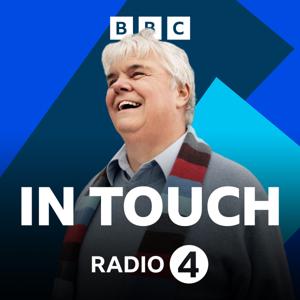

Prior to the current cost of living crisis, the Royal National Institute of Blind People found that one in five blind and partially sighted people had difficulty in making ends meet. People with sight loss already have extra living costs and are more reliant on benefits than others as a result of low employment rates. Recently, the government have introduced financial aid and have increased benefits, but the RNIB say that these measures don't go far enough. We hear the story of Alex Ramzan, who has been struggling with the cost of living crisis and we speak to David Aldwinkle, who is the Director of Insight and Customer Voice at the RNIB, about the problems they are hearing and their campaign.
The cornea is a very delicate part of the eye. It is essentially the surface through which you see, so if it becomes scarred or damaged in any way, what you see can become increasingly impaired. The cornea can be replaced though, and the effects can be dramatic. But the supply of donated corneas has not kept up with demand. Currently, one in 10 people on the NHS Organ Donor Register have indicated that they do not wish to donate their corneas, making donations low and waiting times for replacements high. We hear about the causes behind this and the implications for people waiting from Kyle Bennett, who is the Assistant Director of Tissue & Eye Services at NHS Blood and Transplant. We also hear from Shelly Hague, who recently had her corneas replaced. She tells us about the impact this has had on her life.
Presenter: Peter White
Website image description: pictured is an extreme close up of a brown eye on a black background.
 View all episodes
 By BBC Radio 4
5
55 ratings
Prior to the current cost of living crisis, the Royal National Institute of Blind People found that one in five blind and partially sighted people had difficulty in making ends meet. People with sight loss already have extra living costs and are more reliant on benefits than others as a result of low employment rates. Recently, the government have introduced financial aid and have increased benefits, but the RNIB say that these measures don't go far enough. We hear the story of Alex Ramzan, who has been struggling with the cost of living crisis and we speak to David Aldwinkle, who is the Director of Insight and Customer Voice at the RNIB, about the problems they are hearing and their campaign.
The cornea is a very delicate part of the eye. It is essentially the surface through which you see, so if it becomes scarred or damaged in any way, what you see can become increasingly impaired. The cornea can be replaced though, and the effects can be dramatic. But the supply of donated corneas has not kept up with demand. Currently, one in 10 people on the NHS Organ Donor Register have indicated that they do not wish to donate their corneas, making donations low and waiting times for replacements high. We hear about the causes behind this and the implications for people waiting from Kyle Bennett, who is the Assistant Director of Tissue & Eye Services at NHS Blood and Transplant. We also hear from Shelly Hague, who recently had her corneas replaced. She tells us about the impact this has had on her life.
Presenter: Peter White
Website image description: pictured is an extreme close up of a brown eye on a black background.

7,595 Listeners
1,087 Listeners

394 Listeners

892 Listeners

1,057 Listeners
390 Listeners

34 Listeners

5,462 Listeners

1,799 Listeners

1,749 Listeners

1,041 Listeners
2,087 Listeners

490 Listeners
45 Listeners
265 Listeners
30 Listeners
145 Listeners

235 Listeners
138 Listeners

1 Listeners
32 Listeners
125 Listeners

3,193 Listeners
1,032 Listeners
51 Listeners