
Sign up to save your podcasts
Or



The heat is on: enough to make Parisians take the plunge into the once notoriously polluted Canal Saint-Martin. France this Tuesday awakened from its hottest night on record, testing the tempers of Paris city dwellers as they sizzle under the zinc roofs of top-floor apartments built for a bygone age. This is the second heat dome to settle over Western Europe in less than a month.
Watch moreHow can France adapt to recurrent heatwaves?
France's political class is scrambling to prove it's prepared to do what's necessary. Enter that burning question: should there be air conditioning for all? Emphatic yeses are arising from more than just home appliance salespeople: the far-right is all in with A/C, framing as constraining and elitist those who fret that cooling systems add to the warming outside temperatures.
Unquestionably, hospitals, nursing homes, schools and social housing need to adapt to the new normal, with more than half of France's heatwaves occurring since 2010. So what measures should be taken? How to help those who can't afford expensive geothermal pumps or new shutters for their homes? What's fair and what's sustainable?
Produced by François Picard, Rebecca Gnignati, Juliette Laffont, Piera Rocco, Charles Wente.
Another post-Brexit prime minister bites the dust. Keir Starmer has owned up to the obvious: that he's too unpopular to lead the Labour Party into the next general election. After replacing the hard left's Jeremy Corbyn, the same Starmer won a landslide election victory two years ago on the promise of stability after all the chaos of Tory rule. So where did it all go wrong? Can the heavy favourite to replace him win back disgruntled Labour voters who first flocked to the Conservatives and now to the far-right Reform UK party?
Read moreAndy Burnham, ‘King of the North’ and frontrunner to replace Starmer as PM
We ask about the politics of popular Greater Manchester mayor Andy Burnham, and reflect – on the eve of Tuesday's tenth anniversary of the Brexit referendum – if the same Britain that took a punt on leaving the European Union can rally behind any leader or any party to end a decade of turmoil.
Produced by François Picard, Rebecca Gnignati, Juliette Laffont, Piera Rocco, Juliette Brown, Charles Wente.
Surprise! A stroke of a pen over dinner at Versailles has pre-empted plans for that big Friday signing in Switzerland of an interim agreement between the United States and Iran. Coming off the G7 in France, we ask why Donald Trump suddenly decided to get it over with and whether the region and the world can breathe a sigh of relief.
Read moreMore than 12 million oil barrels transited the Strait of Hormuz overnight, Vance says
Oil markets certainly believe. They're down again as the Strait of Hormuz gets set to reopen. But it's only a 60-day Memorandum of Understanding. And while Gulf neighbours will cheer the lifting of the blockade on what's the world's biggest maritime choke point for oil and gas, we take a second look at the agreement brokered by Pakistan and Qatar – most notably, the inclusion of a cessation of fighting in Lebanon.
What happens if Israel or Hezbollah don't like the way negotiations unfold? Would Washington and Tehran be able to rein them in? How does the US president's plan compare with the 2015 UN nuclear agreement that he constantly belittles? Are we headed for closure or a whole new level of uncertainty?
Produced by François Picard, Rebecca Gnignati, Juliette Laffont, Juliette Brown, Charles Wente.
Is it better to persuade or to confront? French leader Emmanuel Macron is opting for the royal treatment with Donald Trump at Versailles, what with a dinner to celebrate the 250th anniversary of the King of France's support for the birth of a new nation. It's all about keeping the US president on board: on Ukraine, reopening the Strait of Hormuz and more. But will flattery work when it comes to the AI revolution?
Lunch preceded dinner with tech titans the guests of honour on the closing day of the G7 summit in the French Alps. There, the elephant in the room was Trump's sudden decision last Friday to give Anthropic 90 minutes to shut down foreign access to its latest artificial intelligence models. The reason cited: national security. How exposed are both governments and major corporations like French banking giant BNP Paribas, which recently announced it was partnering with Anthropic for its security needs? Can a stroke of the pen from the Oval Office suddenly expose the rest of the world to hackers?
Read moreAnthropic disables access to top-tier AI models after US ban on foreign use
For years, the same Europeans who counted on the US defence shield to protect them also banked on its big tech: everything from Visa credit cards and Google searches to Amazon deliveries and cloud storage.
Amazon boss Jeff Bezos is the star attraction at this week's VivaTech trade fair in Paris. Silicon Valley's dominance has grown to the point where it draws the planet's money and data. Its billionaire bosses dictate their terms and oligarchs like Elon Musk peddle pro-Kremlin, far-right messaging on their platforms. So how does the rest of the world defend its own national security and sovereignty?
Produced by François Picard, Rebecca Gnignati, Juliette Laffont, Ilayda Habip, Charles Wente.
Before he left Washington, there were reports that Volodymyr Zelensky wasn't even on Donald Trump's G7 bilateral meeting list. But in the end, the US president took the meeting, and more. In the French Alps resort of Evian, Trump is putting the onus on Vladimir Putin to come to the bargaining table and even suggesting a rapid return to full sanctions on Russian oil. Why the sudden turn-for-the-better in relations between Washington and Kyiv?
Watch moreTrump suggests US can swiftly reimpose sanctions on Russian oil
How much of it is down to facts on the ground? Overnight, a Moscow-area refinery was hit by a long-range drone, illustrating Kyiv's growing capacity to cripple Russia's oil and gas exports with long-range strikes.
Already, Europeans are tapping into that Ukrainian military upscaling in what's a race against time, with the US drawing down its NATO presence on the continent, making allies pay for Ukraine-bound US hardware and pulling rank on the use of AI by traditional allies who know that true strategic autonomy is years away.
So at summits like this one, even after an Iran war they didn't ask for, G7 members' primary job, critics say, is to placate the president of the United States.
Produced by François Picard, Rebecca Gnignati, Juliette Laffont, Ilayda Habip, Charles Wente.
If Donald Trump calls it a peace deal, does that make it so? '"Let the oil flow," trumpeted the US president after agreeing on the day of his 80th birthday to a memorandum of understanding with Iran. Trump was quick to schedule a signing ceremony for this coming Friday in Switzerland, across from where he's flown in for a G7 summit on the French side of Lake Geneva.
We ask what's actually in the memorandum of understanding brokered by Pakistan and Qatar, and whether the uncertainty is well and truly lifted for the world's biggest maritime choke point, the Strait of Hormuz. Will Iran continue to charge for passage? Will the Gulf states pay the US protection money, as Trump insinuated in a New York Times interview?
Read moreWhat we know about the US-Iran memorandum of understanding
Are Europeans right to volunteer naval patrols? And what should those signatories of the 2015 UN-brokered nuclear agreement make of vague US promises of a new deal with Iran? Everything was done to accommodate the US. Hosts France even pushed back the G7 summit by a day so Trump could enjoy his birthday festivities in Washington. How accommodating should allies be going forward?
Produced by François Picard, Rebecca Gnignati, Juliette Laffont, Ilayda Habip, Charles Wente.
Can blatant racism and shameless greed ruin the World Cup? Fans of the beautiful game and its history can take solace in the opening match at Mexico City's storied Azteca Stadium, the only venue to already host two World Cup finals.
It's a stark contrast with the build-up in the United States, a host nation that's barred Somalia's African referee of the year despite accreditation and a valid visa, refused entry to fans and support staff from a host of nations, imposed short stay restrictions on Iran's team, which will have to plane-hop between LA and new base camp Tiujana, while FIFA's president counts the cash from both a bloated 48-team tournament and ticket prices that are out of this world.
Read moreSomali referee banned by US from World Cup to officiate European Super Cup, UEFA says
When is it too much? Each World Cup is a snapshot of its time: 1978 in junta-ruled Argentina, 1998 and France feting its black-blanc-beurre multiracial heroes, 2014 and the social unrest of post-commodities boom Brazil.
FRANCE 24's François Picard had the privilege of covering the last time the World Cup was in the United States, in 1994: the highs and lows of Diego Maradona, Bulgaria's shock upset of defending champions Germany and a very different America that hosted the final between Brazil and Italy. How will this one be remembered?
Produced by François Picard, Rebecca Gnignati, Juliette Laffont, Ilayda Habip, Andrew Hilliar.
Here in France, outrage over the apparent failure to stop the murder of 11-year-old Lyhanna. The suspect – a 41-year-old father of one of her schoolmates – had previously been flagged over suspected paedophile offences but was never questioned. We'll ask what went wrong and examine why a string of child abuse cases is forcing France to confront difficult questions about prevention, accountability and institutional failures.
We'll also discuss fresh developments involving French singer Patrick Bruel, who was formally charged on Wednesday over allegations of rape and sexual abuse dating back to 1997.
Under pressure, the government has unveiled a series of proposals, including life sentences for certain sex offenders. The Justice Minister blames magistrates for dropping the ball. The far right blames those same magistrates for pursuing what it sees as political vendettas – pointing to the corruption conviction of Marine Le Pen. The left, meanwhile, accuses the government of focusing too heavily on small-time drug dealers while neglecting other priorities. Across the political spectrum, however, there is broad agreement on one point: a lack of resources.
One stark statistic comes from the head of the gendarmerie: in France, four minors every hour file complaints relating to sexual offences. How do authorities cope with such a daunting caseload? And what more can be done to protect children?
Produced by François Picard, Rebecca Gnignati, Juliette Laffont, Ilayda Habip, Andrew Hilliar.
It takes convincing these days to get China's leader to go abroad. Xi Jinping has just wrapped up what was only his first foreign visit of 2026. Why Pyongyang? It's hard to deduce from official readouts of that two-day state visit to neighbouring North Korea. Was it politeness after a pair of visits by Kim Jong Un to Beijing? Celebrations of the 65th anniversary of their mutual defence pact?
Or is it those ever closer ties between North Korea and Russia? Moscow's help in exchange for support in the war against Ukraine has been followed up by North Korea's boast of plans to "exponentially" ramp up its nuclear arsenal.
We ask about what was unsaid during Xi's visit to Pyongyang and whether those claims of a construction boom and growth inside one of the world's most reclusive states are true. For instance, is North Korea serious when it talks of developing a tourist industry? And if that growth is for real, how's China taking the news?
Produced by François Picard, Rebecca Gnignati, Juliette Laffont, Ilayda Habip, Charles Wente.
The US president believed those who insisted he could wrap up hostilities by the end of March, long before the November midterms. If not, the off-ramp would be easy to find. But did Donald Trump factor in that his main ally in the war against Iran was also gearing up for a campaign? That's right: Benjamin Netanyahu is running for re-election.
This past weekend, Israel's prime minister ignored the US president and did what most of his constituents want, bombing both Beirut and Iran. Trump could easily cut Israel off for ignoring him. But does he even dare, what with a coalition of Evangelicals and pro-Israel lobbyists so embedded with the Republican establishment that supports him?
Read moreIran launches missiles at Israel in first bombardment since fragile ceasefire
We ask about Trump's options and the fading hope of all those investors and world leaders, who hope that if they just close their eyes long enough, good business sense will prevail and the Strait of Hormuz will return to the free-flowing passage it was before February 28.
With hardliners in both Israel and Iran finding that war is the best insurance policy for their political survival, how does Washington secure a deal that guarantees closure?
Produced by François Picard, Rebecca Gnignati, Juliette Laffont, Ilayda Habip, Charles Wente.
From the publisher's feed
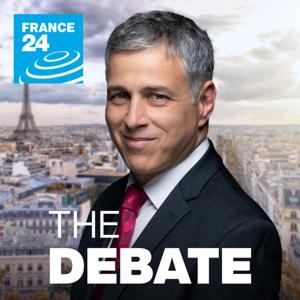
A live debate on the topic of the day, with four guests. From Monday to Thursday at 7:10pm Paris time.

7,580 Listeners

10,709 Listeners

3,369 Listeners

762 Listeners

1,046 Listeners
1,024 Listeners

1,802 Listeners

348 Listeners

4 Listeners
0 Listeners
0 Listeners
2 Listeners
1 Listeners

21 Listeners

181 Listeners

5 Listeners

0 Listeners

4 Listeners

6 Listeners
5 Listeners
39 Listeners

815 Listeners
3 Listeners
4 Listeners

5 Listeners
1 Listeners

16,143 Listeners

0 Listeners
0 Listeners

361 Listeners

0 Listeners

476 Listeners

378 Listeners