
Sign up to save your podcasts
Or

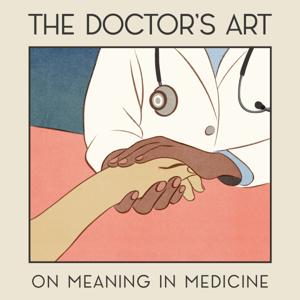


For a profession like medicine in which suffering — be it physical, psychological, existential, or spiritual — is so commonly encountered and experienced, we have developed remarkably little shared vocabulary to talk about what suffering means. That is, if we even have the conversations at all.
In early June 2024, during the American Society of Clinical Oncology annual conference in Chicago, we hosted a live podcast event at Northwestern University's Feinberg School of Medicine, gathering Sunita Puri, MD and Jay Wellons, MD, MSPH to explore the great problem of suffering. Dr. Puri, a palliative care physician and author of the best selling book That Good Night: Life and Medicine in the 11th Hour (2019), last joined us on Episode 74: The Beauty of Impermanence. Dr. Wellons, a pediatric neurosurgeon at Vanderbilt University Medical Center and author of the memoir All That Moves Us: A pediatric neurosurgeon, His Young Patients and Their Stories of Grace and Resilience (2022), last joined us on Episode 28: The Brain and All That Moves Us.
The four of us, the guests and co-hosts, start by sharing our personal encounters with suffering, both in our patients and in ourselves, before discussing our philosophical approaches to and practical strategies for accompanying patients through suffering, managing spiritual distress, contextualizing our own humanity in these encounters, maintaining our own well-being, and searching for meaning amid these tragic moments, if it is possible. After our main discussion, we also answer audience questions about managing the sometimes unrealistic and complicated expectations patients have of clinicians, and the role of interfaith discussions among healthcare professionals.
We thank Kelly Michelson, MD, MPH and the Center for Bioethics and Medical Humanities at Northwestern University for making this event possible.
In this episode, you’ll hear about:
3:58 - Stories of confronting suffering, both in professional and personal contexts
29:02 - Practical tips for coping with suffering and uncertainty as a physician
31:53 - The importance of psychological safety in feeling and expressing your emotions as a physician
36:52 - Being present in the moment while accompanying patients through difficult times
40:00 - Helping doctors re-connect with the deeper reason of why they feel called to medicine
42:24 - The inexplicable relationship between love and loss
52:04 - The deep sense of meaning inherent in the work of a physician and what makes it “real”
54:41 - Q&A: How physicians can better navigate the challenging expectations patients have as well as medical skepticism
1:04:05 - Q&A: How we can better incorporate interfaith dialogue into medical training and practice
Dr. Jay Wellons is the author of All That Moves Us (2022) and can be found on Twitter/X at @JayWellons5.
Dr. Sunita Puri is the author of That Good Night (2019) and can be found on Twitter/X at @SunitaPuriMD.
Most of us take free will for granted — from the biggest of life decisions to choosing an ice cream flavor, we are generally capable of freely deciding how to think and how to behave without outside influence. But Robert Sapolsky believes our decisions cannot be disentangled from our genetics, environment, and neurobiology. In other words, to him, free will does not exist.
Dr. Sapolsky, a neuroscientist and primatologist at Stanford University, is a leading thinker on the biology of stress, human behavior, neurodegenerative diseases, and the science of free will and determinism. He is the author of multiple bestselling books, including Why Zebras Don't Get Ulcers (1994), Behave: The Biology of Humans at Our Best and Worst (2017), and Determined: A Science of Life Without Free Will (2023). His works have been featured widely in the popular press, from National Geographic to The New York Times.
Over the course of our conversation, Dr. Sapolsky presents his arguments against free will, along the way making detours through chaos and complexity theory, philosophy, ethics, and neuroscience. He shows how subtracting free will from the way culture thinks about crime, mental health, and human development have resulted in more humane health, justice, and educational systems. Finally, we contemplate together what human flourishing even means in the context of a life without free will.
His ideas have profound implications not just on our society, but also on our understanding of human nature, challenging our perceptions and provoking deep reflection on how we navigate the choices in our lives.
In this episode, you’ll hear about:
3:08 - How Dr. Sapolsky chose a career straddling both neuroscience and primatology
5:04 - The moment when Dr. Sapolsky realized he did not believe humans have free will
16:16 - How society becomes more humane when free will is factored out
23:29 - The deep implications that free will and determinism could have on criminology
34:13 - How a belief in a lack of free will can negatively affect motivation on a societal scale
43:11 - What does human flourishing look like in a world without free will?
48:07 - The best moments in life in which to utilize this understanding of free will
Dr. Robert Sapolsky has authored numerous publications, a full bibliography of his works can be found here.
Dr. Robert Sapolsky can be found on Instagram at @robert.sapolsky.
Works and past episodes discussed:
What’s Expected of Us by Ted Chiang
Episode 79: Transcendence in the Age of Science | Alan Lightman, PhD
Visit our website www.TheDoctorsArt.com where you can find transcripts of all episodes.
If you enjoyed this episode, please subscribe, rate, and review our show, available for free on Spotify, Apple Podcasts, or wherever you get your podcasts.
Copyright The Doctor’s Art Podcast 2024
Conventionally, we are taught that evolution implies there is no ultimate purpose to our existence, that life lacks inherent meaning — we are the product of countless intricate molecular and genetic accidents. And to many, evolution leaves little room for, and perhaps even contradicts, the existence of a deity.
However, our guest on this episode, Samuel Wilkinson, MD, a professor of psychiatry at Yale University, thinks there is another way to look at evolution. Drawing from an array of disciplines ranging from evolutionary biology to cognitive science, Dr. Wilkinson provides a framework for evolution suggesting not only that there is an overarching purpose to our existence, but what that purpose is. He presents this framework in his 2024 book, Purpose: What Evolution and Human Nature Imply about the Meaning of Our Existence.
Over the course of our conversation, Dr. Wilkinson shares how an existential crisis during medical school led him down the path of exploring the ways evolution can be reconciled with fundamental questions and answers about life's meaning; how navigating the dual potential of human nature — pulling us between selfishness and altruism, aggression and cooperation — is key to understanding our purpose; why evolution does not exclude the possibility of existence of a god or gods; the importance of relationships in living fulfilling lives; the role of free will in the choice between good and evil; and more.
In this episode, you’ll hear about:
3:37 - How a drive to understand human nature drove Dr. Wilkinson to leave his engineering studies and pursue a career as a psychiatrist.
4:44 - The scope of Dr. Wilkinson’s work at Yale
7:13 - What studying depression has taught Dr. Wilkinson about human nature
9:00 - How Dr. Wilkinson views the connection between evolution and God
24:00 - How the central argument of Dr. Wilkinson’s book differs from intelligent design
26:41 - Dr. Wilkinson’s view of selfishness in human nature
37:49 - The deeper meaning that Dr. Wilkinson sees within the biological patterns of evolution
39:04 - The validity of moral relativism
43:42 - “The Rider and the Elephant” as a metaphor for human nature
45:43 - Dr. Wilkinson’s thoughts on free will
55:15 - How marriage can provide a cornerstone to building “a good life”
58:10 - The way in which Dr. Wilkinson’s faith fits into his personal view of human nature
1:04:42 - How Dr. Wilkinson brings these principles into his clinical practice
Dr. Samuel Wilkinson is the author of Purpose: What Evolution and Human Nature Imply about the Meaning of Our Existence (2024).
Works and Individuals Discussed:
The Selfish Gene by Richard Dawkins
Determined: A Science of Life Without Free Will by Robert Sapolsky
Michael Behe and the concept of intelligent design
Free Will by Sam Harris
For Mark Lewis, MD, cancer has defined his entire life. Growing up, he witnessed his father's valiant struggle with cancer before it eventually ended his life. While still in medical training, he not only developed pancreatic cancer but also discovered the culprit. Multiple endocrine neoplasia type 1, an inherited syndrome that drastically increases one's risk of cancers, runs in his family. So now, as a father, he guides his son in making sense of a life burdened with that risk. What’s more, as an oncologist, Dr. Lewis has also dedicated his professional life to understanding and treating cancers of the gastrointestinal system.
In this deeply personal conversation filled with pathos, wisdom, and hope, Dr. Lewis shares how he learned to cope with the rage he felt towards cancer in his early years, the solace he finds in religion and how he tactfully approaches matters of spirituality with his patients, how he was fundamentally transformed after undergoing the daunting Whipple surgical procedure, the wonder he feels when considering the remarkable progress science has made in cancer therapies, and how he channels his personal experiences to connect with patients.
This is an episode that paints a portrait of grace, resilience, and courage in the face of suffering and loss, and it reminds us to search for the dignity that is inherent in the act of caring for another person.
In this episode, you’ll hear about:
2:43 - How watching his father deal with cancer led Dr. Lewis to a career in medicine.
7:04 - How Dr. Lewis managed the grief and rage that came with his father’s passing.
11:10 - How the speed of medical innovation drives Dr. Lewis’ optimism.
19:51 - The role that faith plays in Dr. Lewis’ work and in his relationships with patients.
29:07 - Dr. Lewis’ experience as a cancer patient and how it has informed his work as an oncologist.
39:21 - The ethical challenges involved in administering toxic treatments in oncology.
42:24 - The deeper meaning that Dr. Lewis has found through his experiences at the intersection of science and faith.
48:57 - Dr. Lewis’ advice for empathizing and connecting with patients.
Dr. Mark Lewis can be found on Twitter/X at @marklewismd.
Visit our website www.TheDoctorsArt.com where you can find transcripts of all episodes.
If you enjoyed this episode, please subscribe, rate, and review our show, available for free on Spotify, Apple Podcasts, or wherever you get your podcasts. If you know of a doctor, patient, or anyone working in health care who would love to explore meaning in medicine with us on the show, feel free to leave a suggestion in the comments or send an email to [email protected].
Copyright The Doctor’s Art Podcast 2024
The Bill & Melinda Gates Foundation, with an endowment of over $50 billion, is one of the largest and most influential philanthropic organizations in the world. With a focus on addressing global health, poverty, and education, its initiatives have led to the reduction of malaria mortality by 60% over the past two decades, the near eradication of polio, increased educational opportunities of millions of students, and improved sanitation conditions for millions of people in developing countries.
For six years, oncologist Sue Desmond-Hellmann, MD, MPH was the CEO of this organization. Prior to that, she served as Chancellor of the University of California at San Francisco, as well as President of Product Development at Genentech, where she oversaw the development of Herceptin, Avastin, Rituxan, and other blockbuster cancer drugs that are now staples in the arsenal of many medical oncologists.
The topics of our discussion in this episode are as varied as Dr. Desmond-Hellman's career. We discuss, among other things, how seeing the work of her pharmacist father encouraged her to pursue a career in medicine, how her early experiences treating HIV patients in Uganda spurred her to tackle global health challenges, how she discovered a passion for product development in the pharmaceutical industry, how she reconciles the ethical quandaries of developing medications that can cause serious adverse effects and that can sometimes cost hundreds of thousands of dollars per dose, what her mission while at the Gates Foundation was, and her perspectives on the role of artificial intelligence and human health and well-being, now that she has joined the board of directors of OpenAI, the company behind ChatGPT.
In this episode, you will hear about:
2:50 - How working in her father’s pharmacy led Dr. Desmond-Hellmann to a career in medicine
4:56 - A brief summary of Dr. Desmond-Hellmann’s multifaceted career trajectory
15:36 - What the day to day work of pharmaceutical drug development looks like
18:30 - The challenging ethical concerns that surround drug approvals especially as it pertains to safety concerns
23:44 - Dr. Desmond-Hellmann’s experiences in Uganda that forever transformed her views on poverty
27:55 - The aims of the Gates Foundation
30:47 - How Dr. Desmond-Hellmann views her work both in the non-profit and the for-profit sectors
37:15 - Dr. Desmond-Hellmann’s mission when she took on a leading role at The Gates Foundation
38:38 - How Dr. Desmond-Hellmann thinks about shaping the future of AI as she takes a seat on the board of OpenAI
45:14 - Dr. Desmond-Hellmann’s advice for medical trainees and clinicians on how to navigate the many opportunities available to them along their career path
Dr. Sue Desmond-Hellmann can be found on Twitter/X @suedhellmann.
Visit our website www.TheDoctorsArt.com where you can find transcripts of all episodes.
If you enjoyed this episode, please subscribe, rate, and review our show, available for free on Spotify, Apple Podcasts, or wherever you get your podcasts. If you know of a doctor, patient, or anyone working in health care who would love to explore meaning in medicine with us on the show, feel free to leave a suggestion in the comments or send an email to [email protected].
Copyright The Doctor’s Art Podcast 2024
In today's world, the idea of “identifying your values” is so ubiquitous, appearing from corporate mission statements to self-help books, that it can seem trivialized to the point of meaninglessness. But in this episode, Ira Bedzow, PhD reminds us it does not have to be this way—explorations of personal values can be an inspiring, holistic, and thought provoking process that transforms everything that we do, from finding joy in work to building fulfilling relationships.
Bedzow is the executive director of the Emory Purpose Project, an initiative at Emory University that provides opportunities for students to develop a capacity for reflection on purpose and meaning. He is also an associate professor in the Department of Medicine, a core faculty member of Emory's Center for Ethics, a senior fellow in Emory's Center for the Study of Law and Religion, and an Orthodox rabbi.
Over the course of our conversation, Bedzow discusses how he helps people discover their life purpose, how he teaches moral leadership, how he wrestles with questions of moral relativism, the connection between a loss of purpose and burnout, how he counsels clinicians on resolving ethical quandaries, and more.
In this episode, you will hear about:
2:21 - The varied roles that make up Dr. Bedzow’s current career
8:06 - What “values” mean
15:53 - The principles Dr. Bedzow employs when counseling students on their career and life aspirations
19:07 - Applying ethical thinking to medical scenarios
27:36 - How Dr. Bedzow counsels leadership at an organizational level
31:02 - The connection between a loss of sense of purpose and burnout
39:01 - How organizations and individuals can proactively foster a sense of mission
42:05 - The deep meaning that Dr. Bedzow finds in his religion
45:23 - Truths that Judaism can offer the world
Ira Bedzow is the author of the essay How Purpose and Employee Empowerment Can Stop Burnout.
Ira Bedzow can be found on Twitter/X at @ijbedzow.
Visit our website www.TheDoctorsArt.com where you can find transcripts of all episodes.
If you enjoyed this episode, please subscribe, rate, and review our show, available for free on Spotify, Apple Podcasts, or wherever you get your podcasts. If you know of a doctor, patient, or anyone working in health care who would love to explore meaning in medicine with us on the show, feel free to leave a suggestion in the comments or send an email to [email protected].
Copyright The Doctor’s Art Podcast 2024
Terminal lucidity is a mysterious yet well-documented phenomenon in which someone at the end of life—including those who have suffered strokes or other brain injuries, or those afflicted by dementia—suddenly returns with mental clarity and is able to recognize loved ones and engage in meaningful and emotionally rich conversations. It challenges our fundamental understanding and assumptions about the nature of consciousness, brain function in the context of severe illness, and personhood.
In this episode, Alexander Batthyány, PhD, a cognitive scientist and the Director of the Viktor Frankl Institute, offers insights on terminal lucidity from his years of study on this phenomenon from a philosophical, ethical, neurological, and psychological perspective. He is the author of the 2023 book Threshold: Terminal Lucidity and the Border of Life and Death.
Over the course of our conversation, he shares how witnessing terminal lucidity in his grandmother has shaped his life purpose, why he chooses to use the word “soul” in his academic research, the role of spirituality and religion in making sense of terminal lucidity, the limits of our scientific and materialistic understanding of the brain, what terminal lucidity reveals about the dignity and unpredictability inherent in the human condition, and what it ultimately teaches us about kindness and compassion.
In this episode, you’ll hear about:
2:31 - The personal experience that drew Dr. Batthyány to study terminal lucidity
6:34 - An exploration of human dignity
12:26 - The importance of talking and thinking about the human “soul”
18:26 - Definition and phenomenology of terminal lucidity
23:57 - What is known about brain functioning during episodes of terminal lucidity
31:44 - Advice for caregivers, family members, and clinicians if a patient experiences terminal lucidity
36:55 - The prevalence of terminal lucidity
40:14 - Whether individuals who experience terminal lucidity have insight into their condition
42:15 - Why phenomena like terminal lucidity matter
Dr. Alexander Batthyány is the author of Threshold: Terminal Lucidity and the Border of Life and Death (2023).
Dr. Batthyány can be found in Twitter/X at @Alxdr_Batthyany.
Visit our website www.TheDoctorsArt.com where you can find transcripts of all episodes.
If you enjoyed this episode, please subscribe, rate, and review our show, available for free on Spotify, Apple Podcasts, or wherever you get your podcasts. If you know of a doctor, patient, or anyone working in health care who would love to explore meaning in medicine with us on the show, feel free to leave a suggestion in the comments or send an email to [email protected].
Copyright The Doctor’s Art Podcast 2024
The Association of American Medical Colleges (AAMC) plays a crucial role in health care. As the organization that oversees medical education and thus the pipeline of future medical professionals in the United States, its critical duties include administering the Medical College Admission Test (MCAT), managing the residency application service, drafting guidelines for faculty members and departments at medical schools and academic hospitals, disseminating data on medical education and workforce trends that shape policymaking at medical schools and government bodies, and promoting diversity in health care.
Leading this organization is David Skorton, MD, a cardiologist and pioneer of cardiac imaging and computer processing techniques, who also previously served as the 13th Secretary of the Smithsonian Institution and as President of Cornell University and of the University of Iowa. In this episode, Dr. Skorton shares with us how his family's immigrant past has shaped him, how he went from struggling during his own medical school application process more than 50 years ago to now leading an organization that represents all medical schools and teaching hospitals, why the arts and humanities matter to him, how he thinks about medical education given the emergence of generative artificial intelligence, what great mentors look like, how effective leadership often means learning from everyone around you, and more.
In this episode, you will hear about:
2:42 - Dr. Skorton’s unexpected path from jazz musician to President of the AAMC
7:42 - Why current medical admissions aim to be “holistic”
12:09 - The lessons Dr. Skorton learned through mentorship and why the arts and humanities can create better doctors
17:32 - How Dr. Skorton has been able to “see past himself” enough to receive challenging criticism from mentors
28:01 - The core tenets of Dr. Skorton’s leadership philosophy
31:35 - How the AAMC views the future of medical education especially in light of advances in artificial intelligence
38:47 - The importance of diverse healthcare teams
46:32 - Issues that Dr. Skorton addresses through his role at the AAMC
Dr. David Skorton can be found on Twitter/X at @DavidJSkorton.
Visit our website www.TheDoctorsArt.com where you can find transcripts of all episodes.
If you enjoyed this episode, please subscribe, rate, and review our show, available for free on Spotify, Apple Podcasts, or wherever you get your podcasts. If you know of a doctor, patient, or anyone working in health care who would love to explore meaning in medicine with us on the show, feel free to leave a suggestion in the comments or send an email to [email protected].
Copyright The Doctor’s Art Podcast 2024
In spring of 2020, Cornelia Griggs, MD was finishing her nearly decade-long training to become a pediatric surgeon in New York City, when COVID-19 struck and life fell apart. The hospital was flooded with mysteriously sick patients for whom no known treatments existed, basic supplies disappeared from shelves, and each day at work took on an existential burden as she wondered if this would be the day she caught the deadly disease herself.
Dr. Griggs describes these dramatic stories from the early days of the pandemic in her 2024 memoir, The Sky Was Falling. Today, she is a triple board-certified pediatric surgeon, having completed medical school and pediatric surgery fellowship at Columbia University Medical Center, and her adult general surgery residency and surgical critical care fellowship at Massachusetts General Hospital, where she currently practices.
Over the course of our conversation, Dr. Griggs describes the course of her challenging training in medicine, why it takes “a little crazy” to succeed as a surgeon, harrowing moments that defined heroism amid the throes of the pandemic, how she continued working even when giving up was the easy option, and more.
In this episode, you’ll hear about:
2:26 - What initially drew Dr. Griggs into the field of medicine and to the speciality of pediatric surgery
14:35 - Why the operating room is a “safe space” for Dr. Griggs
19:36 - The sense of alarm that Dr. Griggs experienced in the early days of the pandemic that drove her to write her viral New York Times op-ed, The Sky is Falling
28:26 - How Dr. Griggs fell into an “investigative reporter” headspace as the pandemic raged around her in New York City
30:26 - The sense of fear that enveloped both patients and the medical community during the first months of the pandemic
40:27 - A moment during the early pandemic when Dr. Griggs seriously considered leaving the city and her post in the hospital
46:30 - How ICU nurses brought dignity and humanity when tending to seriously ill COVID-19 patients
51:16 - The hopefulness Dr. Griggs carries in seeing the large number of people who have entered medicine since the pandemic
Dr. Cornelia Griggs can be found on Twitter/X at @CorneliaLG.
Dr. Griggs is the author ofThe Sky Was Falling (2024).
Visit our website www.TheDoctorsArt.com where you can find transcripts of all episodes.
If you enjoyed this episode, please subscribe, rate, and review our show, available for free on Spotify, Apple Podcasts, or wherever you get your podcasts. If you know of a doctor, patient, or anyone working in health care who would love to explore meaning in medicine with us on the show, feel free to leave a suggestion in the comments or send an email to [email protected].
Copyright The Doctor’s Art Podcast 2024
To many health economists, the growing aging population is the greatest public health challenge facing America. The current fragmented and costly healthcare system is simply incapable of dealing with the complex medical and socioeconomic needs of this population, especially in an equitable way.
Our guest on this episode, Linda Fried, MD, MPH, has dedicated her life to rethinking how we can create better health futures for older adults. Her pioneering research has expanded our notions of aging and longevity in the 21st century. Dr. Fried, a geriatrician and epidemiologist, is Dean of the Columbia University Mailman School of Public Health, Senior Vice President of the Columbia University Irving Medical Center, and former Founding Director of the Center on Aging and Health at Johns Hopkins University.
Over the course of our conversation, Dr. Fried shares how her early experiences as a caseworker drove her to study medicine, surprising lessons from the martial arts aikido, what frailty means in the context of caring for older adults, why America is one of the most age segregated societies in the world, the flaws of over medicalizing health issues, redefining the roles of older adults in society, the importance of meaning and community in sustaining happiness in life, and more.
In this episode, you’ll hear about:
2:30 - What Dr. Fried’s early experiences in social work taught her about justice, social inequity, and taking care of another person
11:47 - How an awareness of the social determinants of health shaped Dr. Fried as a clinician
16:46 - Why physicians need to stop “medicalizing” all aspects of a patient’s life
25:00 - How Dr. Fried came to be interested in geriatrics
28:19 - Dr. Fried’s dedication to extending “healthspan” as well as “lifespan” in our society
31:08 - The clinical definition of “frailty”
34:15 - The value that an older population could bring to our society
38:49 - The United States’ unique culture of age segregation and how it contributes to poor health outcomes for the elderly
45:38 - What the healthcare system and society at large can do to better serve elderly populations
50:55 - Dr. Fried’s advice for keeping true to your purpose as a medical professional
Dr. Linda Fried can be found on LinkedIn.
Visit our website www.TheDoctorsArt.com where you can find transcripts of all episodes.
If you enjoyed this episode, please subscribe, rate, and review our show, available for free on Spotify, Apple Podcasts, or wherever you get your podcasts. If you know of a doctor, patient, or anyone working in health care who would love to explore meaning in medicine with us on the show, feel free to leave a suggestion in the comments or send an email to [email protected].
Copyright The Doctor’s Art Podcast 2024
From the publisher's feed
The practice of medicine–filled with moments of joy, suffering, grace, sorrow, and hope–offers a window into the human condition. Though serving as guides and companions to patients’ illness…

43,335 Listeners

817 Listeners

3,483 Listeners
695 Listeners

10,221 Listeners

12,657 Listeners

2,521 Listeners

307 Listeners

112,266 Listeners
596 Listeners
61 Listeners

7,958 Listeners

28,903 Listeners

16,288 Listeners
56 Listeners