
Sign up to save your podcasts
Or

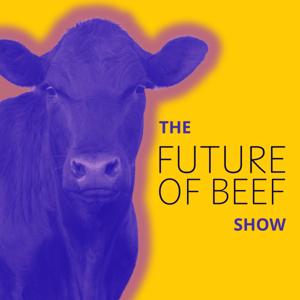


Embryo transfer and IVF have become powerful tools for accelerating genetic progress in cattle—but selecting the right embryos remains one of the biggest challenges in reproductive management.
In this episode of The Future of Beef Show, Dr. Cara Wells joins hosts Jim Johnson, Dr. Jessica Sperber, and Ian Wheal to explore the science behind embryo selection and how new technologies are helping producers make more informed breeding decisions. As founder and CEO of EmGenisys, Cara explains how artificial intelligence, machine learning, and video-based embryo analysis are bringing objective data to a process that has traditionally relied on visual grading alone.
The conversation covers the differences between conventional embryo transfer and IVF, the role of genomics and sexed semen in modern breeding programs, and how improved embryo evaluation could increase pregnancy rates while reducing costs. Cara also shares the entrepreneurial journey that led to the creation of EmGenisys—from undergraduate research and a TED Talk-inspired idea to a growing ag-tech company focused on improving reproductive outcomes.
From embryo grading and pregnancy prediction to AI-powered sex determination and the future of precision breeding, this episode offers an inside look at the technologies shaping the next generation of cattle reproduction.
What You'll Learn:
• The differences between conventional embryo transfer and IVF
• Why embryo transfer can accelerate genetic progress in commercial and seedstock herds
• How embryo viability has traditionally been evaluated—and the limitations of visual grading
• How AI and machine learning can help predict embryo health and pregnancy success
• Why objective embryo analysis could improve conception rates and reduce costs
• The role of genomics in donor selection and embryo testing
• The benefits and tradeoffs of sexed semen in cattle breeding programs
• How non-invasive embryo sexing could create new opportunities for producers
• The entrepreneurial story behind EmGenisys and its development from research to commercial application
• What the future of reproductive technology could mean for the beef industry
Links:
Future of Beef Show: www.futureofbeef.com
Learn more about EmGenisys: www.emgenisys.co
Read more from Drovers: www.drovers.com
Learn more about Breedr: www.breedr.co
Learn more about Corteva Agriscience: www.rangeandpasture.com
Learn more about Whole Cottonseed: https://wholecottonseed.com/
Canada and the U.S. are more intertwined in beef than most producers realize—and Ryder Lee is one of the people making sure that relationship works.
In this episode of The Future of Beef Show, Ryder joins hosts Jim Johnson, Dr. Jessica Sperber, and Ian Wheal to explore how Canadian cattle production mirrors—and differs from—the U.S. industry. Drawing on decades of experience from a cow-calf upbringing to leading the Canadian Cattle Association, Ryder breaks down the geography of Canadian feeding, the reality of cross-border cattle flows, and why traceability has evolved from a disease response tool into a competitive market advantage.
What You'll Learn:
Links:
Future of Beef Show: www.futureofbeef.com\
Learn more about the Canadian Cattle Association: www.cattle.ca\
Read more from Drovers: www.drovers.com\
Learn more about Breedr: www.breedr.co\
Learn more about Corteva Agriscience: www.rangeandpasture.com
Learn more about Whole Cottonseed: https://wholecottonseed.com/
Red Angus is gaining ground—and Greg Ruehle is helping lead the charge.
In this episode of The Future of Beef Show, Greg joins hosts Jim Johnson, Dr. Jessica Sperber, and Ian Wheal to explore why the Red Angus breed is uniquely positioned at this critical moment in the beef industry. Drawing on his experience across breed associations, government affairs, and commercial beef production, Greg explains why record-low cattle supplies and surging consumer demand create a once-in-a-career opportunity—and how Red Angus intends to make the most of it.
What You'll Learn:
• Why Red Angus is well-suited to rebuilding the U.S. cow herd, especially in the South
• How the breed's maternal and terminal traits complement crossbreeding systems
• Why the Allied Access Yellow Tag program is advancing individual animal tracking
• How mandatory total herd reporting strengthens Red Angus EPD data
• Why packers are increasingly opening Red Angus cattle to grid schedules
• How breed associations can go beyond the herd book to drive real industry change
Links:
Future of Beef Show: www.futureofbeef.com
Learn more about the Red Angus Association of America: www.redangus.org
Read more from Drovers: www.drovers.com
Learn more about Breedr: www.breedr.co
Learn more about Corteva Agriscience: www.rangeandpasture.com
Learn more about Whole Cottonseed: https://wholecottonseed.com/
From virtual fences to real-time herd data, ranching is entering a new era—and Andrew Fraser is helping lead the shift.
In this episode of The Future of Beef Show, Andrew joins Jim Johnson, Dr. Jessica Sperber, and Ian Wheal to explore how smart collar technology is transforming the way cattle are managed on pasture. As President of Halter Inc., Andrew shares how a simple idea—a collar for cows—has evolved into a powerful system for controlling grazing, tracking behavior, and unlocking better decision-making for producers.
This conversation goes beyond the technology itself to focus on real-world impact. From reducing labor demands and eliminating the need for extensive fencing to improving pasture utilization and enabling more flexible grazing systems, Andrew explains why virtual fencing is gaining traction across beef operations in the U.S., Australia, and New Zealand.The episode also dives into the growing role of data in ranching—from tracking animal movement and health to the future potential of measuring feed efficiency at the individual cow level. Along the way, the group discusses how AI is being applied in practical ways, why labor and succession are critical challenges, and how technology can make ranching more sustainable, scalable, and attractive to the next generation.
What You’ll Learn:
Links:
Future of Beef Show: www.futureofbeef.com
Learn more about Halter: www.halterhq.com
Read more from Drovers: www.drovers.com
Learn more about Breedr: www.breedr.coLearn more about Corteva Agriscience: www.rangeandpasture.com
Learn more about Whole Cottonseed: https://wholecottonseed.com/
From rumen science to global food systems, innovation in beef production is happening at every level—and Dr. Vaughn Holder is right at the center of it.
In this episode of The Future of Beef Show, Vaughn joins Jim Johnson, Dr. Jessica Sperber, and Ian Wheal to explore how research, innovation, and systems thinking are shaping the future of beef. Drawing on his role leading global beef research at Alltech, Vaughn explains why the industry must focus on efficiency over trends, what we’ve learned from the methane debate, and where the next wave of innovation is heading.
From rumen microbiology and feed efficiency to soil health, nitrogen, and consumer perception, this episode connects the science inside the cow to the broader ecosystem—and ultimately to the future of the beef industry.
What You’ll Learn:
• Why efficiency—not trends—should drive sustainability in beef production
• What the methane debate taught us about rumen function and microbiome research
• How new technologies like probiotics and essential oils may improve cattle performance
• Why systems thinking—from soil to animal to consumer—is critical for future innovation
• The role cattle play in upcycling nutrients and supporting global food systems
• How changing nutrition guidelines could impact beef demand and public perception
• Why innovation and collaboration are essential to solving real industry challenges
Links:
Future of Beef Show: www.futureofbeef.com
Learn more about Alltech: www.alltech.com
Read more from Drovers: www.drovers.com
Learn more about Breedr: www.breedr.co
Learn more about Corteva Agriscience: www.rangeandpasture.com
Learn more about Whole Cottonseed: https://wholecottonseed.com/
Sustainability has become one of the biggest conversations shaping the future of agriculture—and few people have a clearer global perspective than Justin Sherrard, our first guest from Australia.
In this episode of The Future of Beef Show, Justin joins hosts Jim Johnson, Dr. Jessica Sperber, and Ian Wheal to explore how the beef industry fits into the broader sustainability conversation. Drawing on his experience with the Global Roundtable for Sustainable Beef and years analyzing global protein markets, Justin explains why cattle remain essential to feeding a growing population while working within environmental limits.
What You’ll Learn:
Links:
Future of Beef Show: www.futureofbeef.com
Learn more about the Global Roundtable for Sustainable Beef: https://grsbeef.org/
Read more from Drovers: www.drovers.com
Learn more about Breedr: www.breedr.co
Learn more about Corteva Agriscience: www.rangeandpasture.com
Record-high calf prices, tighter herds, and strong consumer demand—what’s next for U.S. beef? Patrick Linnell, Director of Market Research at CattleFax, breaks it all down.
In this episode of The Future of Beef Show, Patrick joins Jim Johnson, Dr. Jessica Sperber, and Ian Wheal to explore the trends shaping the cattle market today and tomorrow. From herd rebuilding and carcass weights to international trade and the role of AI in market research, Patrick gives producers and feeders the insights they need to make informed decisions.
What You’ll Learn:
• Why beef demand remains strong despite record prices
• What’s slowing herd expansion and how it affects the cattle cycle
• How carcass weights, feeding strategies, and genetics impact profitability
• The influence of packing capacity and Mexican cattle imports on markets
• How international trade supports U.S. beef supply
• Ways AI is changing—but not replacing—market research
Links:
Future of Beef Show: www.futureofbeef.com
Connect with Patrick Linnell & CattleFax: www.cattlefax.com
Read more from Drovers: www.drovers.com
Learn more about Breedr: www.breedr.co
Learn more about Corteva Agriscience: www.rangeandpasture.com
Managing grass, cattle, and the land drives more of beef production than ever — and few people know it better than Dr. Jeff Goodwin.
In this episode of The Future of Beef Show, Dr. Goodwin breaks down why grazing management sits at the center of modern cattle production. From regenerative grazing and soil carbon to linking cattle genetics with pasture quality, he shows how planning, adaptability, and system-level thinking boost profitability while supporting long-term sustainability.
Whether you manage a small ranch or a large operation, these strategies demonstrate how smart grazing decisions can pay off for both the land and the bottom line.
What You’ll Learn:
• Why regenerative grazing isn’t slowing down — and what it means for producers
• How ecosystem services like soil carbon, water, and wildlife habitat follow good grazing practices
• The importance of system-level thinking: managing grass, cattle, and the environment together
• How planning and adaptability drive long-term success on ranches
Links:
Future of Beef Show: www.futureofbeef.com
Learn more about the Center for Grazinglands and Ranch Management: https://cgrm.tamu.edu/
Read more from Drovers: www.drovers.com
Learn more about Breedr: www.breedr.co
Learn more about Corteva Agriscience: www.rangeandpasture.com
Breed associations have long played a foundational role in the beef industry—but their purpose, value, and responsibilities are rapidly evolving. Few people understand that transformation better than Brett Spader, President of the American-International Charolais Association.
In this episode of The Future of Beef Show, Brett joins hosts Jim Johnson, Dr Jessica Sperber and Ian Wheal to discuss how data, governance, and producer-focused service are reshaping the future of breed organizations. Drawing on a diverse career across the Kansas Livestock Association, DV Auction, Angus Media, and his own digital startup, Brett shares a unique perspective on how technology and transparency can help associations stay relevant and drive real value for cattle producers.
From the rise of online bidding to the importance of records, collaboration, and connected data, Brett explains why modern breed associations must be both innovative and accountable—and how they can continue to empower breeders in an increasingly data-driven industry.
What You’ll Learn:
Links:
Future of Beef Show: www.futureofbeef.com
Connect with the American-International Charolais Association: www.charolaisusa.com
Read more from Drovers: www.drovers.com
Learn more about Breedr: www.breedr.co
Learn more about Corteva Agriscience: www.rangeandpasture.com
Genetic progress is only as valuable as the profitability it creates, and few people understand that connection better than Marty Ropp, founder and executive officer of Allied Genetic Resources.
In this episode of The Future of Beef Show, Marty joins hosts Ian Wheal, Jess King, and Jim Johnson to discuss how data, genomics, and collaboration are reshaping the business of beef genetics. From lessons learned in the pork and dairy industries to the future of service-driven breeding programs, Marty shares what it takes to help producers capture more value across the entire supply chain.
What You’ll Learn:
• How Allied Genetic Resources built a network to support genetic improvement across the beef industry
• Why connecting genomic data to real-world profitability is the next frontier
• What the beef sector can learn from pork and dairy’s approach to efficiency and consistency
• The importance of collaboration and feedback between breeders, feeders, and packers
• How service, education, and transparency drive long-term genetic success
Links:
Future of Beef Show: www.futureofbeef.com
Connect with Marty Ropp: www.alliedgeneticresources.com
Read more from Drovers: www.drovers.com
Learn more about Breedr: www.breedr.co
Learn more about Corteva Agriscience: www.rangeandpasture.com
From the publisher's feed

4,380 Listeners
356 Listeners
437 Listeners
128 Listeners

125 Listeners
384 Listeners
353 Listeners

115 Listeners

981 Listeners

236 Listeners
78 Listeners
1,692 Listeners

200 Listeners

179 Listeners

56 Listeners