
Sign up to save your podcasts
Or



Summary:
In this special episode of The Handcrafted Network, Paul steps out from behind the microphone and joins Fyfe Barraclough on The Flywheel Lab for a candid conversation about business, leadership, and navigating uncertainty.
Paul shares the story behind Philadelphia Table Company—from touring with a band signed to RCA Records and building furniture between shows to leading a team of 12 makers. He opens up about the difficult season he’s currently navigating, the Stockdale Paradox, and the challenge of confronting reality while maintaining faith that things will improve. The conversation also explores sustainable growth, the myth of overnight success, learning to lead different personalities, and why makers must balance creative fulfillment with the realities of running a profitable business.
Key Takeaways
Core idea: Building a meaningful business is not about finding a shortcut—it is about facing uncertainty honestly, staying focused, and continuing to move forward.
Join the Network
AI doesn’t have to replace craftsmanship—it can support the business behind it. In this episode, Paul shares how he uses tools like ChatGPT and Claude to save time, stay organized, and make better-informed decisions at Philadelphia Table Company.
From forecasting cash flow and analyzing sales to editing product photos, searching client emails, improving the website, and organizing company information, Paul breaks down practical ways makers can use AI without handing over their creativity or judgment. The goal isn’t to let AI run the business. It’s to use it as another powerful tool that helps small businesses compete, operate more efficiently, and become more profitable.
Key Takeaways
Core idea: Use AI to strengthen the business behind your craft while keeping creativity, judgment, and decision-making human.
Join the Network
Join the network.
After reflecting on the Texas Woodworking Festival and the supportive community within the Handcrafted Network, Paul shares a lesson for navigating difficult seasons in business and life.
The Stockdale Paradox teaches us to confront the harsh reality of our circumstances while maintaining unwavering faith that we will ultimately prevail. Using the metaphor of captaining a ship through turbulent seas, Paul explains that we cannot control the storm—but we can prepare, choose our direction, and keep moving forward.
This honest episode is a reminder that struggling does not mean failing, you are not alone, and the only way through a difficult season is to face it with realism, hope, and perseverance.
Join the Network
Summary
In this episode of The Handcrafted Podcast, Paul shares four business beliefs that recently sparked conversation on social media—and explains why he stands behind each one. He also opens with a personal reflection on getting through difficult periods by focusing on one problem, one hour, and one day at a time rather than trying to solve everything at once.
The four “hills” are:
Join the Network
Unfortunately, one of my dogs was hit and killed by a car unexpectedly. As you can imagine it's hard to muster the strength and poise needed to record a new podcast episode. Here is one of my favs that seems to have been overlooked.
In this RERUN episode, Paul explores how makers and creative business owners can transform their client experience by going above and beyond what’s expected — a concept inspired by Will Guidara’s book Unreasonable Hospitality. Drawing lessons from world-class hospitality, he shares how simple, thoughtful gestures can turn ordinary interactions into unforgettable moments that clients rave about. Paul breaks down how this philosophy applies directly to custom furniture and creative businesses, and how delivering “legendary” experiences can become your most powerful sales tool.
Key Takeaways:
For questions or to share your own “legendary” client stories, reach out to [email protected]
Join the Network
Join the Network
Join the network.
Summary:
As makers, we often assume customers value the same things we do. But the details we obsess over—perfect grain matching, a single-maker process, sustainability, or endless customization—may not be the reasons customers choose us.
In this episode, Paul explores the importance of understanding who your work is actually for and what those customers truly value. He challenges makers to separate customer needs from personal preferences and ego—and to question whether the “moat” protecting their business might also be keeping them trapped.
Key Takeaways
Join the Network
The Handcrafted Network
Summary:
Perfectionism can feel like craftsmanship, but often it’s just procrastination in disguise. In this episode, Paul talks about finding the line between maintaining a high standard and wasting time on details your customer doesn’t notice or value. He explores wabi-sabi, the beauty of imperfection, and why handmade work doesn’t need to look machine-made to be excellent. The goal isn’t to lower your standards—it’s to define your standard, know where perfection actually matters, and get the work out the door.
Key Takeaways:
Join the Network
Join the network
Most makers think about selling directly to customers, but there’s another powerful path: selling to other businesses. In this episode, Paul breaks down the strengths and weaknesses of direct-to-consumer (D2C) and business-to-business (B2B) sales—and why the strongest businesses often use both.
Key Takeaways:
Core idea: Use B2B to proactively generate revenue while you slowly build the brand and audience that make D2C scalable.
Join the Network
Explore the Network.
Summary
Business owners often jump straight into fixing whatever problem seems most obvious—but that may not be the problem actually holding the business back.
In this episode, Paul shares how he thought Philadelphia Table Company needed a salesperson, only to realize that sales weren’t the bottleneck at all. The real issue was production capacity and an increasingly long queue.
Before hiring, changing your product, chasing more leads, or making a major pivot, trace the problem back to its actual source. More leads won’t help if you can’t close them. Better products won’t fix bad customer service. New employees won’t solve a broken system.
Key takeaways:
Join the Network
Join the Network
Summary:
In this Office Hours episode, Paul answers five real-world questions about the growing pains makers face as their businesses expand. He covers why being busy doesn’t necessarily mean being profitable, when it makes sense to start turning down work, how to build a quality-control culture with employees, whether to raise prices when leads are slow, and how to stop yourself from becoming the bottleneck in your own company.
Topics Covered:
Core takeaway: Growth creates a new set of problems. The solution isn’t simply working harder; it’s understanding your numbers, creating standards, defining responsibilities, and gradually building a business that doesn’t require you to personally touch everything.
Join the Network
From the publisher's feed
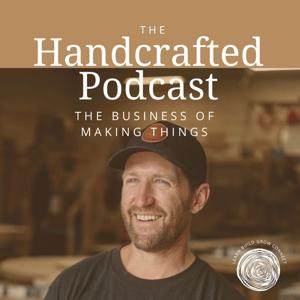
The Handcrafted Podcast: The Business of Making Things" is where craftsmanship meets business strategy. Hosted by Paul, founder of Philadelphia Table Co. and The Handcrafted…
Ranked by our users in the last 21 days

4,380 Listeners
16,842 Listeners
11,758 Listeners
1,682 Listeners

1,534 Listeners
21,053 Listeners
1,141 Listeners

4,456 Listeners
889 Listeners
1,315 Listeners
449 Listeners
349 Listeners

392 Listeners

4,573 Listeners
1,622 Listeners