
Sign up to save your podcasts
Or

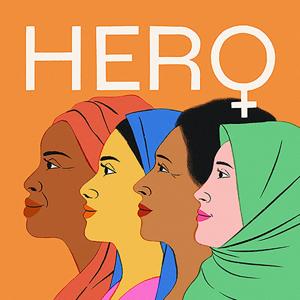


On today’s episode of the Hidden Economics of Remarkable Women, we are closing out our special season on girls with inspiring stories about girl power. First, we go to Peru. Reporter Jimena Ledgard interviews Wendy Sulca, a former child pop star who is finding a new voice as an advocate.
Then, host Reena Ninan speaks with Bogolo Kenewendo about how her childhood shaped her into the political leader she has become. Kenewendo is just in her late 30s and she is a special Advisor and Africa Director to the United Nations Climate Change High-Level Champions.
Finally, we are conducting a listener survey to better understand what you like about the podcast and what you’d like to hear next season. All participants in the survey who provide their email will be placed in a raffle to win a $100 Amazon gift card. To participate, follow this survey link. Thank you very much for your time and feedback.
https://www.surveymonkey.com/r/heropodcast
Learn more about your ad choices. Visit megaphone.fm/adchoices
Education is one of the most important enablers of girl power all over the world. And in a lot of ways, girls’ education has improved. The percentage of girls in school is on the rise globally compared to two decades ago. But there are still significant gaps, particularly in areas with high levels of conflict.
On today’s episode of the Hidden Economics of Remarkable Women, host Reena Ninan speaks with Julie Mwabe, the team lead at the global advocacy and public policy program at Global Partnership for Education. She leads efforts to mobilize political support at the highest levels for education, including from heads of state. They talk about the state of girls’ education and what the international community can do to close learning gaps, especially following the COVID-19 pandemic.
The Hidden Economics of Remarkable Women is supported by the Bill & Melinda Gates Foundation and the Roberta Buffett Institute for Global Affairs at Northwestern University.
And a quick plug: Foreign Policy will host its annual Her Power summit on April 18th in Washington D.C. Host Reena Ninan will do two live interviews, including with the deputy secretary general of the UN, Amina J. Mohammed. If you would like to attend Her Power, you can email us at [email protected]. Here's more information about the Her Power lineup: https://foreignpolicy.com/events/her-power-2024/
Learn more about your ad choices. Visit megaphone.fm/adchoices
Homosexuality is illegal in Kenya, as it is in more than half of African countries. But public attitudes have begun to shift. According to Pew Research Center data from 2002, only 1 percent of Kenyan respondents said society should accept homosexuality. As of 2020, 14 percent believed homosexuality should be accepted.
On today’s episode of the Hidden Economics of Remarkable Women, we follow the key people driving this change. Reporter Eunice Maina interviews women and nonbinary LGBTQ activists such as Marylize Biubwa, the co-founder of Queer Republic, and Ivy Werimba, a communications officer at Galck+, a coalition of 16 membership-based LGBTQ+ organizations from across Kenya. Then host Reena Ninan speaks with Eric Gitari, the co-founder of the National Gay and Lesbian Human Rights Commission in Kenya. His litigation has helped bring recent LGBTQ policy victories.
The Hidden Economics of Remarkable Women is supported by the Bill & Melinda Gates Foundation and the Roberta Buffett Institute for Global Affairs at Northwestern University.
Learn more about your ad choices. Visit megaphone.fm/adchoices
The battle against child marriage around the world seems to be gaining some traction. According to the latest UNICEF data, about 1 in 5 young women between the ages of 20 and 24 were married as children. This represents a 5 percent decrease from a decade ago.
The negative impact of child marriage is widely documented. Child brides suffer domestic violence more often, drop out of school in greater numbers, and are more likely to experience poverty. Curbing child marriage is a United Nations sustainable development goal.
India accounts for some of the progress. While Indian girls still account for one-third of child brides in the world, the prevalence of child marriage there has declined about 7 percent in the past eight years.
On today’s episode of the Hidden Economics of Remarkable Women, we’ll hear how India has been able to reduce its child marriage rates. First, host Reena Ninan revisits a conversation she had in Season 2 with Mabel van Oranje, the founder of Girls Not Brides and the global movement VOW for Girls.
Then, journalist Ayushi Shah reports on a girls’ support group organized by the Indian nonprofit Child Rights and You (CRY) in the village of Tondar—and specifically how members of the group help girls resist pressure from their families to marry young.
The Hidden Economics of Remarkable Women is supported by the Bill & Melinda Gates Foundation and the Roberta Buffett Institute for Global Affairs at Northwestern University.
Learn more about your ad choices. Visit megaphone.fm/adchoices
Family planning is one of the most economically important strategies for women and girls. Access to contraceptives can help women and girls get an education and participate in the workforce. Furthermore, it could reduce maternal deaths by as much as three-quarters, according to the United Nations Population Fund. But nearly 10 percent of women of childbearing age around the world have unmet contraceptive needs and teenage girls report less access to contraceptives than other age groups.
On today’s episode of the Hidden Economics of Remarkable Women, we look at the most effective ways to increase family planning services. First, reporter Elodie Toto travels to the West African country of Benin, which recently expanded abortion access. Then host Reena Ninan speaks with Dr. Samukeliso Dube, Executive Director of the global partnership FP2030. They work with governments, NGOs, civil society, and the private sector to mobilize investments in family planning.
Program Note: The Bill & Melinda Gates Foundation, which supports this podcast, is one of the funders of FP2030.
The Hidden Economics of Remarkable Women is supported by the Bill & Melinda Gates Foundation and the Roberta Buffett Institute for Global Affairs at Northwestern University.
Learn more about your ad choices. Visit megaphone.fm/adchoices
The Hidden Economics of Remarkable Women is back with an all-new season. This time, all our stories are about something that has been getting a lot of media attention lately: Girls. What do they really need to succeed right now? And how can we work with them to get there?
For this first episode, we focus on an often hidden aspect of girls’ economic lives that has a significant impact: period products. According to the World Bank, as many as 500 million people every month lack access to menstrual products or facilities. This cuts across all countries, including big pockets of the U.S. and the UK.
The inability to afford period products is often called “period poverty.” Not only does period poverty make many girls’ lives harder; it also affects their ability to stay in school. Many miss school days during their period and it can contribute to them leaving entirely. In India, for example, around 23 million girls drop out of school every year because they do not have a bathroom at school where they feel comfortable managing their period.
On today’s show, we look at solutions to period poverty and how truly transformational it would be for girls. First, reporter Elna Schutz talks to activists who have successfully advocated for affordable period products in South Africa, including students. Then host Reena Ninan speaks with Sia Towo, director of the nonprofit Femme International, about how to end period poverty. Her organization offers menstrual health education, conducts research, and distributes period products in East Africa.
Learn more about your ad choices. Visit megaphone.fm/adchoices
Season 6 of "The Hidden Economics of Remarkable Women" (HER♀️) launches Tuesday, March 12th. This time, we are focusing all our stories on girls. What are the real economics of girlhood? What are the hidden costs? And how could girls actually shake up the global economy? We visit girls preventing child marriages in India, advocates who helped legalize abortion in Benin, LGBTQ+ activists in Kenya, and education innovators, among others. "The Hidden Economics of Remarkable Women" is a Foreign Policy podcast supported by the Bill & Melinda Gates Foundation and the Roberta Buffett Institute for Global Affairs at Northwestern University.
Learn more about your ad choices. Visit megaphone.fm/adchoices
Kenyan president Uhuru Kenyatta pledged to end gender-based violence by 2026, soon before the end of his term in 2022. With two years left before 2026, is Kenya still on track to fulfill the promises made to Kenyan women?
On today’s episode of the Hidden Economics of Remarkable Women, we talk to women’s rights activists who have pressed the Kenyan government to uphold its pledge to end gender-based violence. First, reporter Pauline Ongaji speaks with Audrey Mugeni, Co-Founder of Counting Dead Women Kenya, about the state of femicide in Kenya. Then we talk to Anne Ireri, Executive Director of the Federation of Women Lawyers in Kenya, or FIDA Kenya. Founded more than 35 years ago, FIDA Kenya has provided legal aid to millions of women – and thousands since Kenyatta’s pledge to end gender-based violence. Ireri talked about that pledge and FIDA Kenya’s other work with our senior producer Laura Rosbrow-Telem.
While this is our last episode of the season, you will not need to wait long for HERO Season 6. Starting in March, we will focus our entire next season on girls – how they’re thriving, despite the odds. And what they need most from the rest of the world right now. So stay tuned.
Finally, we would love to hear your thoughts about this season, which was all about accountability. We are conducting a listener survey to better understand what you like about the podcast and what you’d like to hear in future episodes. All participants in the survey who provide their email will be placed in a raffle to win a $100 Amazon gift card.
To participate, follow the link below. Thank you very much for your time and feedback.
https://www.surveymonkey.com/r/heropodcast
Learn more about your ad choices. Visit megaphone.fm/adchoices
Uganda’s health ministry has launched a campaign to end yellow fever epidemics in the country by 2026. According to the CDC, about 30,000 people die from yellow fever each year, with approximately 90% in Africa. Infants and the elderly are most at risk. So the impact of this disease is more heavily felt by women, who are most often burdened with caregiving.
On today’s episode of the Hidden Economics of Remarkable Women, we visit Uganda, one of 27 high-risk countries in Africa working with the World Health Organization and other partners to try to end yellow fever epidemics by 2026.
First, reporter Leah Kahunde helps us better understand the state of yellow fever in Uganda. She speaks with health journalist Beatrice Nyangoma, whose investigative reporting forced officials to confront flaws in their vaccination procedures. Then, host Reena Ninan talks to two WHO experts about Uganda’s current yellow fever vaccination campaign: Dr. Pamela Bakkabulindi, an immunization consultant in Uganda with the World Health Organization, and Dr. Kwame Amponsa-Achiano, deputy director for Disease Control and program manager for the Expanded Program on Immunization at the Ghana Health Service.
If you’d like to learn more about WHO’s vision to eliminate yellow fever epidemics, also known as their EYE strategy, you can check out their podcast, “EYE on Yellow Fever.” The EYE Strategy’s overarching goal is to eliminate all yellow fever epidemics by 2026 and protect almost 1 billion people against this deadly disease.
https://podcasts.apple.com/fr/podcast/eye-on-yellow-fever/id1578908498
Learn more about your ad choices. Visit megaphone.fm/adchoices
The level of press freedom in Kenya media outlets is among the highest in East Africa, according to the most recent World Press Freedom Index. And Reuters’ research claims that trust in the news grew by six percent last year in Kenya, right after an election.
However, there is still much work to be done when it comes to making newsrooms a safe place for Kenyan women. According to a survey from Women in News in early 2022, about 90% of women working in Kenyan media reported they were likely to be sexually harassed while on assignment. And for both women and gender nonconforming respondents, more than half said they expected to face sexual harassment in the workplace. Thankfully, leaders in Kenyan media have started to take meaningful steps to address this issue.
On today’s episode of the Hidden Economics of Remarkable Women, we will look at what actually works when it comes to ending sexual harassment at work. First, reporter Sharon Kiburi talks to Judie Kaberia. During her tenure as executive director of the Association of Media Women in Kenya (AMWIK), Kaberia helped Kenyan media outlets develop policies and procedures to tackle sexual harassment.
Then, host Reena Ninan speaks with Prof. Alexandra Kalev, a Tel Aviv University associate professor of sociology and dean of the sociology and anthropology departments. Kalev and her colleague Harvard Prof. Frank Dobbin recently wrote a book together called Getting to Diversity. Among other workplace inclusivity topics, Kalev and Dobbin conducted groundbreaking research about how to decrease sexual harassment in the workplace. According to Kalev, most of the well-intentioned programs that they analyzed actually backfired.
Learn more about your ad choices. Visit megaphone.fm/adchoices
From the publisher's feed

90,849 Listeners

21,780 Listeners

37,945 Listeners

43,356 Listeners

26,807 Listeners

595 Listeners

10,131 Listeners

14,660 Listeners

239 Listeners

14,927 Listeners

31,765 Listeners

1,342 Listeners

2,719 Listeners

27 Listeners

39 Listeners

360 Listeners

91 Listeners

1,665 Listeners

75 Listeners

10,497 Listeners

4,225 Listeners
11 Listeners

0 Listeners

13 Listeners

8 Listeners

3 Listeners

0 Listeners

0 Listeners
0 Listeners