
Sign up to save your podcasts
Or

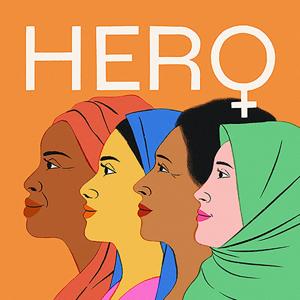


Season 4 of the Hidden Economics of Remarkable Women (HER♀️) launches Tuesday, June 20th. This time around, host Reena Ninan and reporters across Africa are focusing on one theme: the role of male allies. When are they effective? Why are they doing this work? And how do they influence men and boys? We visit religious leaders in Kenya, interview a former politician in Lesotho, and talk to male allies changing men’s attitudes toward gender-based violence in South Africa, among others. The Hidden Economics of Remarkable Women is a Foreign Policy podcast funded in part by the Bill & Melinda Gates Foundation.
Learn more about your ad choices. Visit megaphone.fm/adchoices
One silver lining of the COVID-19 pandemic is many more women have bank accounts than before. Around 250 million women in the global south opened a financial account for the first time to receive government assistance, according to analysis by the Women’s World Banking’s 2021 Global Findex Database. Also for the first time, the gender gap in account ownership across developing economies fell. But data is also showing that many of these women are not retaining these accounts. What can be done to ensure these newly banked women remain in the financial system?
On a special bonus episode of the Hidden Economics of Remarkable Women, we first hear from a member of the Self Employed Women’s Association, a union of millions of female informal workers in India. They have drastically increased women’s digital financial inclusion since the COVID-19 pandemic began.
Then, we share a conversation that first took place at the World Economic Forum in Davos, Switzerland. Foreign Policy editor in chief Ravi Agrawal sat down with global leaders committed to keeping newly banked women in the financial system. Agrawal first chats with Mary Ellen Iskenderian, president and CEO of Women’s World Banking, and Mark Suzman, CEO of the Bill & Melinda Gates Foundation (which is also one of this podcast’s funders). Then, Agrawal has an insightful discussion with Diane Karusisi, CEO of the Bank of Kigali, and Abubakar Suleiman, managing director and CEO of Sterling Bank. They share how they are changing their approach to banking to reach more women in Africa.
Learn more about your ad choices. Visit megaphone.fm/adchoices
On today’s episode of HERO, the last show of the season, we look at how a Women for Women International program in the Democratic Republic of Congo worked with families to try to overcome longstanding cultural barriers to women owning land. We hear from a mother, father, and son who participated in this program. Also, Women for Women International’s country director in the DRC, Rachel Boketa, explains how this project attempted to change men’s and boy’s opinions about female property ownership. Special thanks to Francis Shok Mweze, who acted as our field producer for this segment.
Boketa's program was supported with a grant from the United States Agency for International Development, or USAID. The U.S. currently gives more money to international development than any other country in the world, largely through USAID.
In the second part of the episode, host Reena Ninan talks to Isobel Coleman, the deputy administrator of USAID. Coleman explains why the Biden administration is doubling funding towards gender programming and how USAID plans to invest that financing. This conversation first took place at Foreign Policy’s Her Power Summit, an annual gathering all about women’s leadership.
Finally, we are conducting a listener survey to better understand what you like about the podcast and what else you’d like to hear in future episodes. All participants in the survey who provide their email will be placed in a raffle to win a $25 Amazon gift card. To participate, follow the survey link below. Thank you very much for your time and feedback.
https://www.surveymonkey.com/r/heropodcast
Learn more about your ad choices. Visit megaphone.fm/adchoices
One silver lining of the COVID-19 pandemic, and its resulting child care crisis, is that an increasing number of countries have passed legislation supporting the child care sector. These include Vietnam, Peru, Argentina, and Bangladesh.
On today’s episode of the Hidden Economics of Remarkable Women, we will hear about Bangladesh’s efforts to increase access to child care, particularly for working parents. Bangladesh lawmakers passed the Daycare Center Act in 2021, and last year, they proposed implementation guidelines.
In the first part of the show, host Reena Ninan speaks with Marina Elefante, a lawyer with the World Bank’s Women Business and the Law Project. Ninan asks Elefante about the World Bank’s involvement with Bangladesh to increase child care there and what this law did to support daycares.
Then senior producer Laura Rosbrow-Telem profiles daycare managers in Dhaka, Bangladesh’s capital and largest city, to gauge their opinion of the law. Producer Alvah Amit Halder helped report and produce this segment from Dhaka, Bangladesh.
This week, we are also conducting a listener survey to better understand what you like about the podcast and what else you’d like to hear in future episodes. All participants in the survey who provide their email will be eligible to win a $25 Amazon gift card. To participate, follow this survey link. Thank you very much for your time and feedback.
https://www.surveymonkey.com/r/heropodcast
Learn more about your ad choices. Visit megaphone.fm/adchoices
Close to 20% of all domestic workers are migrant workers, according to the International Labor Organization. Most of these domestic workers are women and they are particularly common in Gulf countries like Saudi Arabia.
Kenya sends a lot of domestic workers to Gulf countries. More than half of the over 87,784 Kenyans employed in the Middle East since 2019 have been domestic workers.
But many women returning from this work describe horrific circumstances, particularly in Saudi Arabia. And in an alarming number of cases, death.
On today’s episode of the Hidden Economics of Remarkable Women, reporter Pauline Ongaji talks with Kenyan women who have returned from domestic work in Saudi Arabia. Then host Reena Ninan speaks with Caroline Kasina from the Solidarity Center in Kenya and Ruth Khakame from the Kudheiha union about their efforts to organize Kenyan domestic workers in Gulf states.
Learn more about your ad choices. Visit megaphone.fm/adchoices
A lot of shea butter, which can be found in moisturizers and chocolate, originates from West and East Africa. According to the Global Shea Alliance, shea exports from African countries have increased about 600 percent in the last 23 years.
Most shea nut collectors are rural women. So, this should be great news for them. But because of the way the shea nut supply chain operates, most women are at the bottom of the power structure, oftentimes squeezed out by middle men.
On today’s episode of the Hidden Economics of Remarkable Women, reporter Nelly Kalu visits a Nigerian nonprofit called Initiative for Gender Empowerment & Creativity. They have innovated the shea nut business to enable women shea nut producers to earn more.
Then, host Reena Ninan speaks with Sybil Chidiac, a senior program officer at the Bill & Melinda Gates Foundation. Chidiac focuses on women's economic empowerment initiatives in Africa and shares her thoughts on this program and others to Ninan. For transparency, it is worth mentioning that HERO is funded in part by the Bill & Melinda Gates Foundation.
Learn more about your ad choices. Visit megaphone.fm/adchoices
On today’s episode, we look at how Nigerian women are changing social norms through the film industry. First, reporter Yecenu Sasetu profiles the Girls Voices Initiative’s Girl Nation Academy and how it is increasing access to women looking to break into film. For deeper analysis host Reena Ninan then speaks to Ojoma Ochai, the Managing Partner of The Creative Economy Practice at CC Hub, which helps support film and other creative projects in Africa.
Learn more about your ad choices. Visit megaphone.fm/adchoices
According to the World Health Organization, more than 200 million girls and women alive today have experienced FGM, or female genital mutilation. That’s about 5 percent of women and girls around the globe. How can the world finally end this?
On today’s episode of the Hidden Economics of Remarkable Women – our first of Season 3 – reporter Eunice Maina explains how financial factors incentivize women to perpetuate this practice, and interviews a group of girls who are tackling this head on.
Later in the episode, host Reena Ninan speaks with Caroline Lagat, a program officer at Equality Now. Lagat works largely on legal ways to end FGM.
Learn more about your ad choices. Visit megaphone.fm/adchoices
Season 3 of the Hidden Economics of Remarkable Women (HER♀️) launches Tuesday, December 13th. This time around, host Reena Ninan partners with journalists around the world to cover underreported ways women are challenging the status quo. Topics this season include justice for domestic migrant workers in Gulf states, how to break down gender barriers in the film industry, and the financial factors behind female genital mutilation, among others. The Hidden Economics of Remarkable Women is a Foreign Policy podcast funded by the Bill & Melinda Gates Foundation.
Learn more about your ad choices. Visit megaphone.fm/adchoices
Indonesia has the eighth highest number of child marriages in the world. Beyond being a human rights issue, child marriage significantly increases the chance of domestic violence, dropping out of school, and poverty. Misiyah Misiyah, founder and director of feminist organization Institut KAPAL Perempuan, wanted to convince Indonesian President Joko Widodo to increase the legal marriage age from 16 to 19, which could dramatically decrease the rate of child marriage. To do that, she and her colleagues came equipped with reams of data.
On the season finale of the Hidden Economics of Remarkable Women, we hear how Misiyah collected grassroots data and used it to build a powerful case to ban child marriage in Indonesia. Later in the episode, host Reena Ninan speaks with Mabel van Oranje, founder of Girls Not Brides and VOW for Girls, about the most effective ways to decrease child marriage globally.
Special thanks this week to Alison Holder from Equal Measures 2030, who recommended we talk to Misiyah. You should check out their latest report on countries’ progress toward gender equality and sustainable development goals; it’s pretty sobering. Also, thank you to In-Depth Creative, a lovely podcast company based in Jakarta, Indonesia. They helped produce our interview with Misiyah. The Hidden Economics of Remarkable Women is a Foreign Policy podcast made possible through funding by the Bill & Melinda Gates Foundation.
Learn more about your ad choices. Visit megaphone.fm/adchoices
From the publisher's feed

90,783 Listeners

21,768 Listeners

37,932 Listeners

43,341 Listeners

26,799 Listeners

595 Listeners

10,131 Listeners

14,654 Listeners

239 Listeners

14,917 Listeners

31,765 Listeners

1,340 Listeners

2,719 Listeners

27 Listeners

39 Listeners

359 Listeners

92 Listeners

1,654 Listeners

75 Listeners

10,497 Listeners

4,224 Listeners
11 Listeners

0 Listeners

13 Listeners
8 Listeners
3 Listeners

0 Listeners

0 Listeners
0 Listeners