
Sign up to save your podcasts
Or

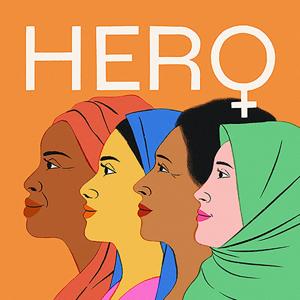


According to the World Bank, small- and medium-sized enterprises (SMEs) comprise about 90% of the global economy. But these kinds of businesses – too big for microfinance and too small for commercial bank loans with favorable rates – face many hurdles to borrow money. On today’s episode of the Hidden Economics of Remarkable Women, we delve deeper into the “missing middle” credit gap and what can be done to improve SMEs’ access to financing. Also, we look at specific barriers to women business owners, such as how low property ownership rates hinder their ability to qualify for small business loans.
Host Reena Ninan talks to Ada Osakwe, founder of the Nuli Juice Company, about the various obstacles she overcame to expand her business – including her first store almost getting destroyed in Lagos, Nigeria. Then, World Bank Financial Inclusion Expert Mahesh Uttamchandani shares the financial solutions he is most excited about for SMEs.
Special thanks this week to IFC’s Jessica Schnabel, who recommended we talk to Ada Osakwe, and to Mary Ellen Iskenderian from Women’s World Banking. The Hidden Economics of Remarkable Women is a Foreign Policy podcast made possible through funding by the Bill & Melinda Gates Foundation.
*Correction note 3:30 p.m. EST, Apr. 7: An earlier version of this episode called Mahesh Uttamchandani an economist. That has been corrected to reflect his title as a financial inclusion expert. We apologize for the error.
Learn more about your ad choices. Visit megaphone.fm/adchoices
In its simplest definition, microfinance refers to small loans usually worth less than $1,000 for people with low incomes. Microfinance is a widely discussed idea in development circles, particularly surrounding women’s empowerment. But how effective is it?
On this episode of the Hidden Economics of Remarkable Women, we look at why microfinance has had mixed results and learn about the best ways to distribute these kinds of loans. First, we talk to a Turkish Grameen Foundation/Kiva microcredit recipient named Kudret about the impact microfinance has had on her personally. Then, Roshaneh Zafar speaks with host Reena Ninan about her experiences launching the Kashf Foundation, the first microfinance institution in Pakistan and the largest loan provider to women in the country.
Special thanks this week to Stephen Rasmussen from the Consultative Group to Assist the Poor, who recommended FP talk to Zafar. Also, thanks to Aslıhan Köksal and Brit Heiring from Kiva, Andrée Simon from FINCA, and a number of others who spoke to us for this episode. The Hidden Economics of Remarkable Women is a Foreign Policy podcast made possible through funding by the Bill & Melinda Gates Foundation.
Learn more about your ad choices. Visit megaphone.fm/adchoices
Access to property is arguably one of the most important paths for women’s income security. But for many, there are not only economic barriers to owning property but also legal obstacles. For example, there are approximately 75 countries where women still do not have the same rights as men to inherit property.
On today’s episode of The Hidden Economics of Remarkable Women, we follow the story of Rachel Korir. Her legal battle to get her fair share of her father’s property in Kenya revealed gaps in the country’s recent constitutional reforms, which aimed to make property rights equal among men and women. We also speak to Cardiff University professor Ambreena Manji, who specializes in East African land, law, and development. Two years ago, Manji also wrote a book titled The Struggle for Land and Justice in Kenya.
Special thanks this week to Dominic Kirui, who first reported about Korir and helped us produce our interview; Olivia Bitanihirwe, who provided Korir’s voice-over; and Mary Ellen Iskenderian, the president and CEO of Women’s World Banking. An early conversation with Iskenderian got us thinking more about property rights.
Learn more about your ad choices. Visit megaphone.fm/adchoices
On this week’s show, we look at how reforming marital rights could be the biggest first step toward gender equality. We found the idea for this show from the World Bank’s Women, Business, and the Law (WBL) project, which ranks 190 economies every year for how well their policies are for gender equality. According to the WBL, South Africa has made the third-most progress regarding gender equality of any country in the world over the last 50 years, largely due to the women’s movement being interconnected with the fight to end apartheid. During the late 1980s and early ’90s, many reforms passed in South Africa propelled women’s rights, particularly in expanding married women’s ability to sign legally binding contracts, register businesses, and open bank accounts without their husband’s consent.
But decades after apartheid ended, one law remained on the books that continued to plague Black women, particularly ones seeking a divorce. We talk to Agnes Sithole, whose divorce case shook her country’s legal system. We also speak to Sharita Samuel, the lawyer who brought Sithole’s case before the Constitutional Court, South Africa’s highest court.
Special thanks this week to Nisha Arekapudi and Natalia Mazoni Silva Martins from the WBL, who wrote the case study about South Africa’s gender equality gains and spotlighted Sithole’s legal fight. And big thanks to producer Elna Schutz, who flew out from Johannesburg to Durban just to record the interview with Sithole and Samuel.
Learn more about your ad choices. Visit megaphone.fm/adchoices
Philanthropist Melinda French Gates and Nobel Prize economist Esther Duflo talk with host Reena Ninan about the best ways to empower women economically post-COVID-19 on the premiere episode of the Hidden Economics of Remarkable Women’s (HERO) second season. French Gates is the co-chair of the Bill & Melinda Gates Foundation, which supports this podcast. French Gates is also the founder of Pivotal Ventures and author of The Moment of Lift: How Empowering Women Changes the World about her work on gender equality. Duflo is a Massachusetts Institute of Technology professor and won the Nobel Prize for economic sciences in 2019 for her experimental approach to alleviating global poverty. Duflo is the author of Good Economics for Hard Times and Poor Economics: A Radical Rethinking of the Way to Fight Global Poverty.
This season on HERO, we will delve deeper into all the obstacles blocking women from their full financial potential and interview women breaking these barriers down. Listeners will hear from people reforming marital laws in South Africa and property rights in Kenya—and what victories in both places would mean for unlocking women’s financial potential. We will also look at which micro-finance strategies work best and why better lending practices could be huge for small- and medium-sized enterprises.
The Hidden Economics of Remarkable Women is a Foreign Policy podcast made possible through funding by the Bill & Melinda Gates Foundation.
Special thanks this week to all the people who helped make this conversation with Melinda French Gates and Esther Duflo possible, including Amy Jerrett, Laura Dickinson, Bo Jungmayer, Sam Veatch, Lynne Thompson, Heather McCurdy, and Rimjhim Dey. And thank you to Ketki Gujjar and Miraiben Chatterjee, who helped connect us to Sheela from SEWA, and Manveena Suri and Shreya Adhikari for Sheela’s voiceover.
Here are links to research cited in today’s episode:
- The World Bank’s Women, Business and the Law Project’s most recent 2022 report provided the data behind the numbers we cite at the beginning of the episode: specifically, that women have three-quarters of the rights men have and the fact that women still do not have the same rights as men to inherit property in 75 countries.
- The study Melinda French Gates cites toward the beginning of the interview is from the research group ORB International.
Finally, if you like HERO, check out Reena Ninan's other great show, Ask Lisa: The Psychology of Parenting. It's on all the platforms! https://feeds.acast.com/public/shows/614c9797ad0d6f00132e0faf
Learn more about your ad choices. Visit megaphone.fm/adchoices
Hosted on Acast. See acast.com/privacy for more information.
Learn more about your ad choices. Visit megaphone.fm/adchoices
Season 2 of the Hidden Economics of Remarkable Women is out soon! Host Reena Ninan shares more – including a potential gift for our listeners.
Learn more about your ad choices. Visit megaphone.fm/adchoices
When we considered what to do for this last episode of the Hidden Economics of Remarkable Women’s first season, it was hard to think of the right people to interview. Who could really comment on what women are facing in the entire world? Thankfully, we were able to connect with two of the most influential women in the world fighting for global gender equality. They reflect on some of the themes we covered on the podcast and what they’re doing to move these issues forward.
Host Reena Ninan first talks to Melanne Verveer, currently the executive director of the Georgetown Institute for Women, Peace and Security. U.S. President Barack Obama nominated Verveer to serve as the first-ever ambassador for global women’s issues in 2009. Before that, Verveer was chief of staff to Hillary Clinton when Clinton was the first lady.
Then, Ninan hears from UN Women Deputy Executive Director Anita Bhatia. UN Women is a part of the United Nations that is dedicated to gender equality and female empowerment. It works with governments, the private sector, and civil society around the world to create better programs and laws for women and girls. Bhatia largely focuses on improving women’s financial reality, so she shares some of her ideas for the best ways to advance women economically.
If you would like to keep in touch with us in the meantime—including sharing ideas of remarkable women we should talk to—feel free to email [email protected]. We hope to be back in your feeds some time soon. The Hidden Economics of Remarkable Women is an FP podcast supported by the Bill & Melinda Gates Foundation.
We want to hear from you! To fill out our 2021 listener survey, go to survey.fan/foreignpolicy.com
Learn more about your ad choices. Visit megaphone.fm/adchoices
Violence between cow herders and farmers has killed more people in recent years in northeastern Nigeria than the Boko Haram insurgency, according to the International Crisis Group. One solution to this conflict is creating a better environment for dairy producers so cattle herders do not need to travel as far to get feed for their cows. This would impact not only the country’s security but also the livelihoods of many rural Nigerian women.
On this episode of the Hidden Economics of Remarkable Women, we look at the Advancing Local Dairy Development in Nigeria (ALDDN) program. It is focused on smallholder female dairy producers, who make the majority of milk products in the country. ALDDN is primarily supported by the Bill & Melinda Gates Foundation, which also supports this podcast.
First, we hear from Rakiya Dalhatu, a dairy producer who participated in ALDDN. Then, we talk to Ndidi Nwuneli, the co-founder of Sahel Consulting Agriculture and Nutrition Ltd., which leads the ALDDN program. And finally, we speak with Cornell University’s Ed Mabaya, who focuses on global development, agriculture, and food security issues in sub-Saharan Africa, including Nigeria.
To learn more about how the ALDDN program is trying to empower women, mitigate the effects of climate change, and decrease conflict in Nigeria, listen to our latest episode on this page, or subscribe on your favorite podcast app. The Hidden Economics of Remarkable Women is an FP podcast supported by the Bill & Melinda Gates Foundation.
Finally, we are still offering a new policy brief on gender equality to our listeners! This is content that’s normally behind a paywall at Foreign Policy, but we’re offering special access right now. It’s a great resource for understanding the big picture on what’s happening globally to try to tackle gender inequality.
We want to hear from you! To fill out our 2021 listener survey, go to survey.fan/foreignpolicy.com
Learn more about your ad choices. Visit megaphone.fm/adchoices
When we use the phrase “remarkable women” for this podcast, Letty Chiwara definitely fits the bill. She is the current U.N. Women Representative to Ethiopia, the Africa Union Commission, and the U.N. Economic Commission for Africa. Although these are broad titles, one major part of her work is helping others get better data on the lives of Ethiopian women, including their full financial contributions to society.
On today’s episode of the Hidden Economics of Remarkable Women, we explore how getting better data on gender disparities is uncovering hidden truths in Ethiopia and elsewhere. Host Reena Ninan first speaks with Chiwara, who spearheaded a major gender data effort in Ethiopia. Then, Ninan talks to Emily Courey Pryor, executive director of the nonprofit Data2X. Her organization partners with entities like U.N. Women, the World Bank, the World Trade Organization, and individual countries to improve their collection and analysis of gender data.
To hear more about the movement to improve gender data, listen to our latest episode on this page or subscribe on your favorite podcast app. Also, for the real nerds out there, you can sign up to get a policy brief on gender equality. This is content that’s normally behind a paywall at Foreign Policy, but we’re offering special access to our podcast listeners. It’s a great resource for understanding the big picture on what’s happening globally to try and tackle gender inequality.
The Hidden Economics of Remarkable Women is an FP podcast supported by the Bill & Melinda Gates Foundation.
We want to hear from you! To fill out our 2021 listener survey, go to survey.fan/foreignpolicy.com
Learn more about your ad choices. Visit megaphone.fm/adchoices
From the publisher's feed

90,849 Listeners

21,780 Listeners

37,945 Listeners

43,356 Listeners

26,807 Listeners

595 Listeners

10,131 Listeners

14,660 Listeners

239 Listeners

14,927 Listeners

31,765 Listeners

1,342 Listeners

2,719 Listeners

27 Listeners

39 Listeners

360 Listeners

91 Listeners

1,665 Listeners

75 Listeners

10,497 Listeners

4,225 Listeners
11 Listeners

0 Listeners

13 Listeners

8 Listeners
3 Listeners

0 Listeners

0 Listeners

0 Listeners