
Sign up to save your podcasts
Or

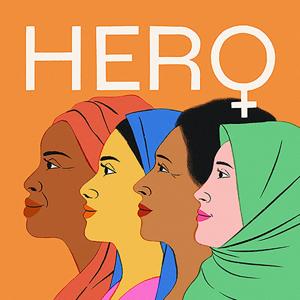


According to the ILO, 81.6 percent of women’s employment in India is concentrated in the informal economy — this is work that’s not taxed, or under the table. On today’s episode of the Hidden Economics of Remarkable Women, we examine why India has one of the highest rates of women in the informal sector and what can be done to get them more rights, income, and support. Host Reena Ninan first speaks with Deepa, a domestic worker and union member of the Self Employed Women’s Association (SEWA), which has more than 1.5 million women informal worker members. Then Ninan speaks with SEWA Punjab State coordinator Harsharan Kaur, who describes how SEWA advances the rights and economic empowerment of women informal workers. After that, Nina talks to Institute of Social Studies Trust Research Fellow Monika Banerjee, who specializes in women informal workers in India, and finally, the Chief Economist for South Asia at the World Bank, Hans Timmer.
To hear more about women informal workers in India, listen to our latest episode on this page or subscribe on your favorite podcast app -- and thank you to Apple Podcasts, which just listed HERO as a New & Noteworthy Podcast! The Hidden Economics of Remarkable Women is a Foreign Policy podcast supported by the Bill & Melinda Gates Foundation.
We want to hear from you! To fill out our 2021 listener survey, go to survey.fan/foreignpolicy.com
Learn more about your ad choices. Visit megaphone.fm/adchoices
On today’s episode of the Hidden Economics of Remarkable Women, we’re headed to Uganda, where a group of women are saving money—and participating in a pilot program called “Household Dialogues” from the nonprofit CARE, where they’re attending a form of couples counseling. Host Reena Ninan speaks with Namara Eve, who participated in the Household Dialogues, and Julia Arnold, senior research director at Accion’s Center for Financial Inclusion.
But before we get into the Household Dialogues project, let us first explain a bit about women’s savings groups. Informal savings groups operating outside of a bank, where around a dozen individuals from a local community band together to save their money collectively, are a common practice in Uganda. One estimate showed that around two-thirds of all adults in Uganda save money that way, including a large number of women’s only groups. And during the pandemic in sub-Saharan Africa, FP Analytics notes that households with a member in an informal savings group have been more likely to have savings and less likely to experience food insecurity.
Women’s informal savings groups, however, can only do so much. To access larger sums of capital, the women need to join a bank, and oftentimes own a smartphone. And for many of these women, their husbands have the only smartphone in the household—which can be a barrier to the women’s economic advancement. So, in the Household Dialogues project, CARE financial counselors met seven times with women and their spouses to help the husbands be more actively supportive.
To hear more about the Household Dialogues project, listen to our latest episode on this page or subscribe on your favorite podcast app. The Hidden Economics of Remarkable Women is a Foreign Policy podcast supported by the Bill & Melinda Gates Foundation.
We want to hear from you! To fill out our 2021 listener survey, go to survey.fan/foreignpolicy.com
Learn more about your ad choices. Visit megaphone.fm/adchoices
As FP Analytics highlights in its new report, “Elevating Gender Equality in COVID-19 Economic Recovery, there’s a dire global child care shortage, which the pandemic only worsened. But increasing COVID-19 recovery plan investments in care work -- especially the child care sector -- would deliver greater and more sustainable stimulus than other measures, such as construction-oriented funding. Still, even if more governments better support the care sector, how does one launch high-quality, affordable child care centers in the near future?
On the premiere episode of the Hidden Economics of Remarkable Women (or HER♀ for short), host Reena Ninan speaks with Kidogo Founder Sabrina Habib about how she created a new approach to franchising affordable childcare centers that has changed the lives of low-income mothers and female daycare owners in Kenya. In it, Habib describes how almost stepping on a baby in a day care center was a “moment of obligation” for her to make a difference. Then, Ninan hears about the state of early childhood development in Kenya from African Population and Health Research Center (APHRC) Associate Research Scientist Patricia Wekulo.
The Hidden Economics of Remarkable Women is a Foreign Policy podcast supported by the Bill & Melinda Gates Foundation.
Learn more about your ad choices. Visit megaphone.fm/adchoices
Could empowering women in the workplace be the simplest way to boost the global economy moving forward? Host Reena Ninan talks to women around the world changing the status quo in surprising ways to improve their lives, their families, and ultimately, the world. The Hidden Economics of Remarkable Women (HER♀) is a Foreign Policy podcast supported by the Bill & Melinda Gates Foundation.
Learn more about your ad choices. Visit megaphone.fm/adchoices
From the publisher's feed

90,849 Listeners

21,780 Listeners

37,945 Listeners

43,356 Listeners

26,807 Listeners

595 Listeners

10,131 Listeners

14,660 Listeners

239 Listeners

14,927 Listeners

31,765 Listeners

1,342 Listeners

2,719 Listeners

27 Listeners

39 Listeners

360 Listeners

91 Listeners

1,665 Listeners

75 Listeners

10,497 Listeners

4,225 Listeners
11 Listeners

0 Listeners

13 Listeners

8 Listeners

3 Listeners

0 Listeners

0 Listeners
0 Listeners