
Sign up to save your podcasts
Or



The level of press freedom in Kenya media outlets is among the highest in East Africa, according to the most recent World Press Freedom Index. And Reuters’ research claims that trust in the news grew by six percent last year in Kenya, right after an election.
However, there is still much work to be done when it comes to making newsrooms a safe place for Kenyan women. According to a survey from Women in News in early 2022, about 90% of women working in Kenyan media reported they were likely to be sexually harassed while on assignment. And for both women and gender nonconforming respondents, more than half said they expected to face sexual harassment in the workplace. Thankfully, leaders in Kenyan media have started to take meaningful steps to address this issue.
On today’s episode of the Hidden Economics of Remarkable Women, we will look at what actually works when it comes to ending sexual harassment at work. First, reporter Sharon Kiburi talks to Judie Kaberia. During her tenure as executive director of the Association of Media Women in Kenya (AMWIK), Kaberia helped Kenyan media outlets develop policies and procedures to tackle sexual harassment.
Then, host Reena Ninan speaks with Prof. Alexandra Kalev, a Tel Aviv University associate professor of sociology and dean of the sociology and anthropology departments. Kalev and her colleague Harvard Prof. Frank Dobbin recently wrote a book together called Getting to Diversity. Among other workplace inclusivity topics, Kalev and Dobbin conducted groundbreaking research about how to decrease sexual harassment in the workplace. According to Kalev, most of the well-intentioned programs that they analyzed actually backfired.
Learn more about your ad choices. Visit megaphone.fm/adchoices
Despite a global downturn for tech, 2022 was a record year for African startup funding. According to data from Partech Partners, Africa tech financing in 2022 was 4.5 times larger than it was four years prior. And Nigeria is one of the continent’s main tech hubs.
However, underneath this success story are less convenient truths – including widespread gender discrimination and financial impropriety.
On today’s episode of the Hidden Economics of Remarkable Women, we will look at Nigerian tech leaders’ accountability efforts. We begin with a story from reporter Nelly Kalu about tech entrepreneur Chioma Agwuegbo’s efforts to increase the number of women in Nigerian tech through her organization TechHerNG – and the backlash she has faced because of it. Then, host Reena Ninan talks to Nigerian entrepreneur and angel investor Ada Osakwe, who shares what she thinks is needed to have real accountability in Nigerian tech.
Learn more about your ad choices. Visit megaphone.fm/adchoices
Nigeria is increasingly important on the global stage. It is the sixth most populous country and has the biggest economy in Africa. It is also home to one of the world’s largest film industries and is a major oil exporter.
Despite these achievements, gender parity in its political leadership has declined. As of last year’s elections, women make up less than 4 percent of Nigeria’s parliament. Now, Nigeria ranks among the bottom 10 countries for female representation in national government.
On today’s episode of the "Hidden Economics of Remarkable Women", host Reena Ninan speaks with Nichole Grossman from American University about her ongoing research on female political candidates in Nigeria. Grossman shares what she learned from dozens of interviews about what would be needed to increase the number of women in office. Then, reporter Yecenu Sasetu talks to a Nigerian female politician, Honourable Kate Raymond Mamuno, about how she got elected. Her successful campaign was largely due to assistance from a nonprofit called Connected Development.
Learn more about your ad choices. Visit megaphone.fm/adchoices
This season, host Reena Ninan and reporters across Africa will meet courageous women holding leaders accountable in various sectors, including healthcare, startups, and government. Specifically, we are looking at promises made about gender equality – and seeing if they have been delivered. For example, the government of Kenya pledged to end gender-based violence by 2026. And the ministry of health in Uganda is trying to eradicate yellow fever. It is ambitious to make these kinds of pledges. But are these leaders really delivering on these promises for women and girls?
For this first episode, we decided to cover a surprising program: a reality TV show. On Ms President, women compete to become the next “president” of Kenya, where they get training to become politicians – leaders we can hold accountable. This wasn’t a typical reality TV production. In fact, a nonprofit called Media Focus in Africa launched the show with the support of the EU and the Canadian government. Reporter Eunice Maina interviews contestant Nereah Amondi Oketch to find out how she fared on the show and whether Ms President was successful at getting more women into elected office.
Finally, we are conducting a listener survey to better understand what you like about the podcast and what you’d like to hear in future episodes. All participants in the survey who provide their email will be placed in a raffle to win a $100 Amazon gift card. To participate, follow this survey link. Thank you very much for your time and feedback.
https://www.surveymonkey.com/r/heropodcast
Learn more about your ad choices. Visit megaphone.fm/adchoices
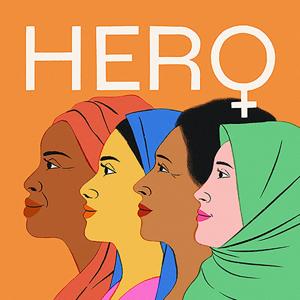
Season 5 of "The Hidden Economics of Remarkable Women" (HER♀️) launches Tuesday, January 9th. This time, we are looking at promises made about gender equality – and seeing if they have been delivered. For example, the government of Kenya pledged to end gender-based violence by 2026. And the ministry of health in Uganda is trying to eradicate yellow fever. It is ambitious to make these kinds of pledges. But it is much harder to achieve these lofty goals. Are these leaders really delivering on these promises for women and girls?
Join us as host Reena Ninan and reporters across Africa meet courageous women holding leaders accountable in various sectors, including healthcare, startups, and government.
"The Hidden Economics of Remarkable Women" is a Foreign Policy podcast funded in part by the Bill & Melinda Gates Foundation.
Learn more about your ad choices. Visit megaphone.fm/adchoices
Throughout this season, we’ve looked at how women are pushing back against legal, political, and cultural barriers to better themselves and their communities. And we’ve centered our conversations on the male allies who have made it their mission to fight gender inequities.
For this final episode of our season, we’re looking forward and talking to women in power. And not just any women in power – leaders who are advancing gender equality in their sectors.
First host Reena Ninan's talks to Ratna Sahay, Senior Advisor on Gender at the International Monetary Fund. Sahay shares data that shows how empowering women strengthens economies.
Then Reena speaks with Rachel Vogelstein who advises President Biden on Gender Policy. They discusses U.S. efforts to expand gender equality across the globe.
Show note:
Reena's conversation with Ratna Sahay first took place at Foreign Policy’s annual Her Power Summit. The next summit will be on October 25th. Feel free to contact [email protected] if you’d like more details.
Learn more about your ad choices. Visit megaphone.fm/adchoices
Kenya passed a number of gender reforms after a new constitution passed in 2010. It’s one thing to get the laws passed. But it’s another to get them implemented, especially in male-dominated sectors like fishing.
On today’s episode of the Hidden Economics of Remarkable Women, we’re looking at how Kenya’s legal reforms have created new opportunities for women in the fishing industry, such as the Fisheries Management and Development Act of 2016. However, women still face significant barriers in the fishing sector, including many reports of gender-based violence.
Reporter Thurea Mwadzaya visits a fishing community to see how policy developments are starting to take hold there, including talking to female leaders and male allies from Coastal Women in Fisheries. Then host Reena Ninan speaks with Margaret Gatonye, former CEO of the Aquaculture Association of Kenya. She helped advise the Kenyan government about the Fisheries Management and Development Act. Gatonye is currently pursuing a PhD in Global Governance at the University of Massachusetts, focusing in part on women in fishing in Kenya.
Learn more about your ad choices. Visit megaphone.fm/adchoices
Lynn Gitu is a program manager at the nonprofit IMPACT. They help decrease conflicts around natural resources in Africa and enable communities to benefit more from their local resources – rather than them getting stolen, for example, by armed militias. According to IMPACT research, Gitu says artisanal mining – or small-scale mining – accounts for about 90% of the minerals produced on the continent. And approximately 30% of artisanal miners in Africa are women.
Gitu asserts that mining is much more profitable than other fields for women on the continent. She explains, “Our research with women directly has shown us that when they are supported, they often earn 300 times more from the mining sector than from any other sector.” However, if women are not supported well, they reap much less of the rewards.
On today’s episode of the Hidden Economics of Remarkable Women, reporter Leah Kahunde visits women artisanal stone miners in Uganda, as well as male allies helping these women advance in the industry. Then, host Reena Ninan picks up her conversation with Lynn Gitu, an IMPACT program leader in Uganda.
Learn more about your ad choices. Visit megaphone.fm/adchoices
South Africa has the ignominious reputation of being the rape capital of the world and continues to battle an epidemic of gender-based violence. It is devastating for women and girls both physically and psychologically—but also economically. South Africa’s Mail & Guardian reports that the country lost about $2 billion in 2019 from the estimated costs of gender-based violence, including hospital bills, loss of productivity, and judicial costs.
On today’s episode of The Hidden Economics of Remarkable Women, we talk to two groups of male allies in South Africa influencing fellow men in unique ways. First, reporter Elna Schutz talks with men from Sonke Gender Justice, including a man whose life changed because of a Sonke program he participated in while in prison. Then, host Reena Ninan speaks with Christopher Isike, a professor of political science at the University of Pretoria. He has conducted 10 years’ worth of qualitative research with men about why they are violent toward women and how to change their thought patterns.
Learn more about your ad choices. Visit megaphone.fm/adchoices
Lesotho, a small, landlocked country located within South Africa, was ambitious about reaching gender parity at the turn of the century. Under the leadership of Prime Minister Pakalitha Mosisili in the 2000s and early 2010s, the country passed a number of gender equality reforms, addressing inequities in land ownership and marriage rights, among others.
Mosisili’s administration also imposed gender quotas in a rather unique way. In 2005, it implemented a randomized gender quota at the local level to allocate 30 percent of electoral seats to women candidates. And then in 2011, it tried to implement another gender quota for national parliamentary seats. However, both these measures had mixed results.
On today’s episode of the Hidden Economics of Remarkable Women, reporter Pascalinah Kabi explores why Mosisili was so passionate about gender equality and what could have made his efforts more successful. Then, host Reena Ninan speaks with University of California, Berkeley, political science professor Amanda Clayton, who has studied the impact of gender quotas around the world—including in Lesotho.
**********
LISTENER SURVEY NOTE:
We are conducting a listener survey to better understand what you like about the podcast and what you’d like to hear in future episodes. All participants in the survey who provide their email will be placed in a raffle to win a $100 Amazon gift card. This is the final week to participate, so follow this survey link if you’d like to enter the raffle. Thank you very much for your time and feedback.
https://www.surveymonkey.com/r/heropodcast
Learn more about your ad choices. Visit megaphone.fm/adchoices
From the publisher's feed

90,569 Listeners

21,796 Listeners

37,876 Listeners

43,334 Listeners

26,824 Listeners

593 Listeners

10,138 Listeners

14,655 Listeners

240 Listeners

14,902 Listeners

31,803 Listeners

1,338 Listeners

2,718 Listeners

27 Listeners

39 Listeners

358 Listeners

92 Listeners

1,644 Listeners

75 Listeners

10,698 Listeners

4,225 Listeners
11 Listeners

0 Listeners

13 Listeners
8 Listeners
3 Listeners

0 Listeners

0 Listeners
0 Listeners