
Sign up to save your podcasts
Or



Based on Podcast App listening data
Amanda Wilson is a school psychologist, BCBA, and the founder of Navigating Behavior Change. She has over 18 years of experience within the public school setting, and as a military wife, she has had the opportunity to work in various regions across the United States. She also has significant experience in conducting assessments, developing comprehensive, individualized behavior intervention plans, and ensuring compliance with special education law.
Amanda is well versed in assisting school teams in implementing positive behavior intervention frameworks, regularly provides professional development, training, and support in implementing classroom management strategies, and is a leader both within her educational setting and her role as an educational consultant.
Here, we dive into Amanda’s work through Navigating Behavior Change and how she empowers and teaches educators across the country. We discuss how to use preventative strategies with students and how to bridge the gap between teachers and BCBAs. Amanda shares some quick classroom wins for teachers to implement and tips for BCBAs to build positive relationships with educators.
What’s Inside:
Mentioned In This Episode:
HowToABA.com/join
How to ABA on YouTube
Find us on Facebook
Follow us on Instagram
Navigating Behavior Change Website
When a learner has multiple diagnoses, it has a significant influence on treatment approaches, behavioral changes, and intervention planning. Therefore, it’s essential to determine whether a skill is a “can’t do” or a “won’t do” when we’re developing our treatment strategies. Here, we discuss the impact more than one diagnosis has on treatment and the steps we can take to provide our learners with the best support possible.
When someone can’t do something, it’s usually due to them not having the skills to do it. In these cases, no amount of reinforcement will be motivating. However, through proper assessment, we can figure out whether a learner isn’t capable of a task or if they are but won’t do it. We discuss the telltale signs that signal a “can’t do” or a “won’t do,” how to break skills down into smaller steps, how to increase motivation, and how to create a trusting environment for our learners.
What’s Inside:
Mentioned In This Episode:
HowToABA.com/join
How to ABA on YouTube
Find us on Facebook
Follow us on Instagram
Autism rarely occurs in isolation, and many individuals face additional health challenges. Understanding these challenges can help us provide more compassion and effective support. Here, we discuss the common comorbidities we may encounter with our learners. We also dive into the behavioral implications of those comorbidities as well as the medical challenges that may arise.
Comorbidities are conditions that happen alongside autism and may even be undiagnosed. They can have a major impact on a learner’s physical and mental health and overall quality of life. We get into some of the more technical aspects of the common comorbidities, like anxiety and ADHD, and what you should incorporate in your teaching. We also cover the behavioral impacts of various health symptoms, how to approach sensory processing disorders and learning disabilities, and the importance of individualizing our strategies.
What’s Inside:
Mentioned In This Episode:
HowToABA.com/join
How to ABA on YouTube
Find us on Facebook
Follow us on Instagram
Free Antecedent Log
Comorbidities or multiple diagnoses like anxiety and ADHD are common in our learners. These overlapping challenges on top of ASD can make day-to-day life overwhelming for both the children and the adults supporting them. Kids with ADHD may be inattentive and hyperactive. Anxiety may manifest as intense worrying, avoidance behaviors, and even physical symptoms. Here, we share some actionable strategies we can use to support learners with anxiety and ADHD.
We cover the importance of looking at our learners’ comorbidities through a behavioral lens and assessing the function of the presenting skills or behaviors. We also discuss the benefits of creating a predictable environment and scheduling, emotional regulation and mindfulness activities, and how to assess and develop executive functioning skills.
If you’d like to explore this topic deeper, we’re hosting a live CEU titled There is No Such Thing as a Bad Kid, a Behavioral Approach to Anxiety on March 20th at 12pm EST. For more information and to sign up, click the link below!
What’s Inside:
Mentioned In This Episode:
HowToABA.com/join
How to ABA on YouTube
Find us on Facebook
Follow us on Instagram
Join our upcoming CEU: There is No Such Thing as a Bad Kid, a Behavioral Approach to Anxiety
Many of our learners struggle with being unable to communicate their basic wants and needs. In some cases, this can cause challenging behavior. Functional communication training, or FCT, is an effective way to build those important communication skills in our learners. Here, we discuss how to incorporate FCT within skills-based treatment.
We touch on why behavior doesn’t just serve a single function and how to introduce healthy communication as a replacement skill. We discuss Dr. Gregory Hanley’s approach to FCT and the importance of starting with a practical functional assessment. We also share some practical examples, the value of shaping, and why we should prioritize building healthy relationships with our learners.
What’s Inside:
Mentioned In This Episode:
HowToABA.com/join
How to ABA on YouTube
Find us on Facebook
Follow us on Instagram
Cooperation Over Compliance Series
When our learners lose a game or have to share a toy, they can become extremely frustrated. To help them adapt to new routines and expectations, we teach them social flexibility. When we’re socially flexible, we can adjust our behavior and communication based on the situation and people involved. Social flexibility greatly improves our learners’ social interactions, helps them manage their emotions, and allows them to deal with daily challenges.
Here, we discuss how to successfully teach social flexibility to our learners. We discuss the benefits of using an ACT-based approach as well as teaching methods for students without language skills. We also share some real-world examples of teaching social flexibility, how to utilize priming, using reinforcement without triggering challenging behavior, and more.
What’s Inside:
Mentioned In This Episode:
HowToABA.com/join
How to ABA on YouTube
Find us on Facebook
Follow us on Instagram
ACT Committed Actions Planner
When our learners are faced with an uncomfortable situation or presented with something they don’t want, they don’t always have someone there to advocate for them. Because of this, it’s critical for us to teach them how to advocate for themselves at an early age. Here, we discuss the importance of self-advocacy and how to best teach it to our learners.
We cover the differences between self-advocacy and appropriate protesting and how to teach learners to know what’s safe and what isn’t. We also discuss how to use priming and fading to correct challenging behaviors, how to use role play, and why communication among team members is key.
What’s Inside:
Mentioned In This Episode:
HowToABA.com/join
How to ABA on YouTube
Find us on Facebook
Follow us on Instagram
The BST Model – Behavioral Skills Training
Teaching Appropriate Protests in ABA
When things don’t go as planned or we experience sudden schedule changes, we become disappointed or frustrated. For children with autism, unexpected disruptions in routine or a person’s actions often lead to them demonstrating challenging behaviors. In order to help our learners become more flexible, we can use these moments to teach tolerance.
Here, we discuss how to help our learners tolerate the stress that comes with things not going their way. Many become stuck and have trouble moving on from one thing to another when they’re faced with unplanned changes in routine. We talk about how to uncover the root cause of their rigidity and reasons behind behaviors. We also discuss how to choose the right examples to work with, how to utilize priming (or pre-teaching), and how to remain supportive through the process.
On February 20th at 12pm EST, we’re hosting a CEU event called Teaching Tolerance: A Flexible Approach to Behavior Management. Click the link below to learn more and register!
What’s Inside:
Mentioned In This Episode:
HowToABA.com/join
How to ABA on YouTube
Find us on Facebook
Follow us on Instagram
Sign up for our next CEU event!
Episode 148: Hanley’s Approach to Teaching Tolerance and Delay
Whenever we feel on edge, frustrated, or exhausted, taking time out for a moment of mindfulness helps us hit the pause button and relax. Incorporating mindfulness and relaxation techniques in our programs can help our learners do the same. Here, we approach mindfulness from a behavioral analytic perspective and walk through how to bring more present-moment awareness into our work with clients.
Our thoughts really do have a strong impact on our behaviors, and mindfulness helps create a space between the two. We discuss how to practice acknowledging feelings, how to decide whether or not to act on them, and how to teach this to our students. We also discuss how to use mindfulness when addressing challenging behavior, breathing exercises, body-based practices, and more.
What’s Inside:
Mentioned In This Episode:
HowToABA.com/join
How to ABA on YouTube
Find us on Facebook
Follow us on Instagram
ACT Committed Actions Planner
Emily Varon is a BCBA, a sleep educator, and the founder of Ready Set Sleep. Ready Set Sleep is also home to the Sleep Collective, the first sleep certification program for BCBAs. Emily returns to the podcast to share more of her passion for sleep and give us an update. Since we last spoke, Emily’s certified 111 behavioral sleep specialists and is coming up on the first recertification cycle!
No matter how experienced you are as a BCBA, sleep can be an intimidating task to tackle, and Emily provides a place to receive proper training and guidance. Here, Emily shares some of the current research she’s involved in and details on a new tool she’s developing for BCBAs. She also shares how to take a sensitive approach with parents, tips for breaking down barriers to progress, and advice for new BCBAs just starting to explore sleep.
What’s Inside:
Mentioned In This Episode:
HowToABA.com/join
How to ABA on YouTube
Find us on Facebook
Follow us on Instagram
Ready Set Sleep
The Sleep Collective
From the publisher's feed
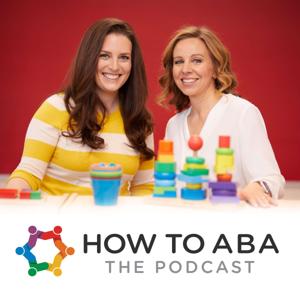
We are Shira and Shayna and we are so excited to bring you our first podcast episode of How to ABA! We are both BCBAs with over twenty years of experience, and as you can imagine, we have created…
Ranked by our users in the last 21 days
1,330 Listeners

626 Listeners

8,891 Listeners

417 Listeners

5,116 Listeners
438 Listeners

164,509 Listeners

25,782 Listeners
1,323 Listeners

15 Listeners

422 Listeners
87 Listeners

19,270 Listeners
28 Listeners

17 Listeners