
Sign up to save your podcasts
Or

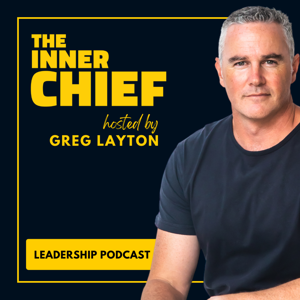


Why leaders micromanage and how you can adjust your approach to improve the working relationship so that it is a. more effective and b. less soul destroying.
Before you dive in and start trash talking your overbearing boss - it is wise to seek some understanding as to why they might be micromanaging you. Take a few minutes to think deeply and through their eyes about what might be causing them to dip down.
Full summary can be found at www.chiefmaker.com.au/podcast
Our CEO this week is Angela Buglass, who has recently returned from 15 years in the UK where she held the role of VP Marketing for LF Beauty, part of the global sourcing giant Li & Fung.
Her experience includes roles with leading players Procter & Gamble, L'Oreal and Estée Lauder (working on the AVEDA brand).
Angela is now the CEO of Trilogy International Limited which you may know through beauty products like Trilogy, Ecoya, Goodness and CS&Co. Her work has taken her from NZ all around the world and back again and her stories are inspirational, insightful and so wonderfully down to earth.
Full summary can be found at www.chiefmaker.com.au/podcast
Kung Fu the most difficult situations with SARS (Smart Automated Response Systems)
In this episode we will be talking a technique that emerged through my work in elite sport and an in particular in martial arts and how you can translate this to the business world.
Full summary can be found at www.chiefmaker.com.au/podcast
In this episode you'll hear from Greg Steele, CEO Arcadis Asia Pacific.
He is also the Chairman of Engineering Aid Australia and on the board of Roads Australia. He was the Managing Director of Hyder Consulting before the Arcadis takeover.
I came across this special man at a mindfulness conference where his authenticity and honesty about the challenge of keeping balance in the corporate world blew the audience away. I couldn't wait to get him on the show.
We cover the importance of making sense of things, making choices and making things happen. And how to drive change, using diversity as a strength and mindfulness to keep you focused.
Subscribe on iTunes here:
https://itun.es/au/87Pqkb.c
Subscribe on Android:
http://tunein.com/radio/The-Inner-Chief-p1004701/
http://www.stitcher.com/s?fid=141429
Key Points:
Greg's top quotes from this episode include:
1) Back yourself but be prepared and don't be afraid to speak your piece. I think one of my early lessons in my career that was very formative.
2) I liked the notion of strategy. I think I was born with a competitive streak. I liked the notion of out-competing, outperforming and other companies. The whole notion of financial performance, HR, really having a broader view of an organisation. Strategy is the thing I guess I fell in love with. Trying to find a way to outperform and win. That's what I liked more than anything and I guess that's where my ambition started to grow.
3) Some of the biggest lessons learned for me was listening to bosses in team meetings and then walking out saying I will never do that. This guy or girl has just totally demotivated the whole staff with that speech. Yeah, funny enough a lot of my lessons learned and maturity came through what not to do.
4) I wasn't a strong candidate for my first attempt at a CEO role. I reflected on that, and I said, things are not going to change, people have got me pigeon-holed as a business development, strategy, marketing type person. I had to change. For the second time in my career, I changed jobs, went back to Hyder. A company I thought was a huge opportunity. Really, not a pay cut but really a backward step. A backward step because I had to do some things to change people's perception. I was never going any further in my current role unfortunately. At Hyder I took on the strategy of the clients but also all the corporate services. Legal, HR, all those things that I needed to help broaden my career. Not quite a P&L but nevertheless getting some real experience in lots of different areas. I did that and there was some changes in leadership both nationally and globally. Out of that within two years, I was the CEO.5
5) I made some mistakes, of course. Some mistakes early on and then I realised, I have to think about this, I just can't make off the cuff decisions here. There's a lot more depth I needed in a couple of areas. I was a little bit concerned about the financial aspect in the matrix but in the end having a very good CFO and I still currently do, is we really play a good team.
6) A big mistake leaders make I think is there's a propensity of people in leadership roles to try and do too many things. I think focus is key to leadership and a successful organisation. Making choices, is you just would love to do some things and you just can't.
7) Three keys to leadership
a) Making sense of things - Where is the marketing heading, what's happening here, what are our competitors up to? Okay, where do we need to go? Differentiate
b) Making choices – Choices need preparation, understanding, thinking through, having data, some factual evidence as to the decision you're making. It might originally be led from a gut feel, which most of my big decisions are. Gut feel is telling me this, now let me do some research on this. How do I convince others and give the business case for what I'm doing is.
c) Making things happen - In the end, I always have a saying, strategy is easy, implementing strategy is the hard thing. Making things happen. This is where understanding people, the Lencioni work of teamwork and having an open, collaborative organisation but still being tough on accountability.
I think it is really important that you bring people on the journey and try to seek ownership of big decisions. Once again, little saying I have, "participation leads to ownership, leads to commitment". Often in a strategy, I'll get about 70% there themself, and I'll stop short of that. I never try to perfect it.
Then I'll get others involved to genuinely help polish it up, finish it up. Even other big ideas to help shift it and to get them on-board. Then once the decision is made, you've got some ownership and therefore their commitment to make things happen. I guess that's the key element for me.
8) I think being mindful and I practise coming to work. I now shut off when I get home. That's home, I really don't like text or emails and I avoid those. I've gotten much much better at that, much better. Then in a presence sense, making sure when you're with a person that you're really present. I can look back now and see me thinking about three or four things whilst I was talking about to a person as opposed to giving that person full attention. Meditation, once again not enough but a couple of sessions a week. Half an hour, that ideally should be done daily.
9) A big mistake a lot of organisations make - I think trying to do too much. It's getting back on that focus and try to achieve too much. The one time it hit very hard, the organisations nowadays not too much fat in them. They're really running close to the wire. Once you keep adding initiatives and things like that, that might be a right thing to do but not the right time. I'm very mindful now. If I ask someone to do something, what's the ripple effect? I always think through. If I ask that person to do that, they're going to go to that person who is going to go to that person, who is going to get them to do something and suddenly, you've got half a dozen people working on something. That might be only just a win.
10) You got to be very mindful of the impact of your thinking and getting people to do stuff for you. I think most of the time wastage is trying to do too much and really getting to that "making choices", getting back to that. Having some clear choices and then driving that through. Our strategy at Arcadis has barely changed. Little tweaks around the edges as the market moved but people come up to me and go, "Strategy is the same as it has been for the last three, four years, Greg." That's great; we know where we're headed. It's really consistent, we know where we're aiming for, it's quiet, it's this sector, it's this market.
Where the guy before me apparently every management course he went to, he'd came back with a new strategy. Flavour of the month type of stuff and that can really stress an organisation out because they never know where they're headed. Just have that consistency.
11) On making culture change: I have a saying; sometimes you just got to put a head on a stake in the foyer of the office and let people walk past it and say, "He is serious about this." We let some people go who weren't serious about global excellence centres. You're not driving this, this is in our culture, you're removed from a performance perspective. This is our strategy; you're not doing it. People just see that you're serious about it.
In an intervention sense, my exec team was Ten people. I said 10% women in that, not good enough I'm leading this. We're not making enough in roads. Whilst we've moved from 22% to 28% women in the organisation over three-year period, and we're doing lots of fabulous things though not moving quick enough. I need to show people I'm serious plus I am a huge believer in diverse teams make better decisions.
We had our city executives of Brisbane City, Melbourne, two of those females. I added them to the regional executive team. Much to the cries of 'don't do it', the team's too big from the people in the existing exec team. I did it, so 25% of the exec team are now women. After the first meeting, you can see the change dynamics and a few people came up to me, the naysayers afterwards, and said, "I can see why you did it, I understand." Some things you just got to go against whatever everyone is advising you and just go with your gut.
12) On what Greg looks for in new executive team members: I look for potential and their learning agility. They are probably the two key things.
You see often people get promoted to positions, and they weren't necessarily the best performance on paper, but they've had a go at some things. You can see there's that curiosity, there's that drive to try some things. I want people to challenge me. I want them to come with ideas and say I want to try this and do that. I far prefer a direct report who will do that as opposed to do what they're told.
13) On learning: Yeah, I think you just got to test and try some things. You got to fix an issue or a problem. I remember the chairman of Hyder, Sir Allan Thomas was in his 70s, would come and spend a week here in Australia with me. He was just legendary with clients. He'd point to me a few times, he says, "You've got an issue here, and you're walking around and admiring it." He says, "You don't walk around issues and admire them. You go up and grab it by the neck, and you grapple with it, and you deal with it." I often reflect very warmly on my time with Sir Allan, and as soon as I do see an issue or an opportunity, I think I'm a lot quicker to get in there and try some things.
I think in today's time it's difficult to let people learn by mistakes, but it's still the best way of learning.
14) Final message of wisdom and hope: I think moving forward with such a dynamic pace of change nowadays in technology. I think some of the fundamentals still need to be there in a leadership sense. Teamwork, bringing people along for the journey. To be very agile, you always think that agility. You got to be more agile than we have in the past because the disruption is occurring. Really building agile organisations so limited bureaucracy, empowering people is very important in this regard. There can't be an empowerment without accountability. Driving empowerment but ensuring that accountability is there. You got to build that culture that can move quickly. Then some of the things into the future, I think sustainability is going to be core as we keep moving into the problems we're having in the world.
Recommended Books & Articles
Patrick Lencioni – 5 Dysfunctions of a Team
The Discipline of Market Leaders, Michael Treacy and Fred Wiersema
https://www.amazon.com/Discipline-Market-Leaders-Customers-Dominate/dp/0201407191/ref=sr_1_1?ie=UTF8&qid=1512688374&sr=8-1&keywords=discipline+of+market+leaders
The Kaleidoscope:
https://hbr.org/2004/02/success-that-lasts
In this episode we will be talking about another pattern that has emerged through many of the CEOs on the show and that is "Taking the Path Less Travelled".
Have you ever found yourself boxed in to a role or industry?
Ever felt stuck in your growth or feel like your network and knowledge set is limited to your profession and industry?
Ever had the nagging gut feeling that you need to do something drastic to change things up but you find any number of reasons why you shouldn't?
Feel like the dream of rising to the top of just having a more meaningful career is slipping away?
One pattern that has come up time and again is one where they have come to a sort of cross-roads where they feel they are potentially going to be stalled.
WHAT IS TAKING THE PATH LESS TRAVELLED?
It can mean shifting industries, roles, organisations or something that expands your horizons.
The key here is to aim to build wide ranging experience and knowledge that you can use to become better, smarter and more connected.
Normally these kinds of shifts only happen a few times in your life. Make no mistake though, they are life and career defining and therefore should not be taken lightly.
This is making a move that is often against most other people's advice but you know in your heart, in your gut that it is the right move.
WHEN SHOUD YOU TAKE IT?
There are a number of situations when taking the path less travelled could be a good move:
THE BENEFITS?
HOW DO YOU DO IT?
For all those that have taken the path less travelled successfully there are a thousand who took it and failed. They jumped too fast without being considered or didn't listen to their intuition.
From the publisher's feed

14 Listeners

565 Listeners

87 Listeners

13 Listeners

309 Listeners

72 Listeners
126 Listeners

70 Listeners
126 Listeners

395 Listeners

50 Listeners

326 Listeners

23 Listeners
12 Listeners
17 Listeners