
Sign up to save your podcasts
Or

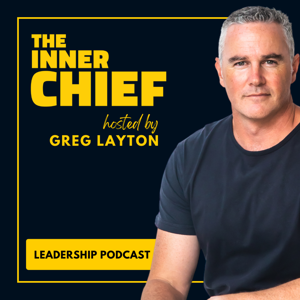


In this episode we are going to cover How to get and keep a CEO mentor.
Every CEO I've met has had a mentor of some sort in their career. Interestingly, in most cases, these were through a reporting structure and weren't formal mentoring relationships.
How to convince a CEO to mentor youCEOs are insanely busy people in very high demand. And yet, every one of them I have met finds time to mentor several of the next generation. The fact is they want to help and give back, but they don't want to waste their time.
It is unlikely that you can offer them much from spending time with you except for giving back. So that is the lever to pull. Here are a few steps that have worked time and again when I'm connecting with big chiefs.
In this episode I cover one my personal mottos "Ownership Precedes Victory" and how to use it to really take control of your career and become a great Chief
Life in the chaos of the modern business world can be crushingly difficult. The rapid pace of change in technology, as well as new customer and employee expectations is now amplified by a hyper-competitive global landscape. Executive teams now have to navigate their companies through transformational change just to survive.
For those reporting to the executive team, and leading the operational charge towards big targets and new cultures, it can be incredibly complex and difficult to stay in front of the game. They work hard all day, every day, on an endless list of tasks at work and home. The politics, red tape and antiquated systems suck their energy and many begin to wonder if there is more to life than this.
It feels like the world is happening to them, rather than they're happening to the world.
After spending the last decade with some of the best in business and sport, it is now crystal clear that their intelligence and relationships, while undeniably important, are only a part of their success. They became great Chiefs not because they are lucky with intelligence or networks, but because they have taken to heart a powerful philosophy: ownership precedes victory. They take personal accountability for the outcome of every challenge they face, relationship they enter, and business they lead. They demand ownership of it and they will not share the blame with others
It is this hunger to accept the mantle of responsibility that separates the good from the great.
But in practice ownership can be brutally difficult because it is between you and you. And the best are their own hardest markers.
As one CEO said to me recently, "You can't lie to the person looking back at you in the mirror." This is what ownership is all about. Can you be truly honest with yourself?
Using this little philosophy can be like an internal call to arms when challenges arise. Instead of shrinking in the face of a challenge or a difficult person, ownership is about rising up to your full height and using every resource, connection and strategy at your disposal to get a new outcome.
In a work context take stock for a minute and ask yourself whether you have taken true ownership of the outcomes in the following:
Your relationship with my boss (hint – your boss is your customer, how would they rate you as a customer?) Key stakeholders and peer relationships Low performers in your team Your company targets and results Your personal development and the development of your team? Sometimes we just need a little reminder that the qualities and habits that make one great are not natural. They are learned and earned and 100% in our own control. It isn't a quick fix – it takes lots of soul searching and all of your personal power. But when you rise above the challenge by taking the harder road and knock it out the park, your victory is so much sweeter.
Remember – OWNERSHIP PRECEDES VICTORY.
Stay epic
Greg
In this episode we hear from Geoff Lloyd, CEO and MD of Perpetual Limited.
SUPPORT GEOFF IN THE CEO COOK OFF FOR OZ HARVEST HERE
ABOUT GEOFF
Geoff joined Perpetual in August 2010 as Group Executive of Perpetual Private and led the development and implementation of the growth strategy for this business. He took on the additional responsibility of Head of Retail Distribution in September 2011 and was appointed Managing Director and CEO in February 2012.
Geoff was previously General Manager of Advice and Private Banking at BT Financial Group following the Westpac Group merger with St.George Bank. Before the merger, he led St.George's wealth management portfolio. He held many senior positions at BT Financial Group, including Chief Legal Counsel and Head of the Customer and Business Services Division.
Geoff is the Chairman of the Financial Services Council, an Advisory board member of The Big Issue and the Patron of the Financial Industry Community Aid Program. He is a Patron of Emerge Foundation and is also Chairman of the University of Technology Sydney Law Advisory board.
Key Questions and Answers from Geoff (curated for clarification and brevity):
What did you learn from the police force?
In the police force, I got to learn a lot about people and what I still take with me is that you don't judge too quickly. Take the time to step back and see what else might be going on, what's driving an outcome, because what you see is normally just the surface of a thing. When it involves people in complex environments, there's always emotion. So that's something I've tried to take with me where I don't judge too quickly, stand back, ask questions and observe.
What did you learn from your first move interstate to Sydney with ASIC?
It was the first time I learned about stretching myself out of what you might call a comfort zone, and how it can lead to just so many unforeseen, unplanned, unexpected outcomes. And so for me, that was probably the first time I've learned that as you actually stretch yourself and take real risk, it is not just a little bit that comes from that. It is quite amazing and you really don't know what you can achieve until you've tried.
What drives you internally? You're this,very aspirational man, you want to grow again and take your game to another level. What drives that?
I've learned for a long time that there's always evidence of how you can keep getting better and you just don't know what you can achieve. And so having that mindset, of being curious…if you aren't finding evidence and keep getting better, then you're going to plateau. And so for me it's about that looking forward, being curious. If I don't have a 110 percent passion and energy for something, it becomes 50 percent and so I need to be operating at that level to truly find rewarding outcomes, whether it's philanthropic, social, business or family.
Do you have in moments when you doubt your abilities? What do you in do in those moments to keep going?
Yeah, I do. You know, if you don't, if you can't look in the mirror and get a bit paranoid, then you're probably not able to really find evidence of how to keep getting better. I've tried to find different times in my career where I've hit inflection points and probably the most successful times the more paranoid I get.
You've got to have enough confidence to know you're going to be able to follow on to what the next challenge is… I get energy from others. So, getting access to and making sure I've got the right network, that's really important. But equally I've always had this philosophy that you've got to hire the best people you can listen to them, trust them, invest in them and then make sure you're having some fun along the way, you know, because it's, it's a very serious game that we play.
If you can get that sort of talent around you then your job as a leader is really about being their guide and helping guide them rather than do or carry out the activity. Great leaders are able to step back and be able to motivate people through how they give them that guidance and help set direction and boundaries.
Why did you switch from General Counsel into other more broader roles and how did that lead to CEO level roles?
I actually started to think differently about my career and stretch myself beyond being tall and skinny in a career or a profession to being broad. Think about it as the goal is to grow skills and experience over the next three to five years rather than, I want this job or that job. I think if you just go off the job titles, you might never know how good you can be and how different the work that you can do will be
Did anyone give you any feedback to you personally that, that really rang true for you? That was important for the young Geoff Lloyd to hear?
BT was a very driven meritocracy, with enormous amount of opportunity. So running too fast can happen and it happened for me. And so learning about not stepping on others around you, but picking others up around you is what you're going to be judged for.
And, that it takes time. Actually there's no shortcuts to hard work. I've tried lots of them. it's just about hard work. It's actually about focus and it's about making sure that you're true to yourself. Don't try to be somebody else. I've worked for some great leaders and I've picked up their characteristics and often said, 'oh, well, if I can be like that'. And you can't be, you can pick up those characteristics and learn from them. But then you have got to be you again. Today we would talk about authentic leadership. You just have to be, you.
How was the final step to CEO different?
The step was quite different because as much as I've worked in large organizations, ran much bigger teams in the past than at perpetual, when you become the CEO, there's nobody else that's coming. It's words that we've used around the executive team that 'nobody's coming'. It's us. You know, you run two and a half thousand people in a bank, there's always somebody else who can ask or the decision can go to. So the big gap is…Nobody's coming.
Does 'Ownership Precedes Victory' resonate with you?
I think you've got to have courage or otherwise you're not going to keep challenging yourself. If you don't you're not going to keep challenging your team, you're not going to take the right amount of risk and you won't see the other sides of the benefit that can come with that risk. So make sure you've got the courage is the key, that conviction of something you've started to create change. Maybe that's the words that gravitate more with me.
How do you stay focused?
I suspect that at perpetual I will be remembered for at least two words. Hopefully it's clarity and focus. I think complexity kills businesses. I'm a big believer in that a quality businesses can't do lots of things. What are the few things that you can do incredibly well and be the leader at.
And then once you become a leader at anything, it's very hard to stay there. Everyone's coming after you. For us at perpetual and for me it's about clarity on a few things. Do them really well and then move to the next few things. Try not to be distracted by a long list, we try to prioritise on what we can do and then draw a line under number three. And you know, often the team will hear me say, just tell me the top two. Actually, I'm not interested in the top three.
We also had to try to focus on what we're not going to do and write that down because a lot of businesses are good at telling you what they do, but if you can articulate what you're not going to do, it brings more clarity to that focus around what you're going to do
Where do leaders in the middle and senior management waste their time and effort?
I think often getting too much into the detail because if you're a leader, you've got to have sort of three hats. You've got to do work, improve your work and lead your team. And you've got to have, at least a third of each of those….So you've got to dedicate time and focus to leadership, not just doing. And I think it's easy to go back to the doing. You know, I had somebody put it in my mind a long time ago, a phrase called 'being a guide, not a guru'.
I think as you become more of a leader and your sole job, which is mine, is leading, not doing. So the job is to guide people not to be the technical guru. It took me a long time to learn that. As a lawyer, you want to be the smartest person in the room when it comes to the topic on 'x of the law'. And that's not your job as even the general counsel, because my job was to hire the smartest people in the room, trust them, invest them, listen to them, guide them because it was their job to be that smart. It's not mine. And so that stuck with me for a long time. So maybe they should be more of a guide than a guru because your job is to hire the gurus as a leader.
How important is it for young people coming through and in middle management and senior executives to have a network?
I think it's vital. You know, I also chair the Financial Services Council now, a leading industry body and one of the things we've reintroduced is a group called 'the circuit'. I call it the 30 somethings and it's actually about bringing interesting topics to a forum of 40 to 100 of all of our members staff.
What was the most important thing you learned in Harvard?
How bad Australians are at negotiation. I think that was a really big part of that program and you know, just seeing our cultural norms. We are ranked in the bottom five countries in the world in negotiation!
You've been CEO here for six years now, and the share price has gone from $19 to just shy of 50 which is a remarkable period of growth for the company. How important is it for individuals to build a track record, perhaps not as spectacular as that, but to keep thinking about change and transformation?
I've worked with a gentlemen named Andy Meikle who has left a couple of thoughts with me over the years and one was, you know, high performers create a track record that you can leave on the table and they can leave the room and it speaks for itself. It is important to be able to think about not the way you would tell the story, how the story would tell itself. And that doesn't have to be about share price growth.
What is the difference between Change and Transformation?
I had this view that change is what happens to you. Transformation is what you do to yourself. So with change, you react to your competitor, you're reacting to, it puts out a new product, you react. Transformations are where you have that honest, courageous look and say we're going to go from x to y and it's going to be tough and we're going to have to have clarity, courage, and control which are three woods, we used a lot. Clarity of what we would or wouldn't do, control because the market is going to tell us what's wrong and we also needed to keep the courage to hold the course because we couldn't possibly plan for everything to that level of detail.
How would you define a GREAT Chief?
I think it's someone who is able to bring passion and energy to the way they communicate to people and the way they support and develop and grow everyone around them. It means you've able to motivate, support and nourish people in your community.
What is the final message of wisdom and hope you think is vital for the next generation of executives?
I still believe that there's no shortcuts, it's all about hard work. But remaining really very curious, have curiosity in your life and you can define what that means and make sure you've got the courage.
SUPPORT GEOFF IN THE CEO COOK OFF HERE
Recommended Books by Geoff Lloyd.
Repeatability :
https://www.amazon.com/Repeatability-Enduring-Businesses-Constant-Change-ebook/dp/B0070YQQI4/ref=sr_1_1?ie=UTF8&qid=1520487587&sr=8-1&keywords=repeatability
Founders Mentality:
https://www.amazon.com/Founders-Mentality-Overcome-Predictable-Crises-ebook/dp/B01BO6QMC8/ref=pd_sim_351_1?_encoding=UTF8&psc=1&refRID=WSXZ3BEMWMND0FWN22E7
In this episode I want to talk about a deep mindset shift that can lead to meteoric improvement in performance. And that is different between viewing yourself as a Professional or an Amateur.
In general terms, an Amateur is someone who turns up and has a crack. They go through spurts of increased interest and their performance spikes and troughs. They don't take the pursuit as as an artform they are looking to master. And that is where the big line is drawn. Mastery.
Being a professional executive means learning to love the fact that this is YOUR artform and you want to build yourself over a lifetime into the sharpest professional you possibly can be. They want to be the best as leading an organisation or whatever their 'profession' is.
This isn't something they start doing once their in a big role. No, they do this from the outset. Before they earn the big bucks and have the big job because in essence that is why they end up getting the big job over others.
Full summary can be found at www.chiefmaker.com.au/podcast
From the publisher's feed

14 Listeners

565 Listeners

87 Listeners

13 Listeners

309 Listeners

72 Listeners

126 Listeners

70 Listeners
126 Listeners

395 Listeners

50 Listeners

326 Listeners

23 Listeners
12 Listeners
17 Listeners