
Sign up to save your podcasts
Or

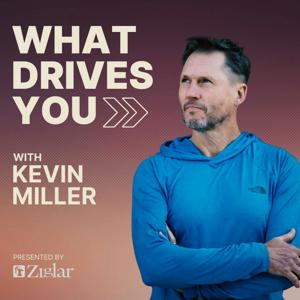
By Kevin Miller | YAP Media


4.5
13321,332 ratings


The podcast currently has 1,751 episodes available.
The most played episodes among Podcast App listeners.
#953: We’re back with Jonathan Fields, host of the top podcast, the Good Life Project. He has a new work focused profile you can take at sparketype.com, just this morning I asked a couple friends to take it, as I wanted them to know if for themselves, and I was curious where they’d land. I really appreciate the profile, and Jonathan uncovers more about it in his new book, Sparked, which I also recommend. In this episode I walk with Jonathan through his personal habits for success, and as you heard in the intro, Jonathan is a deep and intimate thinker, which is what people love about him. I think you’ll be touched and inspired by what he shares. Learn more about your ad choices. Visit megaphone.fm/adchoices

My guest today is an addiction expert, but I interest myself more in the concept of compulsions. I may have something I habitually do that is not necessarily harming anyone else, and is arguably not harming me in a direct sense, which is generally how we define addictions. But a compulsion may be something that I keep doing that may keep me from other, healthier activities. It may own me more than I own it. And more importantly, what we find is that addiction and compulsions are generally not being done for pleasure, but to mask or numb emotions we haven’t or don’t want to deal with. Adi Jaffe is a psychologist and author. His research and clinical frameworks challenge the one-size-fits-all, abstinence-only model of addiction recovery and replaces it with an individualized, evidence-based approach to lasting behavior change. Adi’s authority is earned on both sides of the problem. Before his doctorate and the published research, Adi spent years inside his own methamphetamine addiction — an arc that ran through dealing, arrest, and jail before it ran through UCLA. That combination of lived experience and formal science is the foundation from which our discussion comes from. He has a new book, Unhooked: Free Yourself from Addiction Forever. I invite you to listen to this episode and consider your compulsions, if not addictions, and what you may be trying to artificially address, and why. You can also find Adi on Instagram @dradijaffe Sign up for your $1/month trial period at shopify.com/kevin Go to shipstation.com and use code KEVIN to start your free trial. Learn more about your ad choices. Visit megaphone.fm/adchoices
I read an article yesterday about the fourth season of the tv series, Ted Lasso, coming out. The series was celebrated for bringing the concept of positivity to the forefront. But in this new season they feel positivity isn’t what the culture needs. They depict the populace this way: "People are fine. Not hopeful, not despairing — just fine." So the new season is focused on hope. And I agree. We seem to be losing hope in anything more than just…existing. So when a celebrated author comes out with a book about his research on what “thriving” looks like, I was interested. Daniel Coyle is the New York Times bestselling author known for The Culture Code, The Talent Code, The Secret Race, The Little Book of Talent, and Hardball: A Season in the Projects, which was made into a movie starring Keanu Reeves. But after writing about talent and performance, Dan cites he began wondering about the deeper parts of life. The result is his new book, Flourish: The Art of Building Meaning, Joy, and Fulfillment. And he boils down to…community. Interdependence, which I don’t think many of us understand. I’m not going to try and explain it here, but invite you to listen to the following 55 minutes of discussing a different kind of community experience than I bet you’ve ever fully conceptualized. I feel I got schooled, in a great way, by the message in Dan’s book, and the following conversation. I have myself looking at relationships and community in a new way, and I’m inspiring myself. I think you will too. Sign up for your $1/month trial period at shopify.com/kevin Go to shipstation.com and use code KEVIN to start your free trial. Learn more about your ad choices. Visit megaphone.fm/adchoices
I’m a fan of mind games, because I feel most all of what we experience is just that, a mind game. But I’ve always helped myself by considering different angles to stories. And today I bring you one I’ve benefited myself with. You’ve probably heard of the concept of “10X,” as in 10 Xing your goal. But I want to be clear, today I look at this as a practice or exercise and am not presenting it as what you or I should do. This then is a conversation I’m revisiting with renowned organizational psychologist and author, Dr Benjamin Hardy. I perceive Ben as having great insight into human transformation and a knack for creating clear, contrasting, and innovative messages around concepts we’ve long grappled with. Along with celebrated business coach, Dan Sullivan they wrote a book titled, 10x is easier than 2x: How World-Class Entrepreneurs Achieve More By Doing Less. I’ve altered some of my views on this concept since this talk, but I feel this is a wonderful exercise for anyone to do in order to divest themselves of a lot of clutter we let get in our way and get to what is important for a destination or achievement we desire. You could almost compare it to asking what you would take from your home if you only had 30 minutes till you must evacuate for a flood or fire. This concept can get us super focused and realize what is truly necessary. Sign up for your $1/month trial period at shopify.com/kevin Go to shipstation.com and use code KEVIN to start your free trial. Learn more about your ad choices. Visit megaphone.fm/adchoices
Every day we encounter the stimuli of our lives. Events and people. And we have feelings about most all of it. Some good, some bad, some fairly neutral, but we are processing everything through how we make meaning of things. Some of us have negative emotions about certain things that don’t serve us. After 15 years as an elite cyclist I came to equate negative emotions to rain, as I associated rain with riding in it or riding indoors to stay out of it. I held this negative emotions for many years after I retired, for no real reason. From a habit of speeding and rolling stop signs I grew in myself, negative emotions toward cops who frequently pulled me over. Now, even when I’m obeying the traffic laws, I experience a negative emotion when I see a cop. These negative emotions, I created. And now I’ve retained even after the circumstances have changed. Analogies to question the emotions we hold from past experiences that may not be serving us today. My guest in this episode Dr. Julia DiGangi. Julia is a neuropsychologist who completed her residency at Harvard Medical School, Boston University School of Medicine, and the US Department of Veterans Affairs, and is the author of a book called Energy Rising: The Neuroscience of Leading with Emotional Power. Dr DiGangi has nearly two decades of experience studying the connection between our brains and our behavior and has worked with leaders around the world including the White House Press Office and the US Special Forces. She shows people, at work and at home, how to harness the power of the brain to lead more satisfying and emotionally intelligent lives. You can find her on Instagram with a following of 250k @drjuliadigangi Sign up for your $1/month trial period at shopify.com/kevin Go to shipstation.com and use code KEVIN to start your free trial. Learn more about your ad choices. Visit megaphone.fm/adchoices
The podcast currently has 1,751 episodes available.
2,274 Listeners
10,778 Listeners
4,373 Listeners
3,584 Listeners
1,342 Listeners
21,093 Listeners
1,928 Listeners
6,329 Listeners
13,972 Listeners

2,584 Listeners
1,433 Listeners
1,207 Listeners
2,449 Listeners
1,433 Listeners
8,507 Listeners