
Sign up to save your podcasts
Or

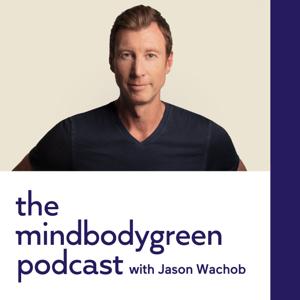
By mindbodygreen


4.5
19421,942 ratings


The podcast currently has 669 episodes available.
The most played episodes among Podcast App listeners.
“As your time commitment goes down, the importance of intensity goes up,” says Kristi Storoshuk. Storoschuk is a PhD candidate in Muscle Physiology at Queen’s University in Kingston, Ontario. Her research focuses on the relationship between skeletal muscle metabolism and whole-body metabolism, with an emphasis on how nutrient–exercise timing influences physiological adaptations to exercise. Storoschuk has contributed to peer-reviewed publications and is passionate about translating complex scientific findings into practical, evidence-based recommendations. Outside of her academic work, Kristi is the founder of a women’s health coaching program focused on improving metabolic health through sustainable nutrition and exercise, particularly in the context of preconception health. 00:00 - What is Zone 2 training? 08:14 - The limitations of Zone 2 training 11:18 - Prioritizing intensity when time is limited 15:56 - All about interval training 19:16 - The truth about building your aerobic base 21:02 - We shouldn’t train cardio like elite athletes 24:48 - Fat burning & Zone 2 26:10 - Talking weekly cardio protocol 30:03 - Storoschuk’s habits 33:03 - Unpacking exercise culture & trends 37:22 - Recovery, wearables, & intuition 43:10 - HIIT above all else Referenced in the episode: Read Storoschuk’s research about Zone 2: https://link.springer.com/article/10.1007/s40279-025-02261-y For more about Storoschuk, visit her website: https://krististoroschuk.com/ We hope you enjoy this episode, and feel free to watch the full video on YouTube! Whether it's an article or podcast, we want to know what we can do to help here at mindbodygreen. Let us know at: [email protected]. Learn more about your ad choices. Visit megaphone.fm/adchoices

“We can choose our brain’s destiny,” says David Perlmutter, MD. Perlmutter is a Board-Certified Neurologist and six-time New York Times bestselling author whose work focuses on the intersection of neurology, nutrition, and brain health. He is on the Board of Directors of the American College of Nutrition and the Editorial Board of the Journal of Alzheimer’s Disease. His books, including the #1 bestseller Grain Brain, has been published in 32 languages and sold over a million copies. Perlmutter lectures globally at leading institutions and has been featured on major media outlets including 20/20, CNN, The Today Show, and Oprah. His new book, Brain Defenders, focuses on the pivotal role of microglia, the brain’s immune cells, in protecting, repairing, and reprogramming the brain for lifelong resilience, and is now available for pre-order. 00:00 - Treating the symptoms, not the cause 02:37 - Microglial cells & their evil twin state 05:44 - How metabolism affects the brain 08:00 - Gut bacteria, inflammation, & brain degeneration 11:38 - Why lifestyle beats the APOE4 gene 16:25 - Perlmutter’s daily routine 23:55 - Loneliness & oxytocin 26:21 - The effects of long COVID on the brain 32:18 - Glyphosate & other environmental factors 39:20 - Reprogramming microglia & mitochondrial transplants 41:35 - Own your brain's destiny Referenced in the episode: For more about Perlmutter, visit his website: https://drperlmutter.com/ For more about Perlmutter's upcoming book, visit: https://braindefenders.com/ Alzheimers & UPFs study: https://doi.org/10.1016/j.tjpad.2024.100042 POINTER study - https://jamanetwork.com/journals/jama/fullarticle/2837046 20-week Alzheimer’s study: https://link.springer.com/article/10.1186/s13195-024-01482-z Golf course & Parkinson’s study: https://jamanetwork.com/journals/jamanetworkopen/fullarticle/2833716 We hope you enjoy this episode, and feel free to watch the full video on YouTube! Whether it's an article or podcast, we want to know what we can do to help here at mindbodygreen. Let us know at: [email protected]. Learn more about your ad choices. Visit megaphone.fm/adchoices
"If you don't get those foundational behaviors down, there ain't nothing a peptide's gonna do for you,” says Rachele Pojednic, Ph.D. Pojednic is a professor of Sports Nutrition and Exercise Physiology at Stanford University and is the Chief Science Officer at Restore. Her work examines nutrition, supplementation and physical activity interventions on muscle physiology, performance and recovery, as well as muscle related chronic disease, with a particular focus on women. Pojednic holds a Certified Strength and Conditioning Specialist (CSCS) certification from National Strength and Conditioning Association (NSCA) and is board certified Health Coach from the National Board of Health and Wellness Coaches (NBHWC). She has a particular passion for science communication and has been a consultant and writer for many prominent news outlets, including NPR, Time, The Washington Post, and Popular Science. Show notes: 00:00 - The difference between science & wellness 06:30 - The big vs. little levers of health 08:40 - What we do & don’t know about peptides 11:45 - A study on supplement stacking gone wrong 13:55 - Next-gen peptides (BPC-157 & more) 18:20 - All about NAD, NR, & NMN 29:57 - Creatine for muscle & brain health 33:48 - Looking at leucine & amino acid profile in protein 36:48 - Why fasting advice for women often backfires 40:24 - Stop chasing perfection 43:45 - How to use wearables & lab testing 50:13 - Bridging science & wellness Referenced in the episode: For more about Pojednic, visit her website: https://www.rachelepojednic.com/ mindbodygreen’s creatine brain supplement: https://shop.mindbodygreen.com/products/creatine-brain mindbodygreen’s whey protein: https://shop.mindbodygreen.com/products/clear-whey-protein We hope you enjoy this episode, and feel free to watch the full video on YouTube! Whether it's an article or podcast, we want to know what we can do to help here at mindbodygreen. Let us know at: [email protected]. Learn more about your ad choices. Visit megaphone.fm/adchoices
"I think structure is more liberating than it is stifling, and it often takes people losing it to sort of realize that,” says David Epstein. Epstein is the author of the number one New York Times bestseller Range and the New York Times bestseller The Sports Gene. He has master’s degrees in environmental science and journalism and has worked as a senior writer for Sports Illustrated and as an investigative reporter for ProPublica. He lives in Washington, DC. His newest book, Inside The Box, is out now. 00:00 - Why constraints drive creativity 06:35 - How mnemonics help you memorize 10:31 - The power of low-stakes practice 12:25 - The problem with youth sports 18:56 - The constraints-led approach in elite sports 22:25 - Good vs bad constraints 25:39 - Constraints at NASA & Pixar 31:07 - Why we always add instead of subtract 35:02 - The dizziness of freedom 41:29 - Experimentation as a practice 45:19 - The importance of self-reflection 49:02 - How to fix your fractured attention Referenced in the episode: Read The Athletic’s article about the constraints-led approach: https://www.nytimes.com/athletic/6665943/2025/09/29/sports-training-cla-coaching-wembanyana-ohtani For more about David Epstein, visit his website: https://davidepstein.com/ Buy Inside The Box here: https://www.amazon.com/dp/B0FNDSKWMY/?/ref=as_li_qf_sp_asin_il_tl?tag=mind0a3-20 Buy Range here: https://www.amazon.com/Range-Generalists-Triumph-Specialized-World/dp/0735214506/ref=as_li_qf_sp_asin_il_tl?tag=mind0a3-20 We hope you enjoy this episode, and feel free to watch the full video on YouTube! Whether it's an article or podcast, we want to know what we can do to help here at mindbodygreen. Let us know at: [email protected]. Learn more about your ad choices. Visit megaphone.fm/adchoices
"It's way better to pull yourself back from the brink of burnout before it hits than to let yourself fall all the way in,” says Elizabeth Svoboda. Svoboda is an award-winning science writer and contributor to Scientific American, Discover, The Boston Globe, The New York Times, and other publications. Elizabeth is a winner of the Evert Clark/Seth Payne Award for Young Science Writers, and her work has been anthologized in the Best American Science and Nature Writing series. She lives in San Jose, California, with her husband and young sons. Her new book, The Art of Pacing, is available now. 00:00 - Why high performers always push to 110% 05:58 - Physical signs of burnout 09:14 - Getting more comfortable with recovery 12:16 - Pacing & how to take advantage of energy rhythms 16:00 - What an Olympic runner taught her about rest 18:32 - Modulation & the importance of breathwork 28:30 - Why it’s so hard recover from burnout 31:48 - Boom-bust cycles 35:12 - Gold star culture & unsustainable achievement 40:34 - Why early sports specialization backfires 44:08 - How to pace yourself with rigid flexibility 50:32 - The next wise choice Referenced in the episode: For more about Elizabeth Svoboda, visit her website: https://elizabethsvoboda.com/ Buy The Art Of Pacing here: https://www.amazon.com/Art-Pacing-Balancing-Short-Term-Long-Term/dp/1668022419/ref=as_li_qf_sp_asin_il_tl?tag=mind0a3-20 Find the Maslach Burnout Inventory here: https://static1.squarespace.com/static/5fecb650c2646617cb1e0599/t/6320f5325f757e4ad8bc0062/1663104306195/Maslach-Burnout-Inventory.pdf For more about Joe Arpaia: https://www.centerfortransformativehealing.org/joseph Follow runner Ajeé Wilson: https://www.instagram.com/ajeelenee/?hl=en We hope you enjoy this episode, and feel free to watch the full video on YouTube! Whether it's an article or podcast, we want to know what we can do to help here at mindbodygreen. Let us know at: [email protected]. Learn more about your ad choices. Visit megaphone.fm/adchoices
The podcast currently has 669 episodes available.
7,186 Listeners

7,227 Listeners

1,085 Listeners

1,529 Listeners
2,619 Listeners
4,874 Listeners
3,456 Listeners
9,182 Listeners

8,031 Listeners
132 Listeners
617 Listeners

1,408 Listeners

29,081 Listeners
1,479 Listeners

101 Listeners

1,214 Listeners