The Modern Manager

The Modern Manager

Download on the App Store
  • Favorites

    164

    Followers

  • Typical duration

    29 min

    per episode

Based on Podcast App listening data

The Modern Manager episodes

  • 73: Tactical and Adaptive Performance with Lindsay McGregor

    A rockstar manager does more than make sure timelines are met and goals accomplished. They know how to get an individual or team to do the best work of their lives while finding satisfaction or meaning in the process. As this week’s guest learned, it’s not about being nice, but instead about how to be authentically yourself while enabling people to accomplish more than they ever thought possible.

    Lindsay McGregor is the co-author of New York Times bestselling book, Primed to Perform: How to Build the Highest Performing Cultures Through the Science of Total Motivation. She is also the CEO and co-founder of Vega Factor, a startup building technology to help organizations transform their cultures. Previously, Lindsay led projects at McKinsey & Company, working with nonprofits, universities, school systems and Fortune 500 companies. 

    Lindsay and I talk about being nice and being a leader, how to manage for both tactical performance and adaptive performance, how various motivations can help or hinder performance, and what you can do to increase TOMO - that stands for total motivation.


    Read the related blog article: Manage Adaptive Performance, Achieve Exceptional Outcomes


    Join the Modern Manager community (www.mamieks.com/join) to get a complimentary session with one of Linday’s colleagues to plan next steps based on your team survey results. Plus, one member will will a signed copy of Primed to Perform.  


    Become a member by Friday October 18, 2019 to be eligible for a free private coaching session with prior guest Lindsey Caplan of episode 70.

    If you work for a nonprofit or government agency, email me at [email protected] for 20% off any membership level.


    Subscribe to my newsletter to get episodes, articles and mini-guides delivered to your inbox. 


    KEY TAKEAWAYS:

    • Every manager must manage two types of performance: (1) Tactical performance: codifying best practices and lessons learned, keeping everyone aligned on what to do and how to do it. (2) Adaptive performance: creating conditions for and facilitating learning, problem solving, and innovation.
    • To enable adaptive performance, it helps to understand people’s motivations. Not all motivations will inspire people to achieve their best performance, especially when creativity, risk taking and growth are involved.
    • The three positive motivations are: (1) Play: find joy in doing the work itself; (2) Purpose: the work leads to a meaningful, desired outcome; (3) Potential: the work positions you for something desired in the future.
    • The three negative motivations are: (1) Emotional Pressure: do the work out of fear of disappointment or missing out, shame, or guilt; (2) Economic Pressure: the carrot and stick approach to do the work for the reward; (3) Inertia: Do the work because it’s what you’ve always done.
    • When combined, you can rate your individual or team Total Motivation (TOMO). Do this through the Vega Factor surveys (below). A team’s TOMO will predict their overall performance.
    • As a manager, you can adjust performance by changing someone’s TOMO via role design, routines and responsibilities, and professional development. You can also help connect a person’s role to the success of the team or organization by helping them feel valued for their unique contributions.


    Resources:

    • Motivation Surveys: https://www.vegafactor.com/survey


    KEEP UP WITH LINDSAY:

    website:  www.vegafactor.com

    email: [email protected]

    linkedin: https://www.linkedin.com/in/lindsaymcgregor/


    [email protected]

    30 min
  • 72: How to Create Team Values

    In his book Traction: Get A Grip On Your Business, Gino Wickman says you have to have “the right people in the right seats.” Team values help ensure you have the 'right people' by making explicit the way the group expects people to act and interact. By doing so, you are able to elevate 'how work gets done' to the same importance as 'what is accomplished.' 

    In this episode, I explain what team values are, how they differ from organizational or personal values and how to create them with your team. 

    The full episode guide includes a list of value terms to select from, an overview of the values structure and process, examples and templates. Get it when you join the Modern Manager community or purchase the full guide at www.mamieks.com/store.  

    If you work for a nonprofit or government agency, email me for 20% off any membership level.


    Get the free mini-guide at www.mamieks.com/miniguides.


    Subscribe to my newsletter to get episodes, articles and free mini-guides delivered to your inbox. 


    Read the related blog article: Align Your Team by Creating Shared Values.


    Key Takeaways:

    • Unlike organizational values, which apply to all employees and are part of the “north star” that guides the enterprise, team values focus on what matters most to this particular group.
    • When someone isn’t acting in alignment with your team’s values, you can work with them the same way you’d work with a team member to develop any competency or skill.
    • To create team values, gather input from the entire team on the values they believe are important. It’s OK for these values to be aspirational.
    • Group the values by theme and together decide which groupings are most critical. Aim for 5-7 in total.
    • A team value has three components: (1) the term, (2) the definition, (3) what it’s not.
    • Create draft values that include a suggested term, starting statement that further illuminates what this value represents, and a starting statement of what it’s not which depicts what overuse of this value might be.
    • Enhance these statements as a group with the goal of good enough to go forward. It’s OK if not everyone feels fully aligned as these are the team values, not a collection of individual values.
    • Agree to revisit the values in 6-12 months after you’ve had time to live with them. 


    Additional Resources:

    • Episode 43: Learning from Experience Interviews
    • Traction: Get a Grip on Your Business
    • Negotiate Anything podcast

    [email protected]

    17 min
  • 71: How to Respond, Not React with Ron Shuali

    Respond, don’t react. Easier said than done. When our emotions take over, our logical brain shuts down, increasing the possibility we’ll say things we don’t mean or make poor decisions. Yet we have more control over our emotional response than you might think.

    Ron Shuali holds a Master of Education and has spent over 15 years presenting in the  education marketplace. He is a best selling author, top motivational speaker and most importantly…He is funny. He presents keynotes, school assemblies and workshops all over the United States on issues related to bullying. His study of martial arts, yoga, reiki and improv rounds out a powerful hero for what is right.

    In this episode, Ron offers a fresh perspective on how we overemphasize emotions and the power we give to other people to influence our emotional state. We share approaches and tips for how to manage your own emotional response and how to deal with other people’s emotional moments. 

    Note: This episode is an experiment. Rather than playing the full interview, it’s a solo-guest mashup. Please share your thoughts on this format - whether you love it or not - and any suggestion for the future. Email me at [email protected].


    Read the related blog article:  Don’t Let Your Emotions Control You


    Join the Modern Manager community (www.mamieks.com/join) to get a free session with Ron on workplace or school bullying. Plus, get a chance to win a free coaching session with Lindsey Caplan of episode 70. Become a member by Friday October 18, 2019 to be eligible.


    If you work for a nonprofit or government agency, email me at [email protected] for 20% off any membership level.


    Subscribe to my newsletter to get episodes, articles and mini-guides delivered to your inbox. 


    KEY TAKEAWAYS:

    • Your emotions are yours. No one can make you feel anything.
    • We’ve been conditioned since childhood to over-emphasize our emotions and the way other people make us feel.
    • Words have inherent meaning, but we often ascribe additional meaning or interpretation to them. 
    • Recognize your physical signs of emotional stress. Use these to help you trigger a thoughtful response.
    • Apply Mel Robbins’s 5 second rule whenever you feel your emotions taking over. Count down from 5, then decide how to respond.
    • Ask yourself, are these emotions helping me right now? Or not?
    • If someone is having an emotional outburst directed at you, stay calm and redirect the conversation if possible.
    • Hum a tune in your head and stare at the person’s forehead to make the experience less intense.
    • If you’ve had an emotional outburst, have a ‘cleanup conversation’ later. Apologize and promise to work to not let it happen again.


    Resources:

    Tiny Leaps, Big Changes - episode 392: How to Overcome Anxiety
    The 5 Second Rule by Mel Robbins
    Episode 14: Personality and Preferences with Rob Toomey
    Episode 69: Center Yourself So You Can Lead Others with Dolores Hirschmann


    KEEP UP WITH RON

    Website: www.ronspeak.com
    Youtube: https://www.youtube.com/user/shualife
     Facebook: https://www.facebook.com/ronshualispeaks/

    [email protected]

    17 min
  • 70: Why + How to Gather with Lindsey Caplan

    Meetings are one of the essential tools that managers use to get work done. While meetings are prolific, they’re only a tool to accomplish some larger purpose. How we design, structure, and engage people in these gatherings is critical. 

    Lindsey Caplan has been gathering people for over 15 years - first to entertain, as a comedy writer in Hollywood, then to educate for companies like DreamWorks Animation and McKinsey, and now to transform as an organizational psychologist as the Head of Talent Development for successful Silicon Valley companies like Zendesk, Credit Karma, and Flexport. Lindsey helps companies drive organizational change by applying lessons in gathering from entertainment, education, and business and she is currently writing a book on “Gathering”.

    Lindsey and I talk about the unique role of the manager, how to design gatherings to accomplish some purpose, how to engage people in the gathering process which generates better thinking, deeper buy in, and more.


    Read the related blog article: Gatherings Should be Personal, Productive and Powerful


    Join the Modern Manager community (www.mamieks.com/join) to get a chance to win a free coaching session with Lindsey. Become a member by Friday October 18, 2019 to be eligible.


    If you work for a nonprofit or government agency, email me at [email protected] for 20% off any membership level.


    Subscribe to my newsletter to get episodes, articles and mini-guides delivered to your inbox. 


    KEY TAKEAWAYS:

    • A manager’s job is to move people from A to B: from under-performer to high-performer, from one level to another.
    • The unique aspect of a manager’s role is that we’re responsible for people more than products or services.
    • It’s not enough to gather people in a room and talk at them. We need to engage people if we want them to act, buy-in, share ideas, etc.
    • Gatherings can take many forms: meeting, workshop or learning session, town hall, etc.
    • There are four reasons to gather: (1) Compliance: ensure specific actions are taken, (2) Engagement: generate new thinking, buy-in, ongoing ownership, (3) Informing: ensure information is internalized, (4) Entertainment: bring about a sense of delight
    • We need to create safe spaces if we want people to engage. Managers should role model by sharing why they want to hear from each person, be explicit that they don’t have all the answers, connecting as humans by sharing auto-biographical information, and connecting the content to what matters to each participant.
    • It’s important to focus on creating the right conditions and worry less about creating good content. Let the group create the content.
    • Treat participants like adults. Invite them to engage, give them choices, and explain why you're asking these questions.


    Resources:

    ELI5: Explain Like I’m 5 podcast


    KEEP UP WITH LINDSEY

    website: www.lindseycaplan.com

    twitter: https://twitter.com/lindsey_caplan

    linkedin: www.linkedin.com/in/lindseycaplan

    [email protected]

    32 min
  • 69: Center Yourself So You Can Lead Others with Dolores Hirschmann

    We all have days when little things seem to bother us more than they should or when our emotions take over and we over-react. It’s hard to lead others when you’re feeling unsettled yourself. It’s even harder when you discover your life isn’t aligned with true purpose.

    Dolores Hirschmann is an internationally recognized strategist, Clarity Coach, TEDx Organizer, speaker, and author. She has over 20 years experience helping entrepreneurs and business owners realize their potential by guiding them to CLARITY so they can reach their next level of growth.

    Dolores and I talk about how you need to take care of yourself in order to lead others, and how to deal with your own and other’s emotions when things are feeling out of whack. We also talk about finding your life’s purpose and how that informs your leadership.


    Read the related blog article: Living and Leading from the Inside Out.


    Join the Modern Manager community (www.mamieks.com/join) to get the ebook version of Stand Out The TED Way: Be Seen & Grow Your Business for free. This book will help you understand what is behind the work you do in order to communicate your message from a place of higher vision, purpose, and passion and thus engage with your ideal client and grow your business.


    If you work for a nonprofit or government agency, email me at [email protected] for 20% off any membership level.


    Subscribe to my newsletter to get episodes, articles and mini-guides delivered to your inbox. 


    KEY TAKEAWAYS:

    • When you’re feeling chaotic on the inside, everything on the outside is amplified. That’s when one drop overflows the glass.
    • It’s critical to have healthy self-care and self-management to avoid overloading our own capacity to deal with the world around us.
    • When you find yourself overwhelmed or overreacting, start with self awareness. Notice your own behavior and feelings. From that awareness, you can then decide how to act.
    • It’s hard to recognize it on our own so it’s helpful to have a trusted ally who can help you recognize when you’re not functioning at your best. 
    • If you notice this in others, be diplomatic and careful not to aggravate the situation or them by pointing out their emotions. Instead, try distracting or redirect them by offering to take a break or go for a walk and talk.
    • Who we are is composed of layers of values, dreams, passions, habits and more. Figuring out your own essence, what matters to you, can help you design a life that fills you rather than drains you.
    • Focusing on the tiny actions we do every day can have a transformative effect because life is really a series of moments and behaviors strung together. 
    • Your life’s purpose is bigger than any job. It’s what fills you up, gives you meaning, and when you’re taking action aligned with your purpose, it feels like time stops.
    • You can’t find your flow or your purpose by changing the world around you. If you’re not settled on the inside, no amount of outside change can fix that. It starts by clarifying your purpose on the inside and then designing the outside accordingly.


    KEEP UP WITH DOLORES

    LinkedIn:  https://www.linkedin.com/in/dolores-hirschmann-28620b28/
     Facebook: https://www.facebook.com/Doloreshirschmann/
     Twitter: https://twitter.com/DglarH
    YouTube:  https://www.youtube.com/channel/UCbc8sZ8Qs-IdmgH1CbHmXWA
     Website: http://mastersinclarity.com

    [email protected]

    30 min
  • 68: Quickly Integrate a New Team Member

    It’s hard to get into a collaboration groove when a team’s composition is in flux. Establishing solid relationships is critical to generating trust and a sense of good will. Any time there is a change to the team’s membership, there are emotions at play - hopes and fears about what this new person will bring.

    In this episode, I walk through the approach I use with teams to help a new colleague–whether a team member or team leader–and the existing team quickly integrate and orient to one another.

    The full episode guide includes sample agendas, ice breaker and story-telling activities, and leadership assimilation questions to help your team integrate a new colleague. Get it when you join the Modern Manager community or purchase the full guide atwww.mamieks.com/store.  


    Get the free mini-guide at www.mamieks.com/miniguides.


    Subscribe to my newsletter to get episodes, articles and free mini-guides delivered to your inbox. 


    Read the related blog article: Building Cohesion When Team Composition Changes


    Key Takeaways:

    • Anytime a new person joins a team, the team experiences a moment of change which comes with fears and hopes.
    • According to Bruce Tuckman, teams go through stages of evolution: (1) Forming, (2) Storming, (3) Norming, (4) Performing, (5) Mourning -- it’s cyclical.
    • To integrate a new team leader, hold a Leadership Assimilation meeting in which the the leader and the team answer questions and discuss the responses with the goal of getting clarity and alignment on a variety of topics of importance. This sets a solid foundation for additional conversations.
    • The Leadership Assimilation questions focus on what’s important to the team and what’s important to the leader such as: What makes this team unique or special? What’s working well that this team doesn’t want to change? What are the new leader’s hot buttons?
    • When a new team member joins, the goal is to establish bonds amongst the team members and help the new person understand the team’s culture. In this meeting, the team can engage in a fun and educational ice breaker such as Two Truths and a Lie, and tell it’s team story: Who are we as a team? What are we proud of? What’s important to us?
    • By intentionally addressing these types of questions, a team can move more quickly from feelings of uncertainty to a position of confidence.


    Additional Resources:

    • The Productivityist Podcast - episode 167: Meetings and Momentum with Mamie Kanfer Stewart
    • The Productivityist Podcast - episode 227: Why You Need Atomic Habits with James Clear
    •  Forming-Storming-Norming-Performing-Mourning model

    [email protected]

    17 min
  • 67: Managing with Moral Leadership with Emily Miner

    Are you living your values every day? It’s not always easy to do what’s right, to recognize your own biases and mistakes, to put people before profits. But these are things that moral leaders do. And the more you do them, the easier they become for yourself and for others who follow you. That’s moral leadership.

    Emily Miner leads LRN’s Ethics & Compliance Advisory practice. She helps organizations understand their company culture to inspire ethical behavior using an approach that is co-creative, bottom-up, and data-driven. In addition to leading engagements with organizations in the healthcare, technology, and manufacturing industries, Emily contributes to major research studies and thought leadership.

    Emily and I talk about moral leadership, what it is, why it’s so important right now, and what the characteristics of moral leaders are and how they show up in managers. 


    Read the related blog article:  Use your Moral Compass to be a Better Leader


    Join the Modern Manager community (www.mamieks.com/join) to get LRN’s The State of Moral Leadership in Business 2019 Report. Note this is available for free to the public because LRN believes in access to knowledge.  If you’re a member of the Modern Manager community, it’s available for download on the guest bonus page.


    Subscribe to my newsletter to get episodes, articles and mini-guides delivered to your inbox. 


    KEY TAKEAWAYS:

    • In every group setting, we have formal leaders with a specific title or expertise, and those with moral authority who are animated by values and inspire others.
    • Formal authority is important but no longer adequate. The world is changing so that profits and shareholders cannot be the primary criteria for business decisions. Globally, employees and consumers are beginning to demand business leaders make choices aligned with their values, not only finances.
    • Moral leadership is needed at all levels of an organization. It starts with role modeling. When employees see their managers demonstrate characteristics of moral leadership, they are more likely to demonstrate those characteristics too.
    • For managers, moral leadership means thinking “what’s the right thing to do here,” putting my organization’s purpose above my own individual interests, thinking beyond my team and connecting dots across the organization. 
    • There are seven main capacities of moral leadership. The two with the most outsized impact are (1) the ability to see people as people, not as a resource to get the job done, (2) the ability to hold really high ethical standards and pursue what is right, not what is needed right now.
    • The remaining capacities are: (1) Starting with a pause and reflecting, (2) fostering freedom to do the work in new/creative ways, (3) demonstrating humility, (4) acting with courage, (5) seeking the truth.
    • Try exercising your moral muscles by asking yourself the tough questions of what’s right and wrong, what’s fair, where are my blind spots and biases, am I living my values?


    KEEP UP WITH EMILY

    Website: https://lrn.com/

    LinkedIn: https://www.linkedin.com/in/emily-miner-6951b414/


    RESOURCES

    LRN report: The State of Moral Leadership in Business 2019

    29 min
  • 66: Putting People First with Shannon Adkins

    People and businesses are complex. In order for one to thrive, so must the other. Easier said than done.

    This is Shannon Adkins world. She lives it and helps others figure out ways to run a business that works for its employees and wins in the market.

    Shannon is a thought leader and CEO at Future State, a woman-owned, employee-owned consulting company with a triple bottom line where people get to be themselves. After years of working for startups, tech companies, and in corporate America, getting her MBA, and starting a family, Shannon decided she wanted to work somewhere where she could be fully expressed as a mom, a volunteer, and a badass business woman. So she went back to Future State, where they bring value to their clients by understanding the journey they are on throughout their transformation.

    Shannon and I talk about how she’s built Future State to embrace people’s full lives and selves, how you can apply some of those ideas to your team, what feminine leadership is, and what happens when you create a personal mission statement to guide your life.


    Read the related blog article: An Empowered Work Environment Inspires Energy, Creativity and Retention


    Join the Modern Manager community (www.mamieks.com/join) to get Future State’s 21st Century Leadership eBook which includes a set of common attributes that when combined make people especially adept at leading teams through this time of change. The eBook provides a self-assessment tool and recommendations to further evolve your skills, and ready your organization for inevitable change. AND I’ve also included the template I use with teams to create the professional profile to help you learn about your team members strengths, desires, and interests.


    Subscribe to my newsletter to get episodes, articles and mini-guides delivered to your inbox.


    KEY TAKEAWAYS:

    • Just because someone hasn’t done something before, doesn’t mean they’re not interested in or capable of doing it. It’s a manager’s job to understand how their people want to grow and find opportunities to stretch them.
    • Business is in a constant state of change. In order to compete effectively in the marketplace and for talent, organizations must put people at the center. There is an inextricable link between employee flourishing and business success.
    • Employees want meaning - to see how the business is making a contribution to the world beyond stakeholder value.
    • Employees want to be their whole selves - to have the option to leave work early to attend a child’s performance, to share their unique perspective.
    • Viewing your employees as whole people starts during the hiring process and continue throughout their time with you. Share what you learn about the person with others in your organization to help the new team member integrate quickly.
    • Use what you learn about your team member’s aspirations and interests to give them new assignments and growth opportunities. 
    • Feminine leadership styles are becoming more accepted in the workplace - putting humans at the center, emphasizing empathy. We see it in the shift to encouraging listening rather than telling, flat structures rather than hierarchy, experimentation rather than perfection.
    • As a manager or leader, you need your own life’s mission to help guide you personally. When you know who you are, what matters to you, and how you want to show up every day, you are better equipped to lead others. 


    KEEP UP WITH SHANNON

    Website: http://www.futurestate.com/

    LinkedIn: https://www.linkedin.com/in/shannonadkins/

    FaceBook: https://www.facebook.com/futurestateinc/


    RESOURCES

    Landmark Education

    Read to Lead Podcast - Episode 184: Alan Alda on the Art and Science of Relating and Communicating 

    35 min
  • 65: The 32-Hour Work Week with Natalie Nagele

    Working 60, 70, 80+ hours in America has become the norm for too many teams. Yet it seems impossible to get everything done in only 40 hours. 

    Not for the employees of Wildbit. This week’s guest shifted her organization to a 32-hour, 4-day work week. Over a year into it, they’re seeing more positive results than they could have imagined.

    Natalie Nagele is the co-founder and CEO of Wildbit, the company behind Postmark, Beanstalk and Conveyor. With 29 team members across 5 countries working on multi-million dollar products for developers, she’s proving that you can grow an extremely profitable business while focusing on shorter work days, an enjoyable work-from-anywhere environment, and staying small.

    Natalie and I talk about why her company moved to a 4 day, 32 hour work week. She shares how she introduced it and managed the transition, the surprising impact it had on the people and the company, and how you might translate this practice if you work in a larger organization.


    Read the related blog article: Make a 32-hour Work Week Work For Your Team


    Join the Modern Manager community (www.mamieks.com/join) to get Natalie’s overview of the 4-day work week which includes a description of their paid time off plan.


    Subscribe to my newsletter to get episodes, articles and mini-guides delivered to your inbox.  


    KEY TAKEAWAYS:

    • We started with only working 40 hours per week and truly limiting our hours on weekends and evenings before moving to a 32 hour work week.
    • Agree on a hypothesis about the impact or why you’re making the shift to a shorter work week e.g. We believe we can accomplish the same amount of work with greater focus and increase the quality of work by having more time to rejuvinate outside of work. 
    • To make this work, you need to be extremely intentional about what work to do and how to do it. You need to change the mindset, processes, and priorities, not simply cut hours.
    • Experiment with changing your communication methods. Cancel all standing meetings to see which ones you really need. Turn off Slack for 1 week or have everyone turn off all notifications to see how it enables people to focus better. 
    • Position the shift as an experiment which you can measure. Check in on it weekly - how people are feeling, what might need to shift, etc.
    • After 1 year of the 32 hour work week, Natalie’s team had increased the quality and quantity of their work!
    • 4 days isn’t the answer for every team or every person. It could be 6 days of 5 hours of work per day. 
    • For knowledge workers, especially, it’s a managers job to help identify what a reasonable amount of high value work looks like so that we can move away from “hours in the office” as a sign of productivity.
    • For larger corporations where you can’t change the workweek structure, look for opportunities to create flexibility in the work week by having each person deliver a specific set of tasks or value - if I get XYZ done, it’s been a solid week and you can go home early.


    KEEP UP WITH NATALIE

    Website: https://wildbit.com/

    LinkedIn: https://www.linkedin.com/in/natalie-nagele-b9aa42/

    Twitter: https://twitter.com/natalienagele

    33 min
  • 64: Establishing Team Email Practices

    For many teams, email is the primary form of staying connected, making it critically important but also a major point of stress.

    Logistically, the most obvious way to make email more manageable is to just have fewer emails coming in. But in reality, this might actually be the hardest thing to make happen because we’re not totally in control of how many emails we receive every day.

    But, there are a number of things you can do with regards to how email is used amongst your team members and therefore strongly influence how many emails you get and send every day. In this episode, I discuss four principles and related tactics for more effective team email along with how to introduce them to your team. 

    This is part two of a two part series on email management. This episode tackles team email practices. Part one, episode 60, covered individual email management practices.


    The full episode guide includes sample agendas and activities to help your team redesign its email practices. Get it when you join the Modern Manager community or purchase the full guide at www.mamieks.com/store.  


    Get the free mini-guide at www.mamieks.com/miniguides.


    Subscribe to my newsletter to get episodes, articles and free mini-guides delivered to your inbox. 


    Read the related blog article: How to Establish Effective Team Email Practices.


    Key Takeaways:

    • Aligning your team’s email practices is one way to reduce the quantity of emails you receive while enhancing the flow of communication.
    • Email is just one tool in your team’s communication toolbox. Clarify how to use email vs chat, meetings, your team collaboration software (e.g. Asana, Basecamp), a document, text message, etc.
    • Email is generally well suited for a limited number of activities such as one-way information sharing, communicating with external stakeholders, multiple choice questions, gauging whether a meeting is needed.
    • Crafting thoughtful emails may take a few extra minutes but will reduce the back-and-forth, saving time and energy in the long run.
    • Consider how your team uses email subject lines. Standardizing subject lines to include a bracketed term followed by a headline makes it easier for the recipient e.g. [ACTION] Your input needed on Monday’s client meeting agenda 
    • If assigning tasks or making a request, be as precise as possible for the 3 Ws: who is responsible, what do they need to do, when does it need to be done by.
    • Explore how your team might structure email content or use formatting consistently to draw attention to important information.
    • Establish explicit norms for email such as how and when to use niceties such as the “thank you” response, what a reasonable response time is for regular and urgent emails, whether email should be read/responded to outside of work hours, etc.
    • There are not right or wrong ways to design team email practices. Engage your team in this process to decide what make the most sense for your team’s situation.


    Additional Resources:

    • Science of Success
    • Episode 60: Habits and Principles to Manage Your Email Inbox

    [email protected]

    18 min

About The Modern Manager

From the publisher's feed

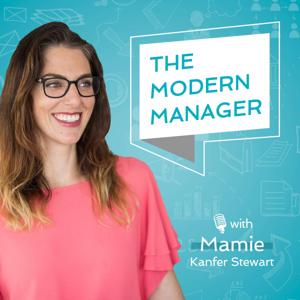
Practical management skills you can use this week. Host Mamie Kanfer Stewart helps managers close the gap between knowing what good management looks like and actually doing it.

Best of The Modern Manager

Ranked by our users in the last 21 days
More shows like The Modern Manager

The Look & Sound of Leadership by Essential Communications - Tom Henschel

The Look & Sound of Leadership

1,157 Listeners

Coaching for Leaders by Dave Stachowiak

Coaching for Leaders

1,462 Listeners

Modern Mentor by QuickAndDirtyTips.com

Modern Mentor

688 Listeners

How to Be Awesome at Your Job by How to be Awesome at Your Job

How to Be Awesome at Your Job

1,022 Listeners

7 Minute Leadership by Paul Falavolito

7 Minute Leadership

93 Listeners

Radical Candor: Communication at Work by Kim Scott & Jason Rosoff

Radical Candor: Communication at Work

705 Listeners

Speak Up: Develop Your Executive Presence & Leadership Communication Style by Laura Camacho

Speak Up: Develop Your Executive Presence & Leadership Communication Style

97 Listeners

Maxwell Leadership Executive Podcast by John Maxwell

Maxwell Leadership Executive Podcast

375 Listeners

No Bullsh!t Leadership by Martin G Moore

No Bullsh!t Leadership

126 Listeners

Leadership Without Losing Your Soul: Master Communication and Management Skills to Boost Productivity, Teamwork, and Ease Overwhelm by David Dye, President Let's Grow Leaders

Leadership Without Losing Your Soul: Master Communication and Management Skills to Boost Productivity, Teamwork, and Ease Overwhelm

35 Listeners

The Anxious Achiever by Morra Aarons-Mele

The Anxious Achiever

563 Listeners

Take Command: A Leadership Podcast by Dale Carnegie Flagship Podcast, Joe Hart

Take Command: A Leadership Podcast

119 Listeners

Coaching Real Leaders by Muriel Wilkins

Coaching Real Leaders

674 Listeners

HBR On Strategy by Harvard Business Review

HBR On Strategy

80 Listeners

HBR On Leadership by Harvard Business Review

HBR On Leadership

161 Listeners