
Sign up to save your podcasts
Or

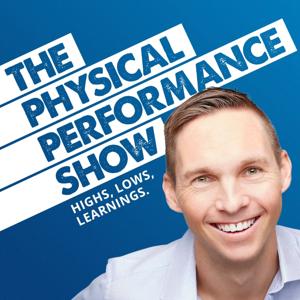


In episode 378 of The Physical Performance Show, host Brad Beer is joined by Pogo physiotherapist Tim Studley for the first instalment of a three-part expert series exploring bone stress injuries. Drawing on decades of clinical experience and the latest research, Brad unpacks the mechanisms behind one of the most common and misunderstood injuries affecting endurance athletes.
This episode explains how bone stress injuries develop, why they occur, and why they're often missed until they become more serious. Brad and Tim discuss the relationship between training load, bone physiology, symptom progression, and risk factors, while providing practical insights for athletes, coaches, and clinicians seeking to identify problems before they become stress fractures.
Show Sponsor:PILLAR Performance is leading a new frontier in sports nutrition through micronutrition innovation. Their new Collagen Repair formula, developed in collaboration with Gelita Laboratories, is designed to support tendon and ligament health while promoting collagen synthesis to help athletes stay healthy and perform at their best.
For 15% off your first order, visit pillarperformance.shop (or thefeed.com for North American listeners) and use the discount code PHYSICALPERFORMANCE (one word, capitals) at checkout.
In this episode, you'll hear"A bone stress injury is simply stress of a bone."
"It's not usually the kilometres that catch people out—it's the intensity."
"Don't judge the severity of a bone injury by how painful it is."
"Symptoms often appear around four weeks after the training error—not the day after."
"If it's really obvious, it's probably important."
Show SponsorPILLAR Performance creates evidence-based sports micronutrition products designed to support recovery, sleep, health, and performance for athletes and active people.
For all your PILLAR products visit https://PillarPerformance.shop, or for our North American listeners, head to https://TheFeed.com.
🔥 For 15% off your first purchase enter PHYSICALPERFORMANCE at the checkout.
Timeline00:00 – Introduction, sponsor and overview of the new three-part Bone Stress Injury series
02:27 – Brad introduces expert editions and welcomes Tim Studley
03:54 – What is a bone stress injury?
04:23 – Bone loading explained: intensity versus training volume
06:50 – Bone physiology: microcracks, osteoclasts and osteoblasts
08:44 – Why recovery weeks are critical for skeletal health
09:14 – Bone remodelling timelines and why symptoms are delayed
11:40 – Bone stress injuries versus stress fractures
13:05 – The Fredericson grading system explained
14:26 – Shin splints (MTSS) versus bone stress injuries
15:21 – Why pain severity doesn't reflect injury severity
17:42 – The importance of symptom behaviour over pain intensity
19:08 – The progression of bone stress injury symptoms
20:30 – Taking a running history: training load, Strava and identifying workload errors
22:22 – Why today's symptoms often reflect training from four weeks earlier
23:20 – Biomechanical versus biological risk factors
24:17 – Previous bone stress injuries as a major predictor of recurrence
24:47 – Performance footwear ("super shoes") and emerging research
26:03 – Terrain, footwear changes and other biomechanical considerations
26:57 – Muscle capacity, tissue resilience and assessing the athlete
THE TEAM:
Join the The Physical Performance Show LEARNINGS membership through weekly podcasts here: https://www.patreon.com/TPPShow
Our goal is to get you back to your Physical Best. Find out more about Telehealth Consultations and book online.
Your Host: 🏃 Brad Beer - Instagram & X @Bradbeer and YouTube on @PogophysioAu
The Physical Performance Show can be found at: Facebook: facebook.com/thephysicalperformanceshowpodcast X: @tppshow1 Instagram: @physicalperforamceshow
Please direct any questions, comments, and feedback to the above social media handles.
*]:pointer-events-auto R6Vx5W_threadScrollVars scroll-mb-[calc(var(--scroll-root-safe-area-inset-bottom,0px)+var(--thread-response-height))] scroll-mt-(--sticky-padding-top)" dir="auto" data-turn-id="081498ac-bc39-4ab2-a81c-691cffa69424" data-turn-id-container="081498ac-bc39-4ab2-a81c-691cffa69424" data-testid="conversation-turn-5" data-turn="user">In episode 377 of The Physical Performance Show, Sports Physiotherapist Nick Kane joins host Brad Beer to unpack the rehabilitation of hamstring strain injuries.
Nick is the founder and director of SportsMap, one of Australia's leading professional development platforms for sports medicine clinicians. Drawing on more than a decade working in elite sport, including ten years with the Essendon Football Club in the AFL and five years as lead physiotherapist, Nick shares practical, evidence-informed insights into managing one of sport's most common and frustrating injuries.
This episode explores the common mistakes athletes and practitioners make during rehabilitation, the critical role of high-speed running exposure, how to assess injury severity, key risk factors for recurrence, and the practical steps required for a successful return to sport. Nick also discusses eccentric strength training, fascicle length, T-junction injuries, and the characteristics that separate great clinicians from average ones.
Whether you're an athlete, coach, physiotherapist, or sports medicine practitioner, this episode delivers practical takeaways you can immediately apply.
Show Sponsor
PILLAR Performance creates evidence-based sports micronutrition products designed to support recovery, sleep, health, and performance for athletes and active people.
For all your PILLAR products visit https://PillarPerformance.shop, or for North American listeners, head to https://TheFeed.com.
For 15% off your first purchase enter PHYSICALPERFORMANCE at the checkout.
How To Check:
LinkedIn - Nick Kane SportsMap – https://sportsmap.com.au
Listen in as we delve into the following:
• The three most common mistakes in hamstring rehabilitation • Why maximum speed exposure is essential for successful recovery • The dangers of over-prescribing and under-prescribing sprint work • Understanding hamstring injury pathology and injury mechanisms • Key clinical assessment findings for hamstring strain injuries • Risk factors including eccentric strength, fascicle length, and running mechanics • The "push and pull of strain" concept • Practical strength benchmarks for rehabilitation progressions • The role of Nordic hamstring exercises and eccentric loading • Monitoring recovery using objective clinical markers • Criteria-based return-to-play decision making • Preventing recurrence following return to sport • Why regular exposure to high-speed running matters • Understanding T-junction hamstring injuries • What differentiates great clinicians from average practitioners • The value of curiosity, continual learning, and athlete-centred communication
Quotes
"Preparing to sprint is preparing to play." — Nick Kane
"The highest strain you can apply to the hamstring is sprinting." — Nick Kane
"Consistency is key." — Nick Kane
"If you stop training eccentrically for two weeks, those fascicles shorten." — Nick Kane
"The person who stays curious and continues learning is the one who keeps improving." — Nick Kane
Timeline
00:00 – Introduction and sponsor messages 01:20 – Introduction to Nick Kane and SportsMap 04:08 – The three biggest mistakes in hamstring rehabilitation 05:35 – Over-prescribing and under-prescribing high-speed running 09:16 – Why sprint exposure is critical for recovery 10:34 – Understanding hamstring injury pathology 13:54 – Key risk factors for hamstring strain injuries 16:12 – The push and pull of strain concept 18:29 – Eccentric strength and fascicle length 20:22 – Practical strength assessment benchmarks 23:13 – Essential clinical assessment tools 27:20 – Using objective markers to guide return-to-play timelines 29:21 – Sponsor messages 31:14 – Return-to-play criteria and rehabilitation progressions 34:41 – Preventing hamstring injury recurrence 37:29 – Understanding T-junction hamstring injuries 41:41 – What separates great clinicians from average clinicians 44:25 – Nick Kane's one piece of performance advice 45:53 – The weekly physical challenge: 10 minutes of stillness 46:51 – Where to find Nick Kane and SportsMap 48:27 – Episode wrap-up and upcoming shows
Your Host
Join the The Physical Performance Show LEARNINGS membership through weekly podcasts here: https://www.patreon.com/TPPShow
Our goal is to get you back to your Physical Best. Find out more about Telehealth Consultations and book online.
Your Host: 🏃 Brad Beer - Instagram & X @Bradbeer and YouTube on @PogophysioAu
The Physical Performance Show can be found at: Facebook: facebook.com/thephysicalperformanceshowpodcast X: @tppshow1 Instagram: @physicalperforamceshow
Please direct any questions, comments, and feedback to the above social media handles.
Brad shares what's happened over the last two years, why there has been infrequency in episode production adn what teh plan is from ehre. Listen into this brief update as he explains what shape the podcast will take and what content you can expect.
We want to say a special thank you to you, our loyal listeners. Without youthere wouldn't be this podcast, we deeply apprecaite you.
In episode 376 of The Physical Performance Show, professional triathlete Ellie Salthouse joins Hugh Darnell and Brad Beer for a deeply honest conversation about resilience, pressure, and longevity in elite endurance sport. Recorded following knee surgery and a strong return to racing, this episode unpacks what it truly takes to rebuild confidence, performance, and belief when the path back to the start line is anything but straightforward.
Ellie reflects on her Wollongong T100 performance, the physical and mental demands of injury rehabilitation, and the systems that now support her consistency at the pointy end of the sport. From working with specialist coaches and reshaping her mental game, to mastering race-day execution, fueling, recovery, and decision-making under pressure, Ellie shares the frameworks that continue to sustain her elite career.
Show Sponsor: The Rehab Mechanics offers Simple Tools and Real Results. Easy fixes for your feet with a massive impact. For 20% off all The Rehab Mechanics products. Go to www.therehabmechanics.com.au Enter discount code TPPS20 at checkout. In this episode, you'll hearWollongong T100 debrief: executing the plan, racing at home, and handling the "always want the podium" competitor mindset
Race-week routines: keeping things consistent, arriving a week early, and why Ellie doesn't taper heavily
The injury story: severe knee pain pre-70.3 Worlds, major swelling post-race, scan results, and surgery timing (Feb)
Rehab timeline & milestones: back on bike + pool at ~10 days, building trainer time, returning to road riding, quad activation challenges, strength work, and a ~6-month return to start line
The mental toll of injury: identity, motivation, sponsor pressure vs internal pressure, and staying process-driven with "small controllables"
Return-to-racing lessons: Vancouver as the first race back, managing expectations, and surprising run performance with minimal prep
Mental performance breakthrough: building a "toolbox" with a sports psych, handling pressure, thoughts, and race-week spirals
Tools that work: "a thought is just a thought," bus analogy, and the "monsters in the boat" approach to sitting with emotions
Coaching structure shift: moving from one coach (8 years with Siri) to specialists (swim/cycle/run/strength) + managing training load
Training with data: the steep learning curve of power/metrics and why it took ~12 months to truly click
Partner + coach dynamic: boundaries between "boyfriend Zach" and "coach Zach," and why switching off matters
Race-day execution: whiteboard cues, focusing on controllables, and adapting plans on the fly
Fueling evolution: from "a few gels and Gatorade" to calculated carbs/sodium/fluid + planned recovery
Recovery essentials: movement-based recovery, boots, protein targets, sauna/ice baths, sleep, magnesium, and tracking what actually works
Filtering the '1%ers': ease of use, time cost, measurability, and avoiding noise
What's next: 70.3 World Champs (Marbella) then camp in the Canary Islands and T100 World Champs (Qatar, Dec 13)
Ellie's advice: stay disciplined, stay hungry, trust your instincts
Listener challenge: 20 x 3 min tempo / 3 min endurance on the bike (yes… brutal)
"A feeling is just a feeling. A thought is just a thought."
"If it's a chore or doesn't integrate into your life, it's probably not the right 1%er."
"Who's willing to suffer the most — that's the name of the game."
Show sponsor: The Rehab Mechanics — 20% off with code TPPS20 at checkout (therehabmechanics.com.au)
Follow Ellie: @elliesalthouse (Instagram)
00:00 – Introduction & sponsor: The Rehab Mechanics + TPPS20 discount 01:13 – Hugh introduces featured performer: Ellie "Salty" Salthouse + Wollongong T100 context 02:43 – Ellie joins: quick bio + why this conversation has been a long time coming 03:42 – Wollongong T100 debrief: home-race energy, execution, 4th place 05:04 – Race-week process: keeping routine consistent + days leading into race 06:21 – "Pressure in the athlete hotel": being around competitors all week 07:43 – Knee injury origin: severe pain pre-70.3 Worlds, race week adjustments 09:03 – Post-Worlds swelling + scan findings: missing cartilage + floating fragments 10:17 – Surgery timing (early Feb) + season disruption + finding positives 11:43 – "Blessing in disguise": freshness late season + only 5 races so far 12:37 – Rehab milestones: back on bike & in pool ~10 days post-op 13:59 – Quad shutdown challenge: stim/BFR + "it finally clicked" 14:28 – Return-to-racing timeline: ~6 months off the start line 14:57 – Mental toll of injury: motivation, identity, checklist of controllables 16:20 – Sponsor pressure vs internal pressure: clauses, but mostly self-driven 17:14 – First race back: Vancouver expectations + rebuilding run fitness 19:02 – Surprise outcome: 11th place + faster-than-expected run execution 19:31 – The "low expectations / low pressure" effect when returning 20:48 – Key win: testing the knee under race stress (sand, mounts/dismounts) 21:48 – Perspective from Jan Frodeno: same surgery took him a year 22:44 – Mental performance shift: why big races used to unravel 24:07 – Working with a sports psych: building a toolbox for pressure + thoughts 25:28 – Why mental coaching should be "the 4th discipline" 26:54 – Advice for athletes who didn't gel with a sports psych before 27:47 – Readiness + openness: why it clicked this time 29:54 – Practical tools: "thoughts on a bus" + "monsters in the boat" analogy 33:26 – Coaching evolution: leaving Siri after 8 years + hard "breakup" conversation 36:10 – Why specialists: swim/cycle/run/strength + being great at all three 39:42 – Adjustment year: results dipped before training began correlating again 40:08 – Learning to train with data: cadence/speed → full power metrics 42:32 – When it clicked: 12 months to understand, 18 months to see new numbers 43:30 – Negatives of multi-coach model: communication + squad consistency when travelling 44:47 – Partner + coach dynamic: boundaries, downtime, and early arguments 47:35 – Race-day execution: Zach's whiteboard cues, focus, and adapting plans 50:16 – Discipline vs instincts: sticking to plan without getting dragged into racing emotions 52:14 – The "ability to suffer": born with it + learned deeper over time 55:33 – Hard sessions nerves: nothing to lose vs race-day stakes 57:23 – Fueling shift: from "whatever felt right" to calculated carbs/sodium/fluid 59:47 – Recovery pillars: movement, boots, protein targets, sauna/ice baths 01:01:33 – Sleep & performance: 8+ hours, magnesium, investing in a great bed 01:03:21 – Filtering "1%ers": track it, keep it easy, avoid time-wasting noise 01:07:27 – What's next: 70.3 Worlds (Marbella) + Canary Islands camp + T100 Worlds (Qatar) 01:08:20 – Ellie's advice: stay disciplined, stay hungry, trust your instincts 01:08:49 – Listener challenge: 20 x 3 min tempo / 3 min endurance on the bike 01:10:14 – Episode close, credits, and sponsor reminder
THE TEAM:
Join the The Physical Performance Show LEARNINGS membership through weekly podcasts here: https://www.patreon.com/TPPShow
Our goal is to get you back to your Physical Best. Find out more about Telehealth Consultations and book online.
Your Hosts: 🏃 Brad Beer - Instagram & X @Bradbeer and YouTube on @PogophysioAu 💪 Huw Darnell - Exercise Physiologist & Performance Coach : YouTube: @huwdarnell & Instagram @huwdarnell
The Physical Performance Show can be found at: Facebook: facebook.com/thephysicalperformanceshowpodcast X: @tppshow1 Instagram: @physicalperforamceshow
Please direct any questions, comments, and feedback to the above social media handles.
In episode 375 of The Physical Performance Show, Coach Lino Holler and Exercise Physiologist Alex Butchies—founders of The Breath Room—join hosts Hugh Darnell and Brad Beer to unpack the science, the soul, and the surprising simplicity behind breathwork.
Known for blending physiological precision with deep nervous-system awareness, Lino and Alex explain how breath training can radically influence performance, recovery, emotional regulation, and everyday resilience. They share the models they've built for athletes, clinicians and everyday performers—equipping listeners to understand when to activate, when to regulate, when to release, and how to stay composed under pressure.
This episode explores breathwork as a foundational human movement—right alongside gait—and highlights how poor breathing mechanics echo into every body system. From apnea training to flow-state access, from nervous-system overload to psychological clarity, Hugh, Lino, and Alex guide listeners through practical tools and principles that can reshape life, training, and mental wellbeing.
Show Sponsor: The Rehab Mechanics offers Simple Tools and Real Results. Easy fixes for your feet with a massive impact. For 20% off all The Rehab Mechanics products. Go to www.therehabmechanics.com.au Enter discount code TPPS20 at checkout. On instagram checkout: Lino @coachhola AB @butschies TBR @thebreatheroomglobal Consulting @ab_physiology To get the TBR Master Your Breath: Personal Development course head to https://cleanhealth.edu.au/product/online-courses/master-your-breath/ To get the Level 1 TBR Certified Breathwork Coaching course head to https://cleanhealth.edu.au/product/online-courses/the-breathe-room-level-1/ To get 20% of either course use promo code 'AB20' at checkout Listen in as we delve into the following:Lino & Alex's backgrounds and the origin story of The Breath Room
Why breathwork is both universal and wildly misunderstood
The "science and soul" model: activate, regulate, release
How breath patterns influence physiology, psychology, posture, and performance
Understanding flow state and how breath helps athletes access it
What inefficient breathing looks and sounds like—and why it matters
Nasal breathing, LSD breathing, and the dangers of skipping the basics
Apnea training, CO₂ tolerance & performance crossover
Assessing breathing in athletes: practical tests and markers
Nervous system burnout, emotional load & modern stress physiology
Training resilience: why athletes must learn to perform under pressure
How to help clients (and yourself) find the "middle zone"
Why 5 minutes of daily breathwork is the minimum effective dose
Two practical breathwork protocols listeners can start today
"If you can master your breath, you can master your life." — Lino Holler
"Seek balance, not perfection. A well-balanced nervous system can go fast, slow, and always find its way back to centre." — Alex Butchies
"Most people breathe all day, but not efficiently. Awareness is the gateway."
"When your breath is compromised, your body will sacrifice everything else to get it back."
"Breathwork is the universal tool to shift your state—faster than anything else."
Timeline00:00 – Introduction & sponsor: The Rehab Mechanics 01:15 – Hugh & Brad introduce the Breath Room founders 01:40 – The "science and soul" of breathwork 02:31 – Why breathwork is misunderstood and undervalued 03:26 – Alex's journey: connecting physiology, sport & nervous-system regulation 05:19 – Clinical insights from veterans, trauma, anxiety & PTSD 06:42 – Lino's story: sickness, burnout & finding regulation 09:41 – Breathwork, performance and the nervous system 11:03 – Breathwork for flow state: accessing presence under pressure 12:32 – Jiu-jitsu, endurance sports & composure under stress 14:39 – Everyday breathwork: LSD breathing, nasal breathing & awareness 17:02 – "Don't sit like a croissant or breathe like a French bulldog" 18:30 – Nasal breathing red flags & the mouth-taping debate 19:56 – Using breath to control transitions & race composure 21:15 – The Breath Room model: activate, regulate, release 23:40 – How the system works in training & everyday life 28:33 – Assessing breathing: tests, observations, retention walks 31:27 – CO₂ tolerance, awareness, and common pitfalls 36:31 – Life stress, emotional load & the body keeping score 38:48 – Mental performance: head noise, pressure, and elite sport 42:01 – Self-consciousness, overthinking & performance breakdown 47:12 – Training resilience: don't flee stress—learn to stay in it 48:35 – Robust versus fragile nervous systems 50:20 – Why endurance athletes must train breath 51:15 – Apnea training, head noise & physiological adaptation 53:06 – The psychology of pressure: young athletes & emotional load 56:13 – Balance, HRV & the "pendulum" model 58:05 – Minimum effective dose: 5 minutes/day 59:01 – The "brakes" metaphor: learning to shift state 01:00:29 – Two breathwork protocols listeners can apply today 01:06:11 – Final messages from Lino & Alex 01:09:12 – Listener challenge: 7-7-7 breathing & nasal-only warm-ups 01:11:02 – Breath Room Global: building a system for all people 01:17:17 – Guided 15-breath practice to close the episode 01:21:40 – Episode close & credits
THE TEAM:
Join the The Physical Performance Show LEARNINGS membership through weekly podcasts here: https://www.patreon.com/TPPShow
Our goal is to get you back to your Physical Best. Find out more about Telehealth Consultations and book online.
Your Hosts: 🏃 Brad Beer - Instagram & X @Bradbeer and YouTube on @PogophysioAu 💪 Huw Darnell - Exercise Physiologist & Performance Coach : YouTube: @huwdarnell & Instagram @huwdarnell
The Physical Performance Show can be found at: Facebook: facebook.com/thephysicalperformanceshowpodcast X: @tppshow1 Instagram: @physicalperforamceshow
Please direct any questions, comments, and feedback to the above social media handles.
Running technique coach Paul Mackinnon (The Balanced Runner) unpacks why most runners "force outcomes" (cadence, foot strike, knee drive) instead of changing the inputs that actually reshape movement. Paul explains his top-down approach—starting at the arms and torso to influence what happens below—so athletes can reduce ground contact time, improve rhythm, and shift along the continuum from rehab to performance.
Across an engaging conversation in episode 374 of The Physical Performance Show, with hosts Brad Beer and Huw Darnell, Paul challenges the idea that "technique doesn't matter," arguing that how you move determines how you load. He distinguishes economy from efficiency, shows why arm swing and thoracic control set the timing for the legs, and shares practical cues to build self-awareness, symmetry, and lift—without derailing training volume. Clinicians and athletes alike will gain a clearer roadmap for translating S&C work to the road, coaching more effectively, and making durable technique change.
To Follow Paul Mackinnon (The Balanced Runner): Website: TBrunner.com Instagram: @thebalancedrunner
Show Sponsor: The Rehab Mechanics offers Simple Tools and Real Results. Easy fixes for your feet with a massive impact. For 20% off all The Rehab Mechanics products. Go to www.therehabmechanics.com.au Enter discount code TPPS20 at checkout.
TIMELINE:
00:00 Forcing outcomes: the #1 running mistake
03:19 Inputs over outcomes; changing the whole system without losing training
04:32 Knee drive, ground time, and why top-down coaching works
07:28 Midline crossover: finding the true driver of the pattern
09:35 Physics → biomechanics → the individual: three coaching silos
11:11 Do mechanics matter? Why the debate misses the point
14:11 Lessons from swimming: skill, workload, and injury risk
16:27 Breaking-2 insight: efficiency beating raw physiology
18:09 Economy vs efficiency; cost per step explained
21:07 Two paths to change: full-pattern reset vs detailed top-down
23:05 New-way/old-way contrasts to build self-awareness
26:06 Feel, timing, rhythm: enlarging the athlete's "sweet spot"
32:29 What good running looks like: rhythm, symmetry, flight
36:37 Coaching language, listening, and athlete buy-in
43:22 Mental health: running as a lifeline
44:43 Humerus–femur coupling: why arms and thighs must sync
49:17 Simple buy-in: reduce ground time & ground reaction force
50:18 Paul's top three: Awareness • Symmetry • Lift
52:50 Why S&C often doesn't transfer—and how to fix it
59:35 One piece of advice: self-awareness—know where you are now
1:00:27 Listener Challenge: film your running, build your baseline
LISTEN IN AS WE DELVE INTO THE FOLLOWING:
QUOTES:
"You can't outrun physics."
"How you move determines how you load."
"Stop forcing outcomes—change the inputs."
"Awareness, symmetry, get off the ground. Every step costs—know what you're paying for."
PEOPLE MENTIONED:
Ellie Salthouse – Triathlete
Enda King – Hip & groin specialist (Aspetar)
Rich Willy – Running biomechanics researcher
Alec McKenzie, Stephen Doohig – Swimming biomechanics researchers
Jenny Alcorn – Triathlon coach (historical reference)
THE TEAM:
Join the The Physical Performance Show LEARNINGS membership through weekly podcasts here: https://www.patreon.com/TPPShow
Our goal is to get you back to your Physical Best. Find out more about Telehealth Consultations and book online.
Your Hosts: 🏃 Brad Beer - Instagram & X @Bradbeer and YouTube on @PogophysioAu 💪 Huw Darnell - Exercise Physiologist & Performance Coach : YouTube: @huwdarnell & Instagram @huwdarnell
The Physical Performance Show can be found at: Facebook: facebook.com/thephysicalperformanceshowpodcast X: @tppshow1 Instagram: @physicalperforamceshow
Please direct any questions, comments, and feedback to the above social media handles.
In episode 373 of The Physical Performance Show, sports medicine expert Dr Jay Hertel shares an in-depth exploration of chronic ankle instability in athletes. Drawing on his extensive clinical and research experience, Dr Hertel discusses the prevalence, consequences, and complex rehabilitation of ankle sprains. The conversation covers the patho-mechanical, sensory-perceptual, and motor-behavioral impacts of repeated ankle injuries, including early onset osteoarthritis, proprioceptive deficits, and the psychological hurdles faced by patients—such as loss of confidence and fear of re-injury.
Dr Hertel explains the evolution of clinical models for assessing and treating chronic ankle instability, emphasising individualised care that considers not just the structural and neuromuscular factors, but also personal and environmental influences on recovery. The episode includes practical wisdom and a holistic approach and leaves athletes, clinicians, and listeners with a greater appreciation for the complexity of ankle injuries and a roadmap for improving outcomes both physically and mentally.
Show Sponsor: The Rehab Mechanics offers Simple Tools and Real Results. Easy fixes for your feet with a massive impact. For 20% off all The Rehab Mechanics products. Go to www.therehabmechanics.com.au Enter discount code TPPS20 at checkout. --
POGO Physio Telehealth Consultations believe that everyone deserves access to complete and remarkable physiotherapy services.
Our goal is to get you back to your Physical Best. Find out more about Telehealth Consultations and book online.
Follow @Brad_Beer Instagram & Twitter
Huw Darnell — Exercise Physiologist & Performance Coach
Helping athletes move from pain and injury to peak performance. Learn more at huwdarnell.com.au and follow on Instagram @huwdarnell.
The Physical Performance Show: Facebook, Instagram, & Twitter (@tppshow1)
Please direct any questions, comments, and feedback to the above social media handles.
In episode 372 of the Physical Performance Show, Brad Beer and Huw Darnell host a live event featuring dual Olympic triathlon medallist Hayden Wilde. Hayden shares his athletic journey, from his early days in multi-sport and the influence of family and personal adversity, through his path to Olympic success. He details the highs and lows of elite sport, including the physical and mental challenges of coming back from a significant injury sustained in a cycling accident, with unique insights into his rehabilitation, mindset, and the role of his multi-disciplinary support team. Hayden discusses his training philosophies, coaching changes, and the importance of maintaining humility amid professional success. The episode explores balancing ambition with self-care, adapting to setbacks, and the power of community in sport.
Show Sponsor: The Rehab Mechanics offers Simple Tools and Real Results. Easy fixes for your feet with a massive impact. For 20% off all The Rehab Mechanics products. Go to www.therehabmechanics.com.au Enter discount code TPPS20 at checkout. --POGO Physio Telehealth Consultations believe that everyone deserves access to complete and remarkable physiotherapy services.
Our goal is to get you back to your Physical Best. Find out more about Telehealth Consultations and book online.
Follow @Brad_Beer Instagram & Twitter
Huw Darnell — Exercise Physiologist & Performance Coach
Helping athletes move from pain and injury to peak performance. Learn more at huwdarnell.com.au and follow on Instagram @huwdarnell.
The Physical Performance Show: Facebook, Instagram, & Twitter (@tppshow1)
Please direct any questions, comments, and feedback to the above social media handles.
In episode 371 of the Physical Performance Show, Charlie Clements, a first contact physiotherapist and specialist in musculoskeletal care based in the UK shares his expertise on the topic of sciatica, particularly as it affects athletes, discussing the prevalence, causes, and different types of leg pain associated with the condition.
Charlie explains the role of disc injuries, inflammation, and nerve root irritation, and provides practical advice on when imaging and interventions like nerve root blocks may be appropriate. Charlie emphasises the importance of patience, staying active through alternative forms of exercise, and seeking qualified healthcare support when needed.
This episode also offers guidance for clinicians on managing sciatica and highlights the value of reassurance and a holistic approach to care.
Show Sponsor:POGO Physio Telehealth Consultations believe that everyone deserves access to complete and remarkable physiotherapy services.
Our goal is to get you back to your Physical Best. Find out more about Telehealth Consultations and book online.
Follow @Brad_Beer Instagram & Twitter
Huw Darnell — Exercise Physiologist & Performance Coach
Helping athletes move from pain and injury to peak performance. Learn more at huwdarnell.com.au and follow on Instagram @huwdarnell.
The Physical Performance Show: Facebook, Instagram, & Twitter (@tppshow1)
Please direct any questions, comments, and feedback to the above social media handles.
In episode 370 of The Physical Performance Show, Dr. Jen Hamer—researcher, consultant, and former elite athlete—delivers a powerful exploration of physique considerations, body image, and the risks of low energy availability in sport. Drawing from her own journey as a high-performing endurance runner who battled an eating disorder, Dr. Hamer shares both personal and professional insights into the complex interplay between athletic culture, health, and performance.
This episode delves into Dr. Hamer's PhD research on supporting coaches to manage the risks of relative energy deficiency in sport (RED-S) among developing athletes. She discusses the challenges of shifting deeply ingrained beliefs and behaviours in sports environments, the impact of coach and practitioner language on athlete well-being, and the importance of systemic education that goes beyond awareness to drive real change. You will hear practical examples from Dr. Hamer's work with national sports organizations, including Swimming Australia and Triathlon Australia, and learn actionable strategies for coaches, parents, and practitioners.
Show Sponsor:POGO Physio Telehealth Consultations believe that everyone deserves access to complete and remarkable physiotherapy services.
Our goal is to get you back to your Physical Best. Find out more about Telehealth Consultations and book online.
Follow @Brad_Beer Instagram & Twitter
Huw Darnell — Exercise Physiologist & Performance Coach
Helping athletes move from pain and injury to peak performance. Learn more at huwdarnell.com.au and follow on Instagram @huwdarnell.
The Physical Performance Show: Facebook, Instagram, & Twitter (@tppshow1)
Please direct any questions, comments, and feedback to the above social media handles.
From the publisher's feed
Ranked by our users in the last 21 days
94 Listeners

1,342 Listeners

426 Listeners
71 Listeners
136 Listeners

23 Listeners

188 Listeners
301 Listeners
137 Listeners

1,875 Listeners

40 Listeners

186 Listeners
157 Listeners
31 Listeners
8 Listeners