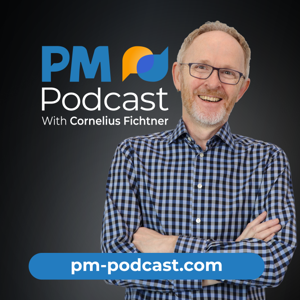
The Project Management Podcast

The Project Management Podcast

By Cornelius Fichtner, PMPBusinessCareers
Download on the App Store
  • Ranking

    2nd

    on Management & Marketing

  • Favorites

    512

    Followers

  • Typical duration

    35 min

    per episode

Based on Podcast App listening data

The Project Management Podcast episodes

  • Episode 351: How to Get Your PMP Certification with Mark Chropufka (Free)
    Play Now: This episode is sponsored by The PM PrepCast for The PMP Exam: Mark Chropufka, MBA, PMP This is another episode in which I am proudly introducing you to one of my successful students who was able to pass the PMP. Hi name is Mark Chropufka (https://www.linkedin.com/in/mark-chropufka-pmp-mba-a3a8196) and he is a student of my PMP PrepCast. I love doing these kinds of interviews because of the in-depth knowledge that I can take from someone like Mark who has passed their PMP exam and bring it to those who are still studying for their exam. And of course, I also feel very satisfied that it was my exam preparation course that showed Mark how to prepare for PMP. In this PMP lessons learned interview you are going to hear him talk about his journey to becoming PMP certified from start to finish. Below are the first few pages of the transcript. The complete transcript is available to Premium subscribers only. Podcast Introduction Cornelius Fichtner: Hello and welcome to episode number 351. This is the Project Management Podcast at www.pm-podcast.com and I'm Cornelius Fichtner.  Welcome back. This is another episode in which I am proudly introducing you to one of my successful students who was able to pass the PMP exam. His name is Mark Chropufka and he is a student of my Project Management PrepCast. I love doing this kind of interviews because of the in-depth knowledge that I can take from someone like Mark who has passed their PMP exam and bring it to those who are still studying for their exam. And of course, I also feel very satisfied that it was my exam preparation course that showed him how to prepare for the PMP. In this PMP Lessons Learned interview, you are going to hear him talk about his journey to becoming PMP certified from start to finish. And so, let's take the first step on this journey. Enjoy the interview. Podcast Interview Cornelius Fichtner:  Hello Mark, welcome to the program. Mark Chropufka:   Hello, Cornelius. Nice to talk with you and actually meet you for the first time. Cornelius Fichtner:  In person. Mark Chropufka:   Yes. Yes. Cornelius Fichtner:  Yes. I listen to podcast myself and sometimes you `know, you get to know these people and to have them in your head and then, suddenly you meet somewhere it's like, Oh my God! I know you. Mark Chropufka:   I know. True. True. Cornelius Fichtner:  Well, first of all, congratulations for passing your PMP exam. Great success. Mark Chropufka:   Thank you very much and thank you for all your help with your product. Great product. Cornelius Fichtner:  Happy to help. When did you pass? Mark Chropufka:   December 31st. Cornelius Fichtner:  Yeah. Okay. Only a little while ago. Only a little while.  Mark Chropufka:   New Year's Eve. Yes. Cornelius Fichtner:  Yeah. Most important thing first, you know, if you have to do this again, is there anything you would do differently? Mark Chropufka:   I feel that with the preparation that I did and all the reading and the reviewing and the course that I took, honestly, not really. I was very successful and I just felt that the preparation and using the PM exam simulator that you offer made all the difference. Taking a number of practice exams made the difference and I was very calm and prepared for the exam. Cornelius Fichtner:  Is there anything you wouldn't do? Anything you would leave out? Mark Chropufka:   Anything I would leave out. I basically say that don't worry. Basically just making sure that if you see, sometimes you see horror stories on the Lessons Learned out in the internet and you see a lot of people take that, with a grain of salt. And also with the other part is not to get frustrated. In the preparation process, you're going to hit points where you feel like you should be at a certain level. And for example, I was taking the PM exam simulator and it w
    59 min
  • Episode 349: Team Leadership for Virtual Teams in a Global Delivery Model (Free)
    Play Now: This episode is sponsored by The Agile PrepCast:: Shyamsundar Ramanathan, PMP Global delivery models have changed the way IT services are delivered and many organizations use them. They are the way of the world. The significant benefits include the ability to provide round the clock services, ensure business continuity, level the playing field through best-in-class consulting, and finally provide key cost advantages for all organizations alike. But there are also challenges, because we have now have virtual teams with its members around the world and we may never meet them. So what’s a project leader to do? Shyamsundar Ramanathan (http://maximisepotential.blogspot.com/, https://www.linkedin.com/in/shyamsundarramanathan ) says that first of all, the key to success of this kind of delivery model is communication. And then he has seven specific recommendations that will help. In our interview we will define what the global delivery model is, briefly discuss DevOps and then get going with his recommendations and how they will help improve your effectiveness as a project leader of such a global team. Shyam would like us to mention that the views he expresses in this interview are his own and not those of his employer. Episode Transcript Below are the first few pages of the transcript. The complete transcript is available to Premium subscribers only. Podcast Introduction Cornelius Fichtner: Hello and welcome to Episode #349.  This is The Project Management Podcast™ at www.pm-podcast.com and I'm Cornelius Fichtner. Thank you for listening in. Before we start, I wanted to remind everyone that we are listener-supported podcast so if you enjoy the interviews then please visit www.pm-podcast.com/premium. Your subscription will help to keep us going. Thank you! Global delivery models have changed the way IT services are delivered and many organizations use them. They are the way of the world, you might say. The significant benefits include the ability to provide round-the-clock services on sure business continuity, level the playing field through best in class consulting and finally provide key cost advantages for all organizations alike. But there are also challenges because we now have virtual teams with its members around the world and we may never meet them. So what's a project leader to do? Shayamsundar Ramanathan says that first of all, the key to success of this kind of delivery model is communication and then he has 7 specific recommendations that will help. In our interview, we will define what the global delivery model is, briefly discuss dev ops and then get going with his recommendations and how they will help improve your effectiveness as a project leader of such a global team. Before we start the interview, Shyam has asked me to specifically mention that the views he expresses in this interview are his own and not those of his employer. And now, can you manage another interview? Enjoy! Podcast Interview Female voice: The Project Management Podcast’s feature Interview: Today with Shyamsundar Ramanathan, Director of Software Quality Assurance. Cornelius Fichtner: Hello, Shyam! Welcome to The Project Management Podcast™! Shyamsundar Ramanathan: Thank you, Cornelius! It's a pleasure to be here. Cornelius Fichtner: So tell me, what is a global delivery model? Shyamsundar Ramanathan: Yes, so the global delivery model is a combination of onshore and offshore development and it is also one of the most preferred methods for the delivery of IT services and solutions globally. It also promises top quality development, onsite delivery and faster project cycles and this is the key selling point - refreshingly affordable rate. So that's very important for a lot of customers and that's why more customers are going towards a global delivery model at this point. Cornelius Fichtner: Is this a model that is used exclusively to deliver IT services or do other industries use this as well? Shy
    38 min
  • PMI's PDU Secrets
    Play Now: Sorry. Your browser cannot play this video. PMI certifications are not for life. Instead, once you pass the exam you are required to go through recertification every three years. The good news is that you don’t have to take the exam again. Instead, you have to earn Professional Development Units (PDUs) in project management during this time. Then the cycle begins anew. This episode looks in detail at what PDUs are, how they are structured, discusses the Talent Triangle and gives you recommendations on where to learn more about PDUs, how to earn PDUs not only from Premium Podcasts but from normal learning activities that we project managers participate in regularly. It's all much simpler than you think and this guide breaks it down for you.
    35 min
  • How to Earn 60 Free PDUs
    Play Now: Sorry. Your browser cannot play this video. Earning 60 PDUs from The Project Management podcast is extremely simple and takes just four steps: Install an app on your phone and subscribe to The PM Podcast Listen to any free or premium episode Track and document your learning in our PDU logfile Claim your PDUs Please watch the video to get all the details about the process and then visit The PDU FAQ Page to read up on all the details. And you should definitely download and use The PDU Logfile because tracking each episode you listen to and documenting what you have learned is extremely important, so that you can give evidence to PMI during a PDU claims audit that you have indeed earned these PDUs.
    18 min
  • How to Claim PM Podcast PDUs in the PMI CCRS
    Play Now: Sorry. Your browser cannot play this video. All PDUs must be claimed online on PMI's Continuing Certification Requirements System. Here are the steps: Go to https://ccrs.pmi.org/ Log in to the website Click "Report PDUs" on the left Now select "Online or Digital Media" on the right Fill in the form based on the table below Form Field Option 1 Claim Separately Option 2 Claim Everything Provider The Project Management Podcast You have to manually type this name / text into the field. It will not auto-fill. The Project Management Podcast You have to manually type this name / text into the field. It will not auto-fill. Title Copy/paste episode title from website The Project Management Podcast Description Copy/paste show notes from website Write a text indicating that you have listened to x-number of episodes of The PM Podcast in the past x-number of months/years, and you are therefore claiming the total number of PDUs accrued for this learning activity. Also mention that you have maintained a separate documentation in which you kept track of dates on which you listened to each episode as well as learning notes. URL www.project-management-podcast.com www.project-management-podcast.com Date Started Date on which you listened to this episode Date on which you listened to the first episode you are claiming Date Completed Date on which you listened to this episode Date on which you listened to the last episode you are claiming PDUs Claimed Input the number of PDus you are claiming for this single episode Input the total number of PDUs you are claiming for each skill area PMI will first send you a confirmation that your PDU claim was received and is under review. Once approved you will receive a second notification email that the PDUs claimed have been added to your account.
    7 min
  • Episode 347: Every Project Leader Needs a Project Plan (Free)
    Play Now: This episode is sponsored by The Agile PrepCast. PDU for PMP:: Ron Black This interview with Ron Black (www.linkedin.com/in/ronblack) is based on chapters two and three of his new book Leadership - The Everyday Superhero's Action Guide to Plan and Deliver High-Stakes Projects. Here is how Ron introduces the need for a project plan: You're going to need a plan. No matter how urgent the moment may appear—stopping killer comet collisions, derailing evil tyrants from world domination, or dashing through security, grabbing a latte, and boarding your 5:31 AM flight in time to stow your roll-aboard in the last available space—you'll be more successful, more of the time, if you have a plan. Leadership by Ron Black In our discussion, Ron and I will focus on introducing you to his "Super Power Points". These are poignant one-liners (i.e. "To finish faster, start a little slower") that he offers at the end of each chapter to summarize the message. We review each of the 15 points from the opening chapters and Ron gives us his insights and recommendations that show why even the best project leader needs a plan. Episode Transcript Below are the first few pages of the transcript. The complete transcript is available to Premium subscribers only. Podcast Introduction Cornelius Fichtner: Hello and welcome to Episode #347.  This is The Project Management Podcast™ at www.pm-podcast.com and I'm Cornelius Fichtner. Thank you for listening in. Before we start, I wanted to mention that we are listener-supported podcast. So if you enjoy our interviews then please visit www.pm-podcast.com/premium. Your subscription will help keep us going. And now onto our topic which is "Every Project Leader Needs a Project Plan". Our interview is based on Ron Black's book "Leadership - The Everyday Superhero's Action Guide to Plan and Deliver High-Stakes Projects". And yes, he does indeed call those like you and me who work in project leadership superheroes and you will hear why very early in the discussion. Ron has also given us one print copy and 9 electronic versions of his book to give away. The print version and 4 ebooks, they are for our premium subscribers and the other 5 ebooks, they are for everyone. So if you want to participate then please go to www.facebook.com/pmpodcast and look for the book giveaway announcement. I will repeat this again after the interview. And now, put on your superhero cape and let's fly. Enjoy the interview. Podcast Interview Female voice: The Project Management Podcast’s feature Interview: Today with Ron Black, Author and Keynote speaker. Cornelius Fichtner: Hello, Ron! Welcome to The Project Management Podcast™! Ron Black: And hello, Cornelius! It's a delight to be here with you today. Cornelius Fichtner: Well, thank you for joining us here. In our interview, we are going to do a review of some of the main points from your book: "Leadership - The Everyday Superhero's Action Guide to Plan and Deliver High-Stakes Projects". But before we get to that, would you please give us sort of the 10,000‑foot high level introduction to the book? What is it about and who did you write it for? Ron Black: You know, Cornelius, it's clear to most of us who have been in this game of project management for any time at all that knowing the tools, the knowledge of project management methodologies is essential. And yet when I go out into the field and I see projects going on and sometimes you see that projects don’t always go as well as they could and I think that oftentimes, it is because there is perhaps a latent or a lack of leadership if you will in some cases or a resistance to step up and speak up at times. When I wrote this book, this is my third book on project management, I really wanted to focus on how to use project management tools as tools of leadership to facilitate high levels of team work. So the 10,000-foot level is this book is dedicated t

    38 min
  • Episode 346: Weight Loss For Risky Projects (Free)
    Play Now: This episode is sponsored by The Agile PrepCast. PDU for PMP:: Cornelius Fichtner and Dr. David Hillson (We're pointing at Disneyworld on the map) This interview with Dr. David Hillson was recorded at the 2015 PMI Global Congress in Orlando, Florida. We discuss his paper and presentation "Weight Loss For Risky Projects". Here is the paper's definition of Risk Obesity: “Risk obesity” occurs when there is too much risk in the system, resulting from uncontrolled risk appetite (Hillson, 2014). This can affect the business as a whole if strategic risk-taking decisions by the senior management team lead to risk exposure that is greater than the organization can manage. But risk obesity can also occur at the project level, when a particular project is carrying levels of risk that are too high, posing a significant threat to the project’s success. Each of the characteristics of physical obesity has parallels in risk obesity, where we accumulate excessive risk exposure that threatens the ongoing health of our project, and that may ultimately be terminal. Risk obesity also makes other risk ailments more likely, as high levels of risk exposure challenge the ability of our risk management processes to cope. The main cause of risk obesity is an uncontrolled or inappropriate risk appetite (Hillson and Murray-Webster, 2012), leading us to take on too much risk without the ability to digest it and deal with it effectively. It is also possible in some cases that there is a built-in tendency to risk obesity arising from the “organizational DNA,” with a corporate ethos and culture that lead to excessive risk-taking. The good news for projects suffering from risk obesity is that it is both treatable and preventable. This paper provides clear diagnostic symptoms to determine whether a project is risk obese, as well as proven treatment options. Episode Transcript Below are the first few pages of the transcript. The complete transcript is available to Premium subscribers only. Podcast Introduction Cornelius Fichtner: Hello and welcome back to the Project Management Podcast at www.pm-podcast.com. We are coming to you live from the PMI 2015 Global Congress in Orlando, Florida. Disneyworld is here. We are in the Exhibit Hall and maybe you can hear it in the background, the exhibitors are starting to take down the tables. With me is Dr. David Hillson. Good afternoon, David. David Hillson: Hello, Cornelius. Nice to be with you again. Cornelius Fichtner: Thank you. It's seems like you're doing a lot of these every congress. David Hillson: Well, I've got lots of things to say and you want to hear about them. So I'm very pleased about that. Thank you.  Cornelius Fichtner: Yes. One thing I really want to hear you talk about is future trends. What do you see ahead of us for project managers? David Hillson: I'm worried about the future trend because in a number of professional associations and in a number of publications and journals, I see an increasing emphasis on the project manager taking a business role or a strategic perspective and lifting their gaze above the project and concentrating on business value and managing senior stakeholders and creating value for the organization. And what worries me is that this is not the business of managing projects. This is the role of the project sponsor, the role of the organization. Managing projects is a tough call and we need people who are project managers to focus on delivering deliverables, to creating the ability to generate benefits and value through the outcomes of our projects. And it just worried me that organizations are encouraging their project managers to lift their sites and lose focus on the actual management of projects.  Cornelius Fichtner: Interesting. That is an interesting counterpoint to everything that PMI seems to be doing at this point. David Hillson: Oh dear. And I'm a PMI fellow- Cornelius Fichtner: Yes. I
    17 min
  • Episode 345: My Project is Failing, It is Not My Fault (Free)
    Play Now: This episode is sponsored by The Agile PrepCast. PMP PDU:: Cornelius Fichtner and Peter Monkhouse This interview with Peter Monkhouse was recorded at the 2015 PMI Global Congress in Orlando, Florida. We discuss his paper and presentation "My Project is Failing, It is Not My Fault". Here is the paper's abstract: Projects fail. This is not new; projects having been failing for years. Studies have been done on why projects fail. The Project Management Institute (PMI) reported in the Pulse of the Profession® (2013a) that poor communication is the number one reason why projects fail. In fact, PMI states that poor communications is a contributing factor in 56% of the projects that failed. But is this the fault of the project manager? A good project manager follows the appropriate methodology for the project, including using a variety of communication tools. But it is not just the method of communication that matters, it is the also the content of the communication that is important. The project manager needs to communicate with the project sponsor and stakeholders in the language of the business. The project manager needs to take the project data and convert it into business information that is actionable for the project sponsor and key stakeholders. To do this, there are two tools the project manager can use. The first is to determine how the product or service of the project supports the organizational strategy. Knowing how the project supports the strategy of the organization will provide the language of why it is important for the project sponsor to support the project. The second tool is the business model canvas which uses nine building blocks to describe how the strategy of the organization is implemented through organizational structures, processes, and systems. Knowing which block the project impacts will provide the project manager with the context to describe the project in the language of the business. A project manager that speaks the language of the business will communicate more effectively with the project sponsor and project stakeholders, and improve the chances of the project meeting its objectives. Episode Transcript Below are the first few pages of the transcript. The complete transcript is available to Premium subscribers only. Podcast Introduction Cornelius Fichtner: Hello everyone and welcome back to the Project Management Podcast at www.pm-podcast.com. Once again, we are coming to you live from the 2015 PMI Global Congress at Disneyworld in Orlando, Florida. And with me right now here in the hallways is Peter Monkhouse. Hello, Peter. Peter Monkhouse: Hi, Cornelius. Pleased to be here and pleased to be talking to your audience today. Cornelius Fichtner: Yes, you are a competitor of mine tomorrow morning because we'll both be speaking at the same time. Your topic is, My Project is Failing, it is Not My Fault. Before we get in to that, Peter, what is the big trend that you see for project management in the coming year? Peter Monkhouse: I didn't realize were speaking at the same time. Can I come to your session? Cornelius Fichtner: And I'll come to yours. Peter Monkhouse: And you'll come to mine. Cornelius Fichtner: And let's see what happens. Peter Monkhouse: Exactly. You know, project management is a wonderful field, Cornelius. There's so much going on in the field. There's so many things of interest. The growth of people practicing project management, the growth in research and so on, it's just wonderful. But I think that what PMI has started this year with introducing a new Talent Triangle and the focus on Business and Strategic Management, is that's going to really start taking off. And that's going to be much more visible and it's going to continue for a few years that as project managers, we're going to have to understand business better than what we do. And this why I'm doing this paper, to share some experie
    17 min
  • Episode 344: Power Snippets
    Click here to download the Power Snippets PDF Document... This PDF Document is the first of two handouts that Neal gave to the attendees of his session "Achieving the Elusive Work-Life Balance" at the PMI Global Congress 2015 in Orlando FL. The document is also part of a Neal Whitten eLearning course called "Achieving the Elusive Work-Life Balance" and was developed by Neal Whitten in partnership with Velociteach.
    0 min
  • Episode 344: Achieving the Elusive Work-Life Balance (Free)
    Play Now: This episode is sponsored by The Agile PrepCast. Earn 37 PDUs:: Cornelius Fichtner and Neal Whitten This interview with Neal Whitten was recorded at the 2015 PMI Global Congress in Orlando, Florida. We discuss his paper and presentation "Achieving the Elusive Work-Life Balance". Here is the paper's abstract: If you have difficulty in juggling the demands of your job and your non-work life, you’re not alone. Many people feel like their lives are overcommitted and see no relief in sight. Nowadays, work-life balance can seem like an unrealistic objective and can seem more elusive than ever. I have personally wrestled with my own work-life balance issues for most of my adult life, but—as a senior-aged person—I have learned a massive amount of knowledge and, dare I say, wisdom, about the highly important subject of finding a satisfactory harmony across all aspects of life. I have also read the research and musings from many valuable contributors that have opened my eyes even wider on maintaining a healthy work-life balance. My mission here is to sift through the data and present to you meaningful information that can help you to not only better understand your work-life balance, but can also give you ideas that can help you to achieve the integration that is most important to you. Episode Transcript Below are the first few pages of the transcript. The complete transcript is available to Premium subscribers only. Podcast Introduction Cornelius Fichtner: Hello everyone and welcome back to Management Podcast at www.pm.podcast.com. Once again, we are live here at the 2015 PMI Global Congress in Orlando, Florida, beautiful Disneyworld. And I'm sitting here with Neal Whitten at the PMI booth. Hello, Neal. Neal Whitten:      Hey, how you doing, Cornelius? Cornelius Fichtner:   I'm doing very well. How did your presentation go? You basically just walked out the door right? Neal Whitten:   Oh, they kicked me out. It was practically staying remotely and I'm humbled. So, there's a lot of people that have interest in achieving the elusive work-life balance. Cornelius Fichtner:    Wonderful. That is the topic of your presentation and we're going to get that in just a moment.  But my question that I'm asking everybody and you have twisted it slightly is what do you see in the future of project management? And you said, you know, why don't you ask me what is the future issue in project management that hasn't been addressed yet? What is it?  Neal Whitten:   In my view, there's a big issue that has not been addressed in past years as well. Certainly, isn't been addressed well here today and I think it will be a major issue going to the future. And that is leadership, I think it's very weak. Most PMs don't know what it means to lead. They don't walk into the job. They are business people first and PM second and they don't necessarily understand that. And they are waiting for somebody else to tell them what to do. But they own every problem on that project either directly or indirectly. It's the lack of leadership, the initiative and I think that's where we need to spend more time on. Cornelius Fichtner:   All right. Achieving the elusive work-life balance was the topic of your presentation today. Why this topic? What is interesting about this topic for you? Neal Whitten:   Well, for me, it's an area that I've wrestled with for most of my adult life. When I was younger, I worked for a major company for 23 years. I would easily be called a workaholic. You don't hear that term much anymore. But I was divorced after 17 years, I did not see it coming and I'm not saying that having an imbalance in my work-life balance caused the break up. But let's face it, having a poor work-life balance certainly didn't help any. And this is an area that I talk to literally
    26 min

About The Project Management Podcast

From the publisher's feed

Become the project manager everyone wants on their team. Tune in to The Project Management Podcast™ and join Cornelius Fichtner, PMP, CSM, as he interviews global PM experts to uncover what drives…

Best of The Project Management Podcast

Ranked by our users in the last 21 days

More shows like The Project Management Podcast

TED Radio Hour by NPR

TED Radio Hour

21,775 Listeners

The Tim Ferriss Show by Tim Ferriss: Bestselling Author, Human Guinea Pig

The Tim Ferriss Show

16,036 Listeners

Coaching for Leaders by Dave Stachowiak

Coaching for Leaders

1,455 Listeners

HBR IdeaCast by Harvard Business Review

HBR IdeaCast

138 Listeners

Something You Should Know by Mike Carruthers | OmniCast Media

Something You Should Know

4,237 Listeners

The Diary Of A CEO with Steven Bartlett by DOAC

The Diary Of A CEO with Steven Bartlett

8,334 Listeners

Projectified by Project Management Institute

Projectified

231 Listeners

Learning English from the News by BBC Radio

Learning English from the News

237 Listeners

Life Kit by NPR

Life Kit

4,747 Listeners

The Happiness Lab with Dr. Laurie Santos by Pushkin Industries

The Happiness Lab with Dr. Laurie Santos

14,298 Listeners

Think Fast Talk Smart: Communication Techniques by Matt Abrahams, Think Fast Talk Smart

Think Fast Talk Smart: Communication Techniques

803 Listeners

Huberman Lab by Scicomm Media

Huberman Lab

28,981 Listeners

The Everyday PM: Project Management Principles for Your Everyday Life by Ann Campea

The Everyday PM: Project Management Principles for Your Everyday Life

37 Listeners

The Mel Robbins Podcast by Mel Robbins

The Mel Robbins Podcast

18,838 Listeners

HBR On Leadership by Harvard Business Review

HBR On Leadership

159 Listeners