
Sign up to save your podcasts
Or

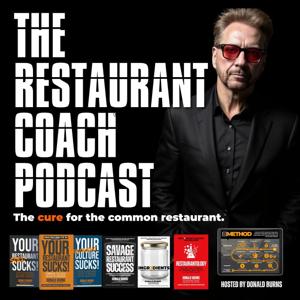


What would change in your restaurant if you had a team working on the business while you slept?
A team that doesn’t call in sick.
The AI restaurant is here—and independent restaurant owners need to understand what that means.
In Episode 187 of The Restaurant Coach® Podcast, I sit down with Andrew Steakley to explore how he’s using AI agents across his restaurant brand, from hiring and marketing to inventory, menu design, websites, and SEO.
We’re talking about moving beyond asking AI to write a caption and toward building agents with defined responsibilities, access to useful information, and clear standards for execution.
For an independent owner, that opens up a powerful question:
How much of your day could you reclaim if you stopped being the person who has to touch everything?
Restaurant owners already have plenty of software. What they need is help turning information into action.
A sales report doesn’t solve a scheduling problem.
This conversation explores how AI agents can help connect those pieces—and what it takes to keep the owner in command.
The opportunity reaches across the business:
An AI agent needs direction, standards, and accountability.
Working around the clock doesn’t guarantee that it gets everything right. The owner still needs to decide what an agent can access, what it can do, and what requires approval.
That makes leadership more valuable.
Your standards.
The goal is to give your human team more room to deliver hospitality—and give you more room to lead.
Imagine starting your morning with a briefing instead of a scavenger hunt.
You can see the issues that need attention.
You spend less time chasing information and more time acting on it.
That is the future worth building: a restaurant where the owner has the information and support to work ON the business, instead of spending every waking hour buried IN it.
Listen to Episode 187 — The AI Restaurant is HERE with Andrew Steakley.
Before we wrap, I want to leave you with something.
Most independent owners aren’t losing to bad food. They’re losing to the night shift.
The emails.
That’s why I built Grok Bot Haus.
It’s a custom AI operations team built for your restaurant: agents designed to watch your prime cost, draft your schedules and orders, help keep your training and food safety tracking on course, draft responses to reviews, and hand you a morning briefing.
You stay in command. You approve what goes out.
Your people can focus on people. Your agents can keep working on the tasks that pull you away from leading the business.
It’s a team that never sleeps, working for you.
Setup takes one to two weeks, and I’m doing it with owners who want their life back.
If that’s you, go to GrokBotHaus.com
Grok Bot Haus. Stop using AI as a chatbot and unleash it’s power to build your profits!
The Restaurant Coach® Podcast — Episode 186
Most independent restaurant owners know their food-cost percentage.
Far fewer understand what that percentage is actually telling them.
A restaurant can report a “good” food-cost percentage while quietly losing thousands of dollars through poor purchasing, inaccurate recipes, overportioning, waste, theft, substitutions, invoice errors, and weak distributor agreements.
The percentage is not the diagnosis.
It is only the first symptom.
In Episode 186 of The Restaurant Coach® Podcast, I sit down with food-cost and broadline foodservice expert Bo Bryant for a results-focused conversation about the numbers restaurant owners chase, the metrics they overlook, and how to negotiate with a foodservice distributor from a position of knowledge.
Because asking your sales representative for a better price is not a purchasing strategy.
And believing that 30% is automatically a “good” food cost is not financial control.
One of the biggest mistakes independent restaurant owners make is evaluating food cost as a single percentage.
Context matters.
Your concept matters.
Your menu mix matters.
Your contribution margins matter.
Most importantly, the difference between your theoretical and actual food cost matters.
Theoretical food cost tells you what your food should have cost based on what you sold, your recipes, portions, and current ingredient prices.
Actual food cost tells you what you really spent.
The gap between those two numbers is where the truth lives.
That gap can expose:
Inside the TRC Method, we use the Theoretical Plus Two Rule.
Your actual food cost should generally remain within approximately two percentage points of theoretical food cost.
When that variance grows wider, you do not simply have a food-cost problem.
You have an execution problem.
Bo and I also dig into one of the most misunderstood areas of restaurant profitability: broadline foodservice negotiations.
Most owners look at the price printed beside each item.
That is only part of the deal.
A true broadline negotiation may include:
A sales representative might offer a lower price on several highly visible products while margin is recovered elsewhere in your order guide.
That is why you cannot negotiate effectively using feelings, loyalty, or a handshake.
You need purchasing history.
You need product specifications.
You need usage reports.
You need delivered-cost comparisons.
You need a method for verifying that the promised savings reached your invoices.
If you do not know your numbers before the negotiation, you are not negotiating.
You are asking the person across the table to decide what is fair.
Bo and I discuss:
This episode is not about squeezing pennies out of every plate.
It is about building a cost-control system that exposes reality and produces measurable action.
Because food does not become expensive only when the distributor raises the price.
It becomes expensive every time your restaurant fails to control what happens after that product enters the building.
Bo will take this conversation even deeper at the 2026 Restaurant Success Summit, happening October 19–21 in Scottsdale, Arizona.
During his presentation, Bo will challenge the traditional food-cost metrics restaurant owners have been taught to chase and reveal what they should be measuring instead.
If you own an independent restaurant and want stronger margins, smarter purchasing decisions, and greater control over your food-cost dollars, you need to be in that room.
Listen to Episode 186 of The Restaurant Coach® Podcast with Bo Bryant.
Then bring your numbers to Scottsdale.
Because you cannot improve a number you do not understand.
And you cannot negotiate from a position of strength when the other side knows more about your purchasing than you do.
Reserve your seat at the 2026 Restaurant Success Summit:
RestaurantSuccessSummit.com
What do you do when everything you’ve built gets turned upside down?
You build something even bigger.
In this episode of The Restaurant Coach Podcast, Donald Burns sits down with entrepreneur and restaurateur Lisa Gasparian, founder of Cafe Cremerie, to share the remarkable story of how she transformed one of the most difficult seasons of her career into the foundation of a thriving multi-million-dollar café brand.
Like so many operators, Lisa watched the restaurant landscape change dramatically during COVID. The business she had invested years building was no longer the business she wanted to own. Instead of clinging to what was, she made the difficult decision to start over.
That decision led to the birth of Cafe Cremerie—a brand built with intention, systems, leadership, and a vision that extends far beyond a single location.
This isn’t just another success story.
It’s a masterclass in resilience, reinvention, and what it really takes to build a restaurant business that can scale.
Throughout the conversation, Lisa shares the lessons she learned while navigating uncertainty, building a brand from the ground up, creating a culture people want to be part of, and making decisions that position her company for long-term growth instead of short-term survival.
She also opens up about something many successful entrepreneurs rarely discuss: the importance of having a coach.
Lisa explains how implementing The Restaurant Coach® (TRC) Method helped reshape the way she thinks as a business owner, gave her greater clarity as a leader, and provided the accountability and strategic perspective needed to build the company she envisioned.
As she says during the interview, having an experienced coach in her corner became one of the foundational pieces behind the business she’s building today.
Restaurants are built by operators. Empires are built by owners.
Lisa’s story is proof that setbacks don’t have to become permanent. When you’re willing to change your thinking, raise your standards, and build systems that support your vision, adversity can become the catalyst for something far greater than you originally imagined.
“Sometimes losing the business you thought you wanted is exactly what creates the opportunity to build the business you were meant to own.”
Lisa Gasparian is the founder of Cafe Cremerie, one of Chicago’s fastest-growing café concepts. After navigating the challenges brought on by the pandemic, she chose to build a new brand centered on exceptional guest experiences, operational excellence, and scalable systems.
Today, Cafe Cremerie continues to expand while staying true to the values that inspired its creation—proof that resilience, vision, and disciplined execution can transform even the toughest circumstances into extraordinary opportunities.
Follow Cafe Cremerie’s journey and learn more about the brand by connecting with Lisa and her team on social media and visiting their website:
Every successful restaurant owner reaches a point where working harder is no longer the answer.
The next level requires better thinking.
Better leadership.
Better systems.
That’s exactly what The Restaurant Coach® helps independent restaurant owners build.
If you’re ready to stop surviving and start building a restaurant that creates freedom, profitability, and long-term wealth, apply for a complimentary Profit Rescue Call today.
Learn more at: TheRestaurantCoach.com
Every week, Donald Burns brings you conversations, strategies, and real-world coaching designed specifically for independent restaurant owners who refuse to settle for average.
If you enjoyed this episode:
Remember…
All business problems are people problems…and coaching fixes the people problems.
Most restaurant owners think their menu is a list of food.
It’s not.
It’s the most powerful sales tool in your restaurant.
Long before your server greets the table, your guests have already begun making buying decisions. Every price, every description, every section, every design choice, and every word on your menu is influencing what they order—and how much they spend.
In this episode of The Restaurant Coach Podcast, Donald Burns pulls back the curtain on the hidden psychology behind menu design and explains why some restaurants effortlessly increase average guest checks while others unknowingly encourage guests to spend less.
You’ll discover why menu engineering isn’t about manipulation—it’s about making it easier for guests to make confident decisions while creating a better dining experience and a more profitable restaurant.
Your guests don’t simply order what’s on your menu—they order what your menu leads them to believe is valuable.
The best menus don’t just display food.
They shape perception.
They reduce uncertainty.
They build confidence.
And ultimately, they create higher profits without making guests feel like they’re being sold.
Print a copy of your menu and review it as if you’ve never seen it before.
Ask yourself:
Remember:
Your menu isn’t just communicating your food.
It’s communicating your value.
“Profit isn’t created when the food leaves the kitchen. Profit begins the moment your guest opens the menu.”
If you’re tired of guessing why your guests aren’t ordering your most profitable items, it’s time to engineer your menu for maximum profitability.
At The Restaurant Coach®, we help restaurant owners build restaurants that generate more profit, create better guest experiences, and run with systems instead of stress.
Apply for a complimentary Profit Rescue Call, and let’s identify the hidden opportunities inside your menu, pricing strategy, and restaurant operations.
Learn more at: TheRestaurantCoach.com
Never miss an episode.
Each week, Donald Burns shares proven strategies, leadership lessons, and operational systems designed to help independent restaurant owners make more, work less, and build a restaurant that serves their life—not consumes it.
If you enjoyed this episode:
Together, let’s eliminate struggling restaurants—one owner at a time.
What if your staffing problem isn’t actually a staffing problem?
Every restaurant owner has experienced it.
You interview someone who seems perfect. They say all the right things. They start strong. You begin imagining how much easier life is about to become.
Then, a few weeks later…
They lose their urgency.
They create drama.
They damage your culture.
Or they disappear without warning.
The natural reaction is to blame today’s labor market.
But what if the real issue isn’t the people you’re hiring?
What if it’s the standards you’re leading with?
In Episode 183 of The Restaurant Coach Podcast, Donald Burns challenges one of the biggest myths in the restaurant industry: most owners don’t have a staffing problem—they have a leadership problem.
This episode dives deep into the psychology behind why restaurant owners often repeat the same hiring mistakes over and over again, uncovering the hidden patterns that quietly shape every team they build.
One of the most powerful ideas from this episode is simple:
Your staff is not an accident. They are the result of the standards you choose to uphold—or the standards you choose to compromise.
If you’re tired of dealing with the same employee issues, constant turnover, culture problems, or feeling like you’re always starting over with your team, this episode will challenge the way you’ve been thinking about leadership.
Because changing your staff doesn’t begin with another hiring ad.
It begins with changing the leader they are following.
Take a fresh look at your roster and ask yourself three difficult questions:
The conversation you’ve been putting off may be the breakthrough your restaurant has been waiting for.
In Episode 184, we’ll shift from people to profits as we explore the psychology behind your menu—why guests spend more (or less), and the hidden decisions that influence every purchase long before they ever place an order.
If you found this episode valuable, please share it with another independent restaurant owner. Your reviews and shares help us reach more operators who are ready to stop surviving and start building restaurants that truly thrive.
Until next time…
Make More. Work Less. Lead Better.
If you’re ready to stop the profit leaks, build an A-Player team, and create a restaurant that runs with stronger leadership, it all starts with knowing exactly where you stand.
Ready to stop the profit leaks and get your restaurant on the fast path to being highly profitable?
Take the FREE Restaurant CheckUP!
www.RestaurantCheckUP.com
In just a few minutes, you’ll discover where your restaurant is losing money, what’s holding your team back, and the biggest opportunities to increase your profits while working less.
Make More. Work Less. It starts with your Restaurant CheckUP.
What if the biggest thing holding your restaurant back… is you?
Most restaurant owners believe they’re trapped by labor shortages, rising food costs, inflation, or a lack of good employees.
But what if those aren’t the real prison?
What if the prison was built one decision, one belief, and one story at a time?
In this episode of The Restaurant Coach Podcast, Donald Burns challenges one of the most dangerous lies in the restaurant industry:
“If I just work harder, everything will get better.”
The truth?
You’ve already proven you’re willing to work harder than almost anyone else.
More hours.
Yet somehow, the restaurant still depends on you for everything.
That’s not freedom.
That’s a prison.
In this powerful episode, you’ll discover why your restaurant is acting as a mirror of your leadership, how your identity is shaping every result you’re getting, and why the transformation you’re searching for doesn’t begin with another system—it begins with becoming a different leader.
If you’ve ever felt like you’re carrying your restaurant on your back…
If you’ve wondered why nothing changes no matter how hard you work…
If you’re tired of surviving and ready to start leading…
This episode was made for you.
Your restaurant doesn’t need another exhausted operator.
It needs a leader with a new identity.
Because the restaurant isn’t the prison.
The prison is the story you’ve been believing.
It’s time to rewrite it.
Your restaurant will never consistently outperform the identity of the person leading it. Change your identity, and your leadership changes. Change your leadership, and your restaurant follows.
Ready to discover exactly where your restaurant is leaking profit?
Take my FREE Restaurant CheckUP and receive a personalized action plan to help you increase profit, improve leadership, and regain your freedom.
Start here: RestaurantCheckUP.com
The Prison You Created
If this episode challenged the way you think about leadership, share it with another restaurant owner who needs to hear it.
And if you haven’t already, subscribe to The Restaurant Coach Podcast so you never miss an episode designed to help you work less in your restaurant, more on it, and build the profitable business you originally dreamed of.
Most restaurant owners think leadership is a personality trait.
Something you’re born with.
Something you either “have” or you don’t.
That belief is exactly why so many restaurants stay stuck.
In Episode 181 of The Restaurant Coach Podcast, I sit down with Jarred Patterson, COO of New South Restaurant Group, to break that myth wide open.
Because leadership isn’t luck.
It isn’t charisma.
And it definitely isn’t title-based.
Leadership is a system.
And when that system is built correctly, it changes everything.
Jarred didn’t come into New South Restaurant Group as an executive.
He started as a General Manager at one location.
What changed wasn’t opportunity.
What changed was identity, structure, and execution.
Through the implementation of the TRC Method, Jarred didn’t just “move up.”
He grew into the role of enterprise leader.
This episode walks through how:
Leadership standards were clarified and enforced
Culture stopped being a slogan and became a daily operating system
Accountability replaced chaos
Managers were developed instead of babysat
And how that shift produced the most profitable year in company history
Not by working harder.
But by building leaders who could think, decide, and execute without constant oversight.
One of the biggest takeaways from this conversation:
Culture doesn’t improve because you talk about it.
It improves because you design it.
Jarred shares how New South moved away from reactive management and into intentional leadership development, where:
Expectations were clear
Standards were non-negotiable
Leaders were trained to lead people, not just run shifts
And results were tracked, reviewed, and reinforced
When leadership became systemized, culture followed.
When culture aligned, profit followed.
Most operators stay trapped at the location level because:
They confuse effort with effectiveness
They promote based on tenure instead of capability
They rely on “gut feel” instead of frameworks
They never install leadership systems that scale
This episode exposes why those habits quietly cap growth—and what happens when you finally replace them with structure.
In Episode 181, we break down:
Why leadership is not a personality trait—but a repeatable system
How Jarred transitioned from GM thinking to enterprise leadership
The role the TRC Method played in transforming culture across multiple locations
How leadership development directly drove record profitability
What restaurant owners must stop doing if they want leaders who can actually lead
Your restaurant depends too heavily on you
You have managers but not leaders
Culture feels inconsistent or fragile
Profitability improves only when you personally intervene
You want to scale without losing your soul—or your sanity
If leadership were just talent, Jarred’s story wouldn’t be repeatable.
But it is.
Because leadership isn’t magic.
It’s method.
And when you build the system, the results take care of themselves.
If this episode made one thing clear, it’s this:
You don’t need to work harder.
You need a system.
If you want to learn how you can deploy my TRC Method inside your restaurant—to build real leaders, engineer culture, and create predictable profit—
Go watch my FREE training at:
www.GrowMyRestaurantNOW.com
This is where you stop guessing and start building a restaurant that actually works for you, not because of you.
In Episode 180 of The Restaurant Coach Podcast, I sit down with Nick Mattia, the founder and owner of Ready Strong Meals, for a raw, honest conversation about what really happens when ambition meets reality in the restaurant and food business.
Nick didn’t come into the industry clueless.
He came in with knowledge, confidence, and a clear vision.
And that’s exactly what almost broke him.
Like many driven operators, Nick believed that having some experience and surface-level understanding of how the industry works would be enough to win.
Instead, it nearly cost him everything.
What Nick learned the hard way—and shares openly in this episode—is that the wrong knowledge, applied without structure, systems, and accountability, is more dangerous than no knowledge at all.
Good intentions don’t fix broken systems.
Hard work doesn’t replace clarity.
And passion doesn’t protect you from bad decisions.
Nick reached a moment every serious operator eventually faces:
Keep grinding blindly…
Or step back and rebuild the business the right way.
That’s when he committed to the TRC Method.
Not for motivation.
Not for hype.
But for frameworks.
In this episode, Nick breaks down how applying structured frameworks—rather than chasing tactics—allowed him to:
Identify where his business was actually leaking money
Replace emotional decision-making with disciplined systems
Build operational clarity instead of constant firefighting
Shift from “owner-operator chaos” to intentional leadership
Turn Ready Strong Meals from survival mode into a controllable, scalable operation
This wasn’t a quick fix.
It was a rebuild of thinking, process, and execution.
This conversation is exactly what The TRC Method is about.
Two operators telling the truth.
No ego.
No shortcuts.
Just lessons forged through pressure.
Nick’s story is proof that transformation doesn’t come from learning more—it comes from learning what actually matters, then having the discipline to implement it.
If you’re a restaurant owner, meal prep operator, or food entrepreneur who:
Feels stuck despite working nonstop
Has “tried everything” but still feels behind
Knows something needs to change but doesn’t know where to start
Is ready to stop guessing and start operating with intention
This episode will hit home.
Listen to Episode 180 – Why Systems Beat Passion Every Time with Nick Mattia
And if Nick’s story sounds uncomfortably familiar, that’s not an accident.
That’s your signal.
If you want to see these kinds of results in your own restaurant, book a TRC Method Strategy Call (for FREE) with me personally at www.GrowMyRestaurantNOW.com
What happens when you refuse to let a good restaurant quietly die?
In this episode of The Restaurant Coach Podcast, Donald Burns sits down with Madison Bree, a first-time restaurant owner who took a massive leap of faith by buying an existing restaurant in Michigan that still had a name… but was slowly bleeding out.
The restaurant was Kathy’s 126.
The reputation was there.
The energy, systems, and vision were not.
Instead of trying to “save” a dying brand, Bree made the bold decision to rebuild it from the inside out. She rebranded the concept into Madison’s on Main, reopened with clarity, structure, and standards—and the results speak for themselves. The restaurant has taken off since reopening, proving that survival is optional when leadership finally steps up.
In this conversation, Bree shares:
What it’s really like buying an existing restaurant with baggage
Why rebranding was non-negotiable for growth
The mindset shifts required to move from operator to owner
How working with a coach fast-tracked her progress and eliminated years of painful trial and error
How the TRC Method helped her build structure, confidence, and momentum instead of chaos
This episode is a must-listen for:
Aspiring restaurant owners thinking about buying an existing concept
Owners stuck “keeping it alive” instead of building something that thrives
Anyone who wants proof that coaching isn’t a cost—it’s a shortcut
Bree’s story is a reminder that thriving isn’t about luck.
It’s about standards, leadership, and having the right guide in your corner.
If you’re tired of surviving and ready to build a restaurant that actually works for you—this episode will hit home.
If you want to see these kinds of results in your own restaurant, book a TRC Method Strategy Call (for FREE) with me personally at www.GrowMyRestaurantNOW.com
What happens when a James Beard Award–winning chef looks around the modern food industry and realizes the system was never built to serve craft, soul, or truth?
This episode is a WAKE-UP CALL.
In Chef Neo vs. The Matrix, I sit down with legendary Chef Craig Shelton for a raw, unfiltered conversation about what mass production, scale-at-all-costs, and corporate commercialization have done to the heart of the culinary world.
This isn’t nostalgia.
This isn’t complaining.
This is a line in the sand.
Craig takes us deep into the moment many chefs silently experience—when the love of food collides with the pressure to standardize, cut corners, chase volume, and surrender creativity for efficiency and margins.
If you’ve ever felt like:
You’re producing food but losing your identity
Your restaurant runs, but your soul is suffocating
You didn’t become a chef to serve a system that feels hollow and transactional
The industry promised freedom… and delivered a golden cage
This episode is for you.
We talk about:
The Matrix of mass production and how chefs get trapped inside it
Why commercialization quietly erodes creativity and purpose
The difference between scaling food and scaling meaning
What it really means to take the red pill as a chef
How to reclaim craftsmanship, leadership, and freedom without selling your soul
This conversation isn’t comfortable—and it’s not supposed to be.
If you’ve felt that quiet inner voice whispering, “There has to be another way,” consider this your signal.
It’s time for chefs to stop playing a role in someone else’s system.
It’s time to wake up.
It’s time to be free of the Matrix.
Press play. Take the red pill. And decide who you’re really cooking for.
If you want to see what the TRC Method can do for your and your restaurant, book a TRC Method Strategy Call (for FREE) with me personally at www.GrowMyRestaurantNOW.com
About DB
Donald Burns is a best-selling author, high-performance restaurant strategist, and founder of The TRC Method, the framework behind some of the most profitable and disciplined independent restaurants in the industry. Known globally as The Restaurant Coach®, Donald has spent more than four decades in the trenches of hospitality—first as a chef trained by his father, a member of the elite United States Air Force Pararescue Teams, a restaurant owner, and ultimately as the strategist restaurant leaders call when burnout, chaos, and shrinking margins are no longer acceptable.
Donald is the author of multiple influential books, including the Your Restaurant Sucks trilogy, Savage Restaurant Success, and Ingredients, with his forthcoming work Restaurantology redefining how leaders think about profit, people, and performance in a low-margin industry. His work challenges the hustle mythology that keeps owners trapped and replaces it with a disciplined, systems-driven approach built on mindset, culture, and execution.
Through his coaching programs, workshops, and live events, Donald has helped thousands of independent restaurant owners reclaim profitability, leadership confidence, and personal freedom—without sacrificing their health, families, or values. His coaching ecosystem spans group masterminds, private advisory, consultant certification, and enterprise-level frameworks used by top operators and industry consultants.
Donald is a strategist trusted by driven founders, high-achievers, and restaurant leaders who are done playing small. Drawing from decades of operational experience, special operations discipline, behavioral psychology, and faith-centered leadership, he is known for delivering uncomfortable truths with clarity, conviction, and results.
Beyond business, Donald is deeply committed to leadership development, spiritual growth, and breaking generational cycles of burnout in hospitality. His mission is simple but uncompromising: to liberate independent restaurant owners from self-made prisons and help them build restaurants—and lives—that actually work.
Welcome to The Restaurant Coach Podcast—where performance meets purpose, and average is no longer an option.
From the publisher's feed
227,520 Listeners
3,837 Listeners
537 Listeners

3,896 Listeners

4,380 Listeners
16,842 Listeners
49 Listeners
580 Listeners
4,456 Listeners
2,293 Listeners
510 Listeners
53 Listeners
187 Listeners

2,647 Listeners
33 Listeners